The alpha, twice a week
That was 3 min.
Get the best new moments in your inbox every Wednesday and Saturday. It's free.
Check your inbox
We sent a link to your address. Click it to finish signing up. Not there in a minute? Look in spam.
or
Founders · 3 min · Nov 11, 2026
Robinhood prepared emergency funding before it needed it
 Vlad Tenev
As trading volumes surged, Vlad Tenev warned Micky Malka that Robinhood might need hundreds of millions quickly.
The episode’s best minutes
Full analysis- 18:22Micky Malka’s first call helped Robinhood raise emergency capitalPro pick 7 min
- 8:52Robinhood prepared emergency funding before it needed it3 min
- 1:05:26Tenev used a 50-year test to decide what to build3 min
- 4 more moments in the full episode
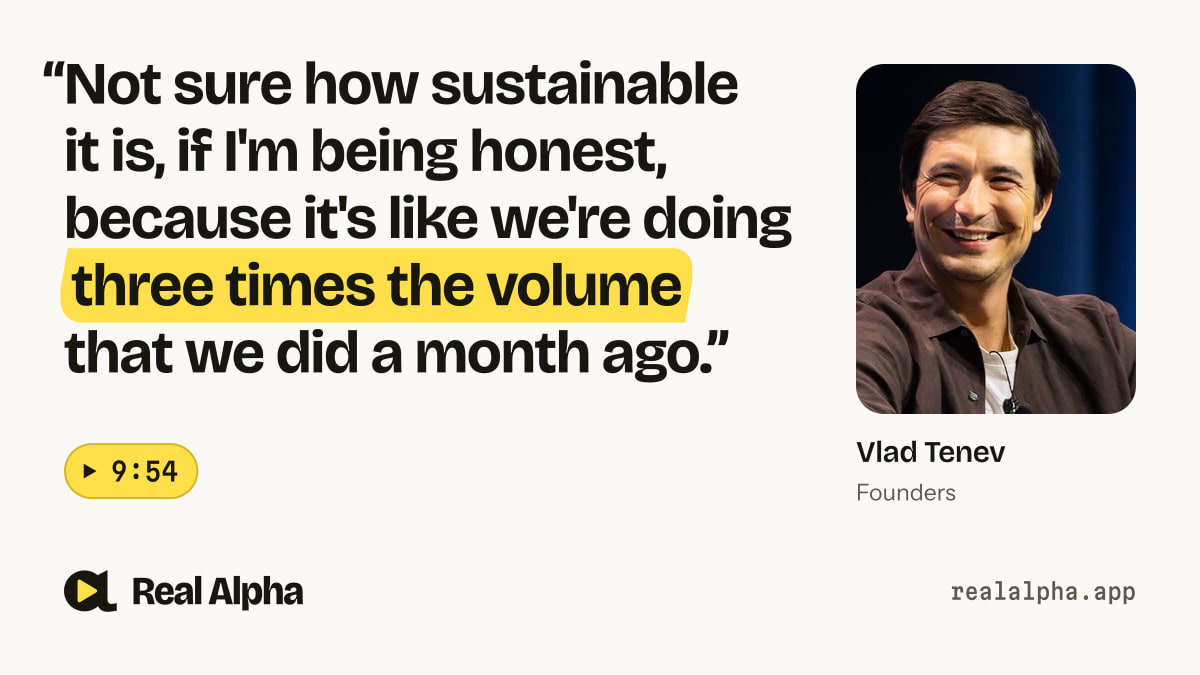
“Not sure how sustainable it is, if I'm being honest, because it's like we're doing three times the volume that we did a month ago.”
 Vlad Tenevat 9:54 · Founders
Takeaways
- A regulated broker’s capital needs can rise with platform activity.
- Robinhood’s trading volume tripled in a month.
- A prearranged term sheet helped make same-day funding possible.
About this segment
As trading volumes surged, Vlad Tenev warned Micky Malka that Robinhood might need hundreds of millions quickly. They drafted a term sheet in advance, making fast funding possible if the crisis came.

Vlad Tenev is co-founder and CEO of Robinhood.
Co-founded Robinhood in 2013, then steered it from a $500M loss in 2023 to a $1.1B profit.

David Senra, Host · Host, Founders
Has read an entrepreneur's biography every week for Founders since 2016.
From “Building Robinhood, Surviving GameStop & A $500 Million Phone Call | Vlad Tenev”, Nov 11, 2026. Watch the full episode
Thanks. We'll look at and fix what's off.
Transcript
Transcribed by machine (Whisper) from the episode’s audio, so a word may be off here and there.
- 9:05
User base was growing, revenue was growing, volumes were growing. So COVID at first seemed like it would be like a headwind, a risk that we would have to manage. And then it became pretty clear that it was just a huge accelerant to the business. But as part of our business accelerating quite dramatically, we encountered the capital requirements for the first time. And the way that basically that works is since we're a regulated broker, depending on how much activity there is on our platform, we have to set aside corporate cash, business cash to like support that activity. And we started noticing during March that, you know, the volumes across equities and options were going parabolic in our capital requirements.
- 9:57
were increasing as well. And so I call up Mickey and I'm like, hey, things are really good right now. Revenue is growing, business growing. Not sure how sustainable it is, if I'm being honest, because it's like we're doing three times the volume that we did a month ago. But there is a chance that I'm going to need hundreds of millions of dollars really quickly, because, you know, what if one day our volume 10 X is and, you know, there's these capital requirements and, and he's like, okay, well, let's work out a deal. Let's have a term sheet in place so that if that does happen and, you know, you need it, we can just like set it up, sign the docs and the money is wired in your account. Same day. Smart. And nobody else was willing to do that kind of, that's like an improvised deal. And remember at the time, venture capitalists
- 10:56
weren't really investing. Everyone had kind of battened down the hatches to see what was happening with COVID. And a couple of months later, it became clear that some businesses were actually doing well. And then the floodgates opened again and it became one of the biggest bull markets ever and kind of a speculative extravaganza from, I'd say, second half 2020 to second half of 2021.