The alpha, twice a week
That was 5 min.
Get the best new moments in your inbox every Wednesday and Saturday. It's free.
Check your inbox
We sent a link to your address. Click it to finish signing up. Not there in a minute? Look in spam.
or
Bloomberg Law · 5 min · Nov 2, 2026
States can use settlements to bypass the normal rulemaking process
 Leon Fresco
 describes Texas and the Justice Department settling over an immigration rule, then notes a similar Biden-era deal.
In this episode
Full analysis- 14:45Prosecutors used a rare filing to beat Comey’s deadlinePro pick 6 min
- 30:03Lilly is using state law to protect its drug patents5 min
- 1:40Families can seek information through a mandamus lawsuit4 min
- 21:02Grand jury refusals may reflect eroding trust in prosecutors3 min
- 25:26Research-only peptide sellers bypass prescription channels4 min
- 6:55States can use settlements to bypass the normal rulemaking process5 min
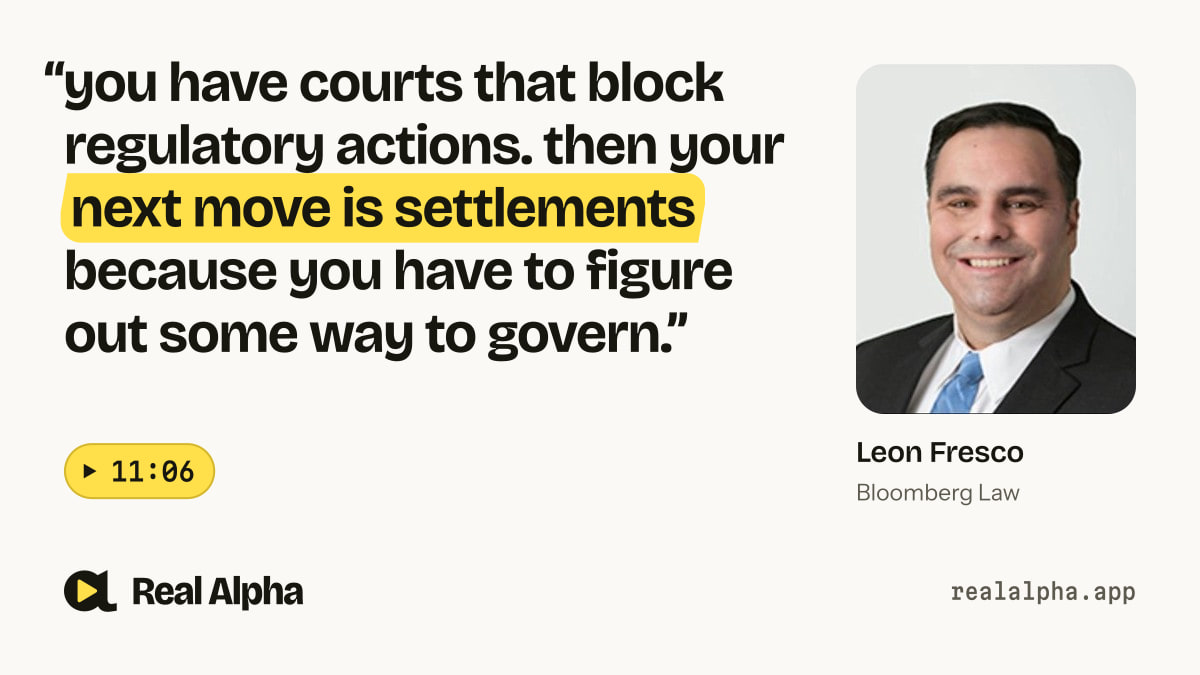
“you have courts that block regulatory actions. then your next move is settlements because you have to figure out some way to govern.”
 Leon Frescoat 11:06 · Bloomberg Law
Takeaways
- Texas and DOJ settled over a rule pausing deportation proceedings.
- Fresco says Illinois and the Biden administration used a similar tactic.
- He expects courts to reach the broader question in a future case.
About this segment
Leon Fresco describes Texas and the Justice Department settling over an immigration rule, then notes a similar Biden-era deal. He expects a future case to test whether such settlements can bypass rulemaking.

Legal Expert, Holland & Knight
Drafted the Senate’s 2013 immigration reform bill and oversaw federal civil immigration litigation at DOJ.
- JG
June Grasso, Host · Host, Bloomberg Law
From “Weekend Law: James Comey, ICE Shooting & Copycat Drugs | Bloomberg Law”, Nov 2, 2026. Watch the full episode
Thanks. We'll look at and fix what's off.
Transcript
From the transcript Bloomberg Law publishes with the episode.
- 6:57
the justices allowed a deportation deal between Texas and the Trump administration that's been called a collusive settlement. It stems from Texas suing the federal government to challenge a regulation that allows immigration judges to pause deportation proceedings. Tell us about it.
- 7:18
The state of Texas sued in Texas and said this is not legal, this regulation. There should be no such thing in immigration court. You should either finish a case or dismiss a case if a case doesn't meet the standard for deportation. They actually enter into a settlement with the Department of Justice where both sides agree, yes, this rule is illegal. So as a part of the settlement, not only are we not going to follow this rule, we agree as the federal government to permanently never have a rule like this. And so a bunch of cities then say, well, I understand that the state of Texas sued, but we should have a right to intervene in this lawsuit and say, nobody asked for this. This is just one state. Since there isn't an opposing view in this case, we should be allowed to intervene. But actually the Fifth
- 8:07
Circuit and the districts within the Fifth Circuit usually have very expansive intervener law. They usually let pretty much anybody intervene as we've seen over the last 10 years in immigration cases. But here they said, that the cities had no standing because they can show how a specific city suffered from this rule being taken away. And so that was the end of it. The settlement stood in place. These cities then tried to appeal and the Fifth Circuit said, go away. We are not interested in any argument you're making.
- 8:39
And the Supreme Court now declined to move forward and similarly agreed that these cities have no standing.
- 8:46
Beyond this case and immigration issues, Isn't there a broader concern here about these kinds of deals?
- 8:53
The sort of larger term question, is this going to be a new thing where rather than going through the whole administrative law process, you just take a state that is partial to the view of whatever new administration is there and just sue about any regulation that the new administration didn't want and just enter into a settlement and basically circumvent the entire meaning of the Administrative Procedure Act. Now, I will say this, as conspiratorially and dastardly as a lot of people have said this is, I will note that during the Biden administration, this exact same thing happened where the state of Illinois and the Biden administration entered into a some sort of similar collusive arrangement to get rid of the public charge regulation that the Trump administration had put in. And at that time, the Supreme Court
- 9:43
was very wary, but just said, we're not going to get into this right now, but we don't like this. We may have to get into this some other day. And so at some point, they're going to have to get into this question. There's no doubt about it.
- 9:56
What was surprising to me is that there were no dissents. I think the problem is that the standing issue wasn't the cleanest way of going after it. And so I think both sides understand the stakes and they understand that each side has done this now. So sort of Everybody knows that they can be harmed by this. We have nuclear deterrents on each side. And so I just think they want to do this cleanly without the standing issue involved and take this case not in the emergency shadow docket, but in a real docket. This was strategic. And I think everybody knows that it may take a year or two, but it's definitely coming.
- 10:36
I mean, it may not be illegal, but it doesn't seem right for one administration to be able to make a regulation that future administrations can't change.
- 10:48
It certainly is unconventional. It's certainly an end run around the Administrative Procedure Act and how the regulatory process is supposed to go. I don't think anyone thought that collusive settlement was with states that agree with you is the new legislation in America. But this is what happens when you don't have a Congress that passes laws and when you have courts that block regulatory actions. then your next move is settlements because you have to figure out some way to govern. And so the more governing tactics that used to work that no longer work, the more you get things like this. Quite a challenging area. We've now seen both sides use it. So now it's going to be an issue that the courts are going to have to address.