The alpha, twice a week
That was 2 min.
Get the best new moments in your inbox every Wednesday and Saturday. It's free.
Check your inbox
We sent a link to your address. Click it to finish signing up. Not there in a minute? Look in spam.
or
Bloomberg Daybreak: Europe Edition · 2 min · Oct 29, 2026
The Fed’s pause depends on how it reads its prior hike
Daniel Moss says the Fed may see its last rate increase as a mid-cycle adjustment, not the start of a sustained hiking cycle.
In this episode
Full analysis- 10:42Healey says fiscal discipline will shape the next spending review3 min
- 14:05Healey argues the budget's impact goes beyond its scorecard4 min
- 27:03Central bank silence can make policy surprises worse2 min
- 24:55The Fed’s pause depends on how it reads its prior hike2 min
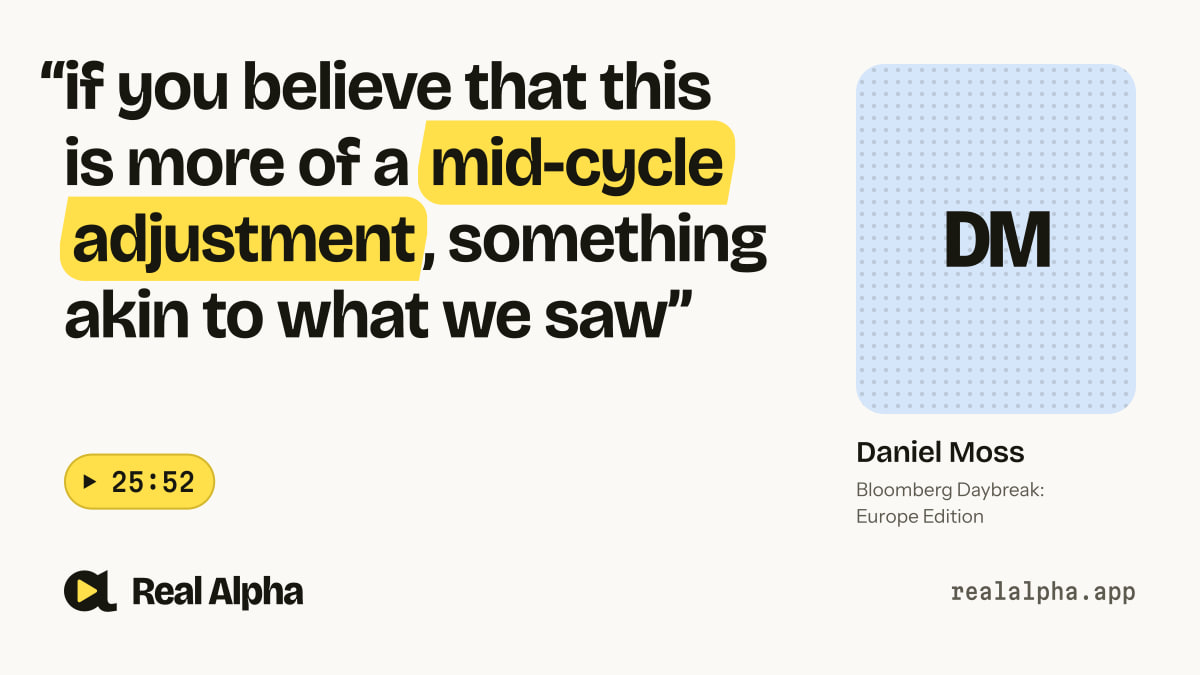
“if you believe that this is more of a mid-cycle adjustment, something akin to what we saw”
Takeaways
- A consecutive hike could suggest the Fed sees inflation as out of control.
- The previous increase may instead have been a mid-cycle adjustment.
- Moss says the Fed has not framed inflation as an immediate emergency.
About this segment
Daniel Moss says the Fed may see its last rate increase as a mid-cycle adjustment, not the start of a sustained hiking cycle. That distinction helps explain why it held rates rather than hiking again.
From “Healey's First Budget Interview, Tech Rally Stalls, Fed Holds Fire | Bloomberg Daybreak: Europe...”, Oct 29, 2026. Watch the full episode
Thanks. We'll look at and fix what's off.
Transcript
From the transcript Bloomberg Daybreak: Europe Edition publishes with the episode.
- 24:58
turmoil in France and higher energy costs. It comes after the Fed held interest rates in the U.S. steady yesterday ahead of the midterm elections, but may cut the number of meetings where they will actually make an interest rate decision each year. Joining me now to discuss is Bloomberg opinion columnist Daniel Moss. Dan, good to speak to you. Should we start on the Fed? Two members dissented. They were in favour of a hike. And the question in the press conference for Kevin Warsh is why they didn't just raise interest rates yesterday, given inflation.
- 25:31
This depends in part on your view of what the hike at the previous meeting was. Now, Are we looking at a mid-cycle adjustment or was the hike at the prior meeting the start of a more concerted pattern of interest rate hikes? Now, if you believe that this is more of a mid-cycle adjustment, something akin to what we saw in the mid to late 1990s from the Federal Reserve, then they don't need to hike at consecutive meetings. If you hike at consecutive meetings, it suggests, well, there's something here that people feel is out of control, as opposed to the message that Warsh has been giving when he does speak, that is, says he's not a fan of it, has been inflation's been above the target for five or six years. We need to get it down. Our credibility depends on it. He hasn't spoken about the urgency of
- 26:38
He hasn't underscored that this has to be done quickly. So not a shocker that rates were left unchanged yesterday. It's in part, you know, a definitional battle over what began or what went on the prior meeting. Okay, interesting.