The alpha, twice a week
That was 3 min.
Get the best new moments in your inbox every Wednesday and Saturday. It's free.
Check your inbox
We sent a link to your address. Click it to finish signing up. Not there in a minute? Look in spam.
or
Bloomberg Intelligence · 3 min · Oct 27, 2026
UPS is trading low-margin Amazon volume for higher-yielding work
 Lee Klaskow
 explains how UPS is shifting toward data-center, healthcare and automotive shipments while reducing lower-margin deliveries.
The episode’s best minutes
Full analysis- 0:40Boeing’s production delays reflect a broader manufacturing labor crunch4 min
- 10:32UPS is trading low-margin Amazon volume for higher-yielding workPro pick 3 min
- 19:13Coke’s bottler model helps limit its exposure to rising costs3 min
- 2 more moments in the full episode
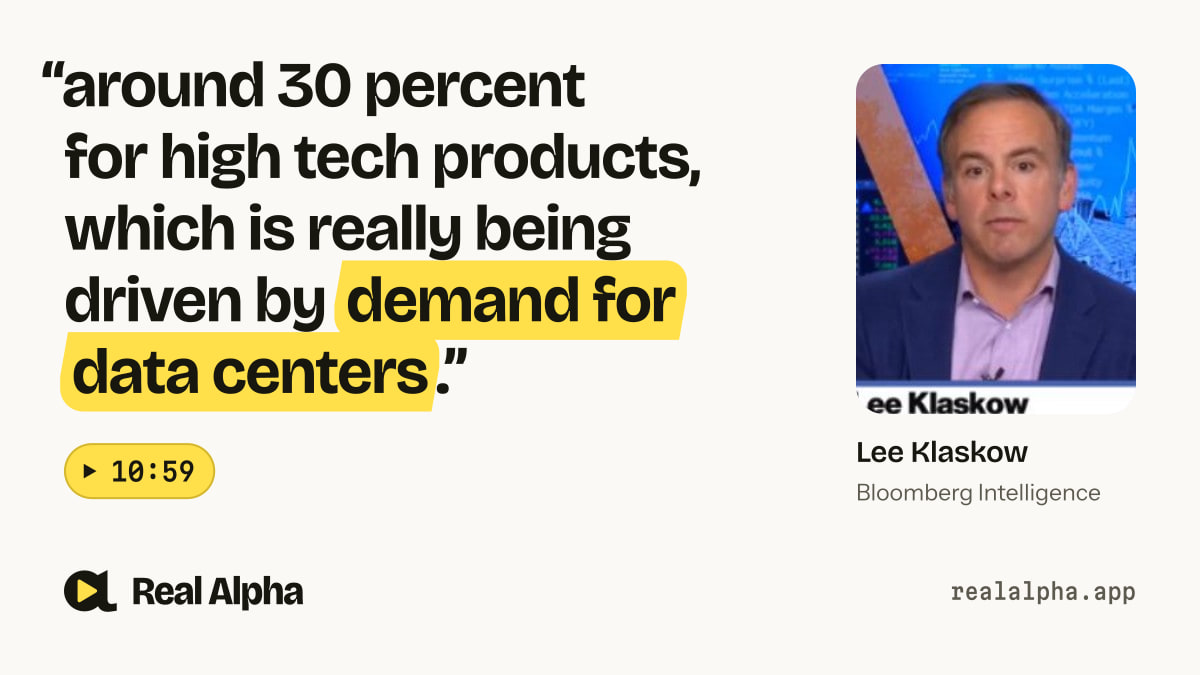
“around 30 percent for high tech products, which is really being driven by demand for data centers.”
 Lee Klaskowat 10:59 · Bloomberg Intelligence
Takeaways Pro pick
- High-tech shipping volume is up about 30%, driven by data-center demand.
- UPS is prioritizing healthcare and automotive as higher-margin growth areas.
- A smaller footprint and business changes create execution risks.
One of Pro's picks, open to you here. Try Pro free for 7 days
One of Pro's picks. The rest of the summary and the 3 takeaways are in Real Alpha Pro; the video, the quote and the transcript stay free.
Read it with Pro, 7 days freeAbout this segment
Lee Klaskow explains how UPS is shifting toward data-center, healthcare and automotive shipments while reducing lower-margin deliveries. The strategy can improve profitability, but restructuring brings execution risks.

Senior Transport, Logistics & Shipping Analyst, Bloomberg Intelligence
Covers global freight markets and founded Bloomberg Intelligence’s Talking Transports podcast for transportation-industry leaders.
- PS
Paul Sweeney, Host
- SF
Scarlet Fu, Host

Norah Mulinda, Host · Markets correspondent, Bloomberg Television
Covers the US trading day and macro markets after reporting on equities, real estate, aerospace and defense.
From “Boeing Cuts Delivery Target, Sending Shares to 18-Month Low | Bloomberg Intelligence”, Oct 27, 2026. Watch the full episode
Thanks. We'll look at and fix what's off.
Transcript
From the transcript Bloomberg Intelligence publishes with the episode.
- 10:34
logistics companies. Hey, Lee, talk to us about UPS. What did you learn from the company's release? Yeah, it was a pretty good print.
- 10:42
And they're showing that their execution of, you know, trying to be better and not bigger is really paying dividends. You know, when you're looking through the numbers from a volume standpoint, while volume was down, it's small to midsize business volumes are up. Its volumes are up pretty strong, around 30 percent for high tech products, which is really being driven by demand for data centers. So there's a lot of things going on there that are showing that they're switched away from Amazon or relying less on Amazon and more towards these higher end. yielding packages is really moving through its income statement down to the bottom line.
- 11:25
And net, you know, it seems like they're really well positioned as they head into peak season.
- 11:30
And speaking of peak season, we see UPS raising its outlook heading into the holiday season. What do you think gave management the confidence to do that?
- 11:39
I think it's really just their execution on becoming a more profitable company. Like I mentioned earlier, the company has been really focused on pivoting away from that low margin business of business to consumer B2C packages. The packages that we get at our doorstep, working with Amazon while they promise you a lot of volumes. the margins on each packages tend to be low because of the higher cost it is to deliver that. So they're really focused on higher margin areas, whether it's the data centers that I mentioned earlier, healthcare, pharmaceuticals, that's another great growth area for them, as well as automotive has become a growth area and a higher margin business, just given the fact that service is really paramount with those kind of deliveries.
- 12:29
Lee, I'm looking at the stock price performance of some of the competitors. Year to date, FedEx is up about 30 percent. DHL is up 25 percent. United UPS lagging, I guess, up about 4 percent. Is that kind of reflecting that this is still a little bit of a show me story that they can kind of manage the change in their business flow?
- 12:47
Yeah, I think it's a combination of a show me story. And those other companies that you mentioned are kind of doing things this year that maybe UPS was doing a couple of years ago and was getting credit for back then. So I think it's more of the other companies catching up to UPS. But I do, you know, would agree that UPS continues to be a show me story because they are trying to really restructure their overall business, whether it's having a smaller footprint, really leaning into becoming more of a tracking network. There's a lot of things that they're doing to improve the overall productivity. And with that comes some execution risks. They sold a lot of businesses that really didn't make sense for them, like their LTL business.
- 13:36
FedEx recently did that. This year, they recently spun out their LTL business. So both companies are really trying to focus more on the parcel markets.