Full episode · 22 min
AI Agents Will Cause a Massive CPU Shortage | Ivan Burazin
Ivan Burazin argues that AI agents could create a CPU shortage, and says Daytona is building the execution cloud to meet their compute needs.
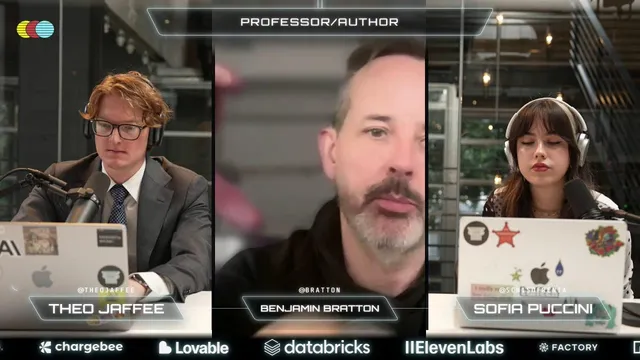
 MTS · Theo Jaffee & Sophia Dew with Ivan Burazin
The best minutes
Also worth watching
Skip the roughly two-minute closing sponsor reads and the Lovable ad.
Summary · 2 min read
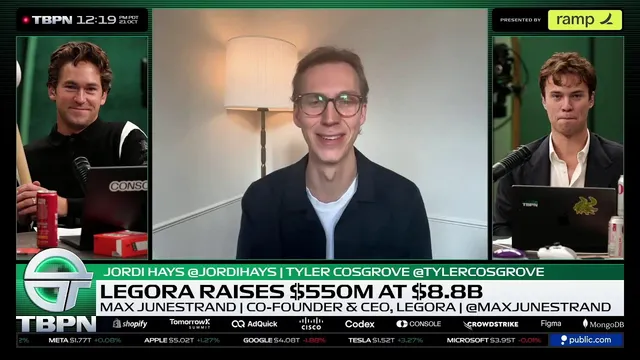
Ivan Burazin is the co-founder and CEO of Daytona, which provides computers, or sandboxes, for AI agents. Daytona began by automating developer environments for people, then pivoted to agent infrastructure; it announced a $60 million Series B at a $1 billion valuation.
Burazin argues that agents need compute to execute tasks through tools, not just model inference, and that broad adoption could push CPU demand beyond today's supply. He says Daytona is building a cloud of fast, scalable agent sandboxes and sees compute availability, alongside product performance, as a competitive advantage. He traces Daytona's pivot from human developer environments to agent infrastructure to early customer demand, and says its $60 million Series B will support compute and hiring as revenue has grown 25x this year. He expects real-world AI to become more visible gradually, especially in San Francisco.
Minute by minute
- 0:00
Burazin warns of a CPU crunch. Burazin cites a rough estimate that 100 million Muse users would require $2.8 billion in CPU compute, then compares that figure with Meta's 3 billion users. He says if consumer apps become agents, the required compute does not exist today, and Daytona is building a CPU execution cloud for agents.
- 5:09
Burazin sees scale as Daytona's moat. Burazin says infrastructure companies need both attention and scale: customers must know a provider exists, and it must have compute ready when demand arrives. He says customers quickly switch to another provider when capacity is unavailable, and he expects agents could make that choice automatically.
- 7:07
Agent demand prompted Daytona's pivot. Burazin says early agent customers rejected Daytona's human-focused product, so the team studied agent workloads and built an MVP. He says those prospects kept asking for API access after a demo, while the enterprise developer-environment market had no clear leader. He saw a larger opportunity in serving agents as software's users.
- 9:42
Series B funds compute and hiring. Burazin says the $60 million Series B at a $1 billion valuation will help fund compute and hiring. He says Daytona raised its Series A earlier that year and grew revenue 25x that year. The company plans to expand from sandboxes into more tools for an agent execution cloud, guided by what agent builders need.
- 11:01
Burazin expects gradual real-world AI. Burazin expects AI in the physical world to become more visible over the next year, but says the change will be gradual. He points to Waymo's long path from test vehicles with a person onboard to cars operating without a driver, and hopes real-world AI will be highly visible in San Francisco by the end of next year.
Published Oct 21, 2026.