Full episode · 1 h 20 m
Managing $525B & Building the World’s Largest Multifamily Office | Kurt MacAlpine, Corient
Kurt MacAlpine says a partnership model with shared incentives can help wealth managers serve ultra-high-net-worth families better.
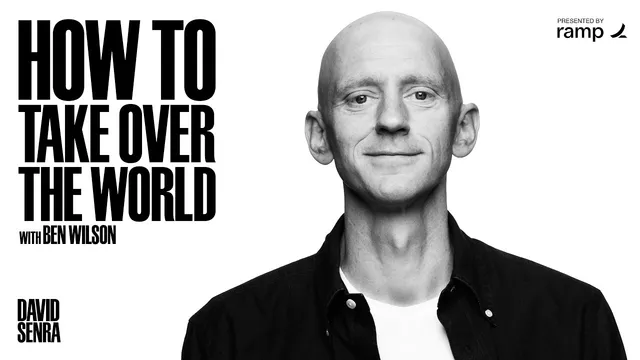
 Founders · David Senra with Kurt MacAlpine
The best minutes
- 5:22Misaligned advisor incentives leave clients with less expertise4 min
- 45:00He used long-term fixed-rate debt to fund the pivot5 min
- 1:00:20Corient fully integrates acquisitions on day one4 min
Also worth watching
- 23:21Corient removes internal barriers to collaboration5 min
- 51:50Mubadala gave Corient a faster route to private ownership7 min
- 39:22CI's shareholder mix amplified its stock swings6 min
- 31:30Independent firms face a steep investment hurdle past $5 billion3 min
- 1:04:22Corient let employees help choose its brand name3 min
Skip the sponsor reads and the extended discussion of Corient's advertising, brand marketing, and Miami headquarters.
Summary · 4 min read
Kurt MacAlpine is a partner and CEO of Corient, which manages approximately $525 billion in client assets. He became a first-time CEO at 39 and launched Corient while leading CI Financial in 2020, then grew the business through acquisitions across 15 jurisdictions.
MacAlpine argues that wealth management’s advisor-centric incentives create silos that keep clients from accessing a firm’s full expertise. He says Corient applies a professional-services partnership model, with one compensation plan and one P&L, to align colleagues and connect investment, tax, planning, trust and family-office services. He says scale helps the firm improve access, pricing and service breadth, while acquisitions bring partners into a fully integrated model. The conversation traces CI Financial’s shift from mutual funds toward wealth management, share buybacks and a private transaction with Mubadala Capital, which MacAlpine says let the business keep building for a longer horizon.
Minute by minute
- 0:00
A new direction beyond mutual funds. MacAlpine says CI Financial’s profits relied heavily on Canadian mutual funds, whose growth prospects were tapering as ETFs and alternatives gained importance. At 39, he became CEO and proposed using the company’s cash flow to build a U.S. ultra-high-net-worth wealth business, then expand globally.
- 5:33
Advisor incentives divide firms. MacAlpine argues that many wealth firms are built around independent advisors who compete for clients and may even take clients from colleagues. He says support services can feel like a cost to advisors, while compensation can reward generating revenue and keeping it rather than sharing expertise. In his view, clients lose access to the firm’s full capabilities.
- 11:42
Partnerships can center client service. MacAlpine says he adapted the partnership structure he knew from management consulting and other professional-services firms for wealth management. He wanted the model to improve the client experience and create a more collaborative environment for colleagues and owners.
- 19:12
Clients need connected expertise. MacAlpine says Corient combines wealth advice with financial planning, wealth transfer, investments, tax, trusts and family-office services. He says its investment team has 175 people, while more than 100 accountants work directly with advisory teams. Other services include bill payment, outsourced CFO work, lending, aviation and art management.
- 24:25
One compensation plan, one P&L. MacAlpine says Corient is fee-only and fiduciary, with a structure designed to remove barriers to collaboration. Its roughly 3,000 employees follow one compensation plan with no exceptions, and the firm uses one P&L without chargebacks. He argues this lets specialists work with clients without internal cost-center friction.
- 28:01
Scale helps clients and partners. MacAlpine says Corient’s scale can improve access to capacity-constrained investment managers, pricing, lending and services smaller firms may struggle to provide. He describes incoming firms as partners, not just acquisitions: founders can continue building while gaining capabilities they might otherwise need to fund themselves. He says firms often face a major investment challenge when trying to grow from $3 billion to $5 billion toward $50 billion or $100 billion.
- 39:13
Transformation made the stock volatile. MacAlpine says CI Financial’s stock was the best or second-best-performing financial-services stock in North America in 2021, then the second-worst in 2022. He tied the swings to the shift from Canadian asset management to global wealth management and to an active shareholder base that included hedge funds and mutual-fund outflows. He said the underlying business was progressing even when its share price did not reflect that.
- 45:00
Debt funded the transformation. MacAlpine says CI used free cash flow from its Canadian business and debt to build Corient, reaching roughly three to three-and-a-half turns of debt. He said the debt was fixed-rate, had no covenants and extended as far as 30 years. He argued that its structure limited the business’s vulnerability.
- 48:18
Share buybacks backed the strategy. MacAlpine says he expected CI to go private through a share-buyback program while building Corient, because he believed the shares were substantially undervalued. He said the company bought back shares at around $12 or $13 each and described the returns as significant.
- 51:50
Private ownership enabled global expansion. MacAlpine says Mubadala Capital approached CI and agreed that buying back the remaining shares could take about nine years, limiting the capital available for Corient’s strategy. CI announced its move to private ownership in November 2024 and completed it on August 12, 2025, with no incremental debt. He said the change made it possible to pursue deals for Europe’s largest and second-largest ultra-high-net-worth wealth businesses.
- 59:02
Acquisitions must fit the partnership. MacAlpine says Corient has made close to 50 acquisitions and selects partners for strategic, cultural and financial alignment, not simply by assets under management. He describes a path from building scale to integration and then a fully integrated business. Acquired teams move to Corient’s brand, technology, compensation and benefits on day one, and he says the relationship should improve both sides.
- 1:04:42
Employees helped choose the brand. MacAlpine says he invited employees to help name the firm, with a third party and focus groups narrowing the options to finalists. About 75 people took part in the focus groups, and partners voted on the finalists at a town hall. He says giving people a voice helped them understand and embrace the change.
- 1:12:36
A long horizon changes investment choices. MacAlpine says advertising requires investment before tangible benefits appear, but Corient is built to last across generations rather than for an 18-to-36-month ownership period. He says that horizon shapes its brand investment and advertising in every market where it operates. He also says he chose Miami as headquarters in 2020, citing its welcoming business community, growing talent pool and quality of life.
Published Oct 18, 2026.