The alpha, twice a week
That was 2 min.
Get the best new moments in your inbox every Wednesday and Saturday. It's free.
Check your inbox
We sent a link to your address. Click it to finish signing up. Not there in a minute? Look in spam.
or
Masters in Business · 2 min · Nov 18, 2026
Costco caps product markups and avoids personalized prices
 Lindsay Owens
 says Costco limits markups to roughly 14% and avoids dynamic or personalized prices; the Savannah Bananas use a ticket lottery.
In this episode
Full analysis- 4:45Loyalty programs can penalize customers who keep coming back3 min
- 14:13Repair restrictions can turn one purchase into repeated charges4 min
- 18:07Public backlash can quickly force companies to change pricing3 min
- 7:23All-in pricing rules now cover lodging and event tickets2 min
- 9:47New York City requires cancellation by the sign-up method4 min
- 20:46Costco caps product markups and avoids personalized prices2 min
- 22:45Early studies found AI shopping agents often miss lower prices2 min
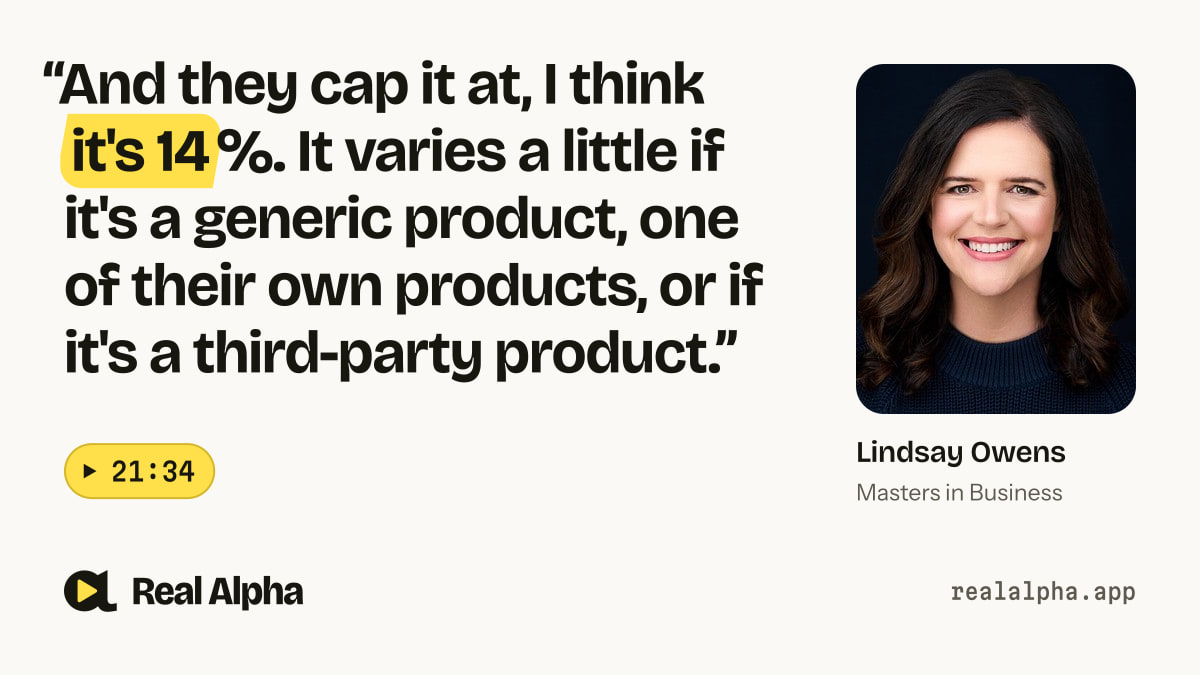
“And they cap it at, I think it's 14%. It varies a little if it's a generic product, one of their own products, or if it's a third-party product.”
 Lindsay Owensat 21:34 · Masters in Business
Takeaways
- Costco’s markup cap varies by product type.
- The retailer doesn’t use dynamic or personalized prices.
- The Savannah Bananas allocate seats by lottery, not highest bid.
About this segment
Lindsay Owens says Costco limits markups to roughly 14% and avoids dynamic or personalized prices; the Savannah Bananas use a ticket lottery. Both show how predictable pricing can build customer loyalty.

Lindsay Owens is CEO of Groundwork Collaborative.
Exposed corporate pricing power and profiteering, shaping debate on inflation, affordability and consumer protection.
- BR
Barry Ritholtz, Host · Columnist, Bloomberg Radio
From “At The Money: Shopping in an Era of Surveillance Capitalism | Masters in Business”, Nov 18, 2026. Watch the full episode
Thanks. We'll look at and fix what's off.
Transcript
From the transcript Masters in Business publishes with the episode.
- 20:49
So let's talk about a couple of companies that you spotlight as doing things right, like maintaining a cap on markups or freezing prices. One of the most obvious examples that comes to mind is Costco, pretty much universally beloved by their clients, what are they doing right?
- 21:14
Yeah, so Costco is a little bit of a tricky example, but I use it in the book because I still think it's a good one. I mean, their business model is a little different. They make a lot of their money from the subscription, the membership that you pay to shop in Costco. But they do have a threshold on how much markup they will charge above their input costs. And they cap it at, I think it's 14%. It varies a little if it's a generic product, one of their own products, or if it's a third-party product. But it's a cost plus pricing model. You're not going to see dynamic pricing at Costco. You're not going to see personalized pricing at Costco. The other example I really like is...
- 21:57
you know, at a time when being a sports fan is getting more and more expensive. And, you know, we saw FIFA over the summer use dynamic pricing for World Cup tickets for the first time in World Cup history. I always like to talk about the Savannah Bananas, the variety show slash baseball team. You know, they have a real fans first pricing approach. They don't use dynamic pricing auctioning off the seats to the highest bidder, they use lottery system. And if you're lucky, you get a seat at a good price. So I think, you know, those are two good examples of folks who are cutting a different path. And I think they are doing well in part because they're cutting a different path because they have a lot of consumer loyalty and a lot of consumer enthusiasm for their brands.