The alpha, twice a week
That was 2 min.
Get the best new moments in your inbox every Wednesday and Saturday. It's free.
Check your inbox
We sent a link to your address. Click it to finish signing up. Not there in a minute? Look in spam.
or
Zero: The Climate Race · 2 min · Oct 29, 2026
Efficient electrification can make demand growth look slow
 Kristian Ruby
 says Denmark's electricity use rose 1.5%, but electrification is a slow indicator because electric systems waste less energy than fossil fuels.
The episode’s best minutes
Full analysis- 6:17A diverse power mix can keep European electricity prices low4 min
- 10:48Battery growth depends on better markets for grid servicesPro pick 3 min
- 22:04Efficient electrification can make demand growth look slow2 min
- 4 more moments in the full episode
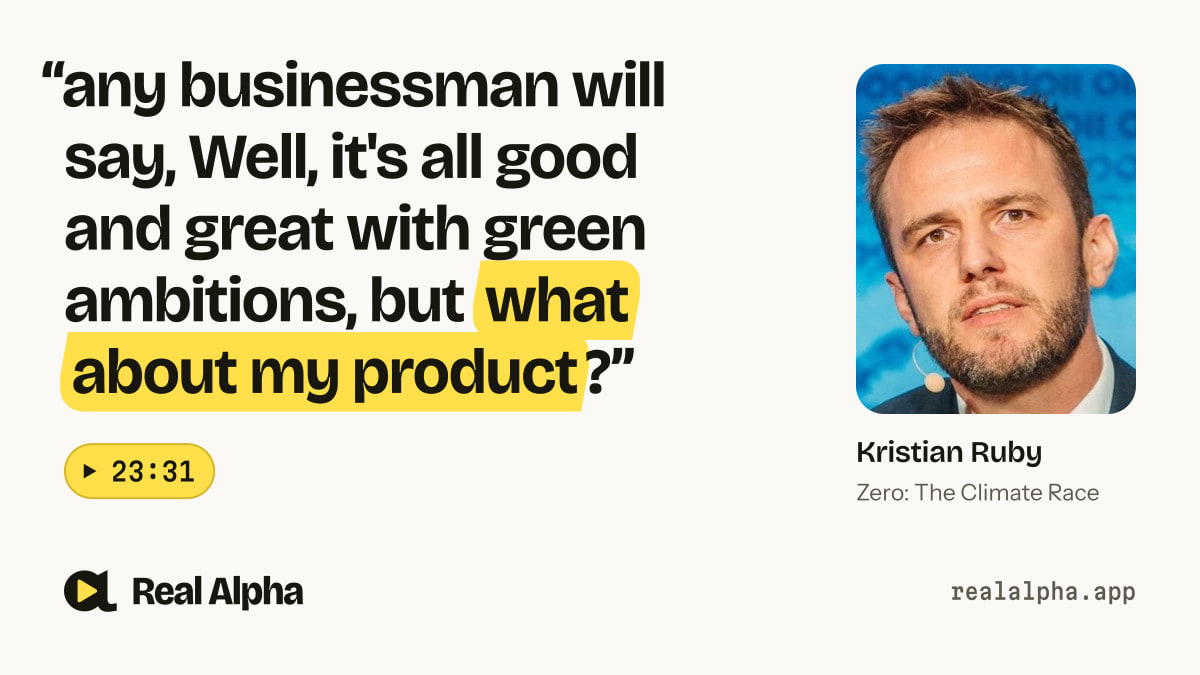
“any businessman will say, Well, it's all good and great with green ambitions, but what about my product?”
 Kristian Rubyat 23:31 · Zero: The Climate Race
Takeaways
- Denmark's electricity use grew 1.5% last year.
- Replacing inefficient fossil fuels can limit measured demand growth.
- Industry needs answers on prices, execution, grid access and returns.
About this segment
Kristian Ruby says Denmark's electricity use rose 1.5%, but electrification is a slow indicator because electric systems waste less energy than fossil fuels. He says Europe must reduce the investment risks facing industry.

Kristian Ruby is a secretary general of Eurelectric.
Leads Eurelectric, the federation representing more than 3,500 European utilities across power generation, distribution and supply.
- AR
Akshat Rathi, Host · Reporter, Bloomberg
From “The big questions over European electrification | Zero: The Climate Race”, Oct 29, 2026. Watch the full episode
Thanks. We'll look at and fix what's off.
Transcript
From the transcript Zero: The Climate Race publishes with the episode.
- 22:06
are there examples of countries where it is happening on the ground? Well, my own country, Denmark, noted a 1.5% increase in the use of electricity last year. I think it is going slow and slower than I would want it to go. But I think there's a number of underlying reasons here as well. First of all, we are experiencing economic challenges in Europe. And we've seen as a consequence of the energy crisis of 2022, a significant reduction in the output of certain industries. Not all industries, but some of the most energy intensive industries have scaled down significantly, mostly chemicals and steel. The second thing is that as an indicator, electrification understood as gradual increases in the share of electricity of total final energy consumption, it is a slow indicator because what we're doing is we are replacing
- 23:04
fossil fuels that have an enormous waste footprint. with something that is much more efficient. And for that to happen, the steps will go relatively slow. The next big things that need to happen are essentially, in my view, in industry, where Brussels can truly do something is on industry, help industries electrify, get rid of fossil fuels, help them with the investment, help them with the operations, de-risk that transition, because any businessman will say, Well, it's all good and great with green ambitions, but what about my product? Electrification is just for me a way of producing something. What about prices? What about execution? What about grid access? What about my risk, my return on investment? All those questions need to be answered for the businessman to make that decision.
- 23:59
And I think that we can craft tools at European level that will make it much more attractive as we have, for instance, in transport where the transition is happening.