The alpha, twice a week
That was 3 min.
Get the best new moments in your inbox every Wednesday and Saturday. It's free.
Check your inbox
We sent a link to your address. Click it to finish signing up. Not there in a minute? Look in spam.
or
Prof G Markets · 3 min · Feb 27, 2026
Prediction markets can hedge risks insurers struggle to price
 Tarek Mansour
 describes homeowners in the Florida Keys using hurricane contracts as a hedge.
The episode’s best minutes
Full analysis- 22:00Prediction markets can improve forecasts when trading is informed7 min
- 29:55Insider trading can destroy trust even when it improves pricesPro pick 6 min
- 35:43Prediction markets can hedge risks insurers struggle to price3 min
- 2 more moments in the full episode
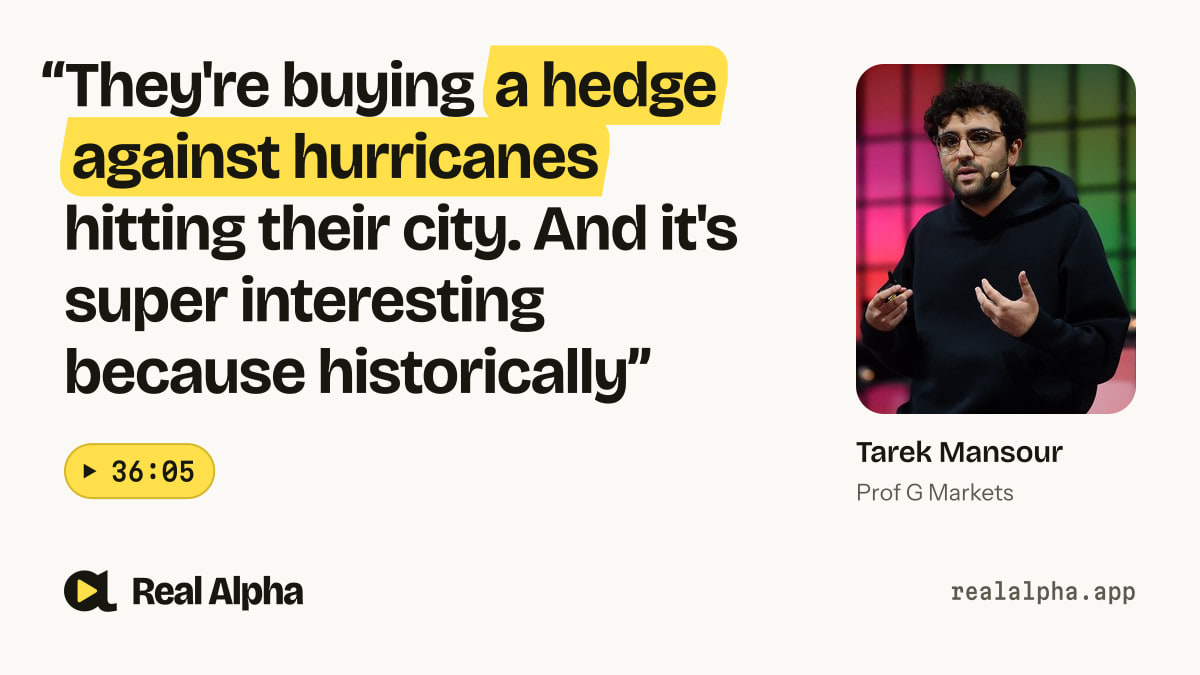
“They're buying a hedge against hurricanes hitting their city. And it's super interesting because historically”
 Tarek Mansourat 36:05 · Prof G Markets
Takeaways
- Hurricane contracts could hedge local property exposure.
- Open bidding can offer an alternative to a single insurer's price.
- Teams also use markets to hedge performance-bonus obligations.
About this segment
Tarek Mansour describes homeowners in the Florida Keys using hurricane contracts as a hedge. He says open-market competition may offer better pricing when insurers and reinsurers pull back.

Tarek Mansour is cofounder and CEO of Kalshi.
Built Kalshi, the federally regulated exchange for event contracts, with co-founder Luana Lopes Lara.

Scott Galloway, Host

Ed Elson, Host
From “Prediction Markets vs. Gambling: Where’s the Line? | Prof G Markets”, Feb 27, 2026. Watch the full episode
Thanks. We'll look at and fix what's off.
Transcript
Transcribed by machine (Whisper) from the episode’s audio, so a word may be off here and there.
- 35:52
whether it's hedging, existing positions. Can you give us some examples of different applications of prediction markets that people have not hit the mainstream yet? One example, you know, and every time around hurricane season, we get a lot of calls from people that live in the Keys and they want to basically buy our hurricane. contract. They're buying a hedge against hurricanes hitting their city. And it's super interesting because historically what they do this is they go to state-regulated insurance, right? They go to the insurance company and the insurance company insures their home against a hurricane. But there's sort of like two issues with that. One, it's an inefficient marketplace. And it's a little bit goes back to how when I started the company, when we were like structuring these trades around Trump
- 36:40
or Brexit, like there's one pricer, which is the insurance company. And you usually don't get a very good price and oftentimes they don't pay out the policy whereas having it in an open marketplace enables competitive bidding right so if ed wants to buy this hedge you know scott or other people can basically be you know competing for that market so you can get price improvement the number two issues for this specific like use cases like insurance companies have pulled out of the keys because they've had a lot of trouble and a lot of difficulty pricing hurricane risk it's been like a very difficult thing for them to put in their balance sheet. Usually they reinsure it with reinsurers, but reinsurers have pulled out of the market. And so this is a very good alternative that people basically go to. And we see this in a bunch of other places, like, you know, the
- 37:26
Fed interest rates, inflation, geopolitical events, bills passing, where kind of regulation could negatively impact an industry or other. And we even see a lot in sports. I mean, sports, the reinsurance or insurance industry for sports is around $10 billion today, $9 to $10 billion today. And same sort of thing applies. So for example, there's a lot of teams that have big bonuses that are due at the end of the season if they achieve certain milestones. And a lot of teams like to insure against those performance bonuses. And they do it oftentimes with reinsurers, but the prices are really bad. And so now that they can basically offload it on an exchange, they get better pricing and they get more efficient pricing. They actually know what the fair price should be for this thing. And that's generally a good thing because it increases
- 38:08
liquidity in the ecosystem for all these types of use cases. We'll be right back. And for even more markets content, sign up for our newsletter at profgmarkets.com slash subscribe.