Free with a sign-in.
The best 13 min of 44
Nvidia Reinstates Jensen Huang, CrowdStrike Agrees to Buy Zscaler for $44B
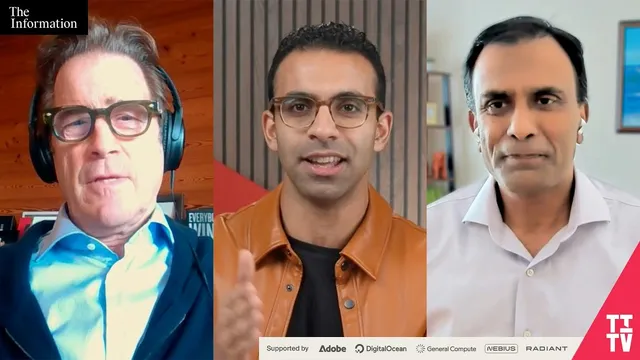
Kimberly Forrest, Ben Bajarin and Jay Goldberg say Jensen Huang’s return helps Nvidia, but governance and customer confidence still need repair.
 The Information's TITV · Akash Pasricha & Kevin McLaughlin with Kimberly Forrest, Ben Bajarin, Jay Goldberg, Brian Halligan, Catherine Perloff and Matthew Hedberg
The best minutes
- 25:36HubSpot charges for heavy AI use, not basic agent access4 min
- 30:08Amazon is buying software that makes AI chips work harder4 min
- 37:25AI attacks are making cybersecurity consolidation more attractive5 min
Also worth watching
- 7:17Nvidia’s board faces pressure to change after Huang’s return3 min
- 21:13Halligan is shifting HubSpot’s focus toward AI interfaces4 min
Skip the opening setup, most of the Nvidia panel’s reinstatement and market discussion, and the CrowdStrike security-layer rundown.
Full analysis · 5 min read
Real Alpha · Nov 23
Jensen Huang returns, Nvidia gains roughly 30%, panel says trust lags
- Nvidia rose roughly 30% after Jensen Huang's return, host Akash Pasricha reported.
- Panelists said his return helps operations, but governance and customer confidence remain unsettled.
- Track board changes, customer signals and whether AI buyers can cover compute costs.
Free with an account
Read the rest of the analysis
6 sections, the 5 other voices it tests Forrest against, and what it means for you. Every episode we cut gets one.
Check your inbox
We sent a link to your address. Click it to finish signing up. Not there in a minute? Look in spam.
or
Signed up before? The same buttons sign you in. The episode, its moments and the transcript stay free.
A 30% rise prices relief, not resolution
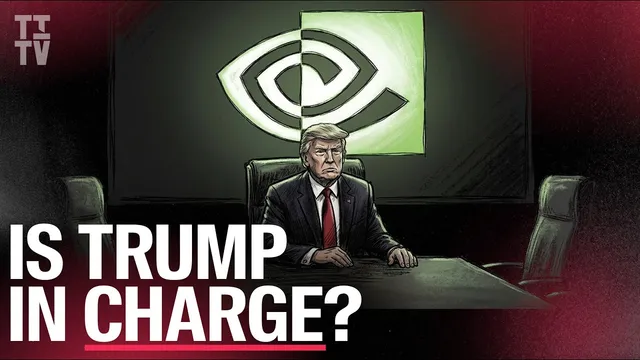
On November 23, host Akash Pasricha reported Nvidia up roughly 30% that morning. The move followed Jensen Huang's reinstatement.
It measures immediate relief, not repaired oversight or restored customer confidence. The share move answers what investors did that morning, not what customers will do next.
Seaport analyst Jay Goldberg called the return probably good for Nvidia, but said nobody came out clean. Bokeh Capital Partners founder and CIO Kimberly Forrest said the board mishandled oversight.
For example, HubSpot co-founder Brian Halligan later cited a 30% Nvidia gain and a 5% Nasdaq gain. That index comparison does not prove a broad response, because Nvidia is part of the Nasdaq.
Nvidia's board said it received input from senior U.S. government levels and believed reinstatement posed no national security risk. But that assurance does not settle board independence, customer perceptions or the oversight questions panelists raised.
The headline market reaction was immediate. Governance work moves on slower evidence, including board composition, disclosures and customer commitments.
Our read
The rise shows immediate relief, but cannot establish repaired governance or durable customer trust.
Customer confidence needs a separate repair
Bajarin separated Huang's operating value from confidence in the company. He said Huang's supply-chain role and dealmaking made him less worried about operations.
But he saw public doubt as a different problem. He said customers may hesitate before committing fully to Nvidia's ecosystem. That was a risk to monitor, not evidence of cancellations or lost orders.
On Bloomberg Tech in November 2026, Mandeep Singh said Huang's return improved the product roadmap and supply-chain outlook. Singh also said neocloud financing pressure remained.
The segment also cited lower neocloud spending estimates and some hyperscaler spending shifting to 2028 and 2029. Those are capital constraints, not proof that all Nvidia customers are pulling back.
The rebound can coexist with neocloud financing pressure and unresolved trust. For Nvidia, customer calls, renewal timing and workload commitments are better tests than one day's stock move.
The distinction matters for procurement. A buyer can keep using Nvidia while seeking assurances, but the episode offered no survey or order data.
“There's going to be a lot of investors who aren't going to increase their confidence level on NVIDIA”
Our read
Treat customer hesitation as a risk to test, not a sales decline the episode did not establish.
The board remains the unresolved governance test
Goldberg predicted board turnover and floated a government-appointed director after the administration's reported role in Huang's return. He did not report an appointment.
Forrest said the board failed on oversight and should keep the CEO and chair jobs separate. She called the board's decision not to restore Huang as chair a step, not a fix.
Gil Luria on Prof G Markets in November 2026 favored an outside CEO to institutionalize Nvidia's supply chain. That prescription goes beyond the panel's discussion of board turnover.
No panelist offered a slate or timetable. That leaves accountability dependent on concrete changes, not the reinstatement announcement alone.
The absence of a timetable matters because leadership continuity was the stated benefit. A board response cannot be measured by whether the CEO simply resumes work.
Our read
Reinstatement settled who runs Nvidia today, not whether its board can credibly oversee him.
Government involvement widens the chip access debate
Goldberg first asked what restrictions Congress might put in place. He then raised whether Chinese companies could access Nvidia compute outside China.
He said he had no idea whether Donald Trump and Xi Jinping had made a deal. His best guess was that a lot of Nvidia shipments would still go to Asia.
In that scenario, he expected chips to serve gray-market third-party data centers through some kind of cutout, ultimately backed by Chinese internet companies.
Take cloud access as a separate enforcement problem. Patrick McHenry on Balance of Power in November 2026 said data-center access is harder to monitor than physical shipments.
That comparison supports concern about enforcement, not confirmation of Goldberg's scenario. The distinction matters to companies using remote cloud hardware rather than imported chips they own.
Nvidia's board disclosed government input, but the episode did not establish its scope or terms. The political dimension remains relevant to oversight as well as chip access.

Our read
The political dimension is not a footnote when chip access and board oversight overlap.
Forrest says model costs challenge AI returns
Forrest's answer was no. She doubted language-model businesses could earn enough to sustain their costs. She described frontier labs throwing hundreds of billions of dollars at every new release.
She said current large language models cost too much. That is her judgment on model economics, not a Nvidia-specific revenue forecast. She offered no customer-level returns or forecast for Nvidia chip demand.
Sarah Frier on Bloomberg Businessweek in November 2026 said Anthropic's enterprise adoption had surged only in the prior year. She said infrastructure spending and the business model still need to prove sustainable.
That is a parallel, not proof that Nvidia demand will weaken. The episode does not quantify inference costs, margins or willingness to pay, so Forrest's warning remains a risk test rather than a settled calculation.
For product and finance teams, compare cost per completed task with value customers actually capture. Usage growth alone cannot show that buyers recover compute spending.

Our read
The share move cannot answer whether AI demand will produce returns large enough to sustain its costs.
Huang's customer role raises succession stakes
Forrest described Huang as Nvidia's strongest customer interface, linking buyers with its technical team. That explains the operating rationale for his return, without answering the board question.
Bajarin also said Nvidia's dealmaking depended on the kind of person Huang is. Those observations show why continuity can matter to partners and customers.
Tobi Lütke on Founders in November 2026 said Nvidia's vision is inseparable from Huang. He distinguished founder-led invention from managerial stewardship.
That comparison makes succession more than replacing a CEO title. The episode offers reasons to value Huang's presence, but no evidence those capabilities have transferred.
Founder dependence can be an operating asset and an oversight burden at once. For a board, dependence cannot substitute for independent challenge or a plan for developing successors.

Our read
Huang may restore an important customer interface, while making independent oversight and succession planning more consequential.
What it means for you
- Separate trust from orders. In account reviews, distinguish leadership concerns from changes in usage, renewals and planned deployments. The panel described possible hesitation, not confirmed lost business.
- Map governance actions. Track board composition and whether the CEO and chair roles stay separate. The panel offered predictions, not a timetable.
- Stress test chip access. Map workloads that depend on cloud access to Nvidia compute. Ask how proposed restrictions could affect them, since Goldberg and McHenry highlighted enforcement limits.
- Model customer payback. Measure AI cost per completed task against customer value captured. Forrest's warning was that model demand alone does not establish sustainable economics.
What to watch
- Whether next week's hearings clarify what happened and what Huang knew.
- Whether Nvidia changes board composition or adds oversight measures.
- Whether Congress changes chip restrictions or enforcement for Nvidia compute accessed outside China.
Send this to the board observer tracking leadership, customer and policy risk.
Watch the minute where the host reports Nvidia up roughly 30%.
Written by Real Alpha from the episode's transcript and the other moments it links, then checked against the transcript. Quotes are the speaker's exact words.
Minute by minute
- 2:31The return leaves reputational questions
Jay Goldberg said Huang’s return was probably good for Nvidia but left the board and government looking confused. Kimberly Forrest pointed to Huang’s role as the link between customers and the technical team. Ben Bajarin said admitted affairs and upcoming hearings left questions unresolved.
- 7:17Nvidia’s board faces pressure to change
Goldberg said the board would likely need changes and raised the possibility of a government-appointed director, given the government’s role and Nvidia’s national-security importance. Forrest agreed the board had failed, while calling the decision not to make Huang board chair a step in the right direction.
- 10:17Customer confidence needs repair
Bajarin said he was less worried about Nvidia’s operations and dealmaking than the questions lingering for investors and customers. He argued that the company needed to explain what happened and how it would prevent a repeat, rather than resume business as usual.
- 12:34China chip flows remain uncertain
Goldberg said Congress was considering different rules for chip sales to China, while enforcement of existing restrictions remained unclear. He expected Nvidia chips could still reach Asian data centers through gray-market channels, ultimately serving Chinese internet companies.
- 14:19AI economics remain unsettled
Forrest argued that investors still needed to see how large language models would generate enough revenue to support frontier labs’ spending. She said the technology’s costs were too high unless the problem it solves costs more than the solution.
- 19:05Halligan questions government involvement
Brian Halligan said government involvement in Nvidia’s CEO decision was a head-scratcher, though he understood it given AI’s national priority and the central role of chips. He noted Nvidia’s stock was up 30% and the Nasdaq was up 5% on the news.
- 21:13HubSpot repositions around AI harnesses
Halligan said he thinks of HubSpot as infrastructure accessed through its Breeze harness and through chat and cloud. He said the company rolled back its customer-relationship-harness branding because people outside Silicon Valley found the term unclear. He described the web app as maybe 70% of company energy and new work as 30%, and said he wanted to flip that balance.
- 25:47HubSpot prices heavy agent use
Halligan said customers with a HubSpot seat could access it through chat or cloud without extra charges for normal use; heavy use would draw credit charges. He said tens of thousands, maybe hundreds of thousands, already use HubSpot this way, and contrasted the approach with competitors’ enterprise-tier or add-on requirements.
- 29:37Decart software could boost AWS chips
Catherine Perloff said Amazon was buying Decart’s chip-optimization business and bringing on its founders and engineering team; reports put the deal at $7.5 billion. The software helps models run faster on the same hardware and has worked with Trainium, Nvidia and Google TPUs. Perloff said Anthropic and Nvidia had also reportedly shown interest.
- 34:33Zscaler adds network security
Matthew Hedberg said CrowdStrike is strong in endpoint, cloud, identity and AI-based security, while Zscaler adds network security. He described Zscaler’s Zero Trust and SASE products as a switchboard routing network traffic to make secure connections among users, agents, applications and data.
- 36:56Security buyers may favor platforms
Hedberg said CISOs value specialized security products but face too much noise from managing them. He argued that consolidators can reduce spending and improve telemetry, and said faster AI-based attacks make broader platforms more useful. He expected bundling to accelerate.
- 39:14Deal execution remains uncertain
Hedberg said Zscaler was growing more slowly than CrowdStrike, which contributed to investor concerns, though he considered the multiple reasonable. CrowdStrike’s CFO expected revenue growth, operating-margin and free-cash-flow-margin synergies to show accretion in the first fiscal year after closing. Hedberg said the deal might not close until the middle to late part of next year and that keeping Jay Chaudhry would be valuable.
Published Nov 23, 2026.
Transcript · 32 min read
The Information's TITV, hosted by Akash Pasricha and Kevin McLaughlin, with Kimberly Forrest, Ben Bajarin, Jay Goldberg, Brian Halligan, Catherine Perloff and Matthew Hedberg.
Transcribed by machine (Whisper) from the episode’s audio, so a word may be off here and there.
welcome everyone to the information's ti tv my name is akash pasprecha it is monday november 23rd jensen huang has been reinstated as NVIDIA's ceo the stock is roaring we are going to bring on and expert panel to break down everything we know and everything that this means. We also separately have a conversation with the co-founder of HubSpot, Brian Halligan, who has returned to the CEO seat after five years. We're also bringing on our Amazon reporter to discuss the company's acquisition of technology and talent from AI startup Descartes. And we're going to wrap the show with some more big news.
CrowdStrike is buying Zscaler for nearly $44,000. billion dollars it is a slow news day and it's going to be a busy show so let's get right on into it NVIDIA has reinstated jensen huang as ceo president and a member of the board the company's board said it quote received input from senior levels of the united states government and that it is confident that the reinstatement doesn't pose a national security risk the stock is roaring this morning, up roughly 30%. Here to break it all down is our expert panel, Kimberly Forrest, founder and CIO of Bokeh Capital Partners, Ben Bajarin from Creative Strategies, and Jay Goldberg from Seaport Research.
Welcome to the three of you. It's great to have you here. Okay, Jay, I'm going to start with you because you are the NVIDIA bear and it's not looking so good this morning. What is it, 34% up today? What do you think? Like, well, it hit my price target a couple days ago, so I'm all right. Look, I mean, I've never been anti-Jensen, right? I've been very careful to say that. I think he's clearly got immense talents. He's probably the best entrepreneur the world's ever seen. He deserves credit for that. It's probably good for NVIDIA that he's back, but nobody comes out of this looking good. Nobody comes out of this looking clean.
Read the whole transcript
let's not forget um okay so maybe the u.s government is saying he did not have an affair with a spy but he did have an affair with a with a customer and multiple direct reports so he he doesn't come out of this looking perfectly clean the board looks flip-floppy the u.s government looks very confused i'm glad he's back i guess but like this is you know right All right. Kim, let's go to you. What are your thoughts on all this? So, you know, it does not look good, but this is better than it looked on Friday. Let's put it that way. I think what Jensen Wong does best now, other than, you know, he built a company 33 years and kept it going 33 years.
But he is the best customer interface or, you know, the interface between the customer and his tech team. And I think that's really what he does well. And yes, he is a AI cheerleader at every conference. But I think that's really why the board agreed to have him back. Yeah, it has a lot of hair on it. But, you know, Silicon Valley, I think, great. Look at OpenAI and their kind of kerfuffle around that CEO position as well. Right. Okay, so Ben, I want to come to you. So, I mean, look, the big question is really what happened? what changed between this morning and when uh harvey opened the conference call last week saying we we do not have any intention to reinstate jensen and i mean we got some color this morning with trump on cnbc he basically suggested i mean he was very much uh Involved in the decision in some capacity. We, of course, know that Silicon Valley elites were involved in the petition and, you know, they're trying to get a 50% of votes and stuff like that. So, I mean, Ben, what do we know about what happened? Does it surprise you? What do you make of the way in which this happened?
yeah i mean you could say you're surprised you could say you're not surprised i mean there's been conversations we've had across the board with people who have a high degree of emotion on both sides of this debate the those that are happy this happened those that are very angry that this happened um i mean i think there's two things right there's the hearings that's coming up next week and i think everybody just wants some clarity on what was accused right there's things that we know there was affairs that happened that he admitted to that's obviously not a great look i think we all agree with that. And now there's a process of how does this get resolved? Is there reformation at the governance level as things they've talked about? And then what clarity comes up, right? I'm not surprised that the board said what they said. I mean, if you think about it, why would they insinuate that they would consider anything with Jensen and knowing that that would impact stock price on that call? And so I think they just have to check all of the boxes that they're doing. And now it came back to, there was obviously involvement of our government.
And I think once you saw the changing of the tune of government officials over the last week, over the weekend, and then Trump tweeting yesterday, it felt like this was relatively inevitable. But the degree that- What was the tweet yesterday that he put out? Just saying that he hopes he comes back. He's great for America and he's great for NVIDIA. Right. You know, he was relatively quiet on this whole process. But again, you noticed- And you noticed last week that there was distinct change of administrative officials' tunes as to what they knew, what they thought, things about NVIDIA. So I do think there were signs, right?
If you just think of Kalshi, right, coming off the end of next week, there were signs. But I do think, again, there needs to be some clarity. I don't know how much we're going to get, but I don't think you just go forward business as usual. How these answers come out, I'm not sure. But I think the stock, the market, investors, the business needs that.
“The board, I think, should probably start cleaning up their resumes and updating their LinkedIn profile because I think there's going to have to be change there.”
right um i mean uh ben i i'm sort of i'm curious about your comments here that it's hard to go back to business as usual when you've had this do you think that the company can do that what does this mean for relationship with customers employee morale uh the deal machine that jensen you know was very much in charge of what do you think from an operational perspective Yeah, I'm a little bit less worried about that. I mean, again, as Kim said, right, he's critically important to the supply chain. I mean, you just don't do the kind of deals that you do without being the type of person that Jensen is, to be honest with you.
And that part I'm not worried about. It's more the public perception. It's the doubt. It's the questions that linger out there, which is, again, good, bad, or indifferent going to flow to the market, right? There's going to be a lot of investors who aren't going to increase their confidence level on NVIDIA, despite, you know, a handful of notes today. And I think that's a relevant position, right? Until some of this gets resolved, then at least you get some answers on a go forward basis as to what happened, how do you make sure this doesn't do again? You know, I think there's going to need to be some clarity on how much he really knew, right? That's going to have to come out of this. And that part just needs to put issues to bed. Because again, there are, if there is a a brand or sentiment hit as a whole right you have customers and you have an ecosystem that is dependent on NVIDIA so national security sovereign ai points aside none of that changes right points aside to to what they're doing with their oem customers as well as the market if there's a concern you might you might be a little bit more hesitant to go full board right with them as a customer buying their ecosystem as before and so i just think you know this this has
to have some clarity i don't again i don't think we're going to get the answers anybody wants this is why a whole slew and investigative journalism is going to exist and have a lot to do for the next six months and a year but but again you you can't just show up and be like nothing happened right so there has to be a communications play here that brings whatever clarity we're going to get in order to try to set some of the market at ease but again i don't believe we're going to get all the answers that we want yeah i mean uh jay one thing that i'm sort of thinking about is how this impacts the relationship uh between the us and china on the chips ecosystem we of course know that trump uh met with xi jinping uh over the weekend a couple days ago i know and um you know we know that NVIDIA said that they're uh steering clear of of now some of the 200 sales on its earnings call. Colette said that. So where do you think the US-China story goes from here with Jensen back in the saddle? So I think the first question I want to know is what kind of restrictions Congress is going to put in place. There are multiple bills in front of Congress now, different ways in which to regulate chip sales to China. I have no idea
if Xi and Trump cut some kind of deal. It doesn't seem like it. I think Xi is very reluctant to accept the imports of a large number of NVIDIA chips into China. But at the same time, the question here has always been to what degree are Chinese companies able to access compute outside of China on NVIDIA chips? We had a whole bunch of new BIS rules last week. Are those going to be enforced now? They were barely enforced before. so it's it's very easy for me to see this administration just saying don't don't go look at those um so my best guess is we still see a lot of shipments to to asia from NVIDIA that are used in gray market third-party data centers with some kind of cutout but are ultimately backed by chinese internet companies it's messy it's complicated yeah kim uh so i mean look last week the whole narrative was that the this was sort of the correction that the ai trade um was people were sort of expecting on it i mean i wonder what you think this means now for the correction that we saw i mean every index index you look at this morning is up so what it's like it never happened no not really i mean if you think back oh a couple of months ago which seems like a lifetime maybe um you know we started to come off the boil of the ai trade and i think
it's a lot of reasons but the most essential thing is how do large language models make money and are they ever going to make enough money to keep you know being the frontier labs and throwing hundreds of billions of dollars at every new um release and i think the answer is no on that and i think you know, investors want to know how do they get their money back. And it really is that easy. I've seen this happen over and over again, that people fall in love with the technology and don't make sure that the problem that is being solved by the technology costs less than the actual problem, right? That is the golden ratio of financial success with respect to a technology that, you know, just lives on and makes everybody happily ever after. And that really isn't happening right now. Large language models cost too darn much money. That's the problem. Right. Okay. And I mean, Ben, last question for you. I mean, I do want to go back to what you were saying. The perception issue is kind of interesting. I mean, I guess maybe what I'm getting from you is this will have a business impact because I'm sort of trying to understand what you were saying earlier, that it's business as usual, but there has to be a calm display to
keep the customers in check. So I guess where you've landed on this is that, no, there needs to be a strong communications message put out for the company to remain in its strength position. Yeah. I mean, I think, again, your customers need as little risk as possible, right? And I think that's again if you just run this through like where are your risks at there are risks with a company that has any negative perception or aura despite right Jensen coming back which again right I think everybody would agree from a technology and investor standpoint or market standpoint is good right but I think there just needs to be more questions that are answered so that the ecosystem has the confidence that they had prior. Because the reality is, again, things changed. It is not the same situation that we had prior to any of this. And so when a change happens, there needs to be some reconciliation of that in order to get back to where you were. And so there's going to have to be, again, whether he comes out and does a comms tour, an apology tour, a bunch of media right explaining these things like there's going to need to be some clarification you know him speaking you don't just get up right at the next conference or ces and start talking like nothing's
happened and so i i think they know this i think this is again right they've got good comms people they've got pr this is what those folks do for a living they recognize that there's a public perception issue and what you want is to get back to as close to where you were before and so how that strategy enacts itself is going to be necessary, again, before confidence can be back where it was. Great. Okay. Well, I want to thank you all for coming on. I'm sure we'll have more details by tomorrow, but that is Jay, Ben, and Kim here on TITV. Okay. While we're talking about leadership shakeups, HubSpot co-founder Brian Halligan is back as CEO after five years away as the company looks to reinvent itself for the AI era.
Halligan has promised a, quote, re-founding of the company. Joining us now is Brian Halligan alongside the Informations Enterprise Software reporter, Kevin McLaughlin. Kevin, over to you. Thanks, Akash, and welcome, Brian. Thanks for having me, my man. Thank you. Yeah, yeah. So you recently returned to HubSpot as CEO, the company you co-founded more than two decades ago. So it's been five years since you were in the CEO role, and obviously the tech industry has changed a lot since then. So I have a lot of questions for you around enterprise AI and HubSpot's approach to enterprise AI. But first, we have to kind of address the big story of today.
And I just wanted to get your thoughts on NVIDIA's decision to reinstate Jensen Wang as CEO. I know that HubSpot, you buy access to NVIDIA servers through cloud providers. So you're not a direct customer of NVIDIA, or correct me if I'm wrong, but you're still in the ecosystem. So what are your thoughts on how Jensen's return could affect enterprise AI and adoption of it? Well, not a lot of slow news days for you recently, Kevin, huh? This and the Anthropic thing is pretty remarkable. I just can't believe the drama that took place over the last week. I always think of enterprise software as being kind of boring, but given what happened with the spy and all the things, and he got fired and brought back, it reminds me a lot of Thanksgiving a couple years ago when all that drama went down with Sam Altman.
Does it remind you of that? Oh, yeah. And it's the same timing. Anyway, I don't have a lot of comments on it beyond, like, look at the stock market. I mean, their stock was up 30% on the news. NASDAQ was up 5% on the news. it's hard to comment on him morally, but clearly the AI ecosystem is a giant fan of his and the economy overall is a giant fan of his. So it's an interesting chain of reaction that's happened today. I think one question we're going to be asking every tech CEO is there are reports that the White House was involved with Jensen's reinstatement at some level. And I just wanted can you talk at all about the implications of government being involved in the decisions here of NVIDIA's management? I saw that too. I've never been a giant fan of the government being too involved in this kind of thing. And it's fascinating what's happened here. I sort of get it though.
It's AI is a national priority and their chips are right in the middle of it and all of that. So I sort of get it, but it's a head scratcher to me how involved the government is in all of this stuff that's going on these days. Okay, great. Well, let's dive into HubSpot.
“I think of HubSpot as infrastructure and these harnesses use that infrastructure.”
Now, one of the things that a harness does is it manages the context of data, right?
I mean, we've been writing a lot this year about context. In fact, I personally think that context might be one of the biggest stories in enterprise AI this year because every software Vendor out there is doing something with regard to either charging for context or talking about charging for context. And it's obviously, in some ways, the crown jewels for every software provider. HubSpot has gone through quite an interesting journey this year around context, and specifically, third-party agents that customers want to use with their data, where it is tapping into context. Back in, I believe it was February, your predecessor, Yamini Rangan, said that HubSpot's not a place where people can just take out data.
And I think she was referring to the increase of third-party agents and accessing data. Where do things stand now?
“If you're whaling on HubSpot and you're burning a ton of tokens through HubSpot, we start charging you for credits”
That was Kevin McLaughlin and Brian Halligan on TIT.
Amazon is making a big move in the AI chip race, finalizing a deal to buy technology from AI startup Descartes and bring on its founders and engineering team. Reports put the value of the deal at $7.5 billion. The goal is to make Amazon's homegrown AI chips faster and more efficient as it competes with NVIDIA. Joining me now to discuss this is our Amazon reporter, Catherine Perloff. Catherine, welcome back to the show. It's great to have you here. Hey, Akash. Can you help us understand what exactly is Descartes and why is Amazon buying it?
“this part of its business helps chips run more efficiently. So it helps get more work out of each chip.”
CrowdStrike is buying Zscaler for nearly $44 billion in an all-stock transaction. It is one of the biggest, if not the biggest, cybersecurity acquisition that we have seen. Here to break it all down is Matthew Hedberg, software research analyst at RBC Capital Markets. Matthew, welcome to the show. It's great to have you here. Thanks for having me on, I'm going to talk. So, Matt, can you just remind us, what are the two different layers of security that CrowdStrike and Zscaler play in, and why does this acquisition make sense?
Sure. So, historically, and if we look at it sort of pre this proposed deal, CrowdStrike is really big in endpoint security, cloud security, identity, AI-based security. And so adding Zscaler brings them into network-based security, which was a huge element that they just couldn't address historically. The two companies had a partnership that worked well, but they're effectively bringing together the entire cyber landscape, you know, under one umbrella with this transaction. Okay, and just to simplify it again, because, I mean, cyber is, every time we have folks coming on, I just want to make clear what each layer is.
So when you say endpoint, we're talking about the device security, basically. When you say cloud security, we're talking about the, you know, all the cloud services having security affiliated with that. The network security that Zscaler plays in, I mean, how, what is that in relation to the devices and the cloud? Yeah, it's a good question. So when we think of, and so their core product, you can call it Zero Trust, you can call it SASE. there's lots of different terminologies for their network-based product. But effectively, I think about it as a digital switchboard. All inbound and outbound traffic from a network goes through the Zscaler network. And so it really becomes, when we think of the broad pillars of cyber between endpoint, identity, network, SASE-based technology, and then cloud and data security, it really does provide that connectivity between an agent and a user to another application, another piece of data. Think about it as a network-based switchboard that's making all of these secure connections.
Okay. So let's get into sort of where you think this deal goes from here. I mean, you know, one question that I always have with these big companies getting bigger is how much customers worry about vendor concentration. And maybe they liked having different options, certainly with security. I mean, like, you know, you could totally see a world where having a few different security providers may be better, but then also maybe it's riskier.
“the big value prop for these consolidators is help us do more with less.”
That does it for today's show. A reminder, we are on the stream Monday through Friday at 10 a.m. Pacific, 1 p.m. Eastern. If you can't make it then, episodes are available on theinformation.com, on our YouTube channel, or wherever you get your podcasts.
Make sure to follow us on social media on X, on Instagram, on TikTok, and on LinkedIn. I am already excited for our next show tomorrow. Have a great rest of your Monday. It's a busy Monday. Bye-bye for now.