Full episode · 22 min
AI Startups Locked Out of Compute in 6 Months | Evan Conrad
Evan Conrad says AI startups are being priced out of compute as lenders demand creditworthy tenants or huge upfront payments.
 MTS · Theo Jaffee & Sophia Dew
- Evan Conrad is co-founder and CEO of SF Compute.
The best minutes
- 0:49Compute prepayments are pricing startups out of clustersPro pick 5 min
- 6:39GPU clouds face correlated customer and financing risk3 min
- 16:04SF Compute aims to make GPU rights usable as collateralPro pick 4 min
Also worth watching
- 10:20Compute access may require startups to raise far more capital2 min
- 13:19A small GPU cluster may be hard to resell after its tenant fails3 min
Skip the roughly two-minute sponsor roll after the interview and the brief Lovable sponsor read.
Summary · 2 min read
Evan Conrad is co-founder and CEO of SF Compute. The company operates GPU clusters without owning the hardware and is developing a market for GPU-use rights that lenders could accept as collateral.
Conrad argues that AI startups already face growing barriers to buying compute, as lenders demand investment-grade credit or prepayments of 30% to 100% for long-term GPU contracts. He says uncertain resale values and reliance on cloud operators create correlated risk, which can steer capital toward the largest firms and leave smaller startups behind. Conrad advises startups to raise as much as possible or partner with a creditworthy company, while SF Compute is trying to make GPU-use rights usable as collateral. He says that could reduce upfront payments, while simply building more compute may not solve the financing problem.
A Pro write-up, open to you here. Try Pro free for 7 days
A Pro write-up. The rest of the summary and the minute by minute are in Real Alpha Pro; the episode, its moments and the transcript stay free.
Read it with Pro, 7 days freeMinute by minute
- 0:49Compute access depends on credit
Conrad says many startups already struggle to buy compute because lenders want investment-grade or near-investment-grade borrowers. Since lenders are unsure what GPU clusters will be worth later, they may require 30% to 100% prepayment on a three-to-five-year contract, a burden startups may not be able to fund.
- 3:58Creditworthiness could split the market
Conrad says companies that get creditworthy enough to secure compute can use it to generate returns and become more creditworthy. He expects this cycle to favor large players and consolidate the industry unless financing changes.
- 5:43New Blackwell clusters are pre-sold
Conrad says some Hopper and Ampere capacity remains available, but Blackwells are sold out. Clouds often built Hopper clusters before finding buyers; for Blackwells, customers generally signed contracts first, leaving most new clusters spoken for.
- 6:39Lenders fear correlated downside
Conrad says lenders may worry that GPU clouds will struggle to find future customers as investment-grade labs and hyperscalers build or operate compute themselves. In a downside scenario, clouds could be left with less creditworthy AI-lab customers that fail, though Conrad says he is not predicting that clouds will suddenly blow up.
- 10:59Startups need capital or partners
Conrad advises a Series A startup to raise as much as possible, saying the bar could be around $1 billion, or to partner with an investment-grade company that can co-sign a lease. He says investors could also buy compute, and warns that venture portfolios may consolidate or be wiped out if the debt problem remains.
- 12:23More compute alone will not solve it
Conrad says building more compute could make the financing problem worse. He thinks lenders need better collateral and more confidence that clusters retain value; SF Compute aims to provide backup operations so lenders can rely on rights to GPUs rather than only on the hardware and its operator.
- 14:33Small clusters risk being stranded
Conrad says new clouds may build five-megawatt clusters and sell them to tenants that later fail. Large investment-grade customers such as Microsoft, Google and Anthropic may not want clusters that small, leaving the equipment difficult to resell.
- 16:04SF Compute makes GPU rights financeable
Conrad says SF Compute operates clusters it does not own and is building a market for time-bound rights to use GPUs, which lenders could use as collateral. Customers set the price they are willing to pay, while funds or data-center owners can own the assets and SF Compute provides cluster operations.
Published Oct 28, 2026.
Transcript · 17 min read
MTS, hosted by Theo Jaffee and Sophia Dew, with Evan Conrad.
Transcribed by machine (Whisper) from the episode’s audio, so a word may be off here and there.
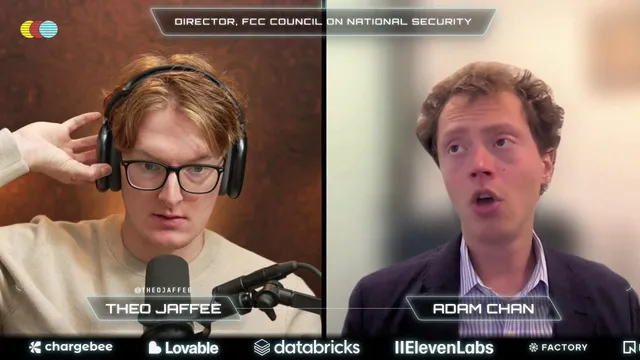
Now it's not like the first month up front. It's like 100% prepayment, somewhere between 30 and 100%. We've seen 100%, meaning that as time goes on, you are asked to pay for a three to five year contract on a supercomputer with all the cash up front or a large portion of the cash up front. And that's a death nail for startups. That's one in which startups don't get to get compute because they will go back to their venture capitalists and they'll ask for more money and they won't necessarily get that more money. And we are back. We are live with Evan Conrad, who is the co-founder and CEO of SF Compute.
He just wrote this really interesting and viral article called The End of Startups, The Coming Credit Crunch, which was, you know, the sentiment behind this article was also posted about by Elon and many other people. And it starts with this very provocative claim. Within the next six months, most AI startups will not be able to buy Compute.
Read the whole transcript
out like is there no way if you're a startup to get like old like hopper or like ampere NVIDIA chips if you want them you can you have to like do you have to like buy 5090s on ebay or something like um you can still get some hopper and you can still get some ampere um but if you want black wells yeah they're sold out um in part because the black wells weren't made until you ordered them And so the only one, nobody, very few people speculatively built Blackwells.
Lots of people speculatively built hoppers. Built or bought? Built. So, for example, in hoppers, what happened is the cloud builds a cluster. Then the cloud sells the cluster. That's not how it worked for Blackwells. Blackwells, the customer signed a contract. Then the cloud built the cluster. And so every Blackwell cluster, for the most part, is spoken for. So if you want a new cluster, it's a new cluster that you're going to get.
“The Frontier Labs, the Hyperscalers, the people who have investment-grade credit want to do the thing you're doing, and will simply try to disintermediate you if they have the opportunity to.”
And through Lovable's MCP server, you can create and deploy your project directly from the agents you already use. Turn ideas into software people love with Lovable. Lovable.dev. Now,
“I think you should try and raise like a billion dollars.”
or they will convert into basically GPU clouds.
So how does this get solved? Just manufacture a lot more compute? That doesn't necessarily solve it. It kind of makes it worse. um so um over time um you can build up the credibility that these things have value um like the the gpu clusters have value and that these companies are making money over a long period of time so i think like in four years this may all be resolved um because um anthropic will be ripping and i don't know maybe we'll have like a cure for cancer or something and so uh we'll all feel much better about it. But until then, you're going to get, like, there's just a lot of risk in the system. And we're being asked to do more risk in the system. So the way that we
“You don't have the ability to sell that cluster to anybody else”
“we run a market on top of the GPU clusters that we operate and this allows us to create this piece of paper that says I own the rights to these GPUs”
11labs, AI that communicates at human level across every channel and modality. 11labs.io slash mts. Scale your startup on Neon. Millions of developers and startups have already chosen Neon for their back end. Start on the free plan or get up to $100,000 in credits for your startup at neon.com slash MTS. Special thanks to our sponsor Kong, the AI connectivity platform. Connect APIs, LLMs, agents, and systems with serious security and governance. KongHQ.com. Finally prove what your AI investment is worth with Lairdyn.
Head to Lairdyn.com today to start measuring your AI's bottom line. MongoDB, trusted to run critical applications by 75% of the Fortune 100, the intelligent data platform for the era. Apply today for access to up to $15,000 in Atlas credits, dedicated technical support, and exclusive events and go-to-market opportunities. MongoDB.com. Chargebee, billing and monetization infrastructure for the AI era. Chargebee.com. Blitzy, autonomous software development for enterprise code bases ship 5x faster blitzy.com adquick make your brand a billboard out of home advertising as easy to scale as digital adquick.com arena measuring ai performance in the real world arena.ai support for the show comes from vcx the public ticker for private tech the u.s stock market started history's greatest wave of wealth creation from factory workers in detroit to farmers in omaha anyone could own a piece of the great American companies. But today, our most innovative companies are staying private longer, which means everyday Americans are missing out. Until now. Introducing VCX, a public ticker for private tech.
Visit getvcx.com for more info. That's getvcx.com. Carefully consider the investment material before investing, including objectives, risk, charges, and expenses. This and other information can be found in the Innovations Fund prospectus at getvcx.com. This is a paid sponsorship. You