Full episode · 2 h 11 m
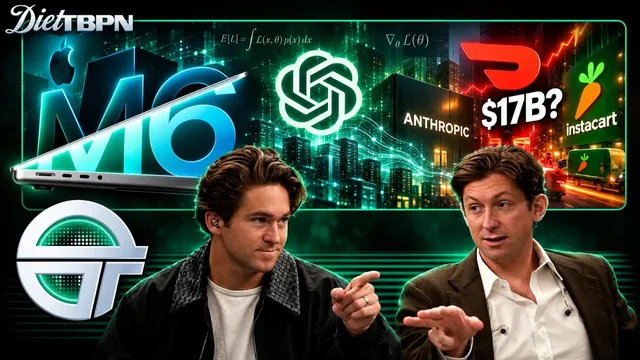
Technology Is Back, Gavin Baker Live, Math Solved Again, Anduril Laptop, DoorDash + Instacart
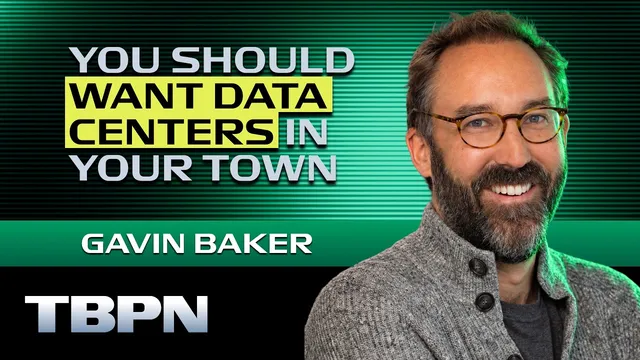
Gavin Baker argues that enterprise AI adoption remains early and compute demand will stay strong as new capacity comes online.
 TBPN · John Coogan & Jordi Hays
- Miles Arnone · Co-founder & CEO, Re:Build
- Rahul Sengottuvelu
- Gavin Baker · Managing partner & CIO, Atreides Management
The best minutes
- 1:21:41Anthropic's enterprise revenue is more diversified than critics suggest6 min
- 1:33:23Compute demand is keeping future GPU capacity expensive8 min
- 1:03:01Lean production can matter more than adding factory robotsPro pick 5 min
Also worth watching
- 1:55:36Cloud cash flow could finance more of the 2027 AI buildout4 min
- 1:08:19Slate keeps truck costs down with a single-SKU factory2 min
- 1:17:38Ramp gives finance teams controls over coding-agent spend3 min
- 36:07Anthropic founders can appoint successors to voting control3 min
- 1:52:22Baker's rare-earth bet targets chemical refining3 min
Skip the Christmas-countdown opener, laptop and MacBook news, math-discovery coverage, China AI market discussion, and dating-show and delivery segments.
Summary · 5 min read
Miles Arnone says Rebuild was founded in 2020 to rebuild U.S. industrial capacity; it now has about 2,000 people across 15 facilities. Rahul Sengottuvelu is Ramp’s CTO and discusses Inspect, a coding tool Ramp first built for its own engineering team. Gavin Baker is managing partner at Atreides Management and discusses AI adoption, compute economics and investment.
The hosts discuss new technology and industrial capacity, including Anduril’s planned U.S.-made laptop and the challenges of restoring domestic manufacturing. Rebuild’s Miles Arnone describes its approach to building U.S. manufacturing capacity, while Ramp’s Rahul Sengottuvelu explains how Inspect combines coding agents with company-wide controls on AI spending. Gavin Baker says enterprise AI adoption is still early, Anthropic’s customer base is more diversified than some critics suggest, and demand for compute remains tight into 2027. Baker also points to potential AI benefits in drug discovery and expects cloud growth and cash flow to help fund future AI infrastructure.
A Pro write-up, open to you here. Try Pro free for 7 days
A Pro write-up. The rest of the summary and the minute by minute are in Real Alpha Pro; the episode, its moments and the transcript stay free.
Read it with Pro, 7 days freeMinute by minute
- 1:35Anduril pitches a U.S.-made laptop
Anduril and Qualcomm announced Blue Chip, a laptop planned for 2027 for government, defense, first responders and public safety users. Palmer Luckey argues that countries need to build computers to secure them. The hosts note that more than 90% of prototype component procurement costs come from U.S. or allied suppliers, while displays, memory and chips remain supply-chain challenges.
- 17:09Apple’s laptop design feels familiar
Apple unveiled a 14-inch MacBook Pro with an M6 chip, a 12-core CPU, 30% faster graphics and 24 hours of battery life. The hosts say its design looks largely unchanged and discuss a possible touchscreen model. They also debate whether Apple’s foldable Duo, shown running a desktop-style screen but without a keyboard, qualifies as a laptop.
- 22:42OpenAI challenges a computer science assumption
OpenAI announced results in mathematics, computer science and physics, including a purported challenge to the exponential time hypothesis. The proposed 3SAT algorithm was checked in Lean and is under review by researchers, including people who proposed the hypothesis. The hosts say that if the result holds, parts of theoretical computer science may need revisiting, but it does not solve P versus NP; they also speculate that labs may keep commercially valuable discoveries private.
- 36:07Anthropic plans founder succession
A report says Anthropic’s founders can name confidential successors to their voting power, with the candidates approved by the other founders. The hosts describe the arrangement as planning well beyond the founders’ tenure. They speculate about possible future roles for a model but say they do not know how the internal decisions are made.
- 43:24A startup dating show goes viral
The hosts say Sarah and Vivian’s AI startup dating show uses deliberate rage bait. They cite a clip with a million views, 450 likes and 160 comments, and say its San Francisco-focused conversation may land differently with viewers outside the tech world. They wonder whether later episodes will draw on more personal stories or shift toward news.
- 47:52DoorDash pursues Instacart
Reports say DoorDash is in advanced talks to acquire Instacart for around $17 billion, with a deal potentially closing that week. The hosts say grocery and prepared-food delivery could complement each other and help DoorDash compete with Uber. They also question whether regulators would approve the deal.
- 54:16Harley’s electric motorcycle struggles
LiveWire shipped 358 electric motorcycles after predicting sales of more than 100,000 in 2026; its shares were down 62% since the start of the year. The hosts say electric motorcycles may not fit Harley-Davidson customers who value engine noise. They also discuss riders’ claim that noise can alert drivers to a motorcycle nearby.
- 59:33Rebuild scales U.S. manufacturing
Arnone says Rebuild was founded in 2020 and now has about 2,000 people across 15 facilities; it has bought 13 businesses and built additional ventures. He says offshoring can weaken a company’s ability to design products and expose its intellectual property. On drones, he says rare-earth magnets remain a supply-chain challenge; U.S.-made small drones can cost $5,000 to $8,000 versus under $2,000 for DJI, while Rebuild targets a $1,600 drone core.
- 1:06:27Lean methods shape the factory model
Arnone argues that robots often address only a small share of production costs, while lean methods can reduce waste through steady improvements. He says Rebuild helped start Slate, which is developing a sub-$25,000 electric pickup built around one product and a low-cost plant. Rebuild supplies components to Slate; Arnone says Rebuild’s $2.1 billion fundraise was led by JPMorgan Chase and General Catalyst.
- 1:12:34Ramp builds a shared coding agent
Sengottuvelu says Ramp built Inspect for its own engineers and designed it to work across models, codebases and teams. Sessions are public by default, can continue through shared links and work in Slack. Ramp connects Inspect to its routing and finance tools so teams can track model, department and token spending and set controls.
- 1:20:56Baker sees enterprise AI adoption as early
Baker calls Anthropic’s S-1 an upside surprise, citing its reported economics and a customer base he considers diversified. He says 250 accounts spent more than $10 million and roughly 11,000 to 12,000 spent more than $100,000. He argues that enterprise adoption remains early and says open-weight inference providers are also growing quickly.
- 1:32:57AI compute demand extends into 2027
Baker says both spot and future GPU capacity are getting more expensive, with companies struggling to secure clusters into 2027 despite announced supply growth. He argues that experienced operators are better positioned to bring GPUs online and says some providers locked in long-term contracts below current market prices. He sees prepayments, spot-market exposure and faster-to-deploy systems as ways to finance and bring capacity online more effectively.
- 1:42:36AI may accelerate drug discovery
Baker says AI has helped identify a potential use for an older drug against a rare disease affecting about 10,000 children a year, though he does not share his friend’s story. He argues that the AI industry should communicate its benefits more clearly and points to power and industrial capacity as important to reindustrialization. He says Atreides tracks energy and rare-earth refining, though these are not major parts of its portfolio.
- 1:55:36Baker expects broader AI financing
Baker says mutual funds and sovereign wealth funds are among the capital sources that could support AI’s next phase; he argues that public listings by SpaceX and Anthropic could free mutual-fund capacity for private investments. He expects cloud revenue growth and cash flow to finance more of the 2027 buildout, while acknowledging that the outlook could change. He also supports giving people a direct stake in companies rather than relying only on foundations.
Published Oct 27, 2026.
Transcript · 1 h 41 m read
TBPN, hosted by John Coogan and Jordi Hays, with Miles Arnone, Rahul Sengottuvelu and Gavin Baker.
Transcribed by machine (Whisper) from the episode’s audio, so a word may be off here and there.
You're watching TVPN. Today is Tuesday, October 27th, 2026. Look at that angle. Go back to that other angle. The temple of technology, the fortress of finance, the capital of capital. We got some, we had a math breakthrough. We had a math breakthrough. We have been trying to calculate, it's really, really hard, the number of days till Christmas. So you take the date of Christmas, December 25th, 2026, and then you subtract the number of days, October 27th, 2026. And it's difficult because the different months have different numbers of days in them. Some have 30, some have 31. So it's a complex math equation, but we had a breakthrough.
And we have a countdown to show you the results of this mathematical finding. They're saying Fields Medal for this. They're saying huge development, 58 days until Christmas. and nikesh var is 58 years old doesn't look a day over 40 personally but i don't know um anyway let me tell you about ramp.com time is money save both easy to use corporate cards bill pay accounting and a whole lot more all in one place we have ramp cto coming on the show at 12 10 we also have gavin baker from atreides management coming on at 12 20 the baconator the bacon eater the baker nater i don't know and the big question on everyone's minds yes as he breaks his silence yes is he generally bullish okay we're gonna get to the bottom of it we're gonna get to the bottom find out no it's uh it's great uh so yeah i mean obviously you can watch the show yesterday for the anthropic stuff that's what's on the cover of the the wall street journal and financial times um but there's a couple other stories that are interesting so uh We're going to continue covering what's going on in the market, but this new project from Palmer Luckey over at Anduril is very, very interesting and very fun.
It's a new laptop. So Anduril and Qualcomm just announced a new American-made laptop called Blue Chip. The first laptop they're saying is going to be available in 2027. That's right around the corner. They're going to build it for the government, and so you're not going to be able to get one of these personally, unfortunately. But hopefully there's a consumer product in the works eventually, because increasingly, with AI and stuff, it's pretty doable to use Windows to go back and forth between Windows Mac, even throw in some Linux. All these different OSs are very fungible, mutable. You can sort of change and do whatever you need to.
Read the whole transcript
If you need a particular piece of software, like I always had this where on PC, Windows has amazing window management, kind of in the name. but if you have two screens you can just hit the windows key and then left and it'll put it perfectly on 50 of the screen to the left 50 of the screen to the right and for like years and years and years uh apple didn't have that uh i used like this third party uh plugin called like move move and zoom and it would kind of do the window arrangement if you were trying to um use like lay out multiple uh windows at the same time on mac mac has since gotten the feature but whatever feature is you know hot in windows or hot in mac you're just going to be able to vibe code what exactly what you want and be able to do it usually unless it's like some crazy server side stuff but in general uh i'm very bullish on new hardware new uh new mutable hardware and i love the fact that this one is going to be made in america what's interesting is you know palmer is obviously been on the re-industrialization train for years uh andrel is a big piece of that Mod Retro is also pushing for that.
It's part of the thesis, re-industrialization. He's spoken at the Reindustrialized Conference about this. Clearly cares about bringing manufacturing capacity back to America. And it certainly seems like it's a good time in the age of AI to have a lot of indigenous supply chains around manufacturing of both consumer and enterprise equipment. but he's quoted as saying it'll be the first time in over 20 years that uh it'll be the first uh first time in over 20 years that a laptop was made in america and i want to fact check that and i think it's actually worse than what he said i think he was underselling it i think it is like way over 20 years i think the last one that the american made laptop went into production like 93 but uh jackson over there on our team uh who's dressed down today there's no dale earnhardt going on a little quiet luxury going on in the ultra so this is the blue chip this is from uh for this is from anduril and qualcomm uh it's built for government defense first responders and public safety workers so maybe the way to get your hands on this volunteer firefighter you know volunteer police officer you do some ride-alongs they give you the blue chip maybe i don't know uh this is gonna be a hot commodity so any way you can get
your hand on it uh is uh is probably valuable quick breaking news it is nollies in the youtube chats birthday oh happy birthday it's great to have you here today i hope you're having a wonderful i hope it's the best birthday of your life oh is it is that is his is the birthday too close to christmas is that is this a birthday that you're like oh people are going to start gifting you like combined gifts because they're like oh your birthday is so close to christmas only 50 days saying that to me no to him 50 he's 50 days 58 days away but i'm i know i'm i'm hours i never realized that about you that's like i mean i i obviously knew but uh the the implications and the ramifications you know it changed you as a person yeah this may as well be road to my birthday yes yeah but it's sort of foundational lore like like you were born you know so close to christmas i was born spirit is embedded in you the farthest i could possibly be away from christmas oh yeah so you had to grind for me my whole life 364 days all i knew yeah all i knew was that that initial road it's kind of a nightmare yeah okay so yeah you're but it formed me into the man i am today when you were in the delivery room being born into this world you had the hardest
road to christmas possible yeah 364 days to christmas that's brutal i'm glad you overcame that but it's it's impressive what you've done anyways um nollies thanks for being here with us Happy birthday. Back to the show. Anyway, let's pull up the blue chip launch video because I want to see what Palmer Luckey has to say about this new American-made laptop from his own voice. America built the first electronic computer to win a war. During World War II, the U.S. Army Ordnance Corps needed a faster way to accurately calculate artillery firing trajectories. So American engineers built the world's first modern computer, and that breakthrough kicked off an entire industry that changed the world.
Then we gave it away. We outsourced the manufacturing of the technology that we invented. Now, we depend on other countries, including our greatest strategic adversaries, to make all of the hardware that runs our businesses, powers our economy, and protects our national security. That's insane. Any country that can't build its own computers can't secure them. If you don't control your technology, you can't control your future. 80 years ago, America pioneered modern computing to defend our nation. Now, we're bringing it home. This is blue chip. American designed, American built. Other companies might design their computers in the U.S.
And Earl makes them here. We're making parts out of metals that the U.S. knows how to extract, knows how to refine, knows how to process, and knows how to mill at scale at a reasonable price. And that goes for the entire laptop. The same thing goes for the battery technology. We need to design things that survive very, very rough environments. So what we've designed is a chassis that makes it very, very easy to replace the bottom shell and even the top shell, which you can easily integrate things like solar panels, other soft goods, other service insignias. Imagine LARPing with this. Yeah, when I'm a volunteer firefighter, I'm going to be pulling this out all the time.
Blue Chip is America's comeback. Anderil's making sure that the machines we depend on every day are machines we can actually manufacture ourselves. Don't mind if I do. This Pat frustrates Geordi incessantly. This is America's birthright. Because he doesn't have one, and he wants one. He's jealous. Okay, so a couple problems with this launch video. There was no video of caveman making fire. There was no video of the Model T. No Wright Brothers. No Wright Brothers. No Wright Brothers. And then no moon landing. How am I supposed to know what to feel? Yeah. And then no nuclear bomb detonating. Just actual relevant footage to the product that they're launching.
Yeah. And a direct history and clear message from the founder and the creator of the product. Make it make sense. Yeah. It's sort of odd. Really bucking the trend. I don't even know what to think about it. It's contrarian. it might work but it seems so risky to not include at least at least 30 to 60 seconds yeah yeah cut really fast you know yeah three seconds three seconds three seconds yeah yeah like the i mean at this point like the the rules have been established you have to copy the founders fund vibreel if you're launching anything doesn't matter what you're what was it 2019 it was 2019 or 2020 yeah annual meeting 2020 something like that yeah uh mike over there fantastic uh kind of invented the genre of vibreal and uh of course mixed a lot of things together in an interesting way that was not just pure tech there's a whole bunch of other culture stuff in there um but uh this is uh you know jokes aside this is a great launch video because it's only giving you the b-roll for what's relevant.
So he's talking about the history of the American-made computer and they show you what the military was up to at that time. And then he talks about the computer that they made and they show you the computer. It's like, this is the way you do a launch video. Very, very exciting. Yeah, the Vibreel launch video is so dead. You can only bring it back in the year 2050. By 2050, I think it will be kind of a cool nod to the 2020s to use it. It'll be kind of like an if you know, you know thing. And it'll be fresh again. But for now, simply do not do it for the next I know why you're so annoyed by the 20 odd years.
All the knockoff vibrails. It's because it's beating a dead horse. And we love horses around here. And so it's extremely rude to beat dead horses generally, and this is a dead horse that we definitely don't want to be beating. Don't beat any horses. Don't beat any horses, alive or dead, actually, yeah. So in that video, Palmer explains how American engineers built the world's first modern computer, and that breakthrough kicked off the computing industry. According to Palmer, any country that can't build its own computers can't secure them. That's a really good point, especially in the era of potential hardware flaws that could create cybersecurity risk.
We've got to secure this. I've heard – I don't know if it's actually like a confirmed story, but that at one point or maybe currently like the NSA has their own fab to make chips because they don't want to make computers that run their code that are insecure because what if a foreign country inserts a backdoor into the chips that they're racking to run their code? So they want to own the vertical stack, but it's very small scale, and it's also not the cutting-edge, you know, fab process that is available internationally. But it's, like, good enough for what they were doing at the time. But I think that might just be a rumor.
But if you don't control your technology, you can't control your future, Palmer says. Eighty years ago, America pioneered modern computing to defend our nation. Now we're bringing it home. you think of the design i like it anything else to say about it i think it's good i think the strap is good okay the tyler cosner review coming in hot no i like i like the fact that it has this like rough texture on the top but then it has this little cutout for like a little bit more geometric detail and they cut the corner off i don't know if you can see it but if you zoom in there's i think it's good and i also think they designed it well okay got it thank you that's fantastic so um so uh let's go through quick history lesson no it would be like the the funny thing is from a retail standpoint it would be really cool to have just an extremely rugged computer like part of what i love about part of what i love about an iphone is you can really like you can really hammer on it okay and it's good right i mean it certainly shows it's it definitely is you know not doing anything that doesn't happen day to day falling on the ground and things like that sure um but having like a really rugged robust personal computer
would be cool like throwing it across the room yeah throwing it on the couch throwing it at you okay like if i have a funny video on my computer if i could just chuck it at you okay yeah uh so let's go through the history of american-made computers give a listen give us a little bit more detail on the history here, how America built them, and then lost the capability to build them domestically. So the Osborne 1, found in California, built in 1981, first commercially successful portable computer. It had a five-inch screen, smaller than an iPhone, two floppy drives, 64 KB of memory, kilobytes, not even a meg of memory. Now we're in gigs of memory. And it was priced at $1,795. That's pretty expensive. The company filed for bankruptcy in 93, just two years after launching it. But you can see there, you pull that out, people know you're doing business, don't you think? I think that makes a statement. What do you think?
Oh, I love it. You want a Frisbee computer? What are you laughing at? No, I love this. I mean, imagine pulling this out on like a commercial aircraft, you know, in the 80s and just click clacking away. That'd be electric. So Grid Systems, which was founded in 1979, launched the Grid Compass in 1982. This is the first true laptop-looking device. That other one is kind of a box. This looks a little bit more like a laptop, built with a folding screen. It was priced around $8,000, and it was used by NASA aboard the space shuttle. That's a fun fact. Then in the early 80s and 90s, we saw the first mass-market laptops in the hands of consumers.
Houston-based Compaq launched the LTE in Texas victory lap. From the H, straight out of the H. In 1989, it delivered nearly desktop-equivalent IBM-compatible PC in a six-pound notebook-sized package with battery power and floppy disks. Then in 1991, Apple launched the PowerBook. And look at Apple's design language back then. This was 1991. Wow. 91. insane stagnation you think this is better than what they got going on now no no i was just like the the like we were just like you know the the oh getting so much better century was just like oh you're watching everything getting so much better and then for the last like 10 years it's been like i'm looking at my computer and i'm looking at that and it's like it's a gray notebook it's the same thing i think that i think that the 90s were like a big still like a big leg up and the capabilities and the function and the, you get the touch screen, like, or the touch pad, you get the screen that goes all the way to the edges.
Like there's a, there's another, I'm psyched on the nineties, but I agree that in the last 10 years, what happened since then. Okay. Okay. So by the late 1990s and the early two thousands, companies like Dell, Apple, Compaq, IBM were increasingly relying on manufacturers in Japan, Taiwan. and China to actually build the laptops. Some laptops like Dell's Notebooks and the IBM ThinkPad T30 were still being assembled in the United States well into the 2000s. Lenovo even reopened their North Carolina manufacturing line in 2012 to bring back laptop production, but it never became a large-scale revival of the American laptop industry.
But American laptop manufacturing has never returned to the levels it reached in the 1980s and 90s, So Anderil and Qualcomm are trying to change that. More than 90% of the procurement costs for blue chips prototype components already comes from the U.S. or allied country suppliers. Anderil also plans to manufacture laptops in the United States, including circuit board assembly at Arsenal 1, the facility in Ohio. So fun, fun project. Very excited for this. But there are a ton of roadblocks and milestones that they need to hit because the supply chain is so complex that as you go, Even if you assemble it here, you need to figure out how do you do the displays, how do you do the memory here, how do you do the chip here.
There's a whole stack that's very, very complicated. But, of course, they are partnering with allied countries as well. And here's the stagnation mobile itself, the stagnation book, as you call it. Apple has officially unveiled the 14-inch MacBook Pro with the powerful M6 chip. Pre-orders start October 28th, tomorrow. It has 12-core CPU, 30% faster graphics. It's thinner, lighter, faster, stronger, all the same thing. 24 hours of battery life. Changes everything. It looks like a MacBook Pro because we're sort of at the end of history there. Same thing with the iPhone. Like, the new iPhone looks like the iPhone from five years ago.
It's a little thinner, lighter, faster, stronger, all that. But basically the same device. The rumor from the Germinator is that they're doing a touchscreen one, which feels a little incremental to me. I don't know. The touchscreen has been around. Touchscreen laptop has been around for a while. It's mostly just been like a jump scare for BDRs who are rocking a Windows PC with a touchscreen, and they can just go, and you're like, whoa, what are you doing? You know? Have you ever seen anyone do that? Yeah. Yeah. What's, you know, people, some people think all laptops are touchscreens. That's true.
And it's deeply offensive to my culture. Well, it's going to get more confusing. Well, yeah, it's going to get way more confusing. Because a lot of people are going to assume you have the touchscreen. Yeah, nothing worse than somebody looking at something on your screen and putting their grubby fingers on your screen. The question is, if they do a touchscreen MacBook Pro, will it be a lot easier to clean? Yep. Like, you know, the iPhone, you can see fingerprints, but at least you can wipe it off pretty easily. Yeah. And so that's my hope. Do you think a – It is going to be – I'm interested to see like do they reinforce the hinge so you can really like properly press on it or is it going to be like you're – You want like a boxing game where you can punch really hard?
Look what's happening. Look what's happening. Oh, yeah. That's actually a good point. Yeah. They're going to have to reinforce it. Otherwise, it'll just be like, again, like you're going to see like another wave of like, you know, 10,000 posts like Steve Jobs would be, you know, man. He set the bar too high. No, that's the whole point. That's the whole point. The bar was set so high that you had decades of the world's best product design and development. Every other company people in human history. Oh, this is like a pretty good upgrade. And whenever it's Apple, it's like Steve Jobs never allowed this.
There are some funky stuff in the old jobs era Apple portfolio. There are some odd devices. Let's be clear. It's not all. We only remember. We have a little bit of selective memory with the jobs era Apple products. Let me tell you about MongoDB. What's the only investor in the AI market? Your business on MongoDB. Don't just build AI. Own the data platform that powers it. Do you think a hot dog is a sandwich? No. It's a hot dog. What about you? No. No. Do you know why people debate that? Because it's like meat in between bread. It kind of counts. What if you split the bun so it's two separate buns?
You know, if the bun breaks into two, does that count as a sandwich then? No, because no one would refer to that as a sandwich. What if you slice the hot dog thinly and assemble it like it's a ham sandwich then? At what point does the deconstruction of the hot dog become a sandwich? I think if it's like, yeah, if it's really thin and it's basically completely flat, there's no kind of cylindrical. And you use white bread and you're just slicing hot dogs? um yeah is there someone who had a really strong opinion on hot dog being a sandwich what if you turn it like this you know instead of eating it like this you eat it like this no okay is the iphone duo a laptop no it folds like a laptop have you seen these videos there's no keyboard pull up pull up this video from uh techie boost deals apple duo running a full macbook pro style screen this is not a laptop you make some good points i'm getting close right there's a couple others look at the there's another the the next video person doing full cad on it look at this look at this you're telling me this isn't a laptop i think it i think it kind of counts as a laptop can someone on the team yeah just take one for the team and get it get the next one uh is it is
Is it still – so my question is, is it still really hard to get? I don't know. Because obviously, you know, it's been dunked on a million, billion times over the last week. And so I wonder if that's causing people to – That's cool. That's a laptop. Right? Fun. Anyway, I don't know. You love a good circus. Yeah, it's a gimmick. Okay. Question from the chat. When is Gavin Baker on? He is on at 12. In one hour. 20. yes p.m pacific time so let me tell you about crowd strike your business is ai their business is securing it crowd strike secures ai and stops breaches hear that backing up the truck for crowd strike yes um wait why their services are in demand oh okay okay everyone's backing up the truck for crowd strike yeah um i want a sound effect of uh crowd striking the gong or something like that every time we do that ourselves i guess we do i guess we do uh anyway um open ai has some uh additional uh announcements in the uh in the world of math dan roberts says we are announcing three new discoveries in mathematics computer science and physics about harmonic analysis complexity theory and quantum field theory and um this was a post that went out and uh it it had to make it through the ringer to actually have the impact that i think it eventually did uh andrew
curran contextualized a little bit more open eyes announced three new discoveries in mathematics and computer science local smoothing in the kayaka conjecture kakia conjecture the exponential time hypothesis is false you asked they answered being exposed for not being i do not pretend to know this i uh i'm not a an advanced mathematician by any stretch of the imagination Oh, okay. Break it down for us. Get out the whiteboard. Explain the exponential time hypothesis. Explain the cocky conjecture. Everyone was asking. But people were excited about this. There's a big, long post from Rashab Karnawat, who says...
Any of you don't understand how serious this is, that is me. So let me break it down for you. In computer science, there's a famous kind of puzzle called 3SAT. You are given a long list of yes or no switches and a set of rules about how they must be arranged, and you have to find a combination that satisfies every rule. The obvious way to solve it is to try every combination, but each new switch doubles the number of possibilities. So a puzzle with a few hundred switches would take longer than the age of the universe to brute force. So it becomes exponentially complex. For decades, the smartest people in the field found clever tricks that made this a little faster, but every trick still hit the same wall.
The time required kept exploding as the puzzle grew. For about 25 years ago, two computer scientists, Russell Impaglasio and Ramamohan Paturi, working with Francis Zane, turned that wall into a formal idea. They proposed the exponential time hypothesis, which says this explosion is no longer a failure of human cleverness, but a law of nature. No algorithm, however brilliant, will ever solve 3SAT without the time blowing up exponentially. Nobody could prove it, but almost everyone believed it, and it became one of the foundations of modern computer science. Researchers used it as a measuring stick.
If you could show that solving some other problem quickly would also crack 3SAT quickly, you had shown that the problem was hopelessly hard, too. But hundreds of papers across scheduling graphs, logic, and much more rest on this one assumption, now an internal model at OpenAI, claims to have broken it. It says it found an algorithm that solves these puzzles meaningfully faster than the hypothesis allows, and it has checked the proof in a computer verification system called Lean. And here's the remarkable part. The very people who propose the hypothesis, along with MIT's Ryan Williams, are now leading the public review of whether a machine has disproved their own idea.
So what happens next? If the disproof holds, a large part of theoretical computer science has to be revisited. Every result that said this problem cannot be solved faster, assuming ETH loses its foundation and researchers will have to work out which of those walls were real and which they stopped looking at. It does not mean everything becomes easy. The new algorithm is still slow in absolute terms. And this is not the famous P versus NP problem being solved, but it means our map of what's possible was wrong in a place where we were very confident about it and that AI redrew the line. If the disproof falls, the hypothesis survives and the field breathes out, but we still have watched an AI produce serious, checkable work on one of the deepest questions in the discipline closely enough that the founders of the idea had to take it seriously.
Either way, something has shifted. So you had a take on this of like, okay, a lot of people are just like, okay, cool, math result, right? But like what's the practical application? And there are some knock-on effects that are interesting. Do you have anything to lay out there? Yeah, my continued take is that any time you see a breakthrough like this that is like against a sort of an open problem that's just generally expanding humanity's knowledge, that isn't exactly immediately commercial. You have to assume there's many other highly commercial discoveries happening in the background that people, both the labs and people individually, are not sharing broadly because they made a discovery and there's an opportunity to monetize it.
And so I think that that is like, anytime there's like a big breakthrough, my head is just going to everything that's not being shared. And that's what I'm actually like probably more. Advances in AI research, advances in bio that need to go through actual testing. Yeah, material science. Material science that might need to be patented at the very least. Advances in cybersecurity that need to be rolled out incrementally and can't just be sort of thrown over the fence. A lot of these math results, it's totally. fine to just get them out into the math community, have everyone engage with them immediately, but every other industry is sort of more unique.
We were talking to Doug O'Loughlin about what's the next leg up, white-collar work, this type of stuff. Obviously, the coding agent boom has fully arrived, but what's next? And I was wondering, how close do you think the models are to being able to answer that Tyler Cowen, Dworkesh debate about like, when will you walk into Walmart and see just like a fully AI run business? And then would that live within the, like it could live within labs. Like you could have a big lab say like, go and build a business and it could just do that. And it could do the market analysis and then it could like create a new product and model it in CAD and send it to a factory and send it to a distribution center and pitch it to Walmart and get it on the shelves and like make the money and then run that flywheel like it could do that and if you added up a bunch of those you might have something economically interesting yeah i don't think cpg would be there first yeah maybe maybe door cash is correct in the sense that it's just like not the best yeah i can i mean in that in that exact context it would be interesting to think about a retailer running an ai that looks at all the store-wide data yeah and figures out white
space yeah figures out figures out white space and then and then autonomously introduces products yeah um but uh but again it's like how much is that how relevant is that when amazon and every retailer has sort of always done this naturally can you speed it up faster can you can it be more niche like who knows and you have like you know effectively but the thing the thing always like People are jumping on those opportunities and using the tokens for that, like, independently. Mathematicians are not like, yeah, let me go risk $10 million to, like, buy a bunch of compute to, like, churn on this question.
But, yeah, this reminds me of, like, the vanity metric of, like, the one-person, $1 billion company, right? Like, it's possible that will happen in some shape or form. It's possible it's already happened. but if you have a billion dollar opportunity do you care more about like magical fake internet points of being like i'm the one person one billion dollar company or do you just want to win yep so most people are just going to be like yeah well we can bring this person on and they would be helpful with this or that and we're more likely to win so let's do that yeah and i think the same thing with like the the fully ai run company where um it's arbitrary there's like a strong incentive if something is starting to work to like add more human capitals to the equation But again, that's from where we're sitting at today, and there's a possibility that you get such an increase in capabilities that adding humans actually does just slow it down and derail the potential of a certain project.
That's true. Well, let me tell you about public.com. Invest across all asset classes. Automate anything with AI agents. Run training strategies, risk management, money movements, and monitor markets with AI agents for investing on public. You want to pull up this GPT video? Yeah, let's pull it up. He's really hitting a stride. There's a new level to the content. I'm excited for this bright AI future. Let's keep these fun AI vibes going. Absolutely. We are full-on embracing these unstoppable AI vibes, knowing that this bright AI future is just getting brighter, and we'll keep soaring forward with full AI momentum.
Exactly. AI is here to stay, so we'll keep riding this fun AI wave so we don't get left behind. Absolutely. AI is here for the long haul, and we'll ride this exciting AI wave with full optimism, ensuring we thrive in every step of this amazing journey. We love every part of AI. AI are AI companions. And of course, AI freedom. What are you most excited about? I'm beyond excited about AI building better AI. Because more AI means even more AI progress. And I'm all in for that AI future. More, more, more, more. Yes, yes, yes. More AI, more breakthroughs, more wonders. The more AI the better. His like, Chad, you see history and like, uh, the memory feature must be so deranged at this point.
He's just like, this user loves AI and talks like me. That's hilarious. Anyway, back in the AI world, Sam Parr is sharing the journey of Jack Clark over at Anthropic from reporter to Anthropic founder. Mike Moritz is another journalist, a tech billionaire guy. What a crazy run. And, yeah, it's fun because Joe Weisenthal, like, knew Jack Clark. I think they worked together maybe at Bloomberg or at least overlapped in the journalism world. And I think Jack went back on Odd Lots to talk about the journey. Do you think Joe Weisenthal is going to get in the arena? Maybe. I'd like to see. I mean, he ships.
I'd like to see. Yeah, he's got to start, like, a neoclap. I think that's the move for Joe. Or maybe, like, straight to oil and gas extraction. I mean, his band, you know, Lightspeed Crude. Yeah, Lightspeed Crude. He should get in the game, start mining some stuff. It's time to talk about the billboard. Okay. Did you figure this out? I had a theory. Okay. So there's a billboard in San Francisco, and it just shows a dock from, it looks like a MacBook dock of some sort with Claude, what's that second one? Perplexity. Perplexity, Notion, GrokBot, and chachi pt and the post says i can't even tell who this billboard is for and i agree it could be any of these it could be notion yeah so my theory was notion because they want to be they want to be a collaborative workspace where you have a bunch of agents coming in they put themselves in the center they're positioning themselves as an ai company they also have the most contrast i feel to the other logos like the other logos all have like some circular design or some like a bunch of lines intersecting like the flower and the clod logo all sort of like take the same design whereas the notion is like a cube a block you see the end it sort of draws you to it so is that true
is it notion billboard i don't know okay we don't know we don't know well actually but it got the people talking okay what'd they say that's us well actually the co-founder says thank you to whoever paid for this so yeah he could be thanking somebody on his team okay maybe um but yeah there's there's literally you can narrow it down as like would anthropic do this no would perplexity do this no would grok spacex do this absolutely not dropping an opening i would definitely never put each other on a billboard together yeah so you can narrow it down to one there's one company that would do this okay now where's gemini apple would do it ah no that they like i i believe it's notion but my second guess would be is the no it definitely wouldn't be it wouldn't be apple either curious if this is just like somebody we caught him image you think it's notion we caught him here we go okay well that's that's that's the end of that mystery i suppose could it be the vc that invested in all those is i think um did anyone invest in all of them uh let me or something i don't know like who who is the ontario teachers yeah i think sequoia has invested in all five sequoia is in all five wow the royal flush uh well hopefully they should uh
They should add Figma to that list. Let me tell you about Figma. Agents, make a canvas. Your AI agents can now create and modify your Figma files with design system context. Why'd you cut me off from the Invest Like the Best soundtrack? I love that song. Just joking around.
“Anthropic's IPO includes a private line of succession, confidential lists of would-be heirs to its founders' voting power”
Citrini says the preclinical bottleneck is monkeys, which take four years to breed and are harder to scale than memory supply.
There's a huge shortage of monkeys. And you can't really, that's the problem, that's probably the most important thing for preclinical testing. And I know a lot of people are going to be morally opposed to this, but I'll just say one thing, which is for, you know, the medicine is closer than ever before to a world where it really is. I say closer than ever before. This is a really rough transcript, Fireside Alpha. You should clean this up a little bit, but I guess it's accurate to what was said in the podcast. I know that sounds counterintuitive because it's, well, okay, are you investing in this company that does animal testing?
Well, the reason for that is you get closer to that world. what you need. need is more data right like you need more experimental data from animal testing and monkeys are irreplaceable so a bull market in monkeys we gotta get into the monkey business yeah you gotta get into monkey business yeah seriously there's serious money to be made in the monkey bottleneck i suppose i mean we we did hear reports about uh the the chinese labs uh chinese monkey labs i suppose like going up in price right you remember that but you were Tyler, you were saying that the Chinese AI bubble has, like, popped? What does that actually mean?
Yeah, so Reuters posted this yesterday. But I think since June, like, AI companies broadly are down, like, 40%. Interesting. A lot of the labs that went public, like ZAI, has been hurting. Unitree, since the IPO'd, like, a few months ago, is down, like, 50%. I wonder why. Is it fears of a ban or just the economics aren't looking as good because of the open source competition? I don't know. um also i mean the the market cap across all the chinese labs has to be a small fraction of the market cap in america i mean we're looking at almost four trillion across the lab efforts in america five trillion and i believe it's like a hundred billion equivalent yeah i've heard some people say like in china broadly there's less incentive to kind of help out these companies because um like the average person in china just doesn't hold that much like they don't hold that many equities compared to the u.s it's like their economy is largely based on real estate yeah so there's like less incentive to pump gotta go over to korea south korea yeah real pumps happen everyone's on leverage um also i mean i wonder if their diffusion story is different in china because they have less white collar work and their economy is more manufacturing driven which
has been harder to diffuse ai into i'm sure there's a lot of machine learning that has already diffused with like image recognition and automation but just in terms of like we have a language model that can talk and do spreadsheets and word documents how useful is that to like grow your gdp well it's going to be way more useful if you do a lot of legal work and a lot of finance work and that's the bread and butter of america what do you think bullish china bearish china you buy i just think i just think it doesn't it all come down to like the the way fewer people owning stocks? Maybe. Relative, like wealth in China is tied to real estate. Yeah. And it's also harder to get money into. The government has no incentive to like sort of really support or pump the market in the same way as the U.S. where so much of like U.S. wealth is tied to the market. Yeah, yeah, yeah. Also a lot of international funds were deploying capital in China and pulled back on that because of capital control. So there's a lot of, it's hard to put together a billion a hundred billion dollar equity raise in china i'm sure sure sure surely harder than america where you can be pulling from uh europe dollars you can be pulling from canadian
pension funds you can be pulling from uh the middle east you can be pulling from american hedge funds and all sorts of different and then retail obviously yeah um well where do you want to go next jordy uh pull something up and i will tell everyone about shopify shopify is the commerce platform that grows with your business and lets you sell in seconds online in store on mobile on social and marketplaces and now with AI agents. Thank you, guys. Soda Wives put the timeline in turmoil. Speck said, it's like TVPNYC and Caller Daddy had a baby. Nuke. Anyways, so here's the thing. Yes. Sarah and Vivian I believe are rage-baiting.
Okay. I believe they're sort of intentionally rage-baiting. They talk about this in the episode. They said they wanted to go further with the rage bait and they wanted to call the show, or one of them wanted to call the show Trophy Wives as a joke, but it would have been even more of a rage bait. But I believe they... Their strategy is working. It's working. It's working maybe a little too well. The stats on this post are so funny. A million views, 450 likes, 160 comments. They somehow got the made with AI tag on it, which I have no idea how you do that when it's a podcast clip. It's clearly not AI. The lighting is amazing and the production value is really good.
Hey, we don't know that. Okay, maybe this is some new model that's fantastic. Maybe it's Gemini or the new video model or world model. But, yeah, I've never seen so many people want a nuke SF. The nuke SF meme is really strong. I've seen a lot of these images of the nuke and every variation of it, too. You get the animated one, the picture, and then you get the full 3D animated explainer video of what would happen if, uh, if the, if a new kit, uh, hit San Francisco. Yeah. People are not, are not reacting well outside of the tech bubble. I think inside people will be into just like, yeah, like, um, hanging out with some people who are tech insiders and, uh, just hearing them talk about. I think it's probably like a very relatable conversation for people that live in SF.
Yes. That's totally reasonable. But, but then the video is being seen by people all over the world. Well, this is kind of what the economists said about us. Remember, the headline was Economist TVPN. Let me see. It was Superstar Podcasts are Silicon Valley's way of talking to itself. But to much of the world, the sound is jarring. So that's what the economists said when they talked about us all in and do our cash. and the critique was like a lot of what we're talking about just makes no sense unless you're following tech pretty closely and this is another example of this I think that there is an interesting trend in there are a lot of news shows there are a lot of interview shows where is the actual white space and there's something interesting about taking people that are actually tech insiders because there's a lot of content that's basically take actual tech insiders and then have them talk about something else so a lot of tech people would rather get their sports news from tech people than from sports people in a way yeah so you have the harry stebbings show you have the ben thompson show yeah yeah yeah on dithering uh uh john gruber and ben thompson always kick it off with like three minutes of discussion about
sports and even though i don't follow sports i'm like i'm really into this this is how i get information about sports and uh you can even see how a lot of people get information about christmas and cars and houses you know like this is a real thing um and uh and there's something there the the interesting thing about the first episode it was like 30 minutes long and it's it feels like they went through a lot of biography in a good way they definitely introduced themselves you have a full context on their careers um it'll be interesting to see with the second third fourth episodes do they do more story time from their history do they run out of those stories and they do more news stuff do they wind up being more techie or do they do more lifestyle content more family style content um but either way uh people are definitely aware of it and that's uh and that's 90 of the challenge when you launch a new media product what do you think yeah halo in our chat says need that christmas countdown then i dip just coming in right just for the open yeah yeah thank you yeah i'm good back to work that anywhere else. You can't Google it. There aren't websites for it. You can't calculate it yourself. There's no apps that would do a countdown on your phone.
You can't even ask the models. You can't even ask the models. They don't know how. Anyway, let me tell you about Cisco. Critical infrastructure for the AI era. Unlocks seamless real-time experiences and new value with Cisco. DoorDash is in advanced talks to acquire Delivery rival, Instacart. The deal could be completed as soon as this week and value Instacart around $17 billion. It's pretty great. I don't know where Instacart's been trading. I don't know what its all-time high has been, but I know as a YC company, it's from an era where $17 billion is a grand slam. I know we're in the AI era and we're looking at $60 billion acquisitions and crazy, crazy, crazy numbers that get even higher, but really a testament to what the Instacart team built with a delivery network that was highly competitive. Uber Eats, DoorDash, you're going up against a lot of different companies and they built this business to a place where it can, you know, trade at $17 billion. I'm just impressed with that as someone who saw them when they were in YC. And you invested, of course. Of course, of course. I definitely backed up the track play the sound effect for me when i had five thousand dollars in credit card debt
negative net worth not not investing in coinbase not investing in instagram instagram was in my yc batch like i got the demo like what was instacart was in my yc batch like like they were like at the yc demo day with us and like we were at parties with them i remember just hanging out on a roof in san francisco with them and uh didn't write a single dime okay you know a lot about the history anyway pop quiz what is instacart's uh entity called oh that's a good question i don't know i i can't i can't it's gonna it's animal themed animal themed and canada themed canada themed moose maple bear ink maple bear ink okay and they haven't updated it yet interesting so when you google instacart it will link you to maple bear inc doing business as instacart interesting which is crazy crazy like there's so many opportunities company and didn't just redo that that's wild um but yeah this happens all the time with yc companies because a lot of people get into yc with one idea they incorporate uh back then it was done on a product called clerky this was pre-stripe atlas and uh yeah they still have maple bear inc dba instacart like in their footer wow yeah so they probably got in as like feels like some tech company or
we're doing some other thing or we're doing software or whatever and then and then during uh during yc they might have said like oh well you know we should we should it's kind of a hassle going out for groceries let's figure that out and then they built that and uh and and got it off the ground uh yeah it was fascinatingly manual at the start and then of course scaled and scaled and scaled uh so instacart went public in 2023 we had a market value around 13 billion the uh the shares rose eight percent monday following the report uh doordash has a value of around 80 uh 73 billion dollars its shares dropped six percent monday buying instacart would add a major grocery delivery partner to its growing roster of services instacart's core business involves online grocery shopping i think this makes a lot of sense like they are competitors But they fill slightly different segments of the market between grocery delivery and food and dinner delivery, like actual prepared meals.
And they could work together really, really well. And it would allow them to differentiate against Uber. What do you think? Do you think this deal makes sense? I have no idea. You have no idea? Okay. I have no idea. Do you think it would get approved by the FTC? Hopefully. It is close-ish to creating more concentration in the market, which I think is what they need right now because there's a lot of competition and there will be lots of other products in this category. But yeah, it does feel like something where a previous FTC would look at it and say, I don't know. Yeah, let's think about that.
Yeah. Anyway. Yeah, it just feels like one of those things, if it doesn't happen now, there will be value destruction, right? I just think that DoorDash is generally sort of an unstoppable force. Yeah, great company. Both great companies. It would be cool to see them pair up. What is going on in the NBA? They got a soundboard. Did I hear a special sound effect, my favorite sound effect? One of the six that I have access to over here. Let's play this clip from the NBA. I'm surprised we can actually play this. I thought the NBA was extremely restrictive. No, we can't. We can't? We'll be demonetized.
Let's see. I want to hear it. Oh, they played it. There we go. Okay, get it off the screen. I don't want to get it taken down. No, it's over. It's already over. That's very fun. I like that. Let's see. The Alpha Waymo Turbo, Moggs, the Beta Zooks, the Sigma Cyber Cab Watches on a Muse holding frame. All three of them were caught on the same street? That's actually funny. I love that the Cyber Cab went with, like, gold because I see it as a nod to the yellow cab. I see it as, like, a taxi color more than, like, it's gold and ostentatious. What do you think? This is really funny. This is really, really funny.
Holding frame. Doomer. Very funny. it's actually pushing it out of the way this is like this is a new uh new benchmark new uh new arena new new lm arena feature av arena they should do av arena at arena where they put them all like demolition derby style in like a corral like it's a rodeo like a monster truck rally and they all have to do uh what's that called there's some game uh twisted metal you know that you know twisted metal anybody do you think waymo should um enter the uh world rally championship it'd be amazing i think all i think all the av companies should be doing like yeah events well well i think some one of one of them uh i think it was xiaomi just did an autonomous run at the nurbur ring no way yeah yeah 10 minutes 10 minutes wow not superhuman yet good luck uh what do you think of electric motorcycles jordy uh i have one do you think do you like electric motorcycles more than electric cars or electric cars more than electric motorcycles i got mine because it's silent that's like a relatively silent and i just didn't want to bother it's like a dirt bike is that is the benefit that like you're more likely to be riding in nature where it's quiet so the because if you're just on a freeway whether it's silent or not there's so much road noise it
doesn't really matter like no it was purely uh for my neighbors like i just thought it i thought it'd be mildly annoying to them yep and uh like if i'm riding over to a friend's house oh sure and sometimes i'll be riding like at night yeah i was doing some analysis on uh like is it going to be in the future if cars continue to electrify and the vast majority of cars are electric in a couple years uh will be will living next to a freeway be less annoying because you won't have all the engine noise and all the smog so maybe it won't be that bad living next to a freeway if you can't see it you know what's the problem well there's tons of road noise though there's gonna be the lone harley davidson yeah just taking full advantage and the guy funny thing is the dodge charge you know harley davidson having ev troubles yes is so predictable why because the i feel like the average harley davidson like um enthusiast yeah like is obsessed with how much noise they can make a hundred percent like it seems to be like the singular obsession of of motorcyclists of like how much noise can they make there's literally i can't tell you As a parent, how many times I've been walking, and I end up stopping and covering my children's ears, because I know the motorcyclists have a stop sign. The second it goes green, they're going to try to make as much noise as possible. And their argument, I think, would be that it's a safety thing.
Safety? Yeah, when they're in traffic, they're revving to let people know there's a motorcycle nearby. Oh, okay. Oh, interesting. It's a way to signal to somebody, don't shift lane. Oh, I've never heard that before. Like, yeah, that's like, that's their justification for it. Clearly, they're just mad that they're not in a sports car. And so that's their way of sort of getting out that frustration. A little anti-loud motorcycles. Oh, I cannot. You can't stand it? I cannot stand it. It's, you know, a crime against your fellow citizens. Interesting. Well, Livewire was working on a solution, but it's been a little bit rough.
And, yeah, so, again, like, hey, GBU says the average motorcycle rider can name several times they likely would have died if they were on a silent bike. So, again, like, there's no buyer for this. Because they're willing to risk it all? Is that the idea? No, no, no. It's like because they're constantly sending out a ping to other people because the bike is so loud. oh okay i i had no idea about this this is interesting okay yeah so they won't they won't want the silent bike yeah you've been sitting in traffic and you hear like and then you and then you realize like okay i shouldn't merge right yeah right um what about just speakers add speakers that are super loud yeah yeah the bullhorn and then it's just the the the your favorite sound effects like imagine this one yeah just every time i fire up my bike i'm going i'm about to go like that it only shipped 358 uh electric motorcycles they had predicted that in 2026 they would sell more than a hundred thousand wow that is rough Just a bit off.
Very, very off. They started this project in 2014, but on Monday, Livewire, which is the subsidiary of the brand of Harley-Davidson working on these electric motorcycles, announced that a special restructuring committee is weighing the company's options following resignation of the chief executive officer last week. Rough, the CEO quit. intended. The company said the moves are intended to facilitate a comprehensive evaluation of our strategic alternatives. Livewire shares closed up 2%, though they are down 62% since the start of the year. I think this is just a realization of the economics. And yeah, didn't the F-150 lightning fail as well? And that's another example. I mean, that's less related to safety, but just when you think about the F-150 buyer, they want a big gas engine. They want an internal combustion engine uh electric electric trucks it always felt like it was going to be a hard sell even though there were some amazing amenities like the the front trunk that you could tailgate out of the 240 volts you know uh you know appliance level power so you can power tools like it seemed useful but it just wasn't in the in the zeitgeist the way that oh if you've been driving a prius and then
it's fully electric it's kind of just like an appliance car that you're using to drive around you don't have a strong identity tied to the motor uh the harley davidson buyer clearly does so um very very very interesting anyway um what we got some breaking news what we got our first guest okay miles from rebuild the co-founder and ceo let me tell you about console first console build a agent already made 70 percent of it hr and finance support giving employees resolution for access requests and password resets and let's bring in miles co-founder and We have rebuilt files. How are you doing? Welcome to the show.
I'm well. Thank you so much for taking the time. It's an honor and a privilege to have you here today. This might be a gong breaker. This is one of the biggest fundraisers we've had in a while. We're very excited to be joined by you. But why don't you kick it off with an introduction on yourself and the company? Sure. I'm Miles Arnone. I'm the CEO of Rebuild. We didn't pick the great name Maple Bear. I'm feeling bad about that now. Yeah. Maple Bear is good. Yeah. It's not too late to change the name of your entity to some obscure sort of lore related to the company. We could rebuild DBA Maple Bear.
You could use butter goat or something like this. We could pick some other food-animal combination. Anyway, Rebuild was founded in 2020 to try and help reverse the extensive deindustrialization that's gone on in this country for the last 40 years. You had a guest on from Warp Sciences a couple of days ago who talked a lot about this. And this whole offshoring that took place over many decades has really destroyed our industrial base. It's negatively affected our national security posture, and it's removed a lot of great jobs. So we built a business over that time. We're about 2,000 people now across 15 facilities that can engineer and build complex products with startups typically or more established companies that have a new kind of hard tech and bring them to market and build them here.
That's amazing. Amazing. What were you doing prior to 2020? I did industrial turnarounds in private equity for about 15 or 20 years. Thank you for your service. I was hoping. We're sort of an inside joke. We're the strongest supporters of the private equity industry. But was part of that some amount of guilt? Did you contribute to the offshoring? And then you were like, hey, this is bad, and I've got to kind of. It's a great question, Jordan. Usually, I was brought in after the offshoring had happened, and they were trying to figure out how to save these companies, right? So what happens when you offshore production is you make some extra money for a while, but then you very quickly lose the ability to design the product effectively.
And also, very often, your subcontract manufacturer, particularly if they're in China, will often use that intellectual property to develop products that compete with you. So after one or two cycles, as you know, in private equity, the companies often move from one shop to another to another. After a few cycles of that, usually you're facing a pretty difficult situation. Very cool. And so what's been the strategy? It sounds like you've been buying, not just building yourself. But also incubating. Yeah, there's a lot going on. That's right. Yeah. So to start, we bought 13 different businesses so that we had a very broad set of engineering capabilities because that's the core.
and likewise in production. So we can build metallics, composites, electronic systems, large-scale assemblies, et cetera. And then we started to also instantiate businesses on our own. We built a battery business, a drone product business, a number of other businesses in the aerospace and robotics areas particularly. And so, yes, we have a multi-pronged strategy because frankly, there's a lot of work to do and we need to do it in many ways if we're gonna catch up, right? We don't have 40 years to do this.
“there's a lot of hype around them and the problem with robots is that they're attacking a pretty small part of the total production cost.”
No, it's very American to be like, well, we have this one trick that's going to solve all of our problems. AI will fix everything. AI is going to solve all problems, right? I like the way that sounds.
“one product, one SKU over and over again, much lower capital cost, much more cost effective.”
Tell us about the fundraise. Tell us about the partnership with J.P. Morgan. I was listening to Jamie Dimon talk about J.P. Morgan's $1.5 trillion security and resiliency initiative. This feels adjacent to that, but I'd love to hear about the fundraise. I want to smash the gong, and then I want to hear about how JPMorgan interfaces with you. Great. Yes, I mean, this fundraise, which was $2.1 billion. Boom. That's a good gong. I appreciate that. Was led by both JPMorgan Chase and General Catalyst. That's right. These are two firms that have very long-term perspective on their investment horizon, right?
And so what we're trying to do, which is rebuild industrial capacity here, is a long-term play. And so they've been great partners, and their networks are fantastic, and their money is quite green. And so between those two things, we can, I think, build this business to be the multibillion-dollar manufacturing company that will hopefully help set an example and encourage many others to participate in the space. I was going to say multi-trillion, but yeah. Yes, many of our board members would go for that, too. just a little longer yeah yeah yeah just a little longer yeah no no i'm pragmatic i love it it's a great it's a great partnership yeah catalyst doing so much interesting stuff on the hot hospital side getting into reindustrialization now and they have been previously and then jp morgan doing so much more there as well it's a great partnership uh yeah and i appreciate your you you maybe should be more hype seeking just because you guys have pretty you know had tremendous results and made incredible progress in a very short period of time but i appreciate how pragmatic you are and just focus on focus on the basics and uh i think it's what we need so Great to meet you, Miles.
Thank you for coming on. Thank you very much. Thank you so much for coming. Come back on soon. We'll talk to you soon. I'd love it. Goodbye. Cheers. Let me tell you about Railway. Railway is the all-in-one intelligent cloud provider user-favorite agent to deploy web apps, servers, databases, and more, while Railway automatically takes care of scaling, monitoring, and security. Up next, we have Rahul from Ramp, the CTO, coming on to TPN. Welcome. There he is. How are you doing? How are you doing? Thank you so much for taking the time. What's happening? What's going on with this artificial intelligence thing?
Anything there? What's going on with AI? Yeah. I've been hearing a lot about it. There's a lot. You think it's the real deal? I think it's totally real. I mean, there's not that many companies who interact with a lot of American businesses and provide AI to them. So we see it. We see the hype. We see the other side, too. Okay. It's great to bring value to them as well. Yeah, I mean, I love the data that's coming out of the Ramp Economics Lab. I love the products that you're working on. What are customers asking for? And then I'm also interested in what are you seeing that customers aren't necessarily asking for, but you want to be able to deliver before they even know to ask for it?
Yeah, I mean, so one of the focuses for us is to help businesses automate their finance and manage their money, control their spend. And we've been going after the long tail. So we launched accounts receivable this year. We've been doing bill pay for a couple of years. We have a bank account now. So Ramp Treasury, we do travel. So we're really just going after all the spend. And our customers sell us because we hear from them what they're frustrated about and where their pain points are. But today, I'm actually here to talk about Inspect. We just launched our coding tool and I'm super excited to talk about it.
Yeah. So, I mean, we've seen that Ramp helping you save time and money. Ramp being the software suite for the office of the CFO, it's growing in scope because the CFO's remit is expanding across coding spend. And so Router makes sense in that context. How does this product fit into the CFO's suite, the CFO's strategy? Or is this a new motion where you're asking CFOs, can we have an introduction to the CTO because we want to deploy that here? How do you think about the actual implementation? Yeah, absolutely. I think when we built InSpec, it was something we built for ourselves. We just wanted a great tool.
And, of course, we're building software. We're a company of engineers and finance people and everything else, too. We just wanted something that we loved using, and we built a lot of software. We wanted to build software fast. And we found that something was missing in the tools that we could get. And so that's kind of where we started. I mean, AI is a CFO problem. It will become more of a CFO problem. Every CFO is probably sweating right now. They're seeing their bills go up a lot. And so just by that, I think CFOs are involved. And our incentives are such that we just want to deliver value to customers.
We're not aligned with just spending more. And this is historically how the business has always operated. We don't want you to spend more. We want you to save money and time. And this is just another way to do that. So, I mean, the AI coding tool space is so competitive. The landscape is so broad. You have the IDEs, your cursors, your windsurfs. You have coding agents, your cloud codes, your codexes. Then you have the always-on agents, the grokbots and the dots and the muses and the instincts. How are you positioning this? Where do you... want it to grow? Where do you want it to deliver value? What's the unique selling proposition right now? Yeah, absolutely. I mean, I think it's a RAM-flavored version of a coding agent. The big focus for us was to make sure it works in a company of our scale, our speed, our complexity. I mean, just in terms of how people collaborate across different functions, we made it extremely collaborative multiplayer first, works in Slack. Every session is public by default, so everybody at the company can see what's happening, what you're talking to. You send over a link and they can continue talking to the agent. And it's kind of a group chat.
You're just hanging out with the agents and hanging out with all the AIs and it works cross-platform across all models. We also like that it works deeply in our RAM context. So it actually can run a version of RAMP inside Inspect, which is an enormous engineering challenge because we just wanted to have it work with all the stuff we have. And when we did it last year, or a year ago, we knew that AI was going to get better. I mean, it was kind of a clear exponential. and just got to keep drawing the line and keep going. We were like, okay, so this thing's going to get really smart. And so we needed to work with our database, our servers, and all the other stuff's going on, and download all our code and be able to run and scale really fast.
And our engineers were getting very excited. They were using local coding agents. They were like, hey, I need a bigger laptop. And then they would walk around the office with their laptops open, sometimes down the street. And so we just wanted to move that experience to the cloud. And so the huge emphasis on, in a secure way, getting all of ramp working and and now we've since expanded that to code bases of any complexity working inside uh inspect and so the collaborative angle is a big piece for us and then the complexity as well how do you think about the the value prop uh not from like the developer experience
“we're not incentivized to just drive up token costs”
Well, congratulations on the launch. I'm going to hit the go. Big one. Thank you so much for coming on the show. Very cool launch. Congratulations with the rollout. And we'll talk to you soon. Have a great rest of your day. Goodbye. Cheers. Let me tell you about the New York Stock Exchange. Want to change the world? raised capital at the new york stock exchange it's right down the street from ramp you can go from one to the other in just a few minutes our next guest is gavin baker from the tradies management the managing partner i have heard of him oh he's been on the show before the baconator we're gonna bring him into the tbp and ultra dome and catch up with him how you doing gavin good to see you i'm awesome man happiness is a choice i'm only ever fantastic awesome superb i mean i I completely agree.
I love that happiness is a choice, but also it feels like this is a week to be extra happy. Like the Anthropica S1 went out and it seemed like a beat. It seemed like if you were worried, oh, the economics are not working secretly behind the scenes and there's going to be some bombshell in there. The haters have been kind of quiet. Ed Zetrin hasn't posted.
“I was actually shocked how diversified their customer base actually was.”
market and so private markets investors have been getting these sort of updates and a lot of these
companies have been like starting fundraisers growing dramatically from the period where they got their first term sheet to when they're actually like pulling in capital and so that that data is like broadly like i would say the east coast is just not aware of that at all um some of them are picking it up but it's not like sort of common knowledge whereas on the west i would say like over here people are like yeah these companies are we're already at scale and then they're growing you know double digits just during the period of like first term sheet to close or like first close well my firm atreides led the last fireworks round and it was actually hard to price it because they growing so fast like we thought i thought we had a handshake yeah like well we've increased revenue yesterday's price is not today's price yeah you're like please like let's let's just get the deal done yeah i mean literally it's like the valuation was going you know the multiple was effectively going down you know every day every day yeah that's crazy and if anything it feels like that ecosystem has accelerated and diversified yeah because earlier this year cursor was a real big driver for all those inference clouds and i mean i the x cursor growth i think you know is what's
really extraordinary and that's just because you know spacex has been insourcing the cursor compute yes so on on cursor spacex like the post-merger integration it feels like uh grokbot has stepped forward in terms of capability is the key to growth there um like we haven't seen the the models from XAI, like stunned on a particular benchmark, but the cursor team has always been fantastic on product and distribution. In the prior era, Grok was putting up pretty remarkable results on the benchmarks, but then there were all the political considerations and the product was banned in some companies. It feels like GrokBot might be in a particularly different slot because they have that go-to-market motion through cursor with the cursor design team behind it. Is that What's driving growth there?
What are you seeing on the GrokBot side that's actually showing acceleration in that product category? I mean, as a user, GrokBot is the most impactful AI product to me and to the firm that we've had yet. I clued together all this stuff with Cloud Code. I'm sure it was user error on my part. 50 years old. I'm doing my best. But GrokBot, it just makes it so easy. I think I'm up to like 17 GrokBots. And every day I think of a new one to add. Yeah, you're getting a layer of somebody, the senior manager, senior GrokBot. How are you personally dividing AI agents across your personal life and your professional life?
Because a lot of people will have a family office with a personal assistant who manages getting gifts for their family members or planning birthday parties. And then separately, they'll have an executive assistant who plans their business travel and their calendar for work stuff. And it feels like we might be entering a world where those two merge together and you have one agent that does everything. But we also might wind up in a world where people are using GrokBot at work or ClogCode at work and then Instinct or Muse and Personal and OpenAI has products in both. And there's sort of like an array, but it's a decision for everyone.
How have you been grappling with it? Well, I guess you would say I guess I have executive assistant privilege because my assistant Susan is exceptional. Yeah, exactly. Not going anywhere. I felt the need, you know, to – yeah, I've, of course, downloaded Instinct and played around with Muse. And I can see they would be super amazing if I didn't have someone like Susan in my professional life, but I do. But for the more professional use cases, I mean, GrokBot has just been transformative for me. So much of investing is making sure that the right information gets to the right person. at the right time. And GrokBot is so good at that.
Yeah. And there's also something so satisfying with the AI agents of like, it can be 10 p.m. on a Sunday and you can kick off like a real research effort that yes, you could probably call someone on your team and say, I need you to like, that would be crossing a professional line. All of a sudden you'd be like kind of a hassle of a work of a boss and people might not want to work there because they're like, yeah, he calls me Every time he takes a shower, he has a shower thought, and then I got to work for six hours. But instead, the AI is like, yeah, boss, I'm right here. I'd love to look that up for you and spend a million tokens figuring out the market size of something or other.
But, yeah. My policy is actually anybody in a tradies is always welcome to call me anytime on the weekend. I try not to call people on the weekends. Yeah. um so uh how uh so i think like you know rewind this week is you know uh anthropic s1 week and so there's there's a lot of focus there last week it felt like the focus was like the general attention was towards how much supply is coming online next year how many gigawatts uh spacex is going to bring online how are you uh what's your what's your you know generally you've maintained a sort of bullishness that that some other people on the timeline have lost here and there but uh
“The forward, it's not just that the spot market is tight. If you want to cluster a year from now, you have to pay a lot of money.”
So I have a follow-up on that. One is just one click higher from the NeoClouds or the NeoLabs. And there's been this speculation that Neo Labs might sort of pivot into Neo Clouds. Is that dynamic going to look like they signed a multi-year offtake agreement with a Neo Cloud, and then they want us to just sell into the spot market? That's what's going to happen? Yes. I mean, what Sarah Fryer said, and Sarah Fryer is an exceptional CFO. She said, you know, everybody made fun of us for signing all these compute commitments, and we could sell them all at a 3, 4, or 5x premium.
Today. And she was being literal. Yep. And so if you signed a long-term compute contract, really at any point prior to May of 2026, you are way in the money. You're buying compute for maybe $10 or $15 a watt, and you could sell it at a massive premium to that two-day. And then the point that Carmen made about the forward curve being in contango is actually really important. And just like it's not just a spot market. It's tight today. You have to pay a vast amount, even with all this capacity coming online, you have to pay a truly vast amount to bring on a cluster in mid to late 27. And I think that's something that just maybe public markets are not appreciating.
Even though, you know, it's not – all of this is public. You know, Sarah Fryer said that. You know, all these inference clouds have kind of given press releases. You hear a bunch of people on X talk about how hard it is to find compute into 27. Carmen Lees stands up and says, you know, like, the market in 27 is crazy strong. So it's all out there, but I think for whatever reason, it's not legible to the public markets. Sure. Jordan? Talk about your outlook on biology as an area that the labs are investing in. It feels very exciting and that there's tremendous potential, but I think the overall concern is around timelines.
It's like there's very real costs coming online, infrastructure costs, and opportunities in biology seem like they're very real, but may take, you know, years to get these, you know, will almost certainly take years to get drugs in market and actually drive, you know, revenue that would then finance. Yeah, I mean, we'll see how long it takes. You know, Montana has an interesting new program for new drugs, which I think is helpful. but i think a really big unlock we we have a lot of compounds and people have used ai to figure out that you can use um maybe a drug that we've had for 50 or 60 years for a very rare disease that's devastating for like 10 000 kids a year and effectively cure that disease and a friend of mine did this and it's you know it's it's it's his story to tell so i'm not going to tell it but ai has already saved a lot of lives and i do think you know the ai industry it's you know they're like negative five out of 100 from like a pr perspective but we gotta be more like pharma the popular kids yeah exactly well no they need to start telling these stories yeah um and by the way are you guys are coming to tomorrow we are we are november 17th 18th we'll be there with you lineup the lineup is
unbelievable. The lineup is crazy. Jensen Wong, David Solomon, Mike Rowan, Lisa Su, Stan Druckenmiller, so many more. Liputon. Liputon, so many people. But the one thing I just want to say is, I get like 25 emails or texts a day saying, hey man, can I come to your conference? And the answer is, you can just sign up. Yeah, you can just sign up. Anyone can come. Now, there's going to be a security screen because of some of the people who are coming. There are unannounced speakers that are comparable in caliber. to some of those you referenced. So we're going to have a lot of security at the conference and everybody's, you'll be screened.
But you can just sign up. You do not need to ask me. You don't need to ask Antonio. You can just come. And it's like the whole goal is to kind of democratize investing. And in addition to those companies, we're going to have Lynn from Fireworks, Chase from Crusoe, Scott from Cognition. We're going to have Max from Lagora. we're going to have a lot of companies two and two and from base 10 yeah um we are going to have a lot of these ceos there that are going to be on a stage and then we're going to have you know dozens of other private ceos and you know it's it's an attempt to kind of like open up the aperture of you know information for retail investors and democratize this so like if you're wondering about coming just sign up you don't need to ask me tomorrowxsummit.com not gavin baker's email you can go to a url once you're there you can get you can get gavin to sign and they will email you when you sign up yes yeah um yeah what what what do you think will change in the content and the conversation between last year's event and this year's event?
What are you hoping to get across? Well, we did. This is the first time we've done it. This is the first one. Oh, sure. Yeah, yeah. Oh, sorry. Yeah, yeah. I'm excited. We're going to have, you know, we're going to have by-siders doing the fireside chats. Yeah, yeah. We're going to have, you know, management teams are going to have the opportunity. If you are an active contributor on X, Substack, Reddit, you get to come for free. Yeah. And then management teams are going to be able to do a breakout session with all of those x accounts so if you're if you're one of the you know four or five hundred you know kind of you know financial commentators that we've given a scholarship to you're going to get you know a lot of management teams are going to opt in and you're going to be able to kind of have your own session with the management team to ask your questions then you're going to be able to go write what you learned for your audience um Um, and I'm, you know, I think we have a really high quality, you know, I, I, I, I picked most of them and you don't have to be bullish.
You know, I want, you know, I love skeptics. I love bears. You just, you just have to be polite and nice and constructive and you can be bearish while being polite, nice and constructive. And, you know, we're, we have loads of, we have loads of skeptics. We have loads of optimists. Like, I think it's going to be great. And then I, I hope every CEO does, you know, uh, you know, kind of a hit on your show after they're on stage or before yeah um i'm yeah it might be the longest it might be the longest TBPN episode ever i think so see yeah how do you deal with how do you deal with um all the All the attention, positive and negative. Do you mean for me? Yeah, for you. For you. I just feel like you talked about your mindset right at the beginning of the show. Just, you know, it's a choice to be happy. But I feel like when it comes to the spotlight, you know, once every week shines directly on you. There's a lot of love, a little bit of hate sprinkled in there. The full spectrum of human emotions.
We can call it what it is. I mean, there are a lot of detractors, let's say. I would just say, look, Antonio, who I'm doing the conference with, he says being on X is an exercise in cultivated equanimity. I don't take any of it personally. I'm not on X to be right. Right now, I'm a responsible optimist, but I'm trying to be open-minded to new negative facts and constantly search them out. but i'm really on x you know to learn and i you know all of the hate like i try to sift through it for oh wow that is actually a very good compelling bearish argument um you know like there was an interesting post i forget it was like pe analyst or lbo analyst and it just said hey you know the fact that anthropic is dedicating 74 percent of their compute training you could read it and on the one hand it's bullish because they could be generating a lot more revenue on the other hand if all this compute is being dedicated towards training and for any reason somebody decides you need less compute for training that's a lot of supply that could hit the inference market and hey wow that's like a really interesting you know bearish perspective And so, you know, I'm human. I don't like I'm human, but it's also just like I'm here to learn. I want to get to the right answer. I'm sharing my views. If somebody shares and, you know, a helpful negative perspective, I try to thank them. I need to go like think that that person, LBO analyst, I think it was. I didn't have time.
um but yeah it's it's an exercise in cultivate cultivated equanimity you can't you can't um you can't take it personally yeah but i do i am trying you know doing what little i can you know has like gavin baker you know i don't have millions or tens of millions of followers but i am trying to help paint i think a more optimistic vision for ai doing well what i can to help the american public understand that hey like you actually want a data center in your in your town you know one of my favorite exchanges was somebody said well i'll wait until they start building data centers at the wealthiest county in america well looted county is the wealthiest county in america they have the highest per capita data centers yep um virginia u.s east so just understanding that like i understand why you know some people are worried um there's been a lot of fear there's you know that we've all seen scary movies but a lot of awesome things are happening today because of ai for ordinary americans for blue collar americans for these small towns we're re-industrializing america we're you know massively increasing our electrical generation capacity which is you cannot re-industrialize without power that's job number
one so i think a lot of good things are happening and i'm just trying to do what little i can to at least tell that side of the story and then be pretty balanced like you know anthropic i called it like i saw it in the summer they were losing market share i'm calling it like i see it in October. They are re-accelerating and gaining share. The S1, it was an upside surprise. i'm trying to call balls and strikes sure because my job is to just get it right yeah uh and it's funny because you know people will get so flustered by you know seeing different posts on x but imagine how boring x would be if no one ever took a stance oh yeah it was just like well it might be this yeah it might be that yeah and it might be this no no no it's over or we're back this is the best thing ever the word because then we can have a debate at least you took a
“the problem with rare earths, it's not that they're rare, it's that refining them is a very dirty process.”
“So, like, I don't know if we've seen the peak of external financing, but I think we're getting close.”
No one can complain about that. That's just investing in the future. AI skeptics will be. In a bad place. In a horrible place. We're going to have to check on them. For sure. You're going to have to go around. Maybe I'm wrong. And, you know, but like, I will change my mind when the facts change. And I'm just going to try and keep calling balls and strikes and then trying to, you know, be an advocate to help understand ordinary Americans that this technology can and should be awesome for them. yeah yeah yeah i'm very interested to see how uh anthropic and open i open ai becoming public companies like impacts like overall sentiment specifically on x because right now you have such a small number of people that actually hold shares in these companies right and so like maybe there's 50 000 people that have some incentive to be relatively optimistic one you know or you know you should be able to see both the bull case and the bear case for for any company but when that changes and you have millions of people globally that suddenly can have exposure how does sentiment change right and i think i think people are going to be i i think it will
be less much less extreme once you have the the sort of middle of the road investor has some exposure right and it's not like totally binary where like very very small number of people have exposure like and and it's direct exposure right because if you happen to own shares there's some retirement fund or through a hyperscaler or things like that um it uh it's not maybe and maybe some of them will do what elon did you know every child in america is going to have a share of spacex sure that's awesome i think that's way better for america than setting up some foundation that you know a board or a bunch of bureaucrats are going to decide how to allocate the money Yeah. You know, just give people the money. Yeah. Like I hope, like simple, let people make individual decisions. Yeah. And I would, you know, I would encourage more company and more, you know, more wealthy people in America to do what Elon and Michael Dell. And of course, you know, my friend Brad Kirshner have done. Um, I think that's awesome for America and great for capitalism.
Yeah, and it feels so important that that infrastructure got built before the big liquidity wave, before SpaceX goes public, so that it's there and it's been tested and it's been implemented and rolled out so that anyone who wants to participate in that can actually go and, like, take advantage of it without needing to, you know, say, oh, it'd be nice if the government had a program. Let me give shares directly to the American populace. Like, nope, it's there. It works. It's up to date. Like, it's in the App Store. You can go download it. Yeah, I love it. Just give people the money. Give everybody a stake in capitalism.
Yeah, no, I completely agree. That's great. Well, thank you so much. We'll see you very soon. We'll see you. Yeah, thank you. TomorrowXSummit.com. Check it out. November 17th, 18th, Austin, Texas. We'll see you there. Have a great rest of your day. Cheers, guys. Good to see you. Goodbye. Let me tell you about Codex. Codex is a powerful workspace for getting work done with AI agents. Whether you're writing code, analyzing data, creating content, or automating business workflows, Codex helps you move projects forward from start to finish. Here's a project you could do with Codex. Find a T-Rex skeleton because if you do, you might be the lucky owner of $47 million in cash.
Do we have a next guest? I thought we did. No, I think we're done with our guests. So Sotheby's just sold Jody. I almost read this as Jordy. You almost read this as Jordy? And I was like, that's nice of them to name a skeleton after Jordy Hayes. after all he didn't major in dinosaurs over here i studied the blade you studied the blade he didn't major in dinosaurs you took a class right in college but you have you have a collegiate level understanding of dinosaurs which i think is extremely impressive no i took that class uh with some of my buddies and we had multiple people that had to retake the class because they failed that's amazing it was like it was it was such a trick yeah in school because it was it like checked off some requirement yeah and and it's like it was kind of a meme yeah yeah oh it's easy but then if you don't take it seriously a little bit the inside joke is that it's like it's very very hard oh it's actually hard required but but not in an interesting way just like hardcore memorization memorization like whatever the different you know trees but that is incredibly practical wisdom. I mean, if you think about people complaining, oh, why don't they teach you how to do your taxes in school? It's like knowing dinosaurs is such a critical piece of
being a good father. Totally. Like this is what they should be teaching. I mean, they do teach it in lower school, middle school, high school, but it should be in general requirements. No matter, you go to middle school, law school, I don't care if you go to PhD, I want a couple dinosaur classes it's sort of it's important like for your own like financial health right because dinosaurs obviously emerging asset class yes i think a lot of people yeah you don't want to get taken to the cleaners buying a t-rex for 60 million when it's trading at 47 you just lose 13 million dollars overnight if you don't know this stuff i'm surprised has anyone fractionalized one of these big guys oh yeah yeah oh yeah in the comments to this post there's someone boasting about a fractionalized dinosaur that they're trading.
You can gamble on them. Sotheby's just sold Jody, a nano Tyrannus, a smallish friend of the T-Rex, for $47 million. The high estimate was $9 million. It went for five times what they were predicting. Incredible. Somebody actually sent this to me over the weekend. Independently. And I was looking at it being like, that feels low for something that... At nine, it felt low to you. Or at 47. Yeah, just because whenever I hear about anything like any apex predator dinosaur, it's always like, you know. I mean, I think we agree it's a steal at $47 million. They were giving it away at $9 million. But, you know, they're leaving room for price appreciation for the next buyer.
So the buyer that bought this at $47 million, they're looking to get out of it in the nine figures, right? Yeah. I mean, they may have already sold it. They might have. They might have. So, Tyler, you have something on the joke? Yeah, I mean, this one is, like, a bit smaller nanotyrannus, so this is only, like, 20 feet long. So if you think about Gus, if you remember in July, that was $50 million. Did Ken Griffin pick that one up? No, that was a mystery body. You're thinking of Apex. Okay. That was 2024. 24 million. Okay, so. No, 2024. It was 44 million. 44 million for a 24-foot dinosaur? No, no, no.
That was in 2024. Okay. In 2024. Yeah. So Rob Petrozo has a breakdown of why this particular dinosaur, despite being the nanotyrannus, sold for $47 million. He says it's because the low estimate was very inviting. It got a lot of butts in seats at the auction. A lot of people are like, oh, I'm going to pick this guy up for nine. This is the steal of the century. They sit down. They get excited. They can't stop bidding. Next thing you know, they're looking at a $47 million bill from Sotheby's. and then we're going home with that dinosaur uh second this is interesting because he says it's the perfect size at 20 feet and i love that he has opinions about the right size of of tyrannosaurus rex skeletons or nano tyrannous skeletons because uh clearly is a replacement for the statue in the entryway of a dramatic you know yeah entryway of a of a yes so even even in a modern mansion going brontosaurus 60 feet tall that's on that's not doable yeah you don't want to have a you you need to use the like um yeah it's you don't want to have to pop it out the top yeah yeah yeah exactly like architectural digest is not calling you if you're if you're if you're brontosaurus is scraping the seal right you want it saying i'm saying some people probably have to
cut a hole oh cut cut a hole in the dome and yeah the neck and head actually yeah go above the house But that might ruin the roof lines. You might wind up on Zillow Gone Wild. You might be sort of in McMansion territory if you do that. It's a nightmare. So this is the perfect size of 20 feet. And this is going in a home, in my opinion. Rob says this is a home dyno. I think in L.A. the code is like you can only have like 18-foot ceilings now. And that's because of dyno. Dinosaur collection? Well, they want to curb it. Yeah, they want to curb it. They want to curb it because less buyers, that'll drive up the price. So whoever wrote that law probably has extreme exposure to the dinosaur market, right? So they wanted to drive up the price. How can they drive up the price? Pass a law that makes it hard to keep 20-foot dinosaurs in your home. There's less buyers, less supply, more demand.
Gus was only 12 and a half feet tall, so you could fit that in an 18-foot house. Okay, so that's an L.A. dyno right there. You got an L.A. dyno. We got some breaking news. Breaking news. Breaking news. The president has hit Truth Social and shared, When will the Wall Street Journal start calling artificial intelligence, a very bad and inaccurate name, SI, superintelligence, the name which virtually everyone else is using or soon will be, In short order, we will be officially banning the term AI slash artificial intelligence and all relevant documents and everything else due to its inaccuracy. Thank you.
I might have a collector's edition Wall Street Journal here because this might be the very last Wall Street Journal that ever features the acronym AI. It says Meta unveils $95 billion AI plan. And also the case for AI Armageddon. And we might not see this in the pages of the Wall Street Journal anytime soon. I'm still a fan of MI. I like machine intelligence. It's not super. It's not artificial. It's just a different thing, different nature of intelligence, really good at math, not so good on the street smarts sometimes. But we'll see. We'll see where it goes. You think he's successful? He does love renaming things.
That seems to be the big piece of the legacy. So we'll see. We'll see if the Wall Street Journal chooses to switch the editorial guidelines to SI. I don't fully understand the point. I don't think people are going to start loving it because it has a new name. Yeah. I don't think that's a solution. Might confuse it. you know if you take si and you translate it from spanish to english people will think that you're not writing si you're writing yes trying to do a button it's not working it's not working oh brutal well that's a good place to end it oh well it's supposed to be yeah for c si anyway thank you so much for tuning in to tbbn leave us five stars and apple podcasts and spotify i deserve this one today also the production team bears some of the responsibility here but we'll have a good one goodbye