Free with a sign-in.
The best 10 min of 45
Trump Offers Robust Defense of Hegseth Amid Impeachment Push | Balance of Power
Rick Davis says impeaching Pete Hegseth could strengthen his job security, even as a Democratic Congress prepares sustained oversight.
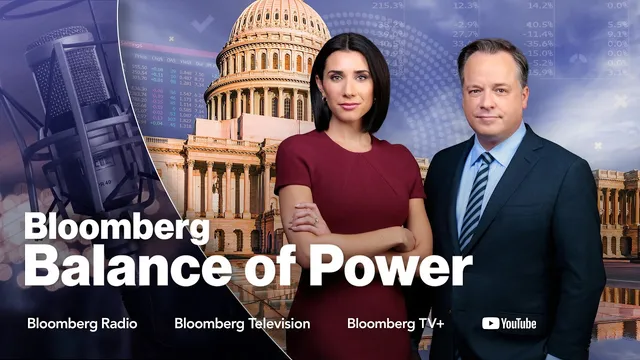
 Balance of Power · Tyler Kendall & Kailey Leinz with Rick Davis, Jeanne Sheehan Zaino, Troy Downing, Michael Shepard and Lael Brainard
The best minutes
- 39:26Down payment support could help more young renters buy homesPro pick 4 min
- 21:17Nvidia's contact with a chip probe raises influence questionsPro pick 4 min
- 10:03Downing argues impeachment should follow hearings and due process2 min
Every moment plays free. PRO marks a write-up that's in Pro.
Also worth watching
Skip the House leadership opener, the rest of Downing’s interview on Iran authority and permitting, and the China-policy panel.
Full analysis · 6 min read
Real Alpha · Nov 21
Rick Davis expects two years of hearings for Hegseth
- Rick Davis says impeachment could protect Hegseth's job and forecasts two years of hearings if he stays.
- The forecast is political, while Downing says Congress should question Hegseth about authority and action first.
- For leaders, the distinction is between scrutiny that builds a record and conclusions that outrun it.
Free with an account
Read the rest of the analysis
6 sections, the 4 other voices it tests Davis against, and what it means for you. Every episode we cut gets one.
Check your inbox
We sent a link to your address. Click it to finish signing up. Not there in a minute? Look in spam.
or
Signed up before? The same buttons sign you in. The episode, its moments and the transcript stay free.
Impeachment could tighten Trump's bond with Hegseth
Rick Davis's central point is a forecast, not a finding about Hegseth's conduct. He said impeachment could make Trump less willing to remove his defense secretary during the process. Because Trump has been impeached twice, Davis said, he may feel more common cause with Hegseth.
Davis is a Republican strategist, so readers should treat this as a political reading, not an administration decision. The transcript provides no evidence that Trump has decided to keep Hegseth.
Then Davis forecast a punishing two years if Hegseth remains in office. He named spending, policy choices, military treatment, retirements and firings as likely subjects.
The host had framed the coming Democratic majority as having subpoena power and a long inquiry list. That setup gives Davis's timeline context, but no hearing schedule or confirmed agenda.
His point is a reversal in political incentives, not a guarantee of job security. Impeachment could bind a president and secretary more closely while increasing oversight exposure. Those effects can coexist, but the show offers no evidence that one will outweigh the other.
“impeachment is actually job security for Pete Hegseth.”
Our read
Davis identifies the tension clearly. His two-year forecast depends on Hegseth staying, and his job-security line remains conjecture.
Downing says hearings should establish the case first
The Montana Republican objected to moving toward impeachment without hearings or a chance for Hegseth to state his case. He said Congress should first determine the action, its authority and the constitutional basis.
He also said Hegseth should answer questions and face cross-examination before Congress judges the case. That is a procedural argument, not an endorsement of every operation.
Downing gave his current view that the allegations did not meet the high-crimes threshold. But he also urged caution if evidence does not reach that high standard.
He did not say inquiry was unnecessary. He said it should precede judgment. This distinction matters because the host's question joined congressional approval, Iran action and Hegseth's leadership.
The segment gives no hearing transcript or fuller evidentiary record against which to test either side. Nor does it settle what Congress has already been told about the operation. Downing's standard depends on testimony that he says Congress has not yet taken.
Our read
Downing's case is strongest as a demand for evidence before impeachment. He offers a current view while leaving room for testimony to inform Congress's judgment.
Oversight forecasts do not decide what Congress will prioritize
Jeanne Sheehan Zaino, a Democratic analyst and Harvard Kennedy School visiting fellow, expected little bipartisanship. She predicted Democrats would balance policy and affordability work against accountability inquiries.
That forecast identifies political pressure, not the actual sequence or outcome of investigations. Rick Davis had made a parallel forecast, expecting a strongly combative approach under Jim Jordan while Steve Scalise might seek policy concessions.
Those are competing strategic readings from partisan contributors, rather than evidence of a settled House plan. The distinction matters to organizations planning around possible inquiries.
For example, Rep. Greg Stanton, on Balance of Power in November, called for a classified briefing on alleged chip transshipment. He also said export controls should be written into law, rather than left to presidential discretion.
Stanton's proposal shows one route from oversight questions toward a rulemaking debate. But he was discussing chip diversion, not the Iran operation or Hegseth. That limit keeps the analogy useful without treating separate allegations as interchangeable.
Our read
Political forecasts describe incentives, not decisions already made. Stanton's example shows how fact-finding can connect to policy, without serving as evidence about Hegseth.
The chip probe shows allegations need an evidence trail
Bloomberg editor Michael Shepard described a reported contact between Nvidia's general counsel and Commerce officials investigating alleged chip diversion. The company lawyer asked about the probe and the detention of a major customer executive in Singapore.
Shepard said there appears to have been a chilling of the probe afterward. The sequence raises an influence question, but timing alone does not establish why investigators changed course.
Shepard also said Nvidia's board did not believe sensitive company or national-security information had been compromised. That assessment was preliminary, and the board's inquiry was only beginning.
The distinction matters. A reported contact, a possible interruption and proven interference are separate evidentiary steps. Ryan Fedasiuk, on Bloomberg Tech in November, described concerns about transshipment, information access and possible interference.
Elizabeth Saunders, on Bloomberg Businessweek in November, said Congress needed to establish facts to keep the chip-sales debate credible. Neither account establishes wrongdoing in this case, much less answers questions about Hegseth.
 Ryan Fedasiuk · Bloomberg Tech · Nov 10The Nvidia allegations raise national security questions
- ESElizabeth Saunders · Bloomberg Businessweek · Nov 10The scandal could undermine the debate over chip sales to China
Our read
Oversight can be justified by unanswered questions, but evidence must still determine conclusions. The chip coverage supports that narrow point, not a verdict about interference.
Davis says both parties should examine Nvidia questions
Davis said lawmakers from both parties should take the Nvidia questions seriously, citing security concerns around the company's chips. Yet the interview does not establish that Congress has reached a finding about the probe.
His other Balance of Power appearance in November extends that question to policy. Davis expected the National Defense Authorization Act could carry bipartisan restrictions broader than Nvidia.
That was a forecast, not proof of passage or effectiveness. For instance, a probe may focus on one company's conduct while lawmakers debate rules affecting a wider industry.
This is a possible consequence of sustained oversight, not an automatic outcome. Companies should distinguish an investigation, a legislative proposal and an enacted control in board updates.
Our read
Scrutiny can lead to broader policy, but the path from allegation to law remains uncertain. Davis's forecast is a reason to track legislation, not assume an outcome.
The interview leaves Iran's authorization threshold unclear
Downing said current Iran action responding to an imminent threat falls within presidential authority. He drew a distinction between current military action and a larger operation that would require further congressional discussion.
He did not specify the threshold at which action becomes large enough to change that assessment. His answer leaves unresolved what Congress's authorization requirement means in this particular conflict.
In her separate interview, former NEC director Lael Brainard called the war a major national-security, economic and fiscal event. She said Congress had little say in the decision or its conduct.
Those statements emphasize different aspects of the conflict, not a settled legal disagreement. Brainard was responding to shutdown and budget risks rather than the impeachment question.
For executives, the practical parallel is to document who authorized material decisions and what information reached them. That governance step cannot resolve a president's legal authority.
Our read
Downing leaves the operative legal threshold and the facts behind it open. The useful conclusion is procedural, not a verdict on whether the Iran action was lawful.
What it means for you
- Track hearing evidence. Ask whether testimony establishes the action, authority and constitutional basis Downing named. Record what remains unknown before treating an allegation as a finding.
- Set an escalation threshold. For decisions involving national authority, document which conditions would prompt escalation and who must approve it. Treat this as an internal governance test, not a substitute for legal review.
- Separate policy stages. In board updates, distinguish a reported probe, a proposed statutory control and an enacted rule. Davis's wider-controls forecast shows why those stages should not be collapsed.
- Check export exposure. Review whether your operations could face scrutiny over diversion, customer relationships or export restrictions. Shepard's account shows why an inquiry may raise questions before establishing interference.
What to watch
- Whether Hegseth appears before House or Senate Armed Services committees, which Davis said could scrutinize him.
- Whether congressional inquiries address the spending, policy, military treatment, retirements and firings Davis listed.
- Whether Congress turns chip-probe concerns into export controls broader than Nvidia, as Davis forecast elsewhere.
Send this to general counsels and government-affairs leaders tracking congressional oversight.
Watch the minute where Davis describes the next two years of hearings.
Written by Real Alpha from the episode's transcript and the other moments it links, then checked against the transcript. Quotes are the speaker's exact words.
Minute by minute
A Pro write-up, open to you here. Try Pro free for 7 days
A Pro write-up. The minute by minute is in Real Alpha Pro; the episode, its moments and the transcript stay free.
Read it with Pro, 7 days free- 3:37Scalise and Jordan offer different paths
Davis casts Steve Scalise as more likely to shape legislation through compromise, while Jim Jordan would use rules and opposition to block Democratic priorities. Zaino says she expects little bipartisanship and sees Democrats balancing affordability policy with accountability, including the Hegseth impeachment effort.
- 7:14Impeachment could secure Hegseth's job
Davis says impeachment could make Trump less likely to remove Hegseth and could therefore give him job security. He expects the defense secretary to face hearings on spending, policy, military treatment, retirements and firings once Democrats control Congress.
- 9:04Downing says impeachment skips due process
Downing says Congress should hold hearings and let Hegseth explain the authority for the Iran operation before considering impeachment. He says the allegations do not meet the high-crimes-and-misdemeanors standard and warns that impeachment could set a damaging precedent for future administrations.
- 12:26Downing backs presidential action against imminent threats
Downing says the president can respond to an imminent threat and does not consider the actions so far to require congressional authorization. He says a larger U.S. military operation would require discussion of the Constitution's reporting rules and approval timeframes.
- 13:38Downing weighs leadership and cooperation
Downing says both Jordan and Scalise are capable and he would not be disappointed with either. He says Republicans need to counter Democratic actions while staying focused on policy, reclaiming the House majority and building a path to the White House.
- 16:50Downing backs permitting reform
Downing calls planned Democratic probes of companies fear tactics and says lawmakers should prioritize policy and affordable, reliable energy. He supports bipartisan permitting reform and cites an American Manufacturing Association estimate that $12.1 billion is being lost because of permitting delays.
- 20:02Nvidia faces scrutiny over executive scandal
The hosts report Nvidia fell 6% after dropping 4% the prior day, amid reports about CEO Jensen Wong's alleged affair with a woman described as a Chinese spy. They note Senate Democratic leader Chuck Schumer called for an AI-chip export bill and criticized Trump's response.
- 21:39Nvidia's outreach raises probe questions
Shepard says Nvidia general counsel Tim Teeter asked the Bureau of Industry and Security about the Singapore detention of Megaspeed executive Alice Wong, whom he described as Jensen Wong's paramour. He says the inquiry was followed by a chilling of the probe into whether Megaspeed diverted Nvidia chips to mainland China, raising questions about Nvidia's influence.
- 25:14Lawmakers may scrutinize Nvidia and China policy
Davis expects bipartisan congressional scrutiny, citing past Republican criticism of Eric Swalwell over his relationship with a Chinese spy. Zaino says Trump should raise the matter with Xi Jinping and asks when he learned of the relationship relative to his export-control decisions. Davis says easing restrictions on China would confuse lawmakers and voters.
- 32:31Brainard backs a December rate hike
Brainard says repeated hotter-than-expected inflation and stronger payrolls leave little reason for the Fed not to hike in December. She says the Fed also needs to signal its plans for future hikes and argues it must show commitment to its 2% target after five years of missing it.
- 35:28Diesel and data centers add price pressure
Brainard says falling gasoline prices offer some relief, but historic diesel prices may keep lifting costs as transportation expenses work through the economy. She says the AI build-out has supported growth and raised electronics price pressures; changes in state governments could slow development and lead to agreements on community benefits and electricity costs.
- 37:49War spending will shape funding talks
Brainard hopes Congress reaches a funding agreement before the December 11 deadline rather than triggering another shutdown. She says the war is a major national-security, economic and fiscal event, and that Congress had almost no say in starting or prosecuting it. She expects the resulting increase in military spending to figure prominently in negotiations.
- 39:07Brainard proposes $1,000 down payments
Brainard says groceries were the biggest financial stress for most people surveyed, while housing topped the list for young renters. Her proposal would let qualified first-time buyers put $1,000 down; she says it could bring 2.2 million young people into homeownership and pair with permitting incentives. She cites the VA zero-down-payment program's repayment record and also calls for food-tariff relief and clearer pricing.
Published Nov 10, 2026.
Transcript · 34 min read
Balance of Power, hosted by Tyler Kendall and Kailey Leinz, with Rick Davis, Jeanne Sheehan Zaino, Troy Downing, Michael Shepard and Lael Brainard.
From the transcript Balance of Power publishes with the episode.
Bloomberg Audio Studios. Podcasts. Radio. News. You're listening to the Bloomberg Balance of Power podcast. Catch us live weekdays at noon and 5 p.m. Eastern on Apple CarPlay and Android Auto with the Bloomberg Business app. Listen on demand wherever you get your podcasts or watch us live on YouTube.
I'm Tyler Kendall here in Washington alongside Kayleigh Lyons and here in our nation's capital. We're just under 30 minutes away from Republicans having a very crucial vote to decide whether their leadership, because Kayleigh, the question that the party is now grappling with, is exactly how to move forward after losing both of their majorities in Congress.
And losing it significantly, which is the question Republicans are now facing. Do you stick with the people who were leading the majority that is now lost, or do you try to go for new blood? That is the argument, of course, the new blood argument that Jim Jordan, the House Judiciary Chair, has been making versus Steve Scalise, who, of course, currently in the Congress that's still going on in this lame duck session, is majority leader and, of course, has been a second to Mike Johnson in a lot of ways. Tyler, both of these individuals have been sitting in this chamber since the Bush era. It's been 20 years.
Read the whole transcript
They are obviously both very well known on Capitol Hill. And the question is going to be for the one that loses. Does this effectively spell the end or the beginning of the end of their political careers? Right.
That's going to be one of the main questions. And they're both definitely pitching themselves as bringing different sort of aspects to what a new Republican conference is ultimately going to look like. You outlined the main contours there, but you have to keep in mind Steve Scalise, known as a major fundraiser in the party. He has won many such leadership elections before. Do Republicans want to go with somebody that has that leadership experience or Or as we look at where Democrats' priorities are going to be, and they have already spelled out an entire array of where investigations may lead, you have the current chair of the House Judiciary Committee, Jim Jordan, who is very familiar with how investigations work. And part of his bid is that he wants to make sure that Republicans are aligned and well positioned to maintain a defense against what's going to be increased oversight.
Yeah. Basically pitching himself as the fighter or a bulldog against Democrats. And of course, there's other races contested in the House as well, including the Republican conference chair seat currently held by Congresswoman Lisa McLean. In the Senate, there's also expected to be leadership elections today, Tyler. And while some senators had pushed for a delay of those so that they can have more conversation, the fact of the matter is John Thune is the only choice. No one has stepped up to challenge him. So the assumption is, whatever this vote happens, it will be John Thune who once again is leader. It'll just be in the minority come January.
And I think we're tracking that vote may potentially happen at the top of the next hour, 2 p.m. Eastern. Again, John Thune running unopposed. The question then becomes, how does he help his conference through an era where President Trump has said that he's not going. To shy away from the veto power. But at the same time, we're still looking at a party that wants to try to get through some sort of legislative priorities, perhaps on a bipartisan basis. And we should say last. Night, maybe we saw one sign of that when it comes to permitting reform that ended up passing the Senate, though still needs some amendments to it. Because at the end of the day, we are talking about what's going to happen next. in the new Congress, but there's 54 days left of this Congress. So what is the lame duck session? 54 days on the calendar.
I think they have 19 legislative days because they'll be taking a lot of breaks as they always do in between. So let's get into all of this now as we turn to our political panel. Bloomberg Politics contributors Rick Davis and Jeanne Shanzano are with us. Rick, of course, Stonecourt Capital partner and Republican strategist, Jeanne, Democratic analyst and Democracy Visiting Fellow at Harvard Kennedy School's Ash Center. Rick, as the Republican, I'll come to you first on the choices Republicans will have to make today. In the House, how different would it be governing in a minority alongside a robust Democratic majority if it was Steve Scalise doing that versus Jim Jordan? Do you have an opinion on who is better positioned for the two years ahead?
Yeah, it's two totally different visions of what to do as a party. There's no question that Stephen Scalise will be looking for ways of molding legislation, of having Republican input, of trying to get some of the legislation to reflect more of the GOP values in exchange for turning over votes, where the caucus may have shortages of Democrats to keep things done. But Jim Jordan definitely would be more combative, opposing Democratic initiatives, vociferously trying to use legislative rules to stop or slow down initiatives that are being promoted by the Democrats and really fight it out for the balance of the two years. So I think that's part of what the approach that the new members are going to have to take a look at is, are they there to basically just go into battle mode, or do they want to try and get some of their ideas incorporated in Democratic legislation and that would have a chance to get through to Congress. So I think there's a STARK difference.
Well, Jeannie, to the point that you have Jim Jordan pitching himself as somebody that could help be a bulwark against Democratic efforts to launch oversight and more investigations, what does it say to you that there seems to be a major appetite in the Republican conference to have somebody that is willing to go up against those initiatives? Or no matter what happens, is there any optimism here that we would be able to find bipartisanship if Democrats are able to focus more on policymaking than they are on potential probes?
Oh, gosh, I wish I was able to be optimistic and I hope I am wrong, but I am not feeling optimistic about bipartisanship. You know, I think exactly the way that Rick described the differences between these two choices, both of whom have run for this position before, But Jim Jordan is a they're both fighters, but Jim Jordan is a real fighter. And I think after a loss this big and, you know, we're going back to like the 1970s since we've seen a route like this. It's a hard vote, I think, for Republicans because they do need somebody that is new. We've seen Scalise. We've seen Emmer. They were in, you know, leadership before.
And that's a hard choice. They also have a really good grasp at fundraising and all of these things. But whoever Republicans go for, I don't think we're going to see a lot of bipartisanship. I think we're going to see. A very vocal opposition. And I think we're going to see Democrats trying to walk a really fine line between, on the one hand, focusing on policy and affordability, and on the other hand, focusing on accountability, like we're starting to see already with this impeachment vote of Pete Hegseth.
Yeah, an impeachment vote that potentially will or will not go ahead, depending on the outcome of a House vote at 530. They're going to try to table it, refer it to committee, kill the effort before it can get anywhere in the House, knowing it very likely wasn't going to go anywhere in the Senate either. Rick, my question is, if indeed this is put to bed, or even if the House votes to impeach Pete Hegseth and the Speaker makes the decision to not send it over to the Senate just yet, leave the issue until January, do things only get worse? For the defense secretary in January when Democrats are in power, have subpoena power, are going to be leading all these inquiries and investigations. Even if it goes away today, this is an issue he's going to be dealing with continually, no?
Yeah. I mean, you could argue that there's some perverse incentives going on now with this impeachment vote because it actually solidifies Hegs' role with the administration. I mean, there's just no way Trump's going to relieve him of duty in the middle of an impeachment. If anything... Trump, who has been impeached twice before, would probably see more common cause with him. So my own point of view is impeachment is actually job security for Pete Hegseth. That being said, he's in for a horrible two years if he sticks around. You're right. There will be just numerous investigations, hearings that he will have to attend with the SASC and the HASC. SACD, HACD, all of which will be hammering him on spending, on policy decisions, on treatment of the military, on retirements and firings, all of which he's gotten a free ride on in the last two years of the Republican leadership in the House and Senate, none of which he's going to get the benefit of the doubt going forward.
All right. Well, our political panel today, we'll have more of this conversation.
Rick Davis and Jeannie Shanzano, both Bloomberg Politics contributors, thank you so much. And we are now joined by one member of Congress who is going to have a say in that procedural vote tonight. That's Congressman Troy Downing, a Republican representing Montana's 2nd District. He's also a member of House Fin Services, Small Business, Natural Resources, as well as a U.S. Air Force veteran. A day before Veterans Day, Congressman, thank you so much for joining us here on Bloomberg Television and Radio. As well as for your service. Now, we did want to start on the news of today, including when it comes to that planned procedural vote against Pete Hegseth, these articles of impeachment, including one that is alleging that Pete Hegseth did not get congressional approval to start the conflict in Iran. I wanted to just get your lay of the land and your thoughts on how satisfied you are with this Pentagon undersecretary Hegseth's leadership in keeping Congress apprised of its military operations in the Middle East.
“Why have we not had hearings? Why have we not had anything for him to state his case before it gets to this point?”
Well, if we put the question of impeachment aside just for a moment and focus on policy, President Trump has said that the U.S. is working toward a diplomatic solution with Iran, but yesterday also said that the U.S. Remains, quote, locked and loaded in. If the administration were to restart significant kinetic military action or operations against Iran, would you want Congress to authorize it?
Well, it really depends on the extent of what's happening. I think that the president, the White House, the administration is fully within their authority if they're responding to an imminent threat. I mean, we don't have boots on the ground. We're not going in there. We're not at war. This is a military action right now. So I I strongly believe that falls within the president's new constitutional authority. If we do start just moving in there, then I think other than what we already have lined out in the Constitution of the reporting requirements and the timeframe that requires congressional approval, if we do start moving in on a higher level, then I think those are discussions we need to have right now. But my opinion is that what we have done to this point does not fall to that level.
Congressman, I also want to ask you about a vote you're going to have to take, what, 15 minutes from now, 1.30 p.m. Eastern time is when we expect you and your colleagues will be assembling behind closed doors for the secret ballot as to who is going to lead you in the minority. Have you made your decisions? Will you share them with us?
Well, here's the issue. It's always tough when you have friends running against friends. And the friendship is one part, but really the question is, is who's going to lead us? Who's going to make sure that we combat any crazy that's thrown at us in the next two years and gives us a path to actually reclaim our majority and hopefully have a path to the White House? And so both Chairman Jordan and Leader Scalise are incredibly talented. They're great debaters. They understand what's happening here. And I really, with all honesty, I don't know which way this vote's going to go. I would not be disappointed with.
Either of them. I'll respect your answer and not wanting to devolve right now who you're voting for. But I am curious if you think continuity of leadership from the current House leadership we have would be more helpful or hurtful in a new Congress where Democrats control both chambers.
Well, you know, we've learned lessons. Tuesday was heard loud and clear. There are parts that I'm not happy with, and they need to answer to what happened. In this race here, I think that we've got two very good candidates. One is going to have the continuity, as you mentioned. The other one is going to bring some new skills to the table. I think that they're both valid, and it really depends on what the conference believes is the best path to do the two things that I articulated. We need to fight back the crazy so there's nothing that happens that is adverse to the United States, adverse to what we're trying to get done here that can't be undone. And the second thing is, is we need to continue to be the folks that are focused on policy and lead the House and the White House to victory in 2028.
Well, obviously, that isn't what happened in 2026, as you're alluding to the losses your party experienced, Congressman. And one of those was in your state in Montana. You're going to have a Democratic counterpart as part of the congressional delegation. Have you had a chance to speak with Sam Forstack?
We spoke very briefly on election night, and then we've been going back and forth a little bit about setting up. He's here for freshman orientation right now, and we're going to try to get together. And there's things that I think we're going to find common ground on, things that are meaningful to Montana. He had already reached out about co-sponsoring A River Runs Through It, which is a a bill that Congressman Zinke has introduced that I'm co-sponsoring. So there's already some common ground there. And I really see, you know, my job here is to work with the entire delegation when it's positive for the United States, when it's positive for Montana, and make sure that I put up roadblocks when it's not.
Well, looking ahead, you do sit on the Natural Resources Committee today. The Democratic ranking member who could potentially be the chair in the new Congress, Congressman Jared Huffman, told more than two dozen companies ranging from energy to tech, including Chevron, ExxonMobil, Palantir, that they should be preserving documents ahead of what is expected to be some potential committee oversight. and investigation into these companies. Can you give us any insight from your side of the aisle, if you know what these investigations and probes are going to be focused on, and if you support increased oversight from your committee of them?
Well, I think there's a little bit of fear tactics there. I'm hoping that now that the Democrats have the majority, that they focus on pushing forward good policy and not spend two years on trials, investigations, and impeachments and all the things that that are contrary to what the American people sent us there to do. They sent us there to make life better for them. And one of the things, you're talking about the energy sector, one of the things that we really need is we need to make sure that we have affordable, reliable energy. That's been heard loud and clear by all of our constituents. My hope is, is that even though he's throwing that out there, is we don't go down that path. That's not what the American people want. You know, and that's bipartisan. The Democrat, you know, the Democrats don't want that. The Republicans don't want that the Senate's all here to actually represent them.
They want to see positive change. They want to see that we're actually passing good policy that makes their lives better. And that's something that just gums up the works and delays everything.
Well, and on energy, Congressman, we saw the Senate clear a procedural hurdle on permitting reform last night. It's unclear whether or not the bill will pass in the full floor vote with the same margin that it enjoyed last evening. But it is a question in the House as to whether it can find adequate support. Do you believe that this will get done in the lame duck session?
I certainly hope so, because here's an example of some bipartisan support in a bill that we really need some relief on. Permitting reform, everybody identifies that as being a problem. Even the American Manufacturing Association has estimated that $ 12. 1 billion is being lost right now because of this. Everybody's crying out that we need to reform this. We're not throwing the baby out with the bathwater. We just need to make it easier for folks trying to build America to actually do that, creating jobs, contributing to the economy. And I'm really happy that we have bipartisan support on that.
And I'm very hopeful that we can get that through in the House this session. All right.
Congressman Troy Downing, the Republican for Montana's 2nd District. Thank you, sir, for joining us. And I'll extend Tyler's thanks as well for your service and wish you. A happy Veterans Day tomorrow.
Stay with us on Balance of Power. We'll have much more coming up after this. You're listening to the Bloomberg Balance of Power podcast. Catch us live week at noon and 5 p.m. Eastern on Apple CarPlay and Android Auto with the Bloomberg Business app. You can also listen live on Amazon Alexa from our flagship New York station. Just say Alexa, play Bloomberg 1130.
Giving everyone a good reason to stay tuned here on Bloomberg TV and radio for a conversation with Lael Brainard that is coming up shortly. But first, we have to talk about something else that, of course, the market is very much interested in, and that is what's happening with NVIDIA. The stock down, again, 6% today after a 4% decline yesterday in the aftermath of Jensen Wong admitting that he had an extramarital affair, allegedly with a Chinese spy. We actually just had the Democratic leader in the Senate, Chuck Schumer, speaking about this on the Senate floor today. calling for a passing of a bill on AI chip export, something we've heard a lot about in just the last couple of days, but also referring to Trump's decision to do nothing on NVIDIA, at least in Schumer's words, as a dereliction of duty. President Trump, on the other hand, when questioned about what went down with Jensen Wong and this woman and the whole story with NVIDIA yesterday in an impromptu press briefing, seemed to be standing behind his man.
Listen. He said he had absolutely no idea that the person in question was a spy. I asked him that question.
Did you have any idea that she was a spy? He said, I had no idea that she was a spy. And I really believe him. I just know Jensen very well.
I just think he's a very honorable man. I feel very confident that he'll be in good shape.
“And in the aftermath, there appears to have been a chilling of the probe.”
All right. Mike Shepard, Senior Editor for Technology and Strategic Industries here at Bloomberg. Thank you so much. And we'll reassemble now for more on this story. Our political panel, Rick Davis and Jeannie Shanzano, both of them Bloomberg Politics contributors, are still with us. Rick, as we heard at the top there, President Trump is still standing by Jensen Wong. He thinks he's honorable, that this maybe was just a mistake. He had no idea that this woman was a spy. Even if President Trump would like to let this one go, do you believe Congress is going to be willing to do that?
I think there's a lot of evidence that Congress will really jump on this. Remember, I mean, Congressman Eric Swalwell was charged with dating a Chinese spy at one point in time, FBI investigated, cut off contact, but that didn't stop Steve Scalise, you know, and a lot of others from saying that, you know, this was a horrible violation of state security and you know, he should be pulled up on ethics rules. So there's a real history here about, you know, what Republicans have been saying about this. And I think the Democrats and the Republicans alike need to take it seriously. You know, this was not an accident.
And it lasted a lot longer than anybody would have thought this kind of relationship would be allowed to in such a sensitive and security envelope as the chips from NVIDIA. So I think there's a lot going on here. I think we'll continue to get great reporting from Bloomberg. Kudos to them for helping to break this most recent story. And honestly, I think we have to tighten our screws because if it's that easy to get to Jensen Wang, how easy is it going to get to a lot of other people who have important information for the Chinese?
And we do know that the NVIDIA CEO had joined President Trump on his last visit to China, Beijing, in May. Jeannie, I'm wondering how this positions President Trump for his upcoming visit to China next week. He's expected to travel there. And it's clearly a top-of-mind question since President Trump yesterday said that he doesn't think he's going to bring it up when he meets with the Chinese president, Xi Jinping. Yeah.
And Tyler, I think I heard you report that yesterday on Bloomberg. And, you know, the president must raise this with Xi Jinping. You know, all of my questions here, I have so many about Jensen Wong, about the board in particular, but most importantly, about Donald Trump. In September, I wrote a piece about his opposition to AI regulation not aligning with his record on China. And the crux of that was his opposition to regulation of any kind seemed to be because of this competition with China. And yet many of us were puzzling over how does he square that with the fact that he is allowing AI export controls and Chinese companies to buy these powerful semiconductors, the H200? How does any of that make sense? And now with the breakage of this story, it seems to be possible that he might have had a whisper in his ear from Jensen Wong. And if that's the case, it's not enough for the president to tell you, Tyler, and all of the folks sitting there in the White House yesterday that he doesn't remember when he heard about this with Jensen Wong. We need to know from the president.
when he learned this, and was it before or after his decision on export controls that have puzzled so many of us? And oh, do I have a lot to ask of the NVIDIA board as well, but I'll leave it at that, Tyler. I'm sure a lot of us have a lot of questions for the members of that board. Rick, just on the notion of the president saying one thing publicly about his China policy and actions, perhaps suggesting otherwise, it is bipartisan popularity to be tough on China and to support things like export controls, right? This isn't just a democratic issue versus the administration. I would imagine a lot of Republicans on Capitol Hill have some of the same questions Jeannie does.
Yeah, and the one thing that really unifies people on Capitol Hill, and frankly voters, which is reflected on Capitol Hill, is the distaste for China. You know, China is. been taking advantage of its trade advantages over the United States for some time, building a military to challenge our military, threatening our neighbors in the region, and really having a state-sponsored plan to take over Taiwan. And all of these things are in direct opposition to Republicans and Democrats in Congress, but even more importantly, the American people. They get the joke on China. And when the administration cracks down and places these export restrictions on China, the American public give them credit for that. When they do things like loosen those restrictions, Congress and the American people are scratching their head wondering, OK, what is our policy toward China now?
Donald Trump should get some credit for being tough on China in his first term. He started this. Now, how's he going to end it?
So much to watch for ahead of President Trump's visit to China next week. Our political contributors, Frick Davis and Jeannie Shanzano, thank you so much for being with us. Make sure to stick with us. We have a conversation with Lael Brainard after that hotter than expected CPI inflation number came in today. That's up next.
Stay with us on Balance of Power. We'll have much more coming up after this. You're listening to the Bloomberg Balance of Power podcast. Catch us live weekdays at noon and 5 p.m. Eastern on Apple CarPlay and Android Auto with the Bloomberg Business app. You can also listen live on Amazon Alexa from our flagship New York station. Just say Alexa, play Bloomberg 1130.
I'm Tyler Kendall here in Washington alongside Kaylee Lines after a hotter than expected CPI reading yesterday. Now, as the market fully pricing in a rate hike at the December meeting, now less than a month away. And the report also suggested that price pressures were building as voters headed in to the midterm elections. And now Republicans are grappling with what to do next amid that voter dismay with affordability. We did hear from the White House Council of Economic Advisers chairman, Chris Phelan, who gave the administration's view earlier today on Bloomberg television and radio.
What I think is going on is when oil prices go up, with a lag, gas and diesel prices go up, and then with another lag, stuff that depends on gas and diesel goes up. So I think that's what we're seeing is higher gas and diesel prices due to higher oil prices filtering through the economy.
So that's the view from the Trump White House. Our next guest is one who served in the Biden administration as the director of the National Economic Council. Lael Brainard is with us. She, of course, is also former vice chair of the Federal Reserve, now distinguished fellow at the Georgetown Sorrows Center for Financial Markets and Policy. She's here with us in our Washington, D.C. Studio. Director Brainard, welcome back. It's always good to have you on Bloomberg, especially on a day like today when we get hotter than expected CPI. The Fed obviously chose not to hike rates at its last meeting. Now with the
“There's really, I think, no reason for the Federal Reserve not to hike in December.”
How are you thinking about energy prices feeding into the broader market? I mean, today we had in this report showing refined prices up on the month. Electricity prices were up nine-tenths of one percent, a relatively big jump comparatively. But then we're also starting to see some easing amid what has been maybe a bid at diplomacy in the Middle East.
What are you watching for in that space? Well, we know that voters were extremely unhappy about the high gas prices. We saw that in the survey. We certainly heard it in people that we talked to. And it is somewhat of a relief to see those gas prices at the pump coming down. But diesel prices have been historic highs, and they are feeding through to the economy more slowly. And so that inflationary push from higher diesel is is in every product that needs to be transported, and it will take a longer period of time to work through the inflation picture.
Well, and we know the inflation story is in part being informed by what is happening with the massive infrastructure build-out on AI data centers. We've heard the chair talk about this as well. The market had a big freak-out, though, last week. And the aftermath of the Democratic victories on Tuesday, if perhaps that being slowed. The notion that now that you have not just more elected representatives on Capitol Hill, but in governor's mansions, in state legislatures, that there could be a material pullback in the pace, at least, of that development. What would it mean economically in your mind if that were to happen?
So obviously the AI boom, disproportionate, huge impetus for growth over the last year, year and a half. And of course, it's also putting pressure on electronics through the semiconductors We don't see those pressures abating very quickly in terms of you see the electronics price pressures broadening out rather than abating. But it is possible that with the change in a lot of the state houses around the country that you do see some slowdown, some more agreements with communities to share the benefits, to cap electricity price increases, to absorb more of that on the commercial side. But that still lies ahead of us.
Well, another thing that Congress is going to be grappling with in terms of what to do next was actually highlighted in this report, which was unique in the fact that we didn't get that 12-month percent change because of the government shutdown last year. But now we are up against another funding deadline that is quickly approaching December 11th. We have reporting that Democrats actually may try to use that deadline as a negotiating tool to pressure Democrats President Trump, when it comes to the conflict in Iran, just from a bird's eye view, what sort of risks would we be looking at if we do end up at this point in time teetering or surpassing the shutdown cliff?
Well, look, my hope is that there is an agreement so we don't see another shutdown. I think both sides know that that also has costs and loses some public confidence. But the reality is that the war has been a massive national security and economic and fiscal event for the country. And Congress had very little say, almost no say, in the decision to go to war or how the war has been prosecuted. And so I do expect that because it is leading to a very large increase in needs for military spending, that will be front and central in those discussions. How could it not be?
Well, of course, Congress is going to try its best, even if it can't necessarily control outcomes in the Middle East, to try to control affordability questions as best they can. This is what Democrats campaigned on to election victories on Tuesday. We hear a lot of different elements of that, whether it's reining back the war or tariffs, but we hear a lot about housing as well. And you're out with
“for young renters, down payment is the single largest barrier, keeping them from becoming a first-time homebuyer”
Well, it's interesting that that isn't important necessarily on default risk, but that people told you across the country that it's the down payment that is acting as the prohibiting factor, not so much high mortgage rates. Just quickly, in the final minute we have you, what else did you hear in the Kitchen Table Project from voters? And what advice would you be giving those who are coming into a new Congress in January, pledging to act on affordability? What is the first things that they should try to do?
So we heard groceries top of the list for most people, except for young renters, which is housing. And what did we hear there? We heard that people would see $ 500 more in a year as measurable relief. So there are things that Congress can do very quickly, get rid of the food tariffs and make sure that companies are actually passing through those savings. You can also do a lot with forcing companies to be honest about their prices, not to shrink packages. There are loads of things, but the important thing is to show some early relief. All right.
Lael Brainard, former director of the National Economic Council under the Biden administration, former vice chair of the Federal Reserve. And Distinguished Fellow at Georgetown, Director Brainard, thank you so much for joining us here on Bloomberg Television and Radio. That does it for the early edition of Balance Power.
Thanks for listening to the Balance of Power podcast. Make sure to subscribe, if you haven't already, at Apple, Spotify, or wherever you get your podcasts. And you can find us live every weekday from Washington, D.C. at noontime Eastern at Bloomberg.com.