Free with a sign-in.
The best 3 min of 28
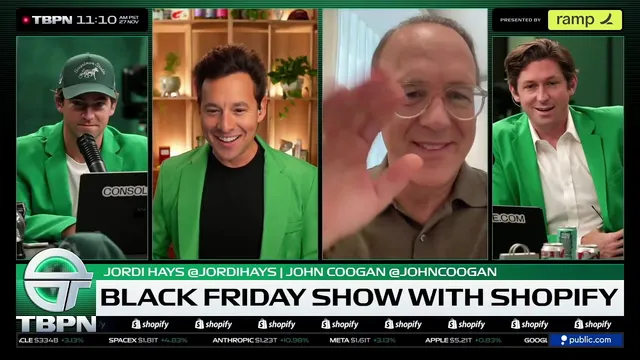
AI Solves Riemann Hypothesis, Stock Market Plunges, The Mansion Section | Diet TBPN
John Coogan and Jordi Hays examine an unverified AI-assisted Riemann proof, the market’s reaction and the economics of AI infrastructure.
 TBPN · John Coogan & Jordi Hays
The best minutes
Also worth watching
- 5:30The Nasdaq has lagged Treasury bills this year4 min
- 9:09SpaceX's GPU lenders may struggle to reclaim chips in orbit2 min
- 12:57Starlink's cash flow supports SpaceX's borrowing capacity2 min
Skip the seven-minute GTA 6 and Anthropic connections and the five-minute Tudor mansion section.
Full analysis · 7 min read
Real Alpha · Nov 20
Levant says Claude helped find proof, hosts float 250,000 raw pages
- The hosts floated an unconfirmed figure of about 250,000 raw pages.
- Levant said he believed Claude helped produce a proof, but expert review remains outstanding.
- The hosts linked the market drop to broad weakness, while saying investors may revisit AI progress.
Free with an account
Read the rest of the analysis
7 sections, the 4 other voices it tests the episode against, and what it means for you. Every episode we cut gets one.
Check your inbox
We sent a link to your address. Click it to finish signing up. Not there in a minute? Look in spam.
or
Signed up before? The same buttons sign you in. The episode, its moments and the transcript stay free.
The reported proof remains unverified by experts
The person identified on the show as Levant said he believed he had found a proof with Claude’s help. Scientific American reported it remained unverified and needed expert review, a process the hosts said could take years.
The Clay Institute still lists the Riemann hypothesis as an unsolved Millennium Prize problem. That is a status check, not a verdict on the manuscript. The hosts raised a possible figure of about 250,000 raw pages, unconfirmed.
One host asked if that figure was right, while the other said it was probably the raw part. That exchange makes the page count weak evidence about the proof’s final length.
Even a shorter document would need scrutiny of every step, not merely a plausible-looking result. An AI-produced proof must survive the same mathematical verification as any other proof.
Until experts check it, the episode supports only a report of AI assistance, not a mathematical solution. Output volume cannot substitute for demonstrated validity.
Our read
The proof remains an unverified report of possible progress, not a usable mathematical result. For teams evaluating AI, verification should come before treating this example as demonstrated capability.
A verified proof would strengthen conditional mathematics
On Tyler Cowen’s show, Terence Tao described the hypothesis as a way to quantify primes’ apparently random pattern. Tao said results touching primes can become stronger if the hypothesis is known to hold.
For example, the hosts noted that prime-number properties underpin cryptographic protocols used to encrypt finances. Many number-theory results remain conditional, with stronger conclusions available if the hypothesis holds.
A proof could let researchers build on results now resting on an assumption. That would be a scientific payoff, distinct from an immediate commercial return.
The hosts named the Millennium Prize’s $1 million as a direct financial payment. They joked that it might add to a company’s cash flow and support borrowing.
The joke exposes the gap between a one-time award and a repeatable business. A mathematical result can have wide research value without creating an obvious revenue stream for its producer.
Our read
A verified result could remove an important uncertainty for mathematics. It would not, by itself, explain who pays for AI research or who captures its economic value.
The proof does not establish an AI research advantage
The hosts framed the larger bet as recursive self-improvement, not the proof alone. They said Silicon Valley sees AI as fundamentally different and potentially able to speed its own development.
The Wall Street camp, they said, sees a high-capex SaaS business and remains unsure it likes the model. Separately, the hosts said weak customer spending could hurt revenue and profit.
Nabil’s steelman was that progress came much faster than expected, even relative to recent AI math progress. He suggested automated AI researchers could create ways to make money ahead of competitors.
That remains a hypothesis about advantage and value capture, not observed revenue. The episode gives no measured link from this proof report to faster training, lower costs, or paying customers.
An isolated result could signal capability without showing a lab can repeat it across research. Nor does it establish which company would capture value if research accelerates.
Founders should test reproducibility, cycle time, and customer impact separately. A single striking output cannot establish how often a system can produce useful work.
Our read
The recursive-improvement thesis may matter, but this proof report does not establish it. An investment case needs repeatable work and a demonstrated route to value capture.
The hosts tie the drop to broad market weakness
That distinction framed the market reaction. The hosts said the proof and Anthropic’s stock drop were unrelated, with trading instead reflecting broad weakness.
They pointed to Nvidia concerns, geopolitical turmoil, and cyberattacks, alongside threats to customers’ ability to spend. The hosts said Wall Street cares about revenue and profit.
Earlier, they said the Nasdaq had underperformed Treasury bills year to date. For example, the hosts said Nasdaq’s chip, energy infrastructure, and data-center winners still underperformed T-bills.
That comparison gives the AI trade a return context, but does not show investors rejected the math result. Still, the hosts said Wall Street was not focused on the math yet, though perhaps it would be soon.
Gil Luria on Bloomberg Surveillance in November 2026 said Anthropic’s IPO must go well. He tied a successful listing to whether markets consider the infrastructure investment worthwhile.
That is a financing-confidence test, not a test of mathematical validity. The episode leaves open whether investors later price AI progress differently.
Our read
The hosts attributed the selloff to general market weakness, not the Riemann news. Their comparison shows performance pressure, while leaving open whether investors later price AI progress differently.
Chip financing depends on recoverable collateral
The SpaceX chip deal makes financing risk concrete. An Apollo-managed entity buys Nvidia GPUs and leases them to SpaceX, with payments over five years, in a financing deal worth roughly $40 billion.
If SpaceX defaults, lenders can take back and sell the chips, according to the hosts. But recovery becomes harder if SpaceX launches them into orbit for planned data centers.
Collateral has value only when a creditor can recover it. The hosts connected this to data centers whose land, shells, power rights, water rights, and chips can change hands.
They also cited older buildings whose floors may not hold heavier racks, forcing retrofits. These constraints make financing depend on where equipment sits, not only what it cost.
Bob Michele on Bloomberg Surveillance in November 2026 explained that some borrowers leasing compute lack cash flow. His discussion of Nvidia and Alphabet backstops shows why financing support matters for other deals.
Kelsey Berro on Bloomberg Surveillance in November 2026 said investors should examine lease payments and residual chip value. SpaceX’s lenders face that test, with the added problem of orbital recovery.
- BMBob Michele · Bloomberg Surveillance · Nov 16Nvidia has helped finance the data center buildout
- KBKelsey Berro · Bloomberg Surveillance · Nov 19Chip financing needs to be judged by lease risk and deal supply
Our read
This is not only a question of whether GPUs retain value. The financing works differently if lenders cannot readily take possession and resell them.
Starlink cash flow supports SpaceX borrowing, with limits
Starlink gives SpaceX an operating cash-flow source, but not unlimited borrowing capacity. The hosts put its annualized Q3 2026 revenue run rate at about $21 billion.
They also said it generates billions in free cash flow, helping support the $40 billion financing. That is material support, but far below the hundreds of billions in annual free cash flow the hosts cited for some hyperscalers.
Revenue scale helps underwriting without making the debt self-liquidating. Starlink also cannot fully replace cellular service because it lacks indoor coverage everywhere.
Conventional carriers have spent decades closing coverage gaps and managing crowds, the hosts said. Starlink still has work to do before service is reliable in such settings.
Frank Lee on Bloomberg Surveillance in November 2026 said GPU shelf life had extended beyond expectations. His episode cited seven-year-old GPUs still earning money on a technology tour, complicating residual-value estimates.
But that does not settle what these particular chips would fetch or whether lenders can recover them. A longer useful life and physical access to collateral are separate questions.
Our read
Starlink makes the financing more legible because it brings operating cash flow. But revenue scale and collateral recovery remain distinct tests.
Teams should separate research gains from revenue
Keep scientific validation, product performance, and financing quality in separate board updates. Do not count the Riemann report as delivered capability before expert review.
Track what independent mathematicians verify, not just generated output volume. Then measure whether AI-assisted work repeats and shortens a defined research task.
Compare cycle time with a baseline, and check whether the gain reaches paid work or lowers costs. For infrastructure, monitor utilization, lease amortization, and expected resale value separately.
Lease payments and recovery values need distinct tests because a working chip may not be recoverable at the expected price. Model verification, prolonged review, and rejection as separate scenarios, rather than planning around one acceleration forecast.
Those measures keep a capability signal from entering cash-flow forecasts before evidence arrives. They also give product and finance teams a shared basis for updating plans.
Our read
Treat the proof as a research signal until verified, and acceleration as unproven until it changes measured work. Keep either out of revenue forecasts until customer, cost, or cash-flow evidence connects them.
What it means for you
- Verify the result. Keep the Riemann report separate from validated capability until experts review it. Track what is independently checked, not just the size of generated output.
- Measure research speed. Compare AI-assisted work with a defined baseline for repeatability and cycle time. Then check whether the gain reaches paid work or lowers costs.
- Stress-test chip loans. Model default recovery using access to the chips, residual value, and lease payments. SpaceX’s orbital plans show why location belongs in collateral analysis.
- Separate cash from growth. Track revenue run rate and free cash flow separately when assessing infrastructure commitments. Starlink’s cash flow supports borrowing, but does not remove product or collateral limits.
What to watch
- Whether independent mathematicians verify the reported proof or identify gaps.
- Whether AI research acceleration produces measurable revenue, lower costs, or shorter task cycles.
- Whether lenders accept collateral they may struggle to recover in orbit.
Send this to product and finance leaders separating AI capability from revenue and infrastructure risk.
Watch the minute where the hosts raise an unconfirmed figure of about 250,000 raw pages
Written by Real Alpha from the episode's transcript and the other moments it links, then checked against the transcript. Quotes are the speaker's exact words.
Minute by minute
- 0:24The Riemann proof claim awaits review
The hosts say Anthropic’s shares were down 10% as Levant posted that he believed Claude helped him find a proof of the Riemann hypothesis. They note Scientific American called the claim unverified and said it still needed expert review; the Clay Institute still listed the hypothesis as unsolved.
- 4:46AI progress has not lifted markets
The hosts contrast visible gains in AI benchmarks and creative tasks with declines in Anthropic, the Nasdaq and the S&P. They say investors may be weighing broad market weakness, high capital spending and whether AI firms can turn faster development into revenue, while Silicon Valley’s recursive-self-improvement thesis points to potentially large returns.
- 6:57Tech stocks lagged T-bills
The hosts note that the Nasdaq was up only 5% year over year and had underperformed T-bills year to date, despite gains in chips, data centers and energy infrastructure. They also revisit Michael Burry’s bearish posts, while noting the S&P had nearly doubled since his January 2023 sell post.
- 9:09SpaceX’s chip deal tests collateral
The hosts discuss a roughly $40 billion financing deal led by Apollo, which involves buying NVIDIA GPUs and leasing them to SpaceX over five years. Lenders worry they could not recover the chips if SpaceX defaults after putting them in orbit for data centers; the hosts joke about needing a space tow truck.
- 13:57Starlink has scale, not full cell coverage
The hosts cite a Starlink revenue run rate of about $21 billion a year, annualized from Q3 2026, and mention airline deals and growing use. They say Starlink cannot fully replace cell service because coverage indoors and connectivity in crowded places remain challenges.
- 16:01GTA 7 talk came early
The hosts revisit a question about whether GTA 7 could span the entire world. They say Strauss replied that GTA 6 had only just gone live on November 19, and the hosts joke that they found his response funnier than he did.
- 17:08Automated AI research could create value
The hosts joke that a Riemann proof might add the $1 million Millennium Prize to Anthropic’s value. They then describe the investment case that an AI researcher ahead of competitors could create ways to make money, while noting that this requires several assumptions.
- 18:32GTA and Anthropic coincidences become a joke
The hosts build a deliberately playful chain of supposed connections between Anthropic and GTA, including the name Claude, matching dates, Anthropic’s IPO price and a Netflix distribution link. They also suggest an anagram and a hidden ticker connection, presenting the whole sequence as a joke.
- 22:50A Tudor mansion earns an S tier
The hosts review a nearly 500-year-old Tudor mansion in England that a couple bought for their blended family of seven children. The property has 12,100 square feet, nearly 13 acres and protected bats; the couple’s renovation is ongoing, and they say they overcapitalized on the house. The hosts give it an S tier.
Published Nov 21, 2026.
Transcript · 20 min read
TBPN, hosted by John Coogan and Jordi Hays.
Transcribed by machine (Whisper) from the episode’s audio, so a word may be off here and there.
let me also tell you how many days there are until christmas because we're so close now time to do your shopping i hope you didn't get 828 hours i hope you didn't get anyone any stock for christmas because it's gonna be worth a lot less by the time they unwrap that under the tree but if you bought the puts they could be looking really good puts under the tree putting put some puts under the tree if you're bearish this holiday season it's over it's over the market is nuking pure red nuking anthropic we gotta add so we gotta add anthropic to the ticker yeah and at the bottom there in there but it's a whole still a big company and they got a lot of cash doing well but uh people are frustrated uh market caps 1.14 trillion that's of course the active if not the fully diluted. Stocks at 87, which is still above the 83 that the IPO at. So there's a little bit of a bump since an hour ago, but down 10% today. And of course, everyone who loves to read into the accelerationism that comes from math accomplishments is confused because it appears that there is a solution to the Riemann hypothesis, a proof, which is extremely consequential in the math community.
Wall Street doesn't really care, apparently. Chad is saying, sell the dip. Sell the dip. Levant over at Anthropic posted that he believes he found a proof with Claude's help, but Scientific American reports it as unverified and still needing expert review. That could take years. years, it's 250,000 pages. Is that right? Yeah, I think that was the raw part. I mean, you can definitely trim these things down. That's crazy. I mean, we're having Eric Winn Vintage on the show today. His book is substantial, only 350 pages. Imagine 1,000 of these books, maybe one day. With AI, it might be possible. And so the Clay Institute still lists Riemann hypothesis as an unsolved Millennium Prize problem. So all we're hearing is the claim.
“the Riedman hypothesis is a very precise way of quantifying this random looking nature of the primes”
Read the whole transcript
But anyway, AI capability, it's obviously getting better at a steady pace. You feel this with all the new models, all the new capabilities, all the different benchmarks, even the vibe check benchmarks, the 3D modeling, the video game building, the AI video editing, everything that you see.
You can see the progress month to month, but the market doesn't care. The market does not like it. Anthropics down 10%. The NASDAQ and S&P are way down as well. Nim Chimski says the Riemann hypothesis is worth approximately negative $121 billion because that is, of course, the drop, the pre-market drop on Anthropik. But these things are obviously unrelated. People are not trading public market stocks based on math progress.
“Year-to-date, the NASDAQ has underperformed T-bills.”
“If SpaceX defaults, the lenders can take back the chips and sell them.”
Yeah. So Trump has been talking this morning saying there's good that he's not going to allow data centers outside of the U.S. Yeah. So it's kind of interesting. you have one some u.s politicians saying no data centers in the u.s trump saying no data centers outside of the u.s we'll see where they land but how do data centers in space fit into that kind of a perfect loophole i feel like it satisfies both but he's saying he's only allowing you to build data centers well you're building the data center technically in this in the U.S. and then you're launching it.
space. So I think that, I think that counts. Okay. So Elon has been a huge fan of backwards day for a long time. He has said anthropic is destined to become misanthropic. OpenAI will become closed AI. Mid journey isn't mid. He's got zingers, but he says there's, it's impossible to come up with an opposite day zinger, an opposite day epic vulgar roast about SpaceX, because what's the opposite of SpaceX? It doesn't make any sense. What's the opposite of X? Why that doesn't make any sense but he's wrong he forgot about ground x which is what's happening to spacex because spacex is making more money on the ground than in space now because of the data centers so it's becoming ground x and they also added ai it was spacex ai and then they changed that to spacex si and we all know that there is an opposite of super intelligence midwit intelligence so it could be ground x mi if if things don't go well but i think he can i think he can launch these into space but we'll see uh it is it is a very funny opposite day uh the zingers uh i love an epic
“That's generating billions of free cash flow. It's not in the hundreds of billions a year of free cash flow like some of the hyperscalers.”
Also, there's just this interesting dynamic where the telecom companies have spent decades finding little patches of gaps in the coverage.
So you used to go to a basketball game or a football game, and you would lose connectivity because there were just so many cell phones in one area trying to break through, trying to get connectivity. the networks have figured out how to load balance that and actually installed extra infrastructure and extra backhaul to make sure that you can maintain connection while you're in a crowded group of people if it's expected. Sometimes if you're in a place that no one expects there to be 100,000. people all of a sudden you can get sort of jammed up still but that's a lot harder with spacex because with the starlink network they still have to go and do that work to figure out how can it be reliable what are you laughing at uh i'm laughing at strauss's response to my question yesterday oh yeah pull this up which uh 82 000 people have appreciated oh yeah yesterday I asked if GTA 7, we were having a conversation about the possibilities of generative AI and future versions of GTA. I asked if GTA 7 could just be set across the entire world. And he said, we just went live with GTA 6 on November 19th. Oh, it's still November 19th. And you're asking a question about GTA 7. We clearly thought that was much more funny than he did. But we had a
great conversation with him yesterday he's also it's also funny because we we will make we will use a giga chad filter on various uh guests of the show but this is i think just a real picture which is um a work of art um absolute chad well uh nabeel and good alexander are going back and forth on reeman claude solved the reeman hypothesis and ant is down 10 seems like the market is not RSI-pilled and believes in AI as normal technology. Good Alexander asks a question. How do you make money off of solving the Riemann hypothesis? Who pays? Well, the Millennium Prize pays a million dollars, so you should add that to the cash flows, and it should hit in a couple months. You don't have to discount it back that much, so you've added maybe $800,000. You might even be able to get a financing against that million dollars that's coming in when the money hits. So that should add to the book value of the company. If you're investing in Anthropic on book value, this is good news for you. But who pays in general? No one's really buying hypotheses these days. Nabil says, yeah, the steel man of this case would be something like this. This is way faster than anyone expected, even conditional on the fast math progress earlier this year. Something similar
will happen for AI research. Having an automated AI researcher ahead of competitors is going to enable various ways to make money so still like some some leaps there but um that that is the rsi trade and i do think people will will wake up to this and you could even say that they are because it's a high revenue multiple high earnings multiple for a company obviously it's a young company it's high growth but um it's uh it's a lot of fun we were digging into the question of is there more than meets the eye to the fact that Anthropic went public on the day GTA 6 launched? Like, are they trying to tell us something with that?
Hidden messages. Yeah, there's no coincidences in this world. And so I dug into it a little bit more, and I think there's something going on here. So in 2001, Claude Shannon, the father of information theory, died. That's the namesake for Claude, the model from Anthropic. And that same year, Rockstar introduced Grand Theft Auto 3. And Tyler, can you look up who the main character, who the protagonist is in Grand Theft Auto 3? What's his name? Claude. It's just Claude. Interesting. Okay. So 25 years later, February 24th, 2026, exactly the 25th anniversary of Shannon's death, Anthropic released version three of its responsible scaling policy, the company's official framework for preventing catastrophic AI risks.
Then on May 26th, and everyone knows what May 26th was, that was the original scheduled release date for GTA 6. So we're already seeing more connections to GTA 6. Tyler, so May 26, GTA 6 was supposed to launch. May 26th of 2026. Tyler, I want you to look up version 3.3 of Anthropic's Responsible Scaling Policy. Pull that PDF up. The Responsible Scaling Policy, version 3.3 specifically. And this is going to shock you. I want to see the date that that was released. May 26th. May 26th. That's crazy. rockstar subsequently delayed gta 6 how many days how many days between between may 26th and november 19th i want you to look that up 177 177 days and do you know the value of anthropic when it went public the precise value 1.77 trillion dollars 1 7 7 the connections don't stop there though both companies were founded by siblings sam and dan hauser rockstar dario and daniela amadei at anthropic and get this anthropic priced their ipo at 83 dollars a share guess what year dario amadei was born 1983 1983 yeah i'm gonna blow your mind that's similar similarity between two anthropic things not even anthropic and gta okay Tyler you're telling me we're seeing no you're telling me we're seeing patterns that
don't exist wow okay okay you're not crazy you're crazy you want a real connection between GTA and and Anthropic I'll give it to you you know Reed Hastings he's on the board of Anthropic you know what you know what company founded Netflix you know where you can stream GTA 3 Netflix that's right yeah yeah Netflix is a distributor for Grand Theft Auto so you so the The guy who's on the board of Anthropic just happens to be distributing the game through Netflix at another company. Interesting. Chad is saying Tyler's trying to cover this up. He doesn't want the truth to get out. Okay. I want you to rearrange the letters Anthropic because it's a perfect letter for letter anagram of hip cop ran.
Coincidence? I think not. We're going to pull up that image. Let me send this in. There's more. It goes deeper. Where does GTA 5 take place? San Andreas? No. Oh, there's a city. Los Santos. And the anthropic ticker is hiding right in the middle. S-A-N-T-O-S. Los Santos. What a coincidence. I think that's it. I tried to find as many. There's definitely more. There's definitely more. Jack Clark is also an anagram for Car Jack if you leave out the L in the day. coincidence i think i think not symbolism will be their downfall let's go over to the mansion section we got to do some tier lists jordy i want your review of this 500 year old mansion they wanted a bigger house they ended up with a 500 year old mansion they bought a 12 100 square foot tutor they meant to they had to re-home home protected bats there you go if you move into always a good sign it's a that's a haunted mansion right if there's bats in there already not necessarily no you think the previous owner was just keeping pet bats these are friendly domesticated well i mean i i people people are afraid of bats for good reason yeah rabies get a yeah get disease from them but um you know some people some people actually you know train them and and sort of get them to the point where they're
on their side right like witches i thought you were talking about batman oh yeah can batman control bats he's not like spider-man where he can talk to bats right can't spider-man spider-man can't do that there's someone who can aquaman aquaman can talk to the fish yes Spider-Man was bitten by a spider, but Batman was not bitten by a bat. He just likes the vibes of bats. Yeah, yeah, yeah. He's just like aura farming. He's just aura farming. Yeah, 100%. Joanne Hughes and Philip Stapp wanted a bigger house, large enough for their blended family of seven children, with a spacious backyard for their youngest, Billy.
They ended up with an almost 500-year-old Tudor mansion, four times the size of their previous house. On nearly 13 acres in England's Shropshire Hills, the bat-filled property had only one shower when they brought it. 13 acre 12 000 square feet one shower brutal they went to shropshire and no one knew you everyone knew you uh the couple embarked on a seven finger makeover that is still in process several years later he's a 64 year old financial advisor and he is seven finger seven figure you said finger i miss did you mean do they mean like an ai makeover yeah probably started there uh he's a 64 year old financial advisor and he admits they may have gone overboard after falling in love with the property, which now has eight bedrooms. It doesn't make economic sense. We have overcapitalized on the house. We have to sell everything. But when you are living somewhere, you want it to be done right. Before the move, they were living in a 3,000 square foot, five bedroom house in the city of Wolverhampton, some 130 miles Northwest of London, accommodating their children now aged between 10 and 39 at the time was a squeeze. Billy was a toddler at the time. So the backyard It was also a problem.
And look at what they did. Wait, their children have a 29-year age? Well, it's a blended family. So I think they both had kids and maybe had more kids together. So they've had a lot of kids across the two of them. Step always admired Shropshire Hills, a 400-plus square mile swath of protected countryside around 440 miles west of Wolverhampton. He was the one who spotted the list. I swear they're just making up names. They're just messing with us. listing for it's called place hall p-l-a-i-s-h uh the 12 000 square foot home was asking 2.69 million dollars i feel like turn this into a hacker house get 50 people in there split it up you're living pretty pretty nicely yeah you're gonna make it all back you make it all back the hall was built between 1540 when king henry the eighth was in the latter days of his reign and 1580 by the wealthy they don't even know they have a 40-year range for when this house was built they're just like when was your house built it was it was built in the 16th century that's all they got by a wealthy judge and politician sir william layton according to a conservation group historic england the h-shaped house was built with red brick and unusual and very modern this is this is one of the best homes we've ever had in the mansion section
You get this S tier. This is, yeah, I'm giving this S tier. Are they going on the nice list for this? So much character. Yeah, definitely on the nice list. But, like, look at the fireplace, the kitchen. Everything is done so nicely. It feels like it would constantly be cold in there is the only thing, is my only knock on it. And imagine being the 10-year-old just, like, you know, trying to figure out who you are, pacing around, or farming. Or farming. Yeah, born in the Oro Farm for sure. Yeah, 130 acres too. That's a lot of room. Anyway, and that's our show. Thank you for tuning in to TBPN today.
Sign up for our newsletter at TBPN.com. Good. Leave us five stars. Good. On Apple Podcasts. Good. Buy Eric Wynn's new book. Buy Eric Wynn's new book. Make it a New York Times bestseller. Book a reservation in Mamafuku. Good. Have a great weekend, everyone. Have the best weekend ever. The market can't stop you.