Free with a sign-in.
The best 12 min of 32
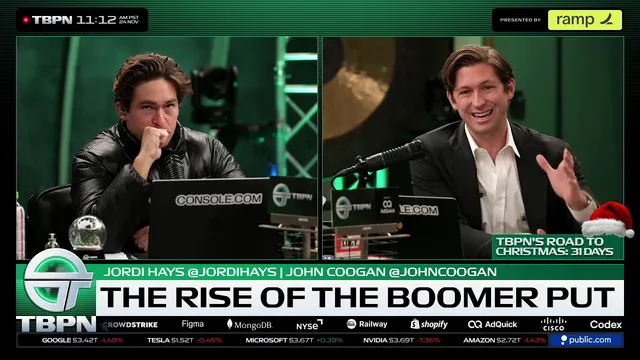
Jensen Huang Returns As NVIDIA CEO | Diet TBPN
John Coogan and Jordi Hays say Jensen Huang’s return may steady Nvidia, but leaves questions about governance, China policy and succession unresolved.
 TBPN · John Coogan & Jordi Hays
The best minutes
- 6:38Jensen’s return revives questions about governance and ChinaPro pick 4 min
- 15:08NVIDIA’s scale makes Jensen’s leadership unusually valuable4 min
- 23:56A founder’s return should come with a succession plan3 min
Every moment plays free. PRO marks a write-up that's in Pro.
Also worth watching
- 12:34Japan has authorized a team to disable suspected attack servers2 min
- 20:09The unfinished investigation leaves Jensen’s return open4 min
Skip the opening prediction-market, White House and spy-report recap, and the closing sneaker and Riemann-hypothesis chat.
Full analysis · 5 min read
Real Alpha · Nov 23
John Coogan says Nvidia's 42,000 people magnify Jensen Huang's value
- Coogan says he believes Nvidia's 42,000 people make Huang more valuable as a coordinator.
- That offers a plausible explanation for investor dependence, not proof that successors cannot coordinate the company.
- The return may steady Nvidia, while governance, China policy and succession remain unresolved.
Free with an account
Read the rest of the analysis
6 sections, the 8 other voices it tests the episode against, and what it means for you. Every episode we cut gets one.
Check your inbox
We sent a link to your address. Click it to finish signing up. Not there in a minute? Look in spam.
or
Signed up before? The same buttons sign you in. The episode, its moments and the transcript stay free.
The return may steady Nvidia, not settle governance
Hays says Huang's return is good for the technology sector and startups in the short term. But he describes mixed feelings, citing a preventable crisis and a troubling precedent around governance norms. That distinction matters because a restored CEO does not show that operations have stabilized.
Hays warns that treating a founder as exempt from rules sets a troubling precedent. He does not establish that Huang personally bypassed a specific rule or that the board violated one. Instead, he worries about what this episode may signal when a founder's influence is unusually large.
Christopher Smart founded Arbroath Group. On Balance of Power on November 23, he placed Nvidia at the heart of national security and the AI build-out. That helps explain why officials might favor continuity, but it does not validate the board's process.
Our read
The return may calm expectations immediately. It also raises the cost of explaining who has authority in the next crisis.
Nvidia's 42,000-person scale magnifies Huang's value
Coogan's clearest case for Huang is organizational rather than technical. He says he believes coordinating 42,000 people can make Huang more important.
For example, a large headcount alone does not get products shipped on schedule. Coogan's proposed mechanism is internal deal-making and political navigation, not a claim that Huang alone designs Nvidia's chips.
Coogan cites conversations with people in the pro-Jensen camp, but provides no internal operating data in the episode. That makes his explanation plausible, but not a measured account of dependency.
Rick Davis is a Stonecourt Capital partner. On Balance of Power on November 11, he said investors could see Nvidia as dependent on Huang. On Balance of Power on November 23, Smart questioned how durable Nvidia's story is if so much rests on one person.
“I do believe that the 42,000 people means he's more important”
- RDRick Davis · Balance of Power · Nov 11Nvidia’s reliance on Huang creates key-person risk
 Christopher Smart · Balance of Power · Nov 23Nvidia’s reliance on Huang raises questions about the AI trade
Our read
Scale could make a transition harder by multiplying coordination needs. But Coogan says it is hard to know why investors lacked confidence in alternatives.
The unfinished probe complicates the board's reversal
Coogan reads Matt Levine's account of the timing around Nvidia's independent investigation. Nvidia hired lawyer June Kim to investigate recent reporting, then announced Huang's resignation two days later.
Levine's point is about how the board's position could shape appearances, not proof of interference. Before reinstatement, a clean report could make directors look mistaken for removing Huang. After reinstatement, adverse findings could make restoring him look premature.
Neither possibility establishes that Kim's work will be influenced. Levine also leaves room for a thorough and impartial investigation. Coogan relays the board's stated satisfaction with Huang's candor and ability to lead.
But the segment gives no underlying evidence or detailed criteria behind that judgment. Levine discussed the issue on Bloomberg's Money Stuff podcast on November 13. He connected the governance questions with export-control risks.
Our read
The reversal raises questions about incentives and appearances without settling what investigators will find. Both the findings and the board's response merit scrutiny.
China policy remains unresolved after the return
Hays asks whether Huang made new China commitments as part of his return. The episode offers no answer and names no agreement, so a new handshake arrangement remains speculation. That leaves buyers and partners without a clear policy signal from this segment.
Gil Luria heads technology research at D.A. Davidson. On The Information's TITV on November 10, he said China-related findings could restrict Nvidia sales across parts of Asia. He treated sales exposure separately from CEO departure risk.
Still, leadership continuity does not resolve export-control exposure. Smart placed Nvidia's national-security role at the center of the discussion on Balance of Power on November 23. That framing helps explain political attention, but neither account identifies a new Nvidia commitment.
- GLGil Luria · The Information's TITV · Nov 10Luria sees China sales exposure as Nvidia’s bigger risk
- Christopher Smart · Balance of Power · Nov 23Trump tied Nvidia to the economy and national security
Our read
For operators, the unresolved issue is permission to serve markets, not simply who occupies the CEO office. Planning should distinguish policy exposure from leadership continuity.
The return renews urgency around succession planning
Hays says Huang should use his return to make lasting changes to how Nvidia operates. He links that duty to the company's importance to the country and its technology sector. The hosts invoke Apple's leadership training as a possible model, not evidence Nvidia has such a program.
Coogan offers a counterintuitive point. A founder with voting control may have more reason to prepare successors. That is a theory about incentives, not evidence that Nvidia has a plan.
The hosts discussed Colette Kress as interim CEO. They also mentioned René Haas as a possible outside candidate. Neither was presented as an appointed permanent successor.
Phoebe Liu is an Nvidia reporter at The Information. On TITV on November 9, she said many people had believed Nvidia lacked a very clear succession plan. Gautam Mukunda called the lack of succession planning negligent on Bloomberg Intelligence on November 23.
Patrick McHenry is a Lazard senior advisor. On Balance of Power on November 23, he urged structural change to reduce key-person risk. These are distinct observations, not an announced plan or identical diagnosis.
 Gautam Mukunda · Bloomberg Intelligence · Nov 23Nvidia's board should have planned for Huang's exit
- PLPhoebe Liu · The Information's TITV · Nov 9Jensen Huang's relationship raises questions about NVIDIA succession
 Patrick McHenry · Balance of Power · Nov 23Nvidia should change its structure to reduce key-person risk
Our read
Now the return renews urgency rather than resolving the risk. Decision rights, leadership development, and board authority would show whether Nvidia is less dependent on one person.
The rebound measures relief, not repaired processes
Coogan relays a report that Nvidia shares gained more than 31% after the reinstatement. A host also says the move added a trillion dollars in market capitalization that day. Those figures record investor reaction, not tests of succession, compliance, or execution.
Alex Kantrowitz discussed this on Big Technology Podcast on November 23. He said some supplier and customer deals depended on Jensen's personal handshakes. That is a reported concern, not a finding established in this episode.
For example, if deals depend on one executive's relationships, teams need to know who can renew them. They also need to know where terms are documented. Neither host provides that map, so it remains a practical test, not an established failure.

Our read
Yet a rally can reward continuity before controls improve. The useful next evidence is whether authority, contracts, and succession become less person-dependent.
What it means for you
- Map decision bottlenecks. Track decisions that require Huang's direct intervention, then compare cycle times across launches. Coogan's explanation makes coordination a measurable dependency.
- Run a succession drill. Ask who owns product and operating decisions if the CEO is unavailable. Test whether those decisions move without informal escalation.
- Model China scenarios. Estimate exposure by region under different export-control outcomes. The episode leaves any new commitments unclear.
- Inventory handshake dependencies. Ask teams which supplier or customer relationships rely on personal ties. Document agreements and identify backup decision owners.
What to watch
- Whether Nvidia completes its independent investigation and explains how its findings affect board decisions.
- Whether Nvidia clarifies its China and Southeast Asia commitments through public policy, not informal assurances.
- Whether the company discloses succession planning or changes to decision authority after Huang's return.
Send this to the board member responsible for CEO succession and risk.
Watch the 3 minutes where Coogan explains why Nvidia's 42,000 people may magnify Huang's value.
Written by Real Alpha from the episode's transcript and the other moments it links, then checked against the transcript. Quotes are the speaker's exact words.
Minute by minute
A Pro write-up, open to you here. Try Pro free for 7 days
A Pro write-up. The minute by minute is in Real Alpha Pro; the episode, its moments and the transcript stay free.
Read it with Pro, 7 days free- 1:37Washington’s role raised national-security stakes
John says Nvidia’s board unanimously reinstated Jensen Huang as CEO, president and a director 11 days after his resignation. He says the White House was involved in the decision and that US officials concluded Huang’s return posed no national-security risk. The hosts review reporting and a Eurasia Group analysis that questioned whether Alice Wong was a spy, while discussing the possibility of coercion.
- 6:01China policy needs clearer rules
Jordi says Huang’s return may help US tech and startups in the short term, but he sees no reason to treat the episode as settled because governance concerns remain. He asks whether Nvidia made concessions on China and argues that the company and the public need a clear policy rather than an informal understanding.
- 10:18Open-source AI faces cyber backlash
John warns that cybersecurity incidents could make open-source AI unpopular; Jordi says it also offers freedom and personal access to intelligence tools, and admits he is unsure where to draw the line. John cites a Bridgewater note putting a 30% chance on a severely economically destabilizing cyberattack within 12 months. Another speaker says Japan allocated 10 billion yen to a government team authorized to disable suspected attack servers.
- 14:38Jordi faults Nvidia’s crisis response
Jordi says Nvidia had a year to address the reporting and could have handled the matter before Huang resigned; John notes that the internal investigation was still incomplete. John says Nvidia gained $1 trillion in market capitalization on the return day, and argues Huang’s value comes from coordinating a 42,000-person organization and clearing internal roadblocks. Jordi calls Huang an exceptional founder but says he needs people around him who can challenge his blind spots.
- 20:09The board’s investigation remains unresolved
John says Nvidia hired an independent investigator on November 10, before Huang resigned two days later, and reads Matt Levine’s analysis of how the sequence affected the board’s expectations. Levine jokes that the investigator’s incentives may have shifted after Huang was first removed and then reinstated. John raises the possibility that the investigation could still produce grounds for a second removal.
- 24:05Jordi urges Huang to build succession
Jordi argues Huang should make substantial changes so Nvidia can survive his departure, given the company’s importance to US technology. Coogan responds that leaders without super-voting control may have little incentive to build succession, while a founder with board control might have more reason to leave a durable organization.
- 26:38Trump posted an AI image as Huang returned
John says Trump apparently dialed into Nvidia’s board meeting and posted an AI-generated image; the hosts then describe Huang’s return to headquarters and employees applauding him. They joke about his outfit, then John argues that human leaders still matter because Nvidia did not hand decisions such as TSMC negotiations or chip design to AI models. He also says the board could face changes, while Jordi says someone used his name on a petition calling for Huang’s return.
Published Nov 23, 2026.
Transcript · 24 min read
TBPN, hosted by John Coogan and Jordi Hays.
From the transcript TBPN publishes with the episode.
- 0:11John
You're listening to Diet TBPN, the best 30 minutes of today's episode of TBPN, Technology's Daily Show. And now here's the current thing in tech. Huge news. Jensen Wong is back as the CEO of NVIDIA. I was not able to predict this. We were wait what did what did Travis Kalanick tell us? We I thought that the polymarket and the Colchi were sitting at like a couple percent. It turned out to be at 10%, I believe. And he said he'd take the over. He thought it would be higher than that.
- 0:37Jordi
Well, that's the funny thing with prediction markets is like generally people see something has a 10% chance and they just assume, okay, there's no shot.
- 0:45John
That was me, for sure. And it seemed like it was over.
Read the whole transcript
- 0:48Jordi
Turns out, you know, things that have a 10% chance
- 0:52John
to get it hits something. 10% of the times. Yeah. So And we are in we are in wild, wild times.
- 0:57Jordi
No, but even yesterday, obviously Bessant was like if you're reading the T leads. Yeah, it seemed like had to at least increase your odds a little bit.
- 1:10John
Well, just to give people the quote, I believe he was on TV and he says, NVIDIA needs to go outside for whoever their next CEO is. And then he follows it up by saying, well, well, Jensen's on the outside now, which is a crazy way to it's a logician's gamble. Like it's technically true, but it's not. what you think of when you think of like going outside the company for a new CEO. You think Renee Haas. You think someone who's, you know, in at another company or running another semiconductor company or something like that. But here we are. Here we are, Jensen's back. So the NVIDIA the NVIDIA board of directors has officially and unanimously reinstated Jensen as CEO, president and board of director. He got three jobs back. He didn't just get one. Triple kill. After his resignation 11 days ago, if you're if you're monitoring blipbench, Sam Altman still hasn't beat. Sam got his job back in, I think, four days. Took Steve Jobs 12 years, so he's closer to Sam than Steve, but still 11 days. Pretty, pretty crazy timeline.
- 2:14John
Not immediate, but very, very quick. The timeline's going crazy. We'll go through a bunch of stuff. An interesting piece of the story is just how involved the White House was in Jensen's return. Trump has been posting on the truth social memes. It appeared that he either like called in or was represented in some way at the board meeting that happened on Sunday. A lot of the executive team was not included in that. The board was discussing this.
- 2:36Jordi
At this point it's like national. Interim CEO was not.
- 2:40John
Apparently blindsided. That's the reporting. So very, very odd sequence of events. But this it feels like it's becoming more of a discussion around national security strategy, geopolitical strategy, as opposed to you know something that just a private corporation needs to decide, right? And so US government officials and decided that bringing that bank bringing Jensen back posed no national security risk. We saw David Sacks posting a little bit about this saying that a lot of the investigations from the various government organizations were either inconclusive or dispositive of the original claims. was not a lot of evidence showing that Alice Wong was a was in fact a true spy.
- 3:21John
I read a fantastic research report from the Eurasia group sort of outlining the case for Alice Wong not being a spy and they kind of break it into three tiers. There's like you're James Bond you're an agent you are your job is first and foremost a spy and then you might be deployed with like an like a nom de guerre like a you know a cover story for a mission and they were like yeah it doesn't seem like she's that then there's the question of like an asset someone who has who has flipped someone who's built a career but then is actually being paid for information on an ongoing basis willingly participating with a particular a surveillance organization intelligence organization and then their argument in this report was She might fall into the third camp, which is compulsory asset intelligence giver.
- 4:18John
So basically her career was all over the place. She'd made a lot of money. You're not gonna really necessarily pay her for information, but if she if you are threatening to take away her business, then maybe that would get her to cough up information or something like that. They were pointing to a bunch of different things about how spies maybe wouldn't be posting all over social media that they're with someone powerful. That seems like a sort of a m a mistake potentially. But clearly the US government is in favor of this coming market.
- 4:51Jordi
Well let's look at the facts. The fact is that last week we had one of the worst market sell-offs in history. Yep. And we were in Las Vegas for Formula One. I was like, why are we even here? This is there's nothing there's nothing to celebrate. It's a very this is a city that I associate with celebrations and I was like, I don't wanna be here.
- 5:16John
Yeah.
- 5:17Jordi
With the current state of things. But yeah, I was very shocked to You
- 5:23John
think everyone in everyone in Las Vegas was short seller? Yeah, I think I think potentially.
- 5:28Jordi
I think everyone on the casino floor w had was short and then they and then they were like
- 5:34John
Michael Burry was going hard.
- 5:36Jordi
Yeah. Yeah, yeah, I'm sure I'm sure he was. No, it was a it was a it was a fun yeah, we had a great fun
- 5:43John
time with cadwac out there.
- 5:45Jordi
It was a great group of people. A lot of tech representation across every single team. Oh yeah. So yeah, really, really back the truck up great group out there. But yeah, it was I was completely I just didn't think this was gonna happen as late as yesterday. Back to NVIDIA. Back to NVIDIA. Didn't have this I mean again, I just it felt like he had resigned. Obviously the implication was that he was forced to resign. It was like, hey, you started this company, we don't want to fire you, resign. Now he resigned. The sell-off was so intense and I do think that just freaked a lot of people out. There's some concern that this whole trade, there's like real systemic risk buried in this trade. And putting Jensen back on at least is like a band-aid, right?
“in some ways like basically ignoring corporate governance norms and just saying like it certainly gives a lot of it certainly gives a lot of ammunition”
- 10:54John
I mean, AI is already so unpopular. I feel like open source AI is going to be a million times less popular, especially in the in the wake of the like the cybersecurity incidents. I know people go back and forth on that, but like there's definitely a world where the narrative that Like the reason you checked your bank balance and it was zero for a day was because of open source, which was because chips got sent to China and models got trained that got open source that were able to be used in RTACs.
- 11:27Jordi
And big open source defenders will be quick to like we had like Gavin Baker last week said every major cyber attack has come from closed models, which is just like It doesn't seem right.
- 11:39John
If you look at the RTEx GitHub, like people are definitely downloading that thing and wreaking havoc. In fact, that's already been confirmed with that South Korean bank that got hacked or the Japanese bank, remember, that a bunch of stuff leaked. That was it was definitely open source. And there's good arguments for continuing open source, but I just think from a popularity perspective, it could become like deeply, deeply unpopular. Like if a i if Americans lose like if the power grid goes down for a day, people are gonna be like Why are we letting people have these tools that let them let random people just do cyber attacks? Like this is annoying.
- 12:14Jordi
Yeah, and I think it's okay, it's okay to have like kind of mixed feelings around it. Like on one hand, it's like it's very pro, it's very pro-freedom. Yeah, yeah. It's cyberpunk in a cool way that you can just, you know, have intelligence in a box in your home. And then of course there's gonna be some negative implications for that and I don't I don't personally know I don't know the right answer.
“they have authorization to go hack and disable that server.”
- 14:43Jordi
Yeah, the other, the other The other like my other thought this morning is that now really having a better understanding of the timeline of like, remember, last October there was New York Times reporting on Alice Wong and Megaspeed, and they hired a crisis comms firm last year. It really feels like another unforced error from Jensen and NVIDIA management and the board to let this whole thing go down the way it did.
- 15:12John
Okay.
“And after talking to so many people in the pro-Jensen camp, I do believe that the 42,000 people means he's more important because actually getting any forward progress”
- 19:22John
It's hard to it's hard to read into why the why the market broadly was like so not confident that anyone else could step in, even when there were rumors about other people. you'd think that there would be the stock would be going more up because maybe they market as confidence to collect crest post earnings or they have confidence that a Renee Haas could step in and stabilize things that never really happened it was just down 5% 10% like every day for a month while the board star for that 11 day period it was basically just down every day no matter what the board tried to message because they tried to message like oh well we have Colette here how do you how do you guys feel about this?
- 20:02John
And it was like not good. And then I was like, oh, well, like let's tease out someone else that we're like, we're thinking about outside. We're thinking about inside. Here's this option. And every time everyone was like, I'm getting out.
- 20:13Jordi
Yeah.
“The funniest outcome, which je which Matt Levine loves talking about, is that Kim and the independent directors conduct their investigation thoroughly and impartially.”
“the same people that were writing letters to the NVIDIA board saying, bring back Jensen, should be writing more letters to Jensen saying like we all expect you to make some very big changes”
- 27:04John
It is a real screenshot of a fake image, very confusing. But Jensen has already been back. He has his new badge, he's back at NVIDIA HQ, and it seems like a warm reception. I follow some NVIDIA employees and I saw some social media posts this morning saying he's back. They were excited about
- 27:22Jordi
it. I had to play this video.
- 27:24John
Yeah. They're clapping.
- 27:27Jordi
And the first thing we need to figure out is does he still have those Fendi sneakers?
- 27:31John
Oh the Fendi's back on. Zooming in to try and clock him.
- 27:36Jordi
They're more casual. I don't know.
- 27:38John
Is isn't that a leather jacket? Or is that cloth? I feel like the leather might have gone. It's still a jacket, but I don't know if it's full leather at this point. Might be a meet in the middle compromise mode.
- 27:53Jordi
Yeah, that doesn't look like leather to me.
- 27:56John
It doesn't. It doesn't.
- 27:58Jordi
Maybe he's been humbled. He really does have he has the aura of a rock star still.
- 28:07John
Yeah, for sure.
- 28:10Jordi
Undeniable. Yeah. Yeah, Halo in the chat says gotta earn the leather jacket again.
- 28:15John
Yeah. Gotta get the stock price back to all-time highs, then the leather jacket goes back on. Well, Julia Black predicted this. A couple days ago, November 17th, she wrote, Could Jensen Wonk be having a blip? Three years after Sam Altman triumphed over a failed board coup at OpenAI, investors are lobbying to reinstate and the ousted NVIDIA CEO following the revelation of several compromising affairs. We have Julia joining in just a bit to talk more about the process that went into this. Also, she was talking a lot about the New York Times, really, really diving into the story. I that was not what we heard from Ben Smith at Semaphore. He was kind of like a Serubio memo that like was distributed to everyone. There's not like one person. So I'm interested to hear her take on like what was the nature of the journalism that went into this whole process, because with a Theranos, you have a John Kerry Rue, right?
- 29:10John
With a Harvey Weinstein, you have a Ronan Farrow. There's a there's a hero journalist. who spent a year, worked on a story, really developed it. With this, it was it kind of was just everywhere all at once. And so, but maybe she knows more because she's been tracking the inside stuff. Well, what else is in the timeline that you want to that you want to talk about? Ross Douthit had a good point. He said one guy in a leather jacket is more important to the NASDAQ than a mathematical demigod breakthrough. He's of course referring to the Riemann hypothesis. quarter million pages. Did you read it this weekend?
I skimmed through it.
- 29:50John
You skimmed through it. You got through most of it. That's good.
- 29:53Jordi
Skimmed it.
- 29:53John
But Ross's takeaway is that the human era is not quite finished yet. So it is, you know, they talk a big game about how good Nemotron is, but at no point did the board say We got Nimotron on the on the on the case. Nemotron will be negotiating with TSMC from here on out. We're good. Nemotron will be in Slack. Nemotron will be deciding the architecture of the next NVIDIA chips. No, that didn't happen. Humans are still in important, apparently. And Lloyd Blankfein in retirement now has been really on a posting spree. Because he said the graveyard is filled with indispensable men. He was saying that everyone is saying like Jensen can't go down and yet this is the nature of graveyards, but he says, I guess you can come back from the graveyard if you're really, really indispensable.
- 30:44John
The NVIDIA board will not have that opportunity. The NVIDIA board might have to go, there might be changes. I'm sure there's, you know, Travis outlined this in his in his 12 point plan or 15 point plan about find out who the allies are, find out who your enemies are. If you come for the king, you better not miss, is the saying. And so it'll be interesting to see who rotates out, who spins out. Maybe there'll be some new startups. Maybe there'll be people who are not in the Jensen camp leaving starting their own semiconductor companies.
- 31:18Jordi
Who knows? There was that one more senior NVIDIA employee last week saying like there's a petition going around to reinstate Jensen.
- 31:25John
Yeah.
- 31:25Jordi
I wanna be clear that I did not sign it and somebody used a used my name to sign it, but I would never under any circumstances sign it. He's gotta be having a bad
- 31:37John
he was like I actually did sign it. It just flips immediately. Leave us five stars in Apple podcast and Spotify. Goodbye.
- 31:44Jordi
We love you