Free with a sign-in.
The best 11 min of 32
Inside the AI Training Data Market — Gabe Greenberg, G2i
Gabe Greenberg says labs need expert-built, carefully calibrated training data—and often buy it from partners rather than build large teams in-house.
 Latent Space · Shawn Wang (swyx)
- Gabe Greenberg is founder and CEO of G2i.
The best minutes
- 6:44Training tasks should sit just beyond current model ability4 min
- 18:40Labs pay more for exclusive data but avoid in-house overhead4 min
- 22:06Compute pressure makes labs buy usable data before perfect data3 min
Also worth watching
- 3:04Training-data projects now need staff-level engineers2 min
- 12:16Labs buy through fast pilots, not enterprise RFPs4 min
- 25:16Company data needs connected, multi-tool work histories3 min
- 27:39Robotics and engineering are opening new data markets3 min
Skip the conference and company intro, the post-training career discussion, the market-size discussion, and the closing ORC product walkthrough.
Full analysis · 6 min read
Real Alpha · Nov 27
Gabe Greenberg says some projects used 6,000 mid-level engineers
- Greenberg says some 2023 and 2024 projects involved 6,000 mid-level engineers.
- His account concerns engineer-led datasets, not all training work, while robotics collection remains high-volume.
- Budget for task design, expert time and iteration, not annotation counts alone.
Free with an account
Read the rest of the analysis
7 sections, the 3 other voices it tests Greenberg against, and what it means for you. Every episode we cut gets one.
Check your inbox
We sent a link to your address. Click it to finish signing up. Not there in a minute? Look in spam.
or
Signed up before? The same buttons sign you in. The episode, its moments and the transcript stay free.
Engineer-led dataset work now needs staff-level judgment
Greenberg said projects in 2023 and 2024 could involve 6,000 mid-level engineers. Last year and this year, he said, the work he sees centers on staff-level engineers and complex dataset building.
The change he describes is in the work’s design burden, not a universal drop in labor. He said these projects involve taste, and benchmarks now require iteration from instructions onward.
But robotics is an explicit exception. Greenberg said its data collection is extremely high volume and is starting over.
G2i sells human-data and computer-use infrastructure to frontier labs, making Greenberg a supplier in the market he describes. He said it has five or six customers at the moment.
He said G2i did $15 million last year and will do about $100 million this year. He also called it profitable and said it had no VC backing.
He did not break out data revenue. Those figures show one supplier’s growth, not market-wide demand.
Our read
Greenberg’s disclosures make G2i’s growth concrete, but cannot validate total market demand. The clearest evidence is a change in dataset work, qualified by high-volume robotics.
RL tasks must teach without becoming evaluations
An RL task needs a narrow learning gap. Greenberg said a task made too hard becomes an evaluation, while an easy one is worthless.
That boundary makes data production closer to experimental design than bulk labeling. Tasks, seed data, verifiers and instructions all shape whether a model can learn.
For example, Wang said some SWE-bench instructions could tell a model exactly how to fix a bug. That exchange illustrates benchmark-design risk, not proof that every benchmark is flawed.
G2i trains staff-level engineers for this work, Greenberg said. Its training tests whether people can ideate, solve and iterate, with payment tied to meeting quality standards.
Scott Wu said on TBPN in November 2026 that many coding models are good enough. He sees behavior, speed and cost as differentiators.
Cognition uses task data and evaluations in mid-training and post-training. That supports the focus on behavior, not Greenberg’s full historical account of training-data labor.
“So you need to make them just hard enough that they're a few steps away from what the model can do today”

Our read
Wu’s account supports the importance of behavioral differentiation, but not the whole shift Greenberg describes. The episode provides no independent measure of how widely this staffing change has spread.
Labs buy pilots for iteration, not just volume
Greenberg said labs buy through quick pilots rather than competitive RFPs. He contrasted that with enterprise procurement, which can take six to 12 months, if lucky.
A fast pilot tests whether a partner fits a current research gap. Greenberg said buyers now want behavior, taste, gap analysis and partnership, not just correctness or volume.
He said vendors bring outside research and help find model gaps. Then partners and labs iterate on everything from instructions down.
Greenberg also said quality can outweigh a 20% price saving. That is a supplier’s account, and the episode gives no buyer-side spending data to establish how typical it is.
Our read
For buyers, a pilot should show whether a partner can find gaps and improve the data quickly. A low unit price alone does not answer that.
Exclusive data costs more, while in-house work adds burden
Off-the-shelf data can be sold to multiple buyers, Greenberg said, allowing a lower price. Exclusive data costs more, though not every lab demands it.
That leaves a tradeoff between differentiation and budget. Greenberg said some buyers accept shared data, while exclusive work is priced higher.
His case against building everything internally centers on management load. He cited legal exposure, contributor coordination, staffing and the complexity of handling thousands of people.
Wang raised the question of a mature in-house operation. Greenberg narrowed the example to vendor-management infrastructure, then said no lab had built the whole operation in-house.
Joy Jiao said on the a16z Podcast in November 2026 that she would say most datasets have a half-life. She said the period can vary by data type.
Her biology example cautions that an exclusive dataset’s advantage may erode as alternatives emerge. It does not establish how quickly coding data loses value.

Our read
That is a caution about erosion, not evidence that data scarcity will end. Buyers still need to estimate how long exclusivity matters and whether its premium pays.
Idle compute can favor usable data over ideal data
Wang said data spending seemed to be like 2% to 3% of compute budgets. He then gave a like 4% to 6% range and said he could argue for 50%.
Those numbers came from Wang, not a ratio Greenberg supplied. The operational point came from a lab Wang spoke with, which said compute burns while sitting idle.
Greenberg agreed that sometimes usable data is preferable to waiting for ideal data. So compute urgency can change what buyers accept in the moment.
Greenberg identified average handling time, or AHT, as the pricing basis. The $250 hourly rate came from Wang’s example, not a quoted G2i price.
Greenberg said a task might be 80% or 90% good, then return for another iteration. He did not explain how rework is billed.
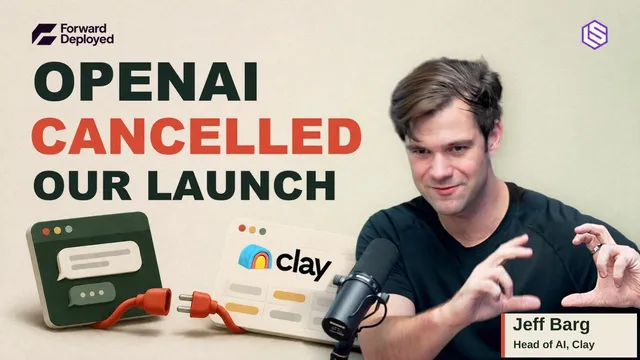
Jeff Barg, Clay’s head of AI, spoke on Latent Space in November 2026. He put post-training’s economic bar at roughly $10 million to $100 million in inference spend.
Barg estimated scoring 40 million companies could cost about $1,500. That different task cannot set G2i’s task prices.

Our read
Compute urgency may explain faster acceptance, but it does not establish the right data share. Buyers should track rework separately because the episode leaves iteration billing unspecified.
Linked company records can strengthen computer-use data
For startup data, Greenberg said the threshold had tightened. Roughly three or four months earlier, he recalled, like anything would go.
Now, he said, a seller needs at least a few terabytes. He added that buyers want more than 10 headcount.
Those are distinct observations, not one firm cutoff. Treat them as Greenberg’s current account rather than market-wide standards.
For instance, Greenberg said records across GitHub, Linear and another tool can be especially valuable when tied to one project. That linkage can help computer-use tasks reflect work across applications.
Greenberg illustrated the problem with similar names across Slack, email and HubSpot. By a third environment, he said, the system can confuse them.
Wang joked about recording employee screens for data, while Greenberg responded uncertainly. Still, the conversation does not establish employee consent, customer confidentiality or contractual rights.
Our read
The commercial signal is connected, sufficiently scaled activity, not data ownership by default. Permission and confidentiality remain separate tests the episode leaves unresolved.
Greenberg expects robotics and engineering data demand to grow
Greenberg expects demand in robotics, 3D world models, CAD, mechanical engineering and chip design. He also sees room in legal, finance and computer use.
He said people now laugh at six-month contracts for some work because time horizons have changed. Robotics and 3D world models remain exceptions where six-month contracts are possible today.
These are forecasts from a supplier positioned to serve those markets. The episode supplies no contract totals for the emerging areas.
Greenberg said he is considering an investment with a researcher challenging current architectures. He framed one possible challenge as cutting inference by 50% with, like, 1% data loss, that sort of thing.
He expects more overt challenges next year, but offered no measured result. The figures remain an approximate example, not a performance target.
Our read
The contract opportunity is specific to robotics and 3D world models, not a general return to long terms. Watch for measured architectural gains, not a promise of those figures.
What it means for you
- Track the capability gap. For each RL task, record the model failure it targets and the behavior it should teach. Separate tasks that train from tasks that only score performance.
- Budget for iteration. Estimate pilots using expert time and average handling time. Track returned work separately because Greenberg did not explain how iteration is billed.
- Price exclusivity separately. Compare the exclusivity premium with the value of sharing data and the internal work of managing contributors.
- Audit linked-data rights. Check whether records connect across tools, then review employee permissions, customer confidentiality and contracts before treating company data as saleable.
What to watch
- Whether labs keep funding fast pilots as model gaps shift.
- Whether robotics and 3D world models produce repeatable six-month contracts.
- Whether the architectural challenges Greenberg expects next year yield measured efficiency gains.
Send this to leaders of model training, data operations and procurement.
Watch the minute where he gives the 6,000-engineer figure
Written by Real Alpha from the episode's transcript and the other moments it links, then checked against the transcript. Quotes are the speaker's exact words.
Minute by minute
- 0:00Training tasks must stay trainable
Greenberg says tasks should sit a few steps beyond what models can do: harder tasks become evals, while easier ones are worthless. He says G2i builds human-data and computer-use infrastructure for frontier labs, with work expanding to 3D and STEM; the company did $15 million last year and expects about $100 million this year without VC backing.
- 2:40Human data now favors specialists
Greenberg says early projects used 6,000 mid-level engineers in gig-work arrangements; current work relies more on staff-level engineers building complex datasets that require taste. He says robotics may bring back high-volume data collection. RL environments also need tasks, seed data and verifiers, not just production code.
- 7:59Agentic skill sets the hiring bar
Greenberg says G2i looks for engineers who can work agentically, and that the screening test changes quickly. For task creators, G2i uses training and pays only when a task meets its quality bar; referrals earn $200 to $500. He says engineers can grow from project work into team-lead and full-time roles.
- 12:16Labs prioritize partners and quality
Greenberg says labs skip competitive RFPs and can move quickly from pilots worth a few million dollars to larger deals; a researcher can spend $10 million in 60 seconds. He says buyers have shifted from volume and correctness toward behavior, taste and gap analysis, and that quality can matter more than a 20% price saving. He also points to security and supply-chain risks in large projects.
- 16:24Shared data lowers costs; exclusivity costs more
Greenberg says market size is still unclear, but expects demand to grow as labs pursue harder tasks, more neo-labs emerge and enterprises seek their own intelligence. He says off-the-shelf data can be sold to multiple labs at a discount, while exclusive data costs more. He says labs avoid large in-house operations because managing contributors adds legal, staffing and operational complexity; the lab with the most mature operation had vendor-management infrastructure.
- 22:06Compute urgency shapes data pricing
Wang estimates data spend has risen from 2% to 3% to 4% to 6% of compute budgets, and says he could argue for 50%. Greenberg says labs may buy good-enough data quickly to keep available compute busy. He says vendors price tasks by average handling time and iteration; raw-data buyers now want at least a few terabytes and more than 10 employees, with linked records across tools especially valuable.
- 27:39Demand is moving into physical engineering
Greenberg says robotics and 3D world models can support six-month contracts today, and sees room in legal, finance and computer use. He identifies CAD, mechanical engineering, chip design and other non-software engineering as areas with room to grow. Wang says he is considering an investment in a researcher's approach targeting 50% lower inference with 1% data loss; Greenberg expects more challenges to current architectures next year.
- 30:21G2i uses ORC across its operations
Greenberg describes ORC as a multi-agent orchestration platform that G2i uses for its software-development factory and data infrastructure. He says potential use cases include security, military and government, and oil and gas. He describes it as an enterprise framework for coordinating models and agents, built in Rust and hostable anywhere.
Published Nov 28, 2026.
Transcript · 30 min read
Latent Space, hosted by Shawn Wang (swyx), with Gabe Greenberg.
From the transcript Latent Space publishes with the episode.
But if you make them too hard, they become evals. [laughs] Right? Uh, and if you make them too easy, they're, they're worthless. So you need to make them just hard enough that they're a few steps away from what the model can do today, so they're trainable, and efficiently trainable. [upbeat music] Okay, we're here at AIE Code. First podcast of the day, uh, with Gabe Greenberg, CEO of G2i. Glad to be here. Always a pleasure. Uh, this is the first ever co-organized conference between AIE with a external partner, G2i. Uh, and you guys are crushing it. Um, it's been such a pleasure to work with your team. Um, I've obviously known you for more than 10 years maybe, I think. Maybe 10 years.
Um, and you guys run React Miami, AIE Miami, and now you're co-running AIE Code with us. Um, but that, you know, that is your side project. What is G2i? Uh, we, uh, we do human data and, uh, and computer use. You know, build infrastructure for the labs to help them train models. You know, some coding to computer use and, and we're branching out into 3D models, uh, you know, STEM, um, mechanical engineering, et cetera. But the, uh, there's just a massive demand for, uh, obviously better models. You know, it's very, uh, Jevons paradoxy, so you know. Yeah. Yeah. The more you use, the more you find things that you wanna use it for and, and it just k- keeps going from there. Yeah.
Um, what are some of, like, the brag public numbers that you can give around the scale of, uh, what you're doing? Yeah. Uh, last year we did 15 million. Uh, this year will be about 100 million, no VC backing. Jesus. You know, profitable company. Um, I think we could, you know, easily triple next year. Yeah. Um, and, uh, it's, it's just a, it's a really fun problem to solve. And you're selling only to frontier labs? Pri- like, you know, are there non-frontier labs? Or wha- what is this market? Like- It's, it's frontier labs, you know, at, at the moment. Okay. So there's like five customers. There's like five or six customers. Okay.
Read the whole transcript
But you, you see some of, like, the other labs starting to, you know, the different labs that aren't the top, you know, two or three raising different amounts of money and then they come to the table with d- you know, they can buy different amounts of data. I think what's interesting and is not publicly known, and I won't go into specifics, but you know, only really one of the labs had a very, very, very mature human data operation. Like, like in terms of like the infrastructure, the people inside the house. Like in-house. In-house. Yeah. But no- not even their... It, it, how they run it. Like a very large, mature team and that lately I've seen it grow i- internally inside the labs of, of how they deal with, uh, with their researchers, how they deal with vendors, how, you know, so much of it was off the shelf data.
There's, there's some movement towards partnership because the, the benchmarks are getting harder, and you just have to iterate on everything from instructions on down, you know, to get the data right. Yeah. I mean, this is something I've been exploring, right? Like, a lot of people are familiar with the RLHF era of human labeling where you're mostly getting like people from like Nigeria, whatever, uh, to say like, "Does this read better than the other sample?" And they'll choose words like delve. Delve, that's like w- why models used to like delve a lot. Um, well how has human data changed? You know? Like, what, what do people want now?
“fast-forward, you know, last year and this year, you're really looking at staff-level engineers.”
I, I think, um, you know, one thing I, I do wanna bring up is that you had a legacy or you, you had a, you came from a recruiting business, right? And in some ways this is the natural next evolution of that. Like, you have to recruit people anyway and you have to recruit, um, smart people, good people at, uh, who are good engineers and so that relies on a lot on your skillsets. The only difference I would say, which is very interesting to me, uh, if I was one of these people, uh, these, uh, human, human experts, is that they're not working on a production project, they're working on a RL environment or they're working on some kind of dataset for, for people.
Yeah. Um, well, I mean a lot of these handshake which is all like the STEM side, all the PhDs, they were not growing quickly and they were a, a, a hiring marketplace of some sort and then the labs got to them. So it's happened with like five of our c- like we were all moving around the same time- Yeah... right? Yeah. So it's a natural evolution like you said. Um, additionally though, like the ones that have focused on the, the best people in their environ- in their, in their kind of network and their community end up better suited for today than they did two years ago. Yeah. Like you came through, that's how I met you is through G2i. Yep. You know, 10 years ago. Yeah. Right?
And we were extremely particular with who we let in based on what the, the best, you know, of React was or, you know, and, and the n- there was a lot of nuances there. Um, so now when you come in, you know, to, to our network, uh, yeah, we s- we still have the, the, the hiring marketplace. It's very small though now. Uh, e- everything is to the labs.
“So you need to make them just hard enough that they're a few steps away from what the model can do today, so they're trainable and efficiently trainable.”
You know, like, um, it, it, it can feel kind of transactional. You know, it's like, oh, you're, you're engaging me for like a job and like I'll, I'll come in and, you know, it's, it's, it's fun for a while.
Um, but is there a sort of long-running relationship, you know, that is built up in the network? A lot of our engineers end up team leads full-time working across... We, almost everyone we've hired at this point from our engineering team- Yeah... has come from, um, initial work in the last year or two. Yeah. Um, even our VP of eng. You know, I mean, they were referrals. It was different. They came in as EMs, you know, but they were for specific projects and they have ramped up because there, there's a hunger and a fear, you know, in that we're all being replaced in different ways. And so- You're helping to replace us. Yeah, that's great. We're helping to replace us. I have no problem with it. No, no problem. Right. Yeah. It's, it's inevitable. We'll, we'll find other work. We'll find, yeah.
But the other work is like what Anthropic's doing with like, you know, they're like, "Oh, we don't need GitHub anymore 'cause it doesn't work for us." Mm-hmm. "So let's rebuild that." So it's like the complexity, you know, i- is, uh, is just increasing and so that's the fun, is that we can do way more in a shorter amount of time, or if we have a longer amount of time it's way more complex. And hopefully useful, right? Um, so yes, they are sticking with us, they're growing, and they're being... When you see how the sausage is made, y- the post-training starts to be a little bit like Less, uh, mystified.
“The labs are different in that if you have something they want, they have much shorter processes.”
What, what do you think about, what else would you observe about the market in general? You know, uh, people would say things like, "Well, okay, there's five customers," and, like, maybe that's it, you know?
Um, is there, is there a TAM question? Is there, like, a recurring revenue question? Um, or it's just too early to tell? I mean, the right answer is it's too early to tell, but I'll take a stab. Take a stab. Uh, the, the, the stab is that, uh, you have one, you have one thought process that actually everything's gonna get more expensive, uh, over the next, you know, couple years, and your ability to grow is massive. You have another kind of thought process around growth of these, you know, data vendors around, well, people are storing data even if they don't need it, right? Uh, the Jevons paradox, you know, kinda element that, like, electricity, we came to points where, you know, we didn't really desire more until obviously this AI boom. But intelligence is not like that.
It's very, like, it's just we just want more and more and more. So how do you... Once, e- even if you get the correctness on a certain benchmark, there's always something that's longer horizon or deeper or, you know, how do we, you know, populate Mars? And how does the model solve for... Stuff that's, you know, um, and, and, but it just gets more specific, you know, and expensive. Um, so if you look at the labs, there's an opportunity there. If you talk to most of the researchers at the labs, it's like going to LA and asking w- anybody on the random, on, on a street corner what, what's their, uh, what's their movie about. [laughs] You know? And, and most of them will answer, right?
So if you, if you talk to a researcher at the labs, like, "What are you thinking about doing in your startup?" They all have startup ideas. So you're gonna see a lot more neo labs. You're gonna see a lot more startups with, you know, verticalized harnesses that are specific around some pain point. Like, we are just continuing to get, like, higher up in the, in the leverage, you know, kind of food chain, and, um, I'm excited for that. Enterprises is, is the space that some of the bigger, uh, data vendors or the biggest data vendors are betting on. Uh, everyone's gonna need their own intelligence, you know?
And, uh, they're not gonna wanna, they don't necessarily have the, the time and the money to build it all in-house. Yeah. Um, so they're gonna need help. Buying data, building data sets, doing the whole thing that every single lab, and you're gonna have a bunch of Neo labs inside of every Fortune 500 company.
“So when it gets sent off, you might have 80, 90% that, yes, this is good. Here's 10%. We want these iterations.”
And, you know, this is where you have companies' data, you know, um, chemical engineering, you know, firm that's 50 years old. You have a small, you know, beauty firm that has, you know, Calendar and, and Cl- Klaviyo and, like, you know, all these, you know, and, and, and that's become the 2026 theme, I think. Actually, a, a, a side question.
“Now you need at least a few terabytes of data. You, you want more than 10 headcount.”
“Robotics, 3D world models, you can sign a six-month contract today.”
Thank you for building the future, and thank you for helping to build AE as well. Um, I think the next one we'll be working together on is AE Miami. Yeah. Yeah, April. April. Um, so people look forward to that. And also, uh, give, give us a call to action. Like, uh, if people wanna join you on the expert side, if people wanna pay you money for, for data, how do, how can they do that? G2i.ai. That's it. That's the spot.
And if you wanna check out, we have a, an, a multi-agent orchestration platform for coding that's kinda like, you know, for enterprise, for military, government- Yeah... Orch, Orchestrator- Yeah... orch.ai. Which you use yourself. We use every day. That's how you're so productive in building all, like, high-quality environments for people. And our own infrastructure for data- Yeah... we build on top of that. I notice you don't, you don't call it a software factory. No, because it's an operating system. Like, it's literally what we- Oh, come on, everyone says it's an operating system. [laughs] No, but, like...
Okay, everyone says it. [laughs] Uh, we'll, we'll see who actually can do it. But, yeah, exactly. You know what I mean? Like- Yeah. Some, some of it's actually true. Some of it's real. Yeah. And, uh, you know, Theo referred me to a few of the engineers that created it, and, uh, it's... I've never seen anything like it. I've really never seen it. And, but the fun thing is that we're not using it... Software factory is use case number one. We have, uh, companies are starting to use it for security issues. Uh, the, the military wants to use it for things like that. Um, you have, like, oil and gas industry that's talking to us about, you know, a myriad of different things. You're just, you just need a, a, a better way to deal with multiple models.
It's more than a router, you know, um, at enter- an enterprise level. Um, and having an SDK for them, it's built in Rust, it's hostable anywhere. Um, yeah, it's a, it's a different, I guess, uh, it's, it's a different focus rather than just composable pieces. It's like, hey, it's more... It reminds me of React. It's more of an opinionated framework on how to do, um, multiplayer, you know, um, you know, uh, adversarial governance, you know, inter-agent comms. Like, that's the part that we're taking care of. Everything else is kinda you, you do what you wanna do in your environment. Awesome. Um, everyone look forward to it, and we'll, I'm sure we'll talk more. Yeah. Thanks, Lux. All right. Thanks for coming on.
All right, man.