Free with a sign-in.
The best 15 min of 101
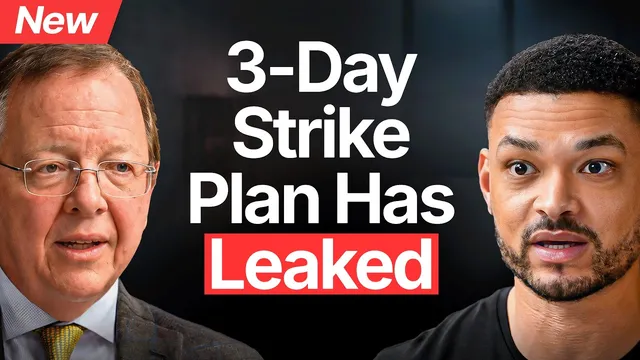
US ELECTION DEBATE: What Trump’s Return REALLY Means For The World! Is The UK About To Collapse?
Scott Galloway, Daniel Priestley and Konstantin Kisin argue that economic opportunity and social trust will shape the West after Trump's return.
 The Diary Of A CEO · Steven Bartlett
- Scott Galloway · Professor
- Daniel Priestley · Founder, Dent Global
- Konstantin Kisin · Political & Social Commentator
The best minutes
- 1:08:11Platforms should be liable for algorithmically boosted defamation7 min
- 1:16:19Online platforms are fragmenting shared reality8 min
Also worth watching
- 17:12The UK has yet to choose a business model6 min
- 36:54Galloway favors income-based affirmative action4 min
Skip the repeated Xero and Gusto sponsor reads, the Perfect Ted and diary promotions, and the Amex and mental-health ads.
Full analysis · 6 min read
Real Alpha · Nov 9
Scott Galloway links platform liability to Fox's $750m bill
- Scott Galloway cited Fox's three-quarter-billion-dollar payment, or $750 million by our calculation.
- His test is whether platforms amplify defamatory speech beyond organic reach, not whether users may speak.
- Teams should separate recommendations, paid ads and user posts while testing how liability rules might reach each.
Free with an account
Read the rest of the analysis
6 sections, the 3 other voices it tests Galloway against, and what it means for you. Every episode we cut gets one.
Check your inbox
We sent a link to your address. Click it to finish signing up. Not there in a minute? Look in spam.
or
Signed up before? The same buttons sign you in. The episode, its moments and the transcript stay free.
Galloway puts algorithmic reach at the center
Scott Galloway draws a distinction between allowing speech and distributing it. He accepts that people should be free to say things others dislike. His concern starts when a platform's ranking gives a statement reach beyond its organic audience.
That distinction makes the product decision visible. A feed is not only a pipe when ranking determines what reaches users, and how often. The question becomes whether a company should bear added responsibility for distribution it controls.
But the episode does not define how to measure reach beyond the organic audience. It also does not explain what proves a platform knowingly amplified a defamatory statement. Those boundaries determine whether the proposal targets a specific editorial choice or makes routine ranking legally risky.
For example, a team could track recommendation reach separately from followers, paid distribution and user uploads. Those records would help establish where the company intervened, rather than merely hosting someone's words.
“If you decide to elevate content beyond its organic reach, then you are making an editorial decision”
Our read
Galloway's proposal makes algorithmic distribution the focus, rather than offensive speech alone. It identifies a product decision but leaves the legal threshold unresolved.
Fox illustrates liability, but not identical duties
Galloway's example is Fox News and Dominion voting machines. He said courts found Fox liable after it distributed statements it knew were false, and that Fox had to pay three quarters of a billion dollars.
Our conversion is three quarters times $1 billion, which equals $750 million. That makes the figure memorable, but the case does not establish that a social platform has the same legal duties as a broadcaster.
The comparison rests on company involvement. Galloway describes Fox distributing information its own organization knew was false. Platforms host far more user speech, and this discussion supplies no legal test for when ranking becomes comparable editorial conduct.
Still, the case puts pressure on the idea that distribution is always neutral. A business that selects and monetizes high-engagement content makes choices, even when users supply the underlying words. Whether those choices create liability is the question, not a settled answer.
Our read
The Fox example supports Galloway's concern about knowingly distributing false material. It does not resolve whether algorithmic amplification should trigger equivalent responsibility.
Paid fake ads offer a clearer product test
Steven Bartlett made the dispute more concrete with a personal example. He said fake BBC-style stories used his face and appeared as paid X advertisements. One falsely said the Bank of England was suing him.
Bartlett said friends sent him the ads, and he suspected a crypto scam. He did not say he had verified who created them. The account describes a practical harm, but not its frequency or a court finding of defamation.
Paid placement changes the product question. A platform accepting money to distribute a fabricated article makes ad review relevant alongside organic ranking. Those surfaces may involve different levels of company choice.
Take separate controls for recommendation feeds, sponsored ads and user uploads. A single policy may miss where the company has actively intervened. Teams can compare complaint rates, review times and repeat advertisers across those surfaces.
Our read
Bartlett's account makes paid distribution a distinct accountability question, while remaining one person's report. User posts, ranked recommendations and sponsored ads should not be treated as interchangeable.
Kisin accepts amplification, not the publisher label
Konstantin Kisin accepts that artificial amplification and bots need attention, but rejects the publisher analogy. He says platforms are places where users publish, not the same kind of organization as traditional media.
That is a substantive disagreement with Galloway. One locates responsibility in the platform's ranking decision. The other sees user speech as the starting point, while still accepting that artificial amplification needs a response.
Earlier, Kisin said removing censorship also lets unpleasant material reach people. He also said X had not done as much as he hoped about bots and outrage. His position is not that amplification is harmless.
This policy tension appears in another technology debate, though not as evidence about social media. Eric Schmidt said on In Good Company with Nicolai Tangen in October 2026 that European regulators can move before innovation. His point concerned AI regulation, but it reinforces the need to define the target of a rule.

Our read
The panel shares concern about bots and artificial amplification, but not about platforms' legal category. Schmidt's comparison highlights regulatory tradeoffs, not an answer to Galloway's proposal.
Identity checks could curb bots and expose users
Kisin says identity checks could reduce bots, then asks who would hold the data and what happens after a change of ownership or a hack. His example of activists criticizing Iran shows why anonymity can protect people.
Galloway replies that age checks and privacy-preserving ways to manage accounts are possible. The panel does not settle who verifies identity, stores the information or handles appeals. Each step creates its own security and access questions.
Diogo Almeida said on Unsupervised Learning in November 2026 that AI labs may be strongest at financial engineering. That is a different market, not evidence about social platforms. It is a reminder to examine business incentives and control points, not just a technology's public purpose.
For teams, verification should not become a checkbox. Test whether it reduces automated abuse, how it affects account recovery, and whether anonymous users can still participate safely.

Our read
The panel names a genuine tradeoff but offers no tested identity system. Almeida's point is about AI labs, yet reinforces the need to inspect incentives as well as product design.
Fragmented feeds weaken shared public reference points
Kisin calls the result a fragmentation of reality. People can find only confirming voices and stop encountering dissent in daily life. He treats that as a technological problem, not merely an X or Elon Musk problem.
That diagnosis is wider than one defamation case. If communities encounter different information, reducing false paid ads may not restore a common account of events. Recommendation choices, bot activity and user trust also matter.
Jasmine Sun said on 80,000 Hours Podcast in July 2026 that a few influential builders' personal beliefs can shape major technologies. That point concerns concentrated influence, not defamation. It is a useful reminder that platform rules reflect decisions made by people and companies.
But one liability rule cannot solve every source of fragmented information. Any intervention also needs to account for privacy, anonymous speech and the possibility that moderation suppresses lawful dissent. The episode offers no tested design that balances all three.
Our read
Kisin's account shows why the stakes extend beyond individual posts. Galloway's liability proposal addresses one distribution choice, not the whole problem of fragmented information.
What it means for you
- Map recommendation reach. Separate reach from followers, recommendations and paid placement. Record how those measures change after ranking or moderation updates.
- Audit sponsored stories. Sample advertisements for impersonation, fabricated news layouts and suspicious destinations. Track repeat advertisers and review outcomes.
- Test complaint escalation. Run a tabletop exercise for a defamation complaint involving ranked content. Record who reviews evidence, changes distribution and handles appeals.
- Review identity safeguards. Assess bot reduction alongside privacy, account recovery and anonymity. Include a scenario where a service changes hands or suffers a breach.
What to watch
- Whether courts or lawmakers distinguish hosting from algorithmic amplification.
- Whether platforms change recommendation systems, bot controls or paid-ad review.
- Whether identity checks advance without exposing anonymous users.
Send this to the product and policy leads responsible for feeds and trust.
Watch the minute where Galloway gives Fox's three-quarter-billion-dollar figure
Written by Real Alpha from the episode's transcript and the other moments it links, then checked against the transcript. Quotes are the speaker's exact words.
Minute by minute
- 2:06Galloway sees a kleptocratic turn
Scott Galloway says the US is shifting from projecting rights and prosperity toward using wealth as a form of power, citing the launch of the Trump and Melania meme coins before the inauguration. Konstantin Kisin says Trump's election reflects voters rejecting managed decline and wanting a stronger, more prosperous country.
- 9:10Galloway says Democrats overreached on DEI
Galloway says Democrats went too far on DEI and transgender issues, arguing that some policies had become discriminatory. He also says the Biden administration failed to communicate strong US growth because voters felt price rises more directly than wage gains.
- 13:27Kisin calls Trump a skilled marketer
Kisin says Trump is effective at branding and that voters compared the Biden-era economy with Trump's first term. Galloway warns that Trump's proposed tariffs and immigration restrictions could be inflationary. Kisin says Trump may use some promises as negotiation signals rather than literal commitments.
- 17:12Priestley says UK business appeal is weakening
Steven Bartlett cites 10,800 millionaires leaving the UK last year, an increase of about 160% on the previous year. Priestley says high taxes and an unclear economic direction are weakening the UK's offer, and outlines possible roles as a European headquarters, a US business launchpad or a low-tax hub. Galloway contrasts US risk appetite and startup funding with what he calls a UK economy that often services wealth created elsewhere.
- 23:08Kisin urges Britain to welcome wealth
Galloway says the UK has strong universities and other advantages, but calls Brexit a major self-inflicted economic wound. Kisin says many Britons see wealthy people as parasites rather than value creators, and warns that driving entrepreneurs away will limit job creation. Priestley says UK tax thresholds can discourage people from earning more, noting that some workers choose to keep their income below £50,000.
- 31:37Galloway warns young men are falling behind
Galloway argues that young men are increasingly isolated, economically insecure and disengaged, and points to low relationship rates among men under 30. Kisin says cultural and economic pressures contribute to the problem, but argues that young men need to take responsibility, build skills and create meaningful work rather than wait for help.
- 36:54The case for adversity-based access
Galloway says university DEI programs can obscure the advantages wealthy students already have, and favors support based on adversity such as low income. He says some sectors, including venture capital, still have representation gaps. Kisin supports ending systems he sees as anti-meritocratic and says support should address poverty or poor schooling rather than race.
- 46:49Masculinity needs a constructive code
Bartlett contrasts the Democrats' list of groups they serve with Trump's list of actions, then asks about masculinity and identity. Galloway says young men need a code built around strength, providing, protecting others and creating value, rather than aggression or gendered corporate roles. Daniel Priestley says masculine and feminine traits are not limited to one gender, while Kisin criticizes Trump's bullying style.
- 55:49Kisin sees a cost to open platforms
Kisin calls Musk's purchase of X a net positive but says looser moderation can expose users to unpleasant content. He describes that as a cost of freedom and says Meta's shift on moderation followed a change in the political climate. He cites the COVID lab-leak theory and the Hunter Biden laptop story as topics he says social platforms had suppressed.
- 1:02:37Kisin sees Musk pressing for renewal
Kisin says Musk appears to pressure the UK government over grooming-gang investigations and to promote free speech, meritocracy and an optimistic vision for civilization, while acknowledging he does not know Musk personally. Priestley says Musk likes a fight and suggests tech leaders' alignment with Trump could expose big tech to breakup pressure.
- 1:07:56Galloway wants accountability for boosted content
Galloway says free speech does not settle whether bots should have rights or whether platforms should answer for posts they algorithmically amplify. He argues platforms should lose Section 230 protections when they boost content beyond its organic reach and that they should face liability for defamatory material. Kisin agrees the bot problem needs solving but disagrees that platforms should be treated like publishers.
- 1:16:19Algorithms fragment shared reality
Kisin says people can become trapped in online bubbles, and that social networks are splitting into political spaces. He warns that identity verification could endanger dissidents and anonymous users. Galloway says platforms use complexity as an excuse not to address bots, and proposes age checks and ways to verify accounts without publicly revealing identities.
- 1:23:57The West's neglected problems diverge
Priestley says schools have not adapted to AI and should reconsider their curricula and age-based grouping. Galloway calls loneliness, especially among young men, a major risk and urges more in-person institutions. Kisin says UK energy prices are four times US levels and blames net-zero policy, while Galloway points to housing and energy supply as priorities for the US.
- 1:33:09Prepare boys through skills and example
Priestley says he encourages his children to build broad knowledge, use supervised AI, learn manual skills and perform on stage. Kisin says he would tell his son to build skills, believe in himself and take responsibility. Galloway says he tries to model kindness and generosity and teaches his sons that adulthood means creating more value than they consume.
Published Jan 23, 2025.
Transcript · 1 h 16 m read
The Diary Of A CEO, hosted by Steven Bartlett, with Scott Galloway, Daniel Priestley and Konstantin Kisin.
Transcribed by machine (Whisper) from the episode’s audio, so a word may be off here and there.
on social, cultural, business, and economic issues to give their unfiltered, uncensored points of view so that we can all make sense of all of this craziness happening before our eyes. They don't always agree on much, but today they thrash it out to see if they can agree on something. We go through the economy, Trump, Elon Musk, EEI, censorship, wokeism, and why so many men are struggling. Why are tens of thousands of millionaires running away from the UK? The terrifying truth and opportunity in AI. And I ask all of them, what is the most important thing in 2025 that nobody is talking about? With the aim of reaching clarity, agreement and having a laugh in the process.
This is the episode you probably didn't know you needed. I find it incredibly fascinating that when we look at the back end of Spotify and Apple and our audio channels, the majority of people that watch this podcast haven't yet hit the follow button or the subscribe button, wherever you're listening to this. i would like to make a deal with you if you could do me a huge favor and hit that subscribe button i will work tirelessly from now until forever to make the show better and better and better and better i can't tell you how much it helps when you hit that subscribe button the show gets bigger which means we can expand the production bring in all the guests you want to see and continue to doing this thing we love if you could do me that small favor and hit the follow button wherever you're listening to this that would mean the world to me that is the only favor i will ever ask you thank you so much for your time back to this episode You guys are three of the best commentators, the most articulate people I know that also have the most interesting, broad experience and also, I think, political background. So I wanted to talk to you about everything that's going on in the world. And I wanted to ask you guys some of the
dumb questions. that I ponder alone with myself and with my dumb friends in my WhatsApp group. It feels to me that the world is at a real moment of transition in many regards. So like social transition, cultural transition, economic transition. And I think the US has been a catalyst for all of that. So that's why I wanted to have this conversation today. We've got an American here, Scott. I think Scott's the only American here. We've got Constantine. We've got Daniel, who are two Brits, but spend a lot of time between America as well. And so I want to come to Scott first and ask Scott a question, which is a very big, broad question, which is from your perspective, Scott, you know, when I talk about this feeling of transition, that seems to be like almost inside my chest that we're at a really historic moment.
Read the whole transcript
What is your analysis on this? What is the big picture here? What's happened over the last three, four, five, six, seven months? And how is that going to impact all of us around the world? Well, if you think of the U.S. as setting the tone economically and maybe even culturally for the West, there's definitely a reversion away from – people feel that, quote-unquote, wokeism – and I don't like to use that word, but I'll use it here – was this sort of overcorrection to systemic racism and that it began to cause more damage than it was – or cause more problems than it was solving. And I think there's been a serious kind of lurch back, if you will, whether it's executive actions declaring the border, a state of emergency, you know, stuff around saying that gender is a thing.
There's male and female. And most of these issues, the actually American public supports, I would say on a more cynical level, America used to be a platform for prosperity, the protection of civil rights, the projection of women's rights and power and democracy abroad. And I would argue that it feels like a pretty quick transition to almost like a, you know, I call it a kleptocracy, but America has become a platform for acquiring wealth and then leveraging that wealth as a means or a proxy of power. And the ultimate example of that was the launch of two meme coins, the Trump coin and the Melania coin, the day before the presidency, such that this conversation could have already or might happen this week.
and I'll finish here. President Trump, it's Vlad. We're thinking about stabilizing our currency or trying to send the outflows of our reserves. So we're thinking about pulsing in about 600 billion rubles into the Trump coin, which based on my economist estimation would take the value of it to a 20 or 30 billion dollar market cap, making you one of the wealthiest men in the world, Mr. Trump. And none of this would be disclosable or transparent. Also, in unrelated news, we'd really appreciate you seizing arms shipments to Ukraine. So I think we've gone kind of full kleptocracy is the way I would describe it.
Are you optimistic, Scott? Well, I'm a glass half empty kind of guy. I don't know if I'm just getting older, but no, I don't see a man convicted of sexual abuse or found liable who inspired an insurrection retaking the White House is a point of light for the American experience. Constantine, I suspect you'd have a slightly different view on all of the above. How are you feeling about everything that happened yesterday? Did you watch the inauguration? What is your big picture, 30,000 feet view? I think it's incredibly unwise to make bold predictions about what's going to happen over the next six to seven months.
I do think what America had at the election and what the election of Donald Trump represents as something that we in the UK don't have, which is choice. They had a very clear choice between two very different perspectives on the world, between two very different approaches, between two very different candidates. And ultimately, criticisms of... President Trump are necessary and legitimate. Of course they are. But at the end of the day, I believe having spent quite a lot of time in America around election time and also just generally and traveling around real America, not just in D.C. and L.A. and New York.
The reason that he was elected was that the American people are not prepared to accept what Europeans have decided they're prepared to accept, which is managed decline. The American people do not want their country to become weaker. They do not want it to become poorer. They do not want to impoverish their fellow citizens through net zero. What they want is their country to be great, their country to be powerful, their country to be influential. The economic realities for most Americans are not really reflected in the figures that we are told. So when people talk about inflation, the reality of people's lives on the ground is that their cost of living has gone up very, very significantly over the last few years. And that's not always reflected directly in the overall inflation figure that we're shown, because certain things are much more influential in people's lives than others. And so whether the decision to elect President Trump ends up being this positive thing for which there should be lots of optimism is a matter of the next four years.
Are we going to see a presidency that really does everything it promises? And by the way, you know, if you look at the things that Donald Trump is promising, I think whether you're left or right, you have to acknowledge that they are things that are worth doing. Having a secure border so that people don't come into your country illegally is a basic duty of government. Economic prosperity is a basic duty of government. Withdrawing America from a kind of simultaneously aggressive but weak posture around the world where America sort of says, yeah, yeah, we're going to get involved in these foreign conflicts, but we're not actually going to then practically help Ukraine win that war is a kind of stupid position on both, whichever side you're on.
So on all of these things, and of course, you know, Scott mentioned wokeness. I think he's absolutely right that there is a massive backlash happening around the world because lots and lots of people who were completely apolitical until the last three or four years or meant to be until 2016 just feel like the world has gone crazy and suddenly they're supposed to pretend that men can change sex and become women and now they're entitled to be in female prisons. And, you know, if your teenager says that they are the opposite sex, you're supposed to chop their breasts off and all of this other stuff that ordinary people just look at and go, this is crazy.
Like, I am liberal, but this isn't liberal. This is some kind of weird thing that's going on. And I see I see the backlash against all of that all over the Western world. And I think Donald Trump signifies that that people are fed up of that. And I have been warning for a very long time that if the woke left continues to exercise this level of influence on our public debate, the reaction will be the rise of the right. And Donald Trump is one of the most diplomatic and pleasant versions of what you're likely to get if the left keeps going crazy. we will see what challenges the world throws at him over the next four years and whether he's capable of responding to them. Scott, has the left lost its way in your view? And if so, how did that happen? And just to respond on some of Constantine's points about Trump being the best of a sort of right wing collective, are we going to see right wing sort of ideology spread throughout the Western world over the coming years? What's your take on all of the above?
um you definitely you know we democrats we get it right and then we just go too damn far And so I look at, I'm a professor on a campus. DEI, 60 years ago, there were 12 black people at Princeton, Yale, and Harvard combined. That was a problem. Race-based affirmative action makes sense. This year, more than half of Harvard's freshman class identifies as non-white. But 70% of those non-whites come from dual-income homes in the upper quintile of income-earning homes. The academic gap between black and white used to be double what it was between rich and poor. It's now flipped. So DEI was a good idea that, quite frankly, has gone insane and now just represents the same racism it was trying to do away with.
And then we created two candidates who were the only candidates who could make each other viable. Vice President Harris, given the hand she dealt with, did the best she did. I think President Biden should be buried in a crypt entitled narcissist who decided that it made sense for him to go back on his pledge to be a transition candidate. and gave us a British-style election timing on the Democratic side in a marketplace where you need time and money. So we did not have a great candidate. There is an understandable swing back from what is an overcorrection around some of these issues. We gave them a huge issue with transgender rights.
There's more Padel players in California than transgender people, and yet the Democrats decided to conflate it with the civil rights movement and think that it was okay for a woman who transitioned, a transgender woman, to enter a bicycle race and finish five minutes before everybody else, and then we all bark up the same tree and decide that it's inspiring. And parents all over the nation are saying, we've literally gone crazy. Where I would disagree a little bit with Constantine is that America choosing economic growth and prosperity, there are 190 sovereign nations in the world. 189 would change places with America over the last four years.
We hit 71 new record highs in the markets, 97% of all AI. We've created more market capitalization in a seven-mile radius of SFO International Airport than Europe's created in the last 20 years. We have the lowest inflation in the G7. We have the highest growth. We've grown 10% since 2020. That's triple the rate of Europe. Biden was unable to communicate any of that effectively because there's this psychological dynamic that when your wages go up, you credit your own grit and character. and when the price of cereal goes up, you blame the president. Now, similar to the future or how William Gibson described the future, it's here. It's just not evenly distributed. Prosperity is unprecedented in the U.S. over the last four years. It just wasn't evenly distributed. Now, having said that, in America, you can stop working in August and you've produced more and made more money than you have in Europe the whole year. And it has gotten better. It says things are less bad than anywhere in the world in the U.S.
Biden was unable to communicate it. And then talking about how great the economy is when rents were skyrocketing, tuition was going up, it was an ineffective strategy. But I don't think it's fair to say Americans chose prosperity. We have prosperity. I would argue that, quite frankly, some of the Republican ideals are on deficit spending, which are nothing but taxes on future generations pulled forward. I mean, we'll see how that works. But his signature policies, clamp down on immigration, tariffs, these things are wildly inflationary. So Constantine's right, it's going to be difficult. You don't know what's going to happen. But it feels to me, I would argue that my favorite appointment in the Trump administration in the adult room is the 10-year bond, which is going to say, sorry, girlfriend, when I believe the president tries to implement some of these economic policies. Constantine, is that true? Because what I heard there is that effectively Trump had a better marketing campaign. And that reality is somewhat different from what the Americans were sold in the last election cycle? Well, politics is about marketing.
And Trump is the marketer-in-chief. He's very good at branding and selling ideas, and partly that's what politics is about. But in terms of the economy, I think Scott is entirely right. It's one of the reasons I admire America so much, the sense of dynamism and economic growth and the desire to create things and build things. It's an observation I've had every time I've been there. You know, if you have a successful restaurant in the U.K., you go, well, I've got a successful restaurant. In America, if you have a successful restaurant, and you open a second one and a third one and you create a chain, right?
So their attitude to business more broadly is fantastic and I love it. But I think the difference is that I don't think Americans were comparing the American economy under Joe Biden to the European economies. They were comparing the American economy under Joe Biden to the American economy under Donald Trump in his first term and also what they expect him to do for the future. When they look at the fact that he's got real business leaders in government now, like Vivek Ramaswamy and Elon Musk talking about government efficiency. We have to admit that all Western countries have a massively bloated civil service, what we call civil service in the UK and the administrative state in the US that wastes a huge amount of money, that produces very little in terms of output in many cases. And that needs to be slimmed down. And people, I think, are very excited about that. And when I talk to business leaders in America, including ones that were never on the Trump train, so to speak.
So many of them went over to his side in this election cycle because they just felt that he was going to continue to accelerate American growth and continue to deliver prosperity for the American people. Now, Scott's point about tariffs and all of these other things, You know, I've listened to Donald Trump enough now to know that you should not necessarily be taking him literally. I think many of the things he says are negotiation tactics and signaling. So when he says, I'm going to build this or do that or do this, you have to sort of read between the lines. When he says, you know, this will be the worst thing that you just go, he's saying to people, like, you better work with me, Otherwise, this is going to work out badly for you on all of these things.
And so it remains to be seen whether he's successful in those tactics of getting what he wants. Look, America is always going to be an unequal society. It's designed in a way that is going to make it that way. In America, the focus is how do we grow the pie? In Europe, the focus is how do we divide it up so everyone gets their fair little share, right? So Americans are about expanding the pie and then the people who bake the pie get as much of it as they possibly can. But the question is, can there be a sense in America that the American dream is alive, that you do not have to work three gig economy jobs to pay your rent, that you're going to be able to buy a house, that you're going to be able to afford to have children, that you're going to be able to raise a family, perhaps on a single income, something that most people only dream about nowadays. That's really what this whole economic conversation is about. And we will see over the next four years if Donald Trump is able to slightly even change the direction of travel towards those things that actually Americans of my generation and older used to take for granted as the promise of the country that they live in. I've thought a lot about this
over the last couple of weeks in particular, because we're hearing these big headlines in
“There's $5 million in venture capital waiting to be deployed for every startup in the US versus 1 million in Europe.”
it's the second london's still the second best city in the world premier league it's an
unbelievable export i know how ridiculous that sounds people want to be here there's still rule of law rule of play you still produce amazing rock and roll i just don't i just don't see how you could say this is a failed you know i would argue that the second only to our entry into iraq the greatest self-inflicted wound was brexit like just i an american can't understand why you would decide to increase your prices while reducing productivity in one fell swoop we'd cut it's difficult for us to wrap our heads around some of the economic decisions the uk has made but i think a lot of people are kind of betting, are hoping that the UK begins to grow again. So I'm in a weird way, I'm sort of, I would call myself cautiously optimistic about the UK. I think at some point it registers, it begins to occupy the place it could, it should command, if you will.
Constantine, I would ask the same question to you as well. Do you think the UK is a failing nation? And Scott describes self-inflicted wounds there. I've heard you speak of self-inflicted wounds when you talk more broadly about the West and what the West needs to do to turn itself around. And also just layering a third point on top of that, which is somewhat linked to this, is Elon Musk has taken a particular interest in the UK over the last month in particular, and he's started to describe it online, it seems, as a failing nation. What's your view? Well, I'm glad you asked me about Elon Musk, because the thing that I love most about the media having this massive meltdown about, oh no, these Americans are interfering in our political.
These are the same media commentators who are constantly banging on about American politics and saying, Donald Trump needs to do this. You need to vote for this. Like all of this stuff is ridiculous. The reality is we download our culture, our politics, our music, almost everything from America, right? America has become what Britain used to be, which is the center of western civilization and my request and ask and begging of british people is if we're going to download american culture and politics let's at least take the good stuff instead of all this terrible woke shit that we downloaded from them the dei and all this other nonsense and actually take the entrepreneurial spirit all these other things that are really great about America, the optimism, the positivity, the willingness to have a go, to take a risk, as Scott was talking about. So I wish we took more of that. And it speaks to your question about are we a failing nation? Look, I think it's a deliberately inflammatory question, which I don't want to kind of actually accept in that way. But what I think we should acknowledge is, are we trending up or are we trending down?
And when you talk about over 10,000 millionaires have left, I hear that through a normal British person's ear. And I worry that there's quite a lot of British people who will hear that and say, oh good, all of these rich parasites have left. Because that's our attitude in the UK to a very large extent, we see wealthy people not as what they are, which is for the most part, not everybody, but for the most part, people who've created a tremendous amount of value for their fellow human beings and as a result of that have been rewarded. We see them because we, you know, we have this history of the landed gentry. And so to us, a millionaire is someone who has these ill-gotten gains that they don't deserve, right? That is not really the world we live in. When I talk to wealthy people in this country and pretty much everywhere else, for the most part, especially in the Western world, these are people who've created something that has fundamentally helped other human beings do something better, do something easier, buy products cheaper, whatever it is. That's who the successful people really are. And we just need an attitude shift. That's what we should be downloading from America. What we should be saying inside our
heads is this person is successful because they've helped other people great we want how do we get more of those people into our country and I'm afraid I'm telling you something that you know better than anyone Stephen if you don't have entrepreneurs in your country creating businesses and creating jobs the economy is going to stagnate for the rest of eternity we have to get smart talented driven people into our country instead of chasing them out Dan I know this is a subject that you're very passionate about and Konstantin's articulated it really, really well. I've seen lots of your posts about this subject, Dan.
What are you seeing? And is it true that the British attitude is a form of self-harm that's holding us back from our potential? There are definitely attitudinal factors, but you'll also get the most incredibly entrepreneurial people here in London. London is a melting pot for creativity. You've got, sitting in one city, you've got people who are phenomenal at media, finance, technology, entertainment, politics, defense, like all of this, like if you take the best of LA and Washington and New York and Miami and kind of start moving it into one city, you know, you get elements of that in London. It's a very diverse city from that point of view, and it creates an entrepreneurial melting pot. The issue is taxes. Nobody wants to pay 60% of their income in taxes. And as soon as you hit, you know, in the US, you don't hit the top tax rate until you are six times the average wage. Here in the UK, it's two and a half times. So as soon as you're two and a half times the average wage, you're in real trouble. There are so many people in the UK who deliberately hold their income at 50,000 pounds, because after 50,000 pounds, you get taxed 40% of your income. So people just give up and they say, I'm not going, I know some really
smart really talented people who could be earning a lot more and they refuse to pay the 40 percent rate so they like keep everything small because they don't want to go from 20 to 40 percent at the 50 grand rate which is crazy um and i've employed people who have said can i have a day off a week rather than going over that threshold uh so uh you know that's that's a huge issue the tax issue. The company rate tax You don't give a flying fuck about territorial sovereignty in the Ukraine or Ukraine, excuse me, or transgender rights. All you know is your kid isn't doing well. And 210 times a day, your kid's getting a notification that somebody he knows is on a Gulf Stream or partying in St. Barts, and it's not him or her.
And so we not only have young people not doing as well, this pornographic wealth is just shoved in their face. and you end up with, in my opinion, kind of a young, struggling young man. No group has fallen further faster in the world, I would argue, than young men in America. If you go into a morgue in the United States and there's five people who've died by suicide, four of them are men. One in three men under the age of 30 has a girlfriend. Two in three women under the age of 30 has a boyfriend. Why? You think that's mathematically impossible? Because women are dating older because they want more economically and emotionally viable men. There's one in five men live at home at the age of 30, one in three under the age of 25. They're not having sex. They're more obese, they're more depressed. When women don't have a relationship, they oftentimes channel that energy into their professional lives. More single women own homes in the U.S. than single men.
Women in urban areas under the age of 30 are making more money than men. When men don't have the guardrails of a relationship or a job or being in school, they pour that energy sometimes into unproductive things, misogyny, nationalism or extreme nationalism, conspiracy theory. In some, they become really shitty citizens. They become sequestered from society. So I'm worried in the US, our biggest threat is a new species of asexual, asocial young men who are incredibly dangerous, have opted out of America. 60% of 30-year-olds used to have one child in America, and that's 27%. So people, I think, in the U.S., and I am just a genuine question.
I don't know if it's the same problem here. Our tax policies have taken money from the young, stuffed them in the pockets of old people so Nana and Pop-Pop can upgrade from Carnival to Crystal Cruises. Meanwhile, young people can't afford education. They can't afford housing. And we especially see this really acute emerging crisis among young men who are just opting out of America, who don't even want to try and date, don't even want to enroll in school, don't want to even try and get a job, just stick in their basements and go on Reddit or Discord, or why go try and shower or work out and get a relationship when you have you porn?
Why get a job when you can trade stocks or crypto on Coinbase or Robinhood? I think this is, in my opinion, this is the most dangerous trend in America right now. It was almost like demonizing men for decades has consequences. I mean, this is what's been happening. Men are the root of all evil, the root of all evil, the root of all evil. Every advert is about, you know, the woman is strong and capable. The guy's pathetic. In every movie, the woman's kicking ass and the man is pathetic. This has been going on for decades. It's a cultural thing as well as an economic thing. And many of us have been saying that when you take meaning and opportunity away from men, if you create an education system that punishes boys for being boys, if you create a society in which traditional masculine virtues become vices, then you will create exactly the sort of thing that Scott is talking about.
It's a terrible thing that's been done. Having said that, my message is always the same to young men, who I hope are listening, which is the answer to your problems is never going to be, as Scott says, porn and this and that. The answer to your problems is going to take responsibility, go out and get a job or create a business, and actually make your life better. No one's coming to save you. No one's coming to help you. There is no sort of programs that we have for women where we sort of go, well, you know, let's give them an opportunity here. None of that's happening for men. It's not going to happen because for evolutionary reasons...
we just don't feel sorry for men the way that we do for women. That's a reality. I know it sucks, but the answer for men is going to be the answer that's always been the answer for men, which is for you to get off the sofa, to get off the couch and go out and actually do and create and build and find your own way through it. Even if you have to acknowledge that the society you live in has been conditioned for quite a long time to think that you're a piece of shit because you happen to have the genitalia that you do. Now, that I think is the harsh reality of it. And I think Scott is right to point this out as a problem. And I hope that we start to have both in terms of economic policy, but in terms of also just the cultural conversations and the way we talk about these issues, we come back to something that human beings have known through the entire history of our species, which is men and women are both good and need to work together in order to thrive and succeed together in order to have families, in order to have children, and in order for us to have healthy communities and healthy societies.
You need healthy femininity and you need healthy masculinity and they need to come together and work together. That's what we're supposed to do. And these stupid gender wars and this idea that men as a group are this and women as a group are that,
“I had unfair advantage because I came from a household that was low income.”
The moment you start advocating for a special advantage based on any external factors, I think at this point in our society, it probably causes more problems than it solves. That's exactly right. That's exactly right, Stephen. And I think if we take a step back and look at why DEI has become such a big part of the conversation, it's precisely because instead of addressing the reality of people's lives, which is some people are disadvantaged and some people are advantaged.
Actually, what we've mainly done, and Scott alluded to at the very beginning of our discussion, is we've given a leg up to very wealthy ethnic minority people from successful families. And they now, their children now get into prestigious universities, which they probably would have done anyway, some of them, because they come from very advanced backgrounds. and the kids that are growing up in poverty, black and white, have no shot whatsoever. But the reason that it's become such a big issue around the Western world, actually, I don't think it's the nuances that we've delved into here, but actually something else, which is we have created the most ethnically diverse societies in history.
And what I mean by that is not that we've created societies in which there are large groups of people who are different from each other, But for the first time, probably in human history, we've created societies in which there is a lot of ethnic diversity and there is no overt discrimination against some groups of people in the sense of, you know, the imperial societies in the past would have had one dominant ethnic group, which is, you know, the Russians in the Soviet Union or the Turks in the Ottoman Empire or the Brits in the British Empire, whatever. that was the ethnic group that was like the dominant one and everybody else was a kind of second-class citizen and everybody knew it right we don't have that anymore we have highly diverse societies where people of every single background exist in which we have this idea uh that we're all supposed to be equal and when we have programs that explicitly discriminate against people there were times when the discrimination was explicit against black people well we've got we've gone full circle now where the discrimination was going the other way in university admissions in hiring in all sort in corporate america in government in all sorts of things you know in
this country the bbc has internships that aren't available to white people etc when you get to that point as scott said earlier on everyone just goes look i know i'm not supposed to say this but the reality is this is racism. This is a form of racism. And I thought we were trying to get away from the racism. So to the extent that the elimination of DEI is about creating a merit-based society in which people are given an opportunity because they're skilled and talented and they have the potential to actually achieve things and create wealth. You know, we all know this. We all employ people, right? How many of us are thinking about the races of the people we hire?
I don't think we think about that at all. What we're thinking about is, I run a business, I need the very best possible person for this job at the price I'm willing to pay. I don't care if they are purple, green, blue, white, whatever. It doesn't matter. What matters is, are we getting the best person for the job? And my concern about identity politics has always been that if we do not adopt that worldview, you, then what we will do is create a worldview in which we have different racial groups competing with each other on the basis of race. And that is a very, very dangerous mix for a multi-ethnic society like ours, which is why I've been begging people to let go of this stupid idea of identity politics and to say, first and foremost, we are all Brits or we are all Americans.
We have this umbrella identity under which we all operate, and our personal ethnicity or sex or whatever is secondary to that, and actually for the purposes of employment, for the purposes of college admission, et cetera, is irrelevant. Yes, if there is disadvantage, if we grew up in a single-parent home with a low income, we may need some extra support there. If we had terrible schooling or our education was not good, we may need extra support. If there's certain things that make it easier for us because of the disadvantages we've had to fulfill our talent and potential. I'm all for that. But what we've created so far, and that's why I'm delighted it's being eliminated, is an anti-meritocratic system which says, we don't care what you bring to the workplace. We don't care whether you deserve this place or not. We don't care about the potential you have. Actually, we just needed an insert category tick box to fill this slot. And you fulfilled it. It doesn't really matter that you're not doing your job very well, because now we can say, you know, we're a diverse company. I don't care about that. And we shouldn't care about that as a society. And thank God that's now gone. Yeah, I think the worst part about it, too,
is that it calls into question when someone does succeed. And they're from a diverse background, you know, calls into question why they got that job in the first place, which I think is horrible. you know I just hired from two candidates the final two candidates was a was a guy and a woman I would hate if the woman felt that she got the job because she's a woman and not because she's best she turns out she was by far the best in the process and I would love for her to know that there was absolutely nothing that changed our view we weren't trying to fill a position with a woman we were trying to fill the position with the best and she should know she was the best I think the contrast that was really fascinating was between Trump's website and the Democrats website. So in the Democrats website, it was who we're for, which was what Scott was saying. But Trump's website was the 20 things we're going to do. And it was just a list of 20. These are the 20 action points.
This is what we're going to do this, we're going to do this, we're going to do this, we're going to do this. So it was a to-do list as opposed to the identities that we want to advantage list. And I think that was the choice. At the beginning, Constantine, you said America had a choice. And for me, when I looked at those two websites, I saw this choice between the identities being the main thing or the to-do list being the main thing and very different approaches. Scott, I am When I was listening to that Zuckerberg interview talking about masculinity and identity issues, one of the lines he said in there sounded like something you've said on my show before, where he said, I think having a culture that celebrates that aggression a little bit more, talking about masculinity, has its own merits that are really positive. Now, Mark Zuckerberg isn't necessarily someone that I saw closely aligning to your worldview. Am I right in thinking that that's something you agree with? Because I remember you saying to me, you think people should be able to walk in a room and kick everyone's ass. What I've said on your show is that I think the male form, especially under the age of 30, with its bone structure, incredible
double twitch muscle, and then this amazing, amazing chemical called testosterone, you're going to look back at your 25 year old self and think, why wasn't I a fucking monster like Steve barley because and also there is i you know some masculinity when russian soldiers pour over the border in ukraine you want some of that big dick energy that daniel was was talking about in the case of zuckerberg i i don't think i don't think he really understands an aspirational view of masculinity i think when he couches immediately kind of trying to kiss trump's ass because trump threatened to put him in prison and what he used to call moderation he's now calling censorship and when you have an algorithm that elevates incendiary hateful content i would not describe that as masculinity for me masculinity comes down to protection providing and procreation and i don't think it's a i think to talk about gendering a workplace in the context of trying to excuse um uh a total elimination of what i would think is probably healthy moderation i imagine daniel and constantly might have a different view i don't i think he's just couching his his his supplicant obsequious kiss-ass behavior under the auspices of masculinity
it just doesn't ring true for me and i'm not sure we need to man up or fem up organizations and companies right now. When I talk about masculinity, you know, there's, if I say at a conference, oh, women are better managers, everyone goes, yes, that's right. That's right. Right. That's okay. If I say men are more risk aggressive and make better entrepreneurs, you're a misogynist, you're out. And the reality is men and women bring different attributes, but the masculinity and femininity, I think masculinity is a wonderful thing. I think we need a different image of it. I think people born as male have an easier time leaning into those things. Having said that, I work out at CrossFit with a bunch of lesbian firefighters. They bring great masculine energy, and they could carry my ass out of a fire. So a lot of men demonstrate wonderful feminine qualities. A lot of women demonstrate wonderful masculine qualities. I don't think these things are sequestered to anyone born as a specific gender. What I think, what I talk about masculinity, I don't talk about it in the role of corporations. I think that's this fraught with risk and not worth talking about. It should be about shareholder value or
stakeholder value. I think young men need a code. We're going to church less. We have fewer relationships. So what's the code you hold onto in terms of creating behaviors that are productive for you or yourself, society? And I think masculinity needs to be redefined as something more aspirational where you're celebrated for being really fucking strong. You're celebrated for not complaining. You're celebrated for creating surplus value. You create more tax revenue than you absorb you're celebrated for being aggressive you're celebrated for breaking up fights at bars not not not starting them you're celebrated for protecting your country not shit posting it you know there's you're you're celebrated for approaching strange women and expressing romantic interest that's that's not a crime and if she's not interested and you're rejected you're both going to be fine uh you know you're celebrated for getting out of the house you're celebrated for working, you're celebrated for making money and liking money.
There just needs to be a redefinition of masculinity in the context of helping young men find a code that they used to get from the armed services or from dual parent households. And I feel like they're struggling. So I like the idea of something that they feel in their bones and in their body and in their DNA that they can lean into that we celebrate. And the conversation is flipped entirely. Five years ago, I was called a misogynist for talking about masculinity. now the conversation is being led and advocated by one group and it's mothers who are like i my son is not doing well i got three kids two daughters daughters in pr with the other ones at penn and my son is in the basement vaping and playing video games he needs something to latch on to he needs a code anyways but i apologize word salad zuckerberg and masculinity give me a fucking break he looks like a chechen molly dealer sorry back to you steven Well, it's interesting when you speak, Scott, because your views on masculinity appear to me to be most better represented by the right side of politics than the left side of politics.
They both have their own vision of masculinity. And yours seems to be a Republican view of masculinity. To Trump's credit, he saw the opportunity and he flew right into the manosphere. rockets, crypto, Joe Rogan, Theo Vaughn. He said, no, I'm not going to run from this. I'm going to fly right into it. Now, I would argue that his vision of masculinity has too much coarseness, too much cruelty, too much bullying. I don't think that's masculinity. I think when we talk about Elon Musk taking risks, sending rockets that are captured by scissors coming down, inspiring the EV race, taking an enormous risk, making a shit ton of money. Yeah, that's a great form of masculinity. Accusing men trying to save Thai soccer players, calling them pedophiles, calling your employees a sex criminal such that they have to leave their house, having 13 kids by five women or three women, none of which you live with, living next to, sleeping next to a loaded gun, losing control of your self-control because of addiction.
I don't think that's a great role model. I think it's an amazing role model for boys. I don't think is a great role model for man. In terms of energy there are so many reasons why I'm a big matcha fan if you don't already know by now and so much so that I actually invested in the UK's leading matcha company called Perfect Ted and one of my favorite Perfect Ted products is these delicious matcha pouches that come in every flavor from salted caramel to peach flavor to mint flavor to berry flavor. One of my favorites is this vanilla flavor which I'm going to make in just two seconds. You just take this mixer here get a little bit of the powder pop it on top of the shaker like that put the lid on shake shake shake delicious if you haven't tried this yet you can find perfect ted at tesco and holland barrett stores or online where you can get 40 off with my code diary 40 head to perfect ted.com and put code diary 40 to try this delicious multi-flavored matcha now highly recommend and if you do it please tag me send me a message online do you know that 80 of new year's resolutions fail by february it's because we focus too much on the end goal and we forget the small daily actions that actually
move us forward those actions that are easy to do are also easy not to do in life it's easy to save a dollar so it's also easy not to making one small improvement each day one tiny step in the right direction has a big difference over time. And that is the 1% mindset, which is why we created the 1% diary, a 90 day journal designed to help you stay consistent and focus on the small wins and make real progress over time. It also gives you access to the 1% community, a space where you can stay accountable, motivated, inspired, along with many others on the same journey. We launched the 1% diary in November.
and it sold out. So now we're doing a second drop. Head to thediary.com to grab yours before it sells out again. I'll put the link below. Constantine. Elon Musk. Censorship. The word censorship was used there by Scott. We've seen this reversal in Meta's attitude, Facebook's attitude that had been built up over a decade, where it almost felt like if you had sort of right-leaning views or really any unaccepted views and you posted those on Facebook, you would face maybe having the post deleted or your account suspended this new world of um of speech of free speech and as it pertains to masculinity do you think elon musk's decision to buy x which i noticed scott you'd left x you no longer post or tweet on x anymore do you think elon's decision to buy x is a net positive for society uh net yes but i think what people hear when you say that is there's no problems with this system than, you know, compared to the ones we had before. There are definitely disadvantages to a free platform like X now. And one of them is inevitably when you remove censorship, one of the things the censorship was doing was keeping all all the deeply unpleasant people away from being able to shove things in your face. And that
happens quite a lot on it. So I don't enjoy that aspect of it. But I've always said that would be the price that we would pay for freedom. Freedom always has a price, and that's what we're seeing. As for Zuckerberg, his miraculous transformation into a free speech warrior is just wonderful, and I'm delighted to welcome him. I'm sure it's entirely genuine and not anything to do with the election results we've just seen in any way whatsoever, and the fact that the culture has shifted. And those of us who were being censored by people like him for years actually winning the argument. Well, what it shows you is we've won the argument on free speech when it comes to the big tech platforms. And it's going to be messy. And I always said it was going to be messy because inevitably, when you create these large platforms that are algorithmically driven, where the truth and the moderate, reasonable take is not what usually gets attention.
You're going to see a lot of unpleasantness. I value the ability to hear and communicate truthful ideas and facts over my own subjective feelings. Oh, someone said a thing I don't like or someone was racist or someone was misogynistic. I don't enjoy the fact that that happens, but I would rather that happened And also we were not being censored from saying, you know, COVID probably came from a lab in China, which we were. You know, the Hunter Biden laptop story isn't Russian disinformation. Actually, it's an important piece of information that American voters need to hear when they're making their decision about the election.
And all of these other things that were being suppressed and censored across social media for years, they're not anymore. And I think that's a good thing. And I think that's helpful. And if you look at, you know, to bring it back to the UK for a moment, Stephen, as you know, on Trigonometry, we've tried to cover the grooming gangs scandal and is an outrage what happened in this country over decades. We've been covering that for years, since about 2019, 2020, to very little purchase. And one of the reasons is it was just something that the media sort of covered and then moved on when it actually should have been something we talked about on a daily basis until serious action was taken.
And we saw real, real change, real change in policing, real change in social work, real change in government, real change in the way that these racially aggravated hate crimes were treated. Well, none of that was really being talked about. in Europe and the UK affects America. So what Elon, I think, is trying to do is to say, we care about our civilization. Elon doesn't really talk that much about the United States. He talks about our civilization, as I do, because I believe that we are now one thing to a very significant extent. Now, from our civilizational point of view, is it a good thing that mass rape gangs in the UK are being insufficiently investigated and treated improperly by the police and the government.
No, it's not. It's a very bad thing. So how do we address that? Well, we address that by putting pressure on the government of the day. Now, I don't see the grooming gangs as a party political issue. The Tories didn't really do anything about it properly either, although there were individual members of the cabinet that tried to do something like Suela Braverman. But he's putting pressure on the government of the day. You can see him going after Nigel Farage, of all people, and saying Nigel Farage is not the right leader for reform. So he's attempting to shape British politics in the direction that he feels is the right way.
What does he want? What outcome does he want? Look, I don't know what Elon Musk wants. I don't know him personally. I haven't even yet had a chance to interview him, which I really look forward to doing because I think he's one of the great visionaries of our time. Whether you like him or not, I think that's undeniably true. But my sense is he's trying to talk about all the things that we've been discussing, freedom of expression, the end of identity politics and the pursuit of meritocracy, a pioneering, inspiring vision of the future, which is why he's talking about Mars and a vision for our civilization that goes beyond the narrow squabbling that we do here on Earth, and the understanding that human beings are meant...
We left the cave. We're not supposed to stay in a place with the walls closing in on us and feel like we're in decline. We're not supposed to be a civilization that has 1.5 children per woman and that is simply just leaving the planet Earth because we can't reproduce. We're supposed to look at the future with hope and optimism. We're supposed to say, I want things to be better. I want things to be better for my children. I want to have children. I want the vision of our society being one of positivity and optimism and a sense of a pioneering vision and inspiration. That's what I think he wants.
And I don't really see any of that in the current government in the UK. And I think he's right to go after them and say, you are destroying your country's economy. You're destroying its culture. You're destroying its sense of cohesiveness by allowing illegal immigration. You are destroying that sense of optimism and vision. and you're not saying to people, let's build something better. You're saying, let's stay small. Let's play small. Let's not rise above our station. And I think we need people like that, imperfect as they may be in all sorts of different ways, to drive our civilization forward, to say to us there is an inspiring vision to which we're all moving as opposed to just sitting there and waiting to die, which is what we've been doing for far too long.
Yeah, I think Elon is taking at his word. You know, he said a year ago that he was going to absolutely dismantle the woke mind virus globally, and he was going to ensure meritocracy and free speech. And when he sets his mind on something, he has the ability to stay focused on it for a very long time to a degree most people can't fathom, you know, and he's absolutely willing to endure pain. He loves a fight. He obviously has the kind of mind that can't relax unless he's kind of grinding up against some gear as well. like the way he the way he works needs stress in his life he needs a big enemy he needs a big fight to to engage with um and i think kia starmer just ticked all of his boxes as someone to go up against um i think i think it's interesting is we talk about these big tech i love that scott has previously talked about breaking up big tech and i think there's potential for that in the next four years. All of these guys like Trump and J.D. Vance and all of them have have locked horns with big tech and they've come, you know, this is their chance to get revenge on big tech in the next four years. They could do a little, you know, you might see Google have to, you know, spin off YouTube or you might see AWS have to come away from Amazon
or something like that. Who knows? But it's interesting that that a lot of these big tech guys they're probably cozying up to trump um because you know that could be on the cards as well there's been a lot of um uh trump butt kicking butt kissing over the last couple of weeks i think trump's almost bragged about the fact that everybody's flown down to mar-a-lago to kiss his butt and to cozy up with him and there's now headlines saying that there's this tech oligarchy forming in the united states where bezos and elon and zuck are all now friends and they're stood behind Trump as this unifying force. Just to touch on a few points of that, but also on Constantine's message that Elon is doing this for the betterment of humanity, to further humanity, his involvement with the UK, but his broader involvement in politics now.
Scott, does that square with how you think about Elon? And I am quite curious to ask you why you made the decision to leave X and to go to Blue Sky and Threads and things like that. Yeah, I can't speculate on what motivates Elon Musk. I just, I quite frankly, just don't get the guy and i don't also i don't i don't have the domain expertise to comment on the rape gangs it's such a serious upsetting issue i don't know it well enough to speak intelligently to it
“there's something wrong when we have algorithms that have a profit incentive around rage, conspiracy theory, and lies”
I think that's really fascinating as a way of handling it. And also, we're living in a world where, as of this year, some of the most phenomenal content you will read will be algorithmically generated and some of the most compelling content.
So this idea that Scott's talking about of should bots have free speech, it sounds like a kind of, you know, intellectual kind of pseudo intellectual topic. But it's absolutely a very practical topic in the sense that bots now can generate conversations very easily. And some of the you could spend all day talking to a bot and not know. It's funny. This is this subject has come up because in the last week, I've had a flurry of messages on WhatsApp from friends. I actually had two tweets yesterday, which you could probably see if you just search my name. Because on X at the moment, there's multiple ads running that are fake articles with fake BBC headlines with my face in. So it says things like the Bank of England is suing Steve Bartlett.
And this is running as a sponsored ad on X. And people are tweeting me these things. My friend says every time he refreshes the feed, he sees a new sponsored ad of a fake article of me. And sometimes it's like, can't believe this happened to Steve. And it's a BBC article. You click on on it you get scammed i think it's a crypto scam i don't want to click you i'll send the link to you guys so you can click on it for me but um i just it really has because that is a bot there's multiple of them multiple accounts that have been spun up they're all verified accounts and it's ai generated imagery with a paid ad behind it that's the bit that really gets me i get people can post shit but but sponsoring sponsoring it is a new a new level of a new level of uh like defamation um one of the big macro things i've been thinking a lot about that i haven't shared yet is
“It's a technological issue. We're living through, probably already have lived through most of the digital revolution.”
What I wanted to ask you all to really close out this conversation was these conversations tend to be a bit of a reflection of what's in the news cycle and what's in the news cycle tends to be a reflection of what people are clicking. And a lot of that's driven by fear and the sort of narrative of the time, whether it's immigration or the Trump inauguration.
But what is the what is the big, important idea that we're not talking about? What's the most important thing that we should be talking about that isn't getting enough attention right now as it relates to the future of the West? And that's a big, broad question. I'll start with you, Daniel. For me, it's the schooling system. I think the schooling system is not preparing people for a world that exists and that we're teaching. you know we haven't grasped the fact that AI is going to be the biggest most disruptive technology in the lives of our children and that the jobs that we think they might be able to go into probably won't exist we need to have a radical look at this idea that children should go to school with the same age groups or study a certain set of topics or that it should be topic-based at all um we need to explore you know are there better models for the schooling system that prepare people for the world that we're going to be in our current schooling system goes back to the early 1800s it was essentially based on a military schooling system in prussia um and that's kind of where it evolved from uh i think what we need to do is think about um what what are the you know what are the skills that our kids are going to need i see too and i can only i don't
feel like i can wrap my arms around uk's issues but in terms of the u.s political extremism i would put it number two you know at negative 40 celsius and fahrenheit meet and because of our electoral system and citizens united people from the far left who are crazy and people from the far right who are crazy are just overrepresented and they come together to meet on reckless spending deficit spending they come together to agree on anti-semitism and there's just too many people on the far left and the far right and the people in the middle uh it's minority rule they're just not represented however i think the biggest threat that people aren't talking about and i'm i've actually spent some time talking with the administration around this or the former administration i should say is loneliness and that is you have the deepest pocketed most well resourced companies and people in the world trying to convince people especially young men that they can have a reasonable facsimile of life on a screen with an algorithm and i think they literally go crazy i think they wake up and they're obese and lonely and have no skills um we talked about this i think young people i say this jokingly but have seriously i think young people
You need to get out of the house more, drink more, make a series of bad decisions that might pay off. I think we need more sex. I think we need more people in third spaces, more church, more religious, more institutions, national service. We're mammals. And I worry that one in seven men doesn't have a single friend. One in four men can't name a best friend. so this loneliness epidemic where people get into a bubble and start engaging into conspiracy theory not trusting each other uh blaming women blaming the nation self-harm i just i worry about you know what i say to young men i coach a lot of young men romantic comedies are two hours not 15 minutes for a reason this shit is hard and it's worth it but i worry that we're raising like i said, this new species of asocial, asexual being called the young American male that is obese, anxious, and just a shitty citizen. Constantine, the most important thing in 2025 that's not getting enough attention? In the UK and in most of Europe, it's an issue that Daniel raised earlier, which is in the UK, our energy prices are four times what they are in the United States.
That is an ideological decision. It's done because we're saving the planet. That's what we're being told. The reality is our contribution to global carbon emissions is we're responsible for 2% of global carbon emissions in the world. Making British pensioners freeze to death every winter because they can't afford fuel bills is not the solution to climate change. And if you amplify that further, driving businesses out of business, making our economy uncompetitive, making Britain unable to generate wealth for itself and for its future is not the moral position. Net zero, which is the impoverishment of our society for ideological reasons, has been positioned as the moral cause where we're saving the planet, we're ending climate change.
We're not doing any of that. All we're doing is virtue signaling and making our fellow citizens suffer. So what we should be talking about is how do we make energy cheap again so that we can have a prosperous economy? And guess what? When people are prosperous, that's when they actually start being responsible about pollution, about throwing away things they don't need. And also, when you have money, that's when you can invest money in scientific research, which allows you to find cleaner, better forms of energy. That's what we should be doing. We should be making sure that we generate as much wealth for our fellow citizens as possible because a lot of people are struggling.
And I think it's deeply, deeply immoral to impoverish already poor pensioners in this country and to prevent businesses from hiring people and giving them jobs and opportunities, including the young men that Scott is talking about, because we are saving the planet and we're trying to keep little Greta happy. We're not doing any of that. We're not successful in that. We should stop pretending and we should do what Donald Trump said he plans to do, which is drill baby drill. We should be exploring and exploiting all the energy reserves we have in this country in order to create clean energy and better forms of energy for the future, as well as to improve the well-being of our fellow citizens.
That's what we should be talking about a hell of a lot more than we are. You need cheap energy. You're right. It's what I would argue. I think it's going to be liquid natural gas and nuclear. We haven't talked about AI. AI requires 10 times the energy. The AI query is a Google query. the choke point is energy. I would argue in the U.S., I think we'd benefit more from, as opposed to drill, baby, drill, build, baby, build. I think young people have seen housing prices just go crazy. There's a psychological benefit to household formation, forced savings. So I don't, I'm going to take your word because you're a very smart guy that Britain has implemented a series of policies that have, I did.
That energy stat you rolled out was incredible. But in the U.S., like I said, we're – I don't want to say we're drowning in oil. There were more drilling permits issued under Biden than the previous Trump admitted. I mean, just to call Biden anti-energy or that somehow we have this massively overinflated energy prices, it's just not – that hasn't happened in the U.S. I would like we need we need more homes in the U.S. And in the U.K. too. And Stephen, let me just before you wrap up, fill the stats out a little bit more. Obviously, everyone understands that geopolitically we're in a pretty tense time and there's conflicts happening.
Britain is in a position now where we would struggle. You've got to remember British history. Britain is Britannia rules the waves, right? The way that Britain has become a great nation throughout history is by having a powerful fleet. We would struggle to build warships now because we've closed down all our steelworks, because we're green, right? It's insanity. And on every other issue to do with energy and industry, we have basically deliberately moved our production facilities to other countries. Okay, great idea. Globalization, make things cheaper, ship things, but we're wonderful. Okay, what happened during COVID? What happened when suddenly the entire chains of production weren't quite operating the way that they normally do.
Oh, China's suddenly hoarding all the masks. Interesting. So what do you think is going to happen when there's a war? Or they're just going to keep shipping the steel to us to make the battleships and the warplanes that we need to fight them? That's what you think is going to happen? This whole thing, this whole agenda is ideological insanity. And what Ed Miliband is about to do to this country when it comes to this issue needs to talk about way more. And it is about economic prosperity. It is about housing, because one of the reasons we don't build as much housing as we need to is, again, building housing produces emissions, and we don't want to be not green. So that's why people in their 30s and 40s are now living in flat shares for four people, right? We have got to let go of this obsession with net zero. We have got to build. We have got to drill. We have got to produce energy. And we have got to stop thinking that the moral thing to do is to make our poor citizens suffer in order that we feel good about saving the planet, which we're not even remotely saving by doing this. Guys, thank you so much for all of your perspective. One of the things I realized as you guys are talking is that you're all fathers, and you're all fathers of boys, although you're
fathers of boys at different ages. So I wanted to just give you all 30 seconds if you could. And this is maybe me asking for myself for this advice. But based on everything that's happening in the world, which can feel incredibly confusing, especially to young people, where we're getting a lot of our information from different echo chambers what is the advice that you would all give to your young boys that would best prepare them for the future in the next couple of years starting with you dan yeah so i've got a six-year-old daughter a seven-year-old son and a 10-year-old son it's an incredibly confusing time because preparing them for a world that's fast changing is difficult. We're taking the approach of a lot of general knowledge across a lot of things so that you can use AI to run deep in different topics. We're encouraging the kids to interact with supervised AI conversations and letting them know that that technology is available.
We're also just focusing on some manual skills, like how to fix a boiler and how to saw through some wood and uh you know those kind of things and also um we're doing things like uh acting classes uh being up on a stage and performing um so all of those kind of typical things but to be to be honest um it is a point of anxiety in my life just Thank you. about what, you know, what the world looks like for, you know, 10 or 15 years from now that they're going to be going into. So if you get clear answers on this, I'm really open to learning. For me, my son is two and a half, so it's a little bit early for this pep talk.
But my message to him when he's old enough to hear it is going to be this. your grandfather, your great-grandfather, my grandfather, was taken as a slave laborer from Soviet Ukraine to Nazi Germany. Your great-grandfather was born, your great-grandmother rather, was born in the Soviet gulag. Your great-grandmother lived through the German occupation and is now living through Vladimir Putin's invasion of Ukraine. You are not living in the worst time ever. You're surrounded by pussies. If you are a man and if you do your job and if you learn the skills that you need to do and if you pursue the things that you want to do with your life to the best of your ability, if you believe in yourself, if you believe that you're talented, if you actually achieve the things that you set your mind to, there's never been a better time in the history of humanity than now.
You're surrounded mostly by people who feel sorry for themselves. If you're not one of them, you're gonna clean up. Young women are looking for a young man like you who's actually gonna stand up for himself, who's actually gonna go out there and achieve and be confident be that and you're going to clean up when it comes to to finding the right partner for yourself you're going to clean up when it comes to making money you're going to clean up to your when it comes to your career you're going to clean up on every front because the bar has never been lower the bar has never been lower so just go out and be a man and life is going to be great i'm i'm older i have 14 and 17 year old boys and my observation is you can't tell them anything the best you can do is you can try and model behavior for them so i'm trying to be really kind to their mother i'm trying to show them that yeah you know if you're serious about having a good family you got to be a generous loving partner um i'm trying to be in great physical shape and which is getting harder and harder i'm trying to be aggressive around them in terms of business and um trying to be kind and what i do i do talk to them about the concept of
surplus value i'm like you're takers right now you know the uk school system which is amazing is investing a lot in you and you're giving almost nothing back me and your your mother are loving you a lot more than you're loving us you're just taking resources everywhere you're a net negative and you're crossing the manhood isn't sex or some religious ceremony you're crossing the manhood is when you start creating surplus value. You're loving more people than you're absorbing. You're listening to more complaints than you are complaining. You're creating more revenue than you're absorbing. That's the notion. It's surplus value. And I have this trick called what a man does. And I've been doing this when they're kids. And my guests show up. A man goes and gets their luggage and puts it in their room. A man is constantly scanning the table for empty water glasses and I mean the proud one of the proudest moments I ever had was when like my six-year-old boy who was all like 30 pounds got up and went over this gigantic pitcher of water at this table and like started like trying to pour other people's water and everyone had no idea what was going on here you know I do these things called what a man does a man goes up
to a man asks a woman out for coffee a man pays for women I'm a sexist that way I still have told of my men my my son gave me this rap on oh dad you're so establishment i'm like do everyone have sex i'm like then you need to pay i mean that's the bottom line anyways but what i would say is i'm trying to model i'm trying to model good behavior or or be a good a good role model but i agree with constantine and and daniel i i Bye. I think every day they have more potential to lead the most amazing life in history. I'm not a nihilist. I'm not a catastrophist. I think I have big problems. But given the blessings of the sons born to these men and future, you know, future sons that you'll have, Stephen, Jesus, it's good to be them.
They have no excuse. They should rock on. They should have a wonderful life. Constantine, Scott, Daniel, thank you so much for taking the time at sort of short notice to talk about all these subjects. It's incredibly wide ranging conversation and you'll bring such an interesting, hilarious, nuanced perspective to these issues. And I'm glad that we can have these conversations and disagree in a respectful way that hopefully clarifies a lot of the confusion that I experience and a lot of people are experiencing at the moment. So thank you to all of you. I'm going to link to all of your work on the screen.
I know, Scott, you've got a book coming on masculinity, which we're all very, very excited about. We've been waiting. It's long overdue. Please hurry up. um Constantine you've got an incredible podcast with trigonometry which I'm going to link on the screen and I suggest everybody goes and listens to and subscribes to if they're looking for more of this stuff and Daniel you've just been on my show already but your endless amount of books and I think the best place to get more from you is your website of course uh your the Daniel Priestley website where you can find all of your books and all of your work and everything you're doing now thank you everybody really really appreciative and incredibly grateful for taking part in our first little experiment of this kind so yeah thank you