Full episode · 38 min
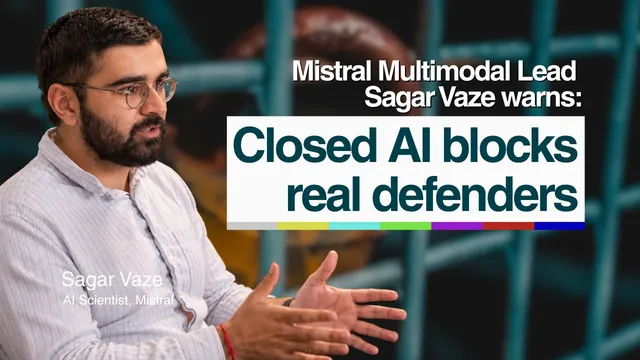
Taking on ServiceNow: Coding Agents for the Rest of Us with Serval Co-Founder and CEO Jake Stauch
Jake Stauch argues that enterprise coding agents need strict guardrails to make automation safe at scale.
 No Priors · Sarah Guo & Elad Gil
- Jake Stauch is co-founder and CEO of Serval.
The best minutes
- 3:04IT can bring coding agents to every department3 min
- 9:55Code generation gives Serval a path to replace ServiceNowPro pick 5 min
- 29:29Background agents need gradual, permissioned autonomyPro pick 4 min
Also worth watching
- 17:20Serval combines release gates with customer-led productization4 min
- 23:17AI may shrink SaaS sprawl without replacing systems of record2 min
- 34:55Serval puts engineers in customers’ daily conversations3 min
- 6:22Serval paired embedded services with an enterprise-first plan4 min
Skip the first three minutes of company background, the token-spend and ROI discussion, and the hiring-growth discussion.
Summary · 4 min read
Jake Stauch is the co-founder and CEO of Serval, an enterprise automation and service-management company that uses code-generation agents. He says he found the category while working at Verkata, which sold physical security products to IT teams, and spent years talking with those teams.
Stauch says Serval is building a code-generation automation platform to challenge ServiceNow, whose implementation process can leave workflows months behind. He argues that coding agents can help IT teams and other non-engineers build automations, provided enterprises control permissions through approvals, staged releases and audit trails. He expects personal agents to become part of work but says fully autonomous background agents remain a security challenge; he sees SaaS consolidation affecting point solutions more than core systems of record. He also describes Serval’s deployment services and a product approach that puts engineers in close contact with customers.
A Pro write-up, open to you here. Try Pro free for 7 days
A Pro write-up. The rest of the summary and the minute by minute are in Real Alpha Pro; the episode, its moments and the transcript stay free.
Read it with Pro, 7 days freeMinute by minute
- 1:12ServiceNow can lag changing workflows
Stauch says ServiceNow is a powerful, customizable workflow platform, but each new idea needs to be implemented, often with consultants. He says it can run six to 12 months behind where customers want it and becomes more expensive over time.
- 2:52Coding agents can empower non-engineers
Stauch says Serval brings coding agents to IT teams, which can then build tools for departments such as HR, finance, legal and people operations. He says approval, staging and audit controls let non-engineers build while following safeguards similar to code review.
- 4:40Enterprise agents need scoped permissions
Stauch says personal agents have limited use in large enterprises because employees have restricted permissions. Serval can use IT service-account credentials to enable broader tasks, while access requests, approvals, just-in-time permissions and audit logs govern each workflow.
- 6:22Embedded teams close the adoption gap
Stauch says Serval sends a deployment strategist and a deployed software engineer to help customers map workflows and implement the product. Its ProServal team of automation engineers provides ongoing support as customers identify more work to automate.
- 7:45Serval targets the system of record
Stauch says Serval set out from day one to challenge ServiceNow and build a larger enterprise software company, rather than start as a layer on an incumbent or focus on smaller customers. He says going after large enterprises shaped the company’s product, team and growth decisions.
- 9:55Code generation made automation viable
Stauch says code is a better way to express enterprise automation than drag-and-drop workflow builders, which he considers awkward for both technical and nontechnical users. He and his co-founder bet that coding agents would improve on defined, verifiable workflows; early demos relied on examples, but the models later became capable of automating workflows when APIs existed.
- 12:16Guardrails become more important
Stauch says better coding agents will enable more browser use and background-agent capabilities, but also make overbroad permissions riskier. He expects enterprises to narrow employee access and rely on approval-controlled exceptions; he says one employee who led Fox’s company-wide Serval adoption was nominated for an MVP award.
- 16:13Personal agents may enter the workplace
Stauch sees consumer products as a window into enterprise adoption and expects employees to use personal agents that handle tasks and delegate to other agents. He expects separate work and personal agents, like separate corporate and personal email accounts, and says governance will be central.
- 17:20Enterprise automation needs lifecycle controls
Stauch says large companies need development, staging and production environments, plus review and user acceptance testing before new agent capabilities ship. Serval avoids bespoke product features, but may make a repeated customer automation a first-class feature; examples include detecting outdated knowledge articles and reclaiming unused software licenses.
- 21:27Customers need proof of AI ROI
Stauch says companies may pull back after initial AI spending, but he expects adoption and spending to keep growing. He says customers want better evidence of return on investment and that Serval prices around workflows run, which he considers a better measure of work than tokens.
- 23:17SaaS consolidation, not extinction
Stauch says building and maintaining enterprise software remains expensive, so most companies will keep buying systems outside their core competencies. He expects AI to reduce sprawl among point solutions and middleware, while core systems such as ERP, HRIS, ITSM and CRM remain, though they may change.
- 25:15Catalyst helps users build automations
Stauch says Serval treats IT as capable of using powerful tools, while supporting users who do not want to work directly with code. Its Catalyst agent lets admins describe requirements and configure automations, approvals and permissions; he says it can also help users understand concepts and find ways to automate their work.
- 29:29Background agents remain a moonshot
Stauch calls agents that independently discover and solve problems an ambitious but unresolved goal for enterprise software. He says Serval’s approach is to let agents request specific tools or workflows and have people approve them incrementally, because unrestricted code execution would create an unacceptable security risk.
- 32:58Customer immersion shapes product decisions
Stauch says Serval had 200 employees, up from 20 in January, and expects to keep hiring because its ambitions and demand for work are growing. Engineers join customer calls and Slack channels, and the company has no separate product function; Stauch says product-oriented engineers must make decisions quickly and be willing to reverse course.
Published Oct 29, 2026.
Transcript · 36 min read
No Priors, hosted by Sarah Guo and Elad Gil, with Jake Stauch.
Transcribed by machine (Whisper) from the episode’s audio, so a word may be off here and there.
This is the ultimate moonshot in enterprise software. These agents that go off and do work for you and magically discover all your problems and solve all your problems. And I think no one's really figured out how to do this well. This is kind of the OpenAI hugging face incidents or other things where agents are given a task and they do something that's unexpected. The agent becomes pretty competent. It could theoretically just start writing code that could take action in all your systems. And that is an unbounded security risk that I don't think anyone's going to be able to take anytime soon. On the one hand, you want these to be very autonomous without somebody babysitting them.
On the other hand, autonomy is very scary in the enterprise. Serval is the boundary. Serval is the guardrails. We are the way that a large enterprise with a lot of rules and approvals and process and politics can adopt these tools safely and comfortably at scale. Hi, listeners. Welcome back to No Priors. Today, Alad and I are here with Jake Stauch, co-founder and CEO of Serval. Serval with all the speed of the African wildcat. is trying to attack ServiceNow and more broadly, bringing the power of code generation to IT and enterprise teams overall. Welcome, Jake. Jake, thanks for joining us today on NoPriors.
Thank you. Great to be here. Maybe you could tell us a little bit more about your history and how you started Serval and what is the problem that you started with or why did you start working on this to begin with? Yeah, so background Serval is enterprise automation, enterprise service management. The idea is you can ask questions and get help at work and automate a lot of the parts of the job you don't enjoy. And we do that through co-gen agents. So that's what the company does. We compete with companies like ServiceNow is historically the big legacy provider in the space. I discovered this category actually working at a previous company called Verkata, where we sold enterprise physical security products to IT teams, spent many, many years talking to IT teams, figuring out what to build for them.
Read the whole transcript
And one of the things I love to do with these teams is ask them, what do you spend the most money on? And what do you hate the most? And ServiceNow would top a lot of those lists. And so I was always interested in this category of maybe there's a better solution here. But it wasn't clear for most of my time there how you'd ever beat ServiceNow. They're a great company. They've done so much so well. And why would you be able to compete with them? What was frustrating for users about it? I think so hard to build in the platform. So it's a very robust, customizable, powerful platform that can map to all these enterprise workflows.
Fundamentally, it's a workflow automation platform. And so it can do so much, but every idea you have for doing something cool, you have to go and implement. And a lot of times you're bringing consultants to implement. So it's always kind of running six to 12 months behind where you want it to be. And it's fine if you're building something that's going to last five, 10 years, like a big onboarding flow and nothing about your business is going to change. So you can invest all that upfront effort and then it gets deployed and it works for a while. But for just trying to keep up with all the automation that you want to build, ServiceNow is not able to catch up.
And then it's very expensive and it keeps getting more expensive over time. So that frustration of it's not keeping up with where I want to go as a business and it keeps getting more expensive. That's what was driving a lot of the frustration. I think one thing that you mentioned that's really interesting about what you do is if you look at the world of AI adoption, a lot of the really early adoption is coding agents. Yes.
“we build a platform that brings coding agents to IT departments who then can bring it to HR and finance and people teams and legal teams.”
“we deploy both a deployment strategist, we call them, and a deployed software engineer that go on site with customers”
and then you hope to expand later on.
How'd you choose this versus Salesforce? You know, there's a few other sort of canonical giant companies in different categories i think we didn't really
“we actually become more powerful and more essential the more you clamp down on end user permissions.”
- 14:26Jake Stauch
we actually become more powerful and more essential the more you clamp down on end user permissions. Is there like a story or a win you can share as to, you know, people would be taking
a big risk going with you to replace a very embedded incumbent, right? It's an investment of their own time. I assume it's like personal risk. Like why do that? Or is there an experience where people have already gone through to the other side. I think we have to convince ourselves and our customers that Serval is the way you get promoted at work. It can't be the fact that... Serval is a risk that you take to hopefully get something on the other side. We have to convince customers that you do this and you're going to make your career. You're not just going to not get in trouble, but you're actually going to get a promotion. And this is top down, right?
Top down. So we sell into the C-level, we sell into IT leadership in many cases, and then distribute it into other departments. And that is the message. People built their career on ServiceNow. You're going to build your career on this next generation. And we're seeing this play out. So one of our largest customers is Fox. Fox Corporation adopted Serval company-wide. And the person who led that migration on the ground level actually got nominated to be the MVP of the entire company and got an award for his work there. And that is really what we're about, is we're convincing our customers, saying, like, this is the way to not just prove that you're useful to your organization, but to prove that you might be the most essential person in your company because you're leading this change.
And we're so pivotal to the AI transformation story that I think it's something we can sell really nicely to our customers. When you started Serval, I think you were very adept at thinking ahead, right? So you knew coding agents or coding would get better. You knew there's this way of transformation. You kind of identified the good market segment to go after. What do you predict will happen in the next two, three years, not only for your company, but for adding more broadly? Like, is there something else you're seeing on the horizon that you're very excited about or a big shift that you see coming?
I think consumer often gives us a window into what's going to happen next in enterprise. And it doesn't always look the same, but I think it's a nice window. So I'm very bullish on what do personal agents look like in the enterprise. I think in the same way that email and Slack and these tools transformed how we communicate at work, I think personal agents will also be a big part of that. I think everyone will have their personal agent that does tasks for them, that delegates to other personal agents. And so your agent will talk to other agents at work. So I'm really excited about that. But then how do we secure that in a world of increasing cybersecurity risk and increasing concerns at large enterprises around what's happening with everyone's agents taking action in all their computers and using their browsers. And so that tension between what employees, consumers want out of their personal agents at work and what enterprises need from a governance perspective, I think is really interesting. And I think there's going to be a lot of opportunity in that tension. Do you think there'll be a separate personal and work agent? I think so.
Yeah, I think so. In the same way that I have a Gmail and I have a corporate email. Yeah.
“we actually never build custom features. We don't build bespoke product capabilities. And luckily for our category, no one asks us to.”
Or enterprise customers as it relates to just general spend on code generation for software teams have gone through a journey this year, right? They're like, ah, we're going to let people try it. Then we're going to token max and we're going to like restrict that and figure out who's actually doing this productively.
How do you think that reflects for your business and how do you think about the sort of actual intelligence cost? Yeah, I think we're still watching this. I do see our CIO customers trying to pull back from that initial token maxing era. But I also think we're so early in the adoption curve that it's not going to be a clampdown in aggregate. It's actually going to continue to be a pretty dramatic rise because most companies are still figuring this out for the first time. And they are all going to go through this cycle of rapid early adoption and then kind of a pullback of spend and trying to measure and calculate ROI.
But what I hear from our customers all the time is not really a concern about the long-term budget impacts. They realize that there's going to be a short-term pullback. But they're still planning on increasing spend. What they need, though, is more proof of ROI. And that, I think, is what's going to transform in the industry is people looking for how can I prove that this spend is giving me something. And that is hard. I don't know that anyone's really figured out how to measure what you're getting from the tokens that you're buying. But that, I think, is going to be a huge opportunity for us to show the work that's being done and try to equate it to work that would have been done in other platforms or with other cost models or by labor.
And so that's what our customer asked for us is help me prove that this was worth it. And that's what the assignment is. That's what we have to do. We try to price on workflows run because I think it's a better reflection of actual work being done versus just tokens, which is more like verbosity and inefficiency. But I think we're all going to figure out different models of proving that what we're doing makes sense.
“I do think you're going to have a shrinking of the sprawl of different point solutions.”
have for the IT user, given, you know, they're not software engineers, but they understand their business. They understand what they're trying to go automate. Is it, you know, when you talk about vibe coding, I'm like, okay, but do you understand like security architecture? Like, do you understand how this is going to integrate with governance? Like, how do you square, you know, code generation and how we think about vibe coding and what the challenges are with that with, you know,
we want to build robust IT systems? Yeah, absolutely. I think IT is really interesting because they're closer to a software engineer than I think a lot of people give them credit for. Especially in large enterprises, the IT department is the engineering team. In a lot of cases, they don't have the software engineering team. So IT runs all these systems and IT often does write code and manage the systems. And so I think we treat them as adults. We give them the tools that we would give software engineers. Now, we abstract away some of that complexity. We make it easier to use in some regards and we don't just kind of hand them cloud code and tell them good luck.
We actually we build a platform that's dedicated to their use case and we don't expect them to be able to necessarily write code or understand what's being written, but we still give them access to it on our hood. So you can always see the code and you can always treat this through a full software development lifecycle, but you also don't have to. And so a lot of the product principles is thinking with a few different personas in mind, you know, an IT engineer who actually can and does write code all the way through someone maybe in the marketing department and the people team that doesn't want to see code ever but still wants to have that flexibility of code gen under the hood because they've got a complex workflow that they want to build that they don't want to drag and drop their way to.
So I think a lot of it just comes to having multiple personas in your head and also treating IT like an adult. I think a lot of the products that have been out there have actually kind of been pedantic to IT of like, oh, you don't actually understand this stuff, so you need this very stripped down, more opinionated, simpler version. Actually, IT appreciates the complexity and appreciates the power of these platforms. We want to deliver that to them. You guys built an agent that helps you build automations. Can you explain how? that works. Yep. So one of the things I think every company discovered this as they're building kind of the first generation of these AI tools is that you could build such amazing, complicated systems, but then you had to train people to understand all of your product primitives and how these systems fit together. And so the first generation of this is we deployed all these FDs to explain to customers, okay, here's how to build the platform. Actually, let me just build it for you. And then we realized it would be really nice if customers could just talk to an agent that understood their requirements and then translated that into the product primitives. And so we built
this agent called Catalyst. It does exactly that. It's an agent for managing the platform. So it's an agent for admins to build out all those underlying automations, but also configure the rules around approvals, permission checks, build out different policies, update all these different systems, understand the entire deployment. And so because Serval is all co-generated the hood, having the agent on top of that to help you manage the system just made a ton of sense and is so powerful because now I don't need you to train yourself on how to use Serval. You can just talk to an agent that actually understands how to use Serval and how to build on it. And that is your primary interface into the product. I think one thing that's underappreciated and I think is cool is that the experiences for agents in different products and actually in code generation agents as well, being able to bring a user along as they are building a product or an implementation or something is actually like raising the technical competence and ability of a huge number of users and turning people into more, you know, engineers.
Yes, absolutely. You have this blank slate problem in the old generation of automations of where do I even begin? I know I want to automate all these parts of my job, but where do I begin? Products like ours say, where do you want to begin? And just can start making suggestions and you can iterate with them. You can say, I actually don't understand that. What are you trying to say? Can you explain this to me? Okay, I'm trying to do this. How would I even go about doing this? And they can give you that information. They can fetch the information. They can explain concepts to you. And so it does become a build partner.
And you can achieve so much more than just prompting an agent to go and build something.
“And over time, the agent becomes pretty competent because it has a big enough toolkit that it can solve most problems.”
And so I think it's a very normal just process, right? Yeah. The company is about two and a half years old. You have gone very quickly to at least an enterprise mature product. How big is the team today? We are 200 people today. 200 people. We are 20 in January, so it's been an incredible ramp year. That's quite a year. One, I guess, do you expect to continue hiring so fast? And as somebody who clearly believes in AI, like, why? And then two, just, you know, you've been part of, you and your team have been part of startups before. Like, what are you operating, how are you operating very differently, you know, the last two years and the previous 10?
Yeah, the hiring velocity, I think, will increase even from where we're at today. We believe that there is unlimited demand for work and there's unlimited competition and there's unlimited ambition. And so even though every single employee does so much more than what they could do a year ago, we have even bigger ambitions for what they could do. And so I think because every employee is so much more productive, we actually want more of them, not less of them. Given your time at Verkata before, how are you operating differently over the last two years than the previous 10? I think what's so unique about Serval and the category we're in and the moment we're in is the TAM is unbounded.
So it feels like the addressable market is really more about the size of our ambition than it is about fundamental limitations on how big this business can get. Because we are automating essentially all kinds of work for every single employee in the world, the TAM is as big as we want it to be. And it's really how fast can we grow and what is our ambition and making decisions based on that versus, okay, here's what the market looks like. Here's what we think we can actually do. And that's a different set of challenges. It's not it's not strictly better because now there's so much open space and there's so many more decisions we have to make about what we actually want to focus on.
But it is really fun to not be constrained in and hemmed in by what the market allows for. given that
“Most engineers are on at least one customer call a week. I think most of them are actually on at least a customer call a day.”
If you want to see our faces, follow the show on Apple Podcasts, Spotify, or wherever you listen. That way you get a new episode every week. And sign up for emails or find transcripts for every episode at no-friars.com.