Free with a sign-in.
The best 8 min of 42
Inside Anthropic’s trillion-dollar AI gamble
Joey Brookhart says Anthropic’s trillion-dollar case depends on expanding AI beyond coding while keeping compute commitments aligned with adoption.
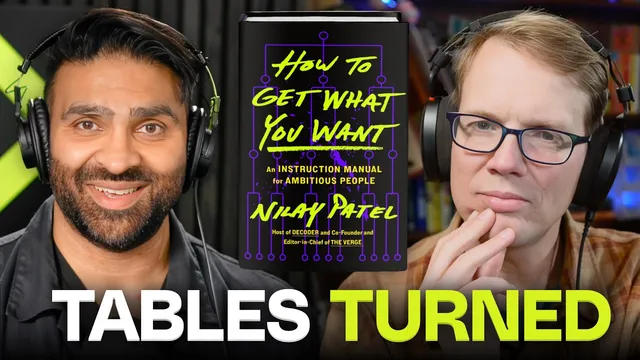
 Decoder · Nilay Patel
- Joey Brookhart is an analyst at SemiAnalysis and co-lead of its Tokenomics Model.
The best minutes
- 8:33Inference efficiency is funding frontier model trainingPro pick 4 min
- 12:22Frontier models can matter most in competitive work4 min
Every moment plays free. PRO marks a write-up that's in Pro.
Also worth watching
Skip the opening sponsor reads, the mid-episode ad blocks, and the closing sponsor reads and show outro.
Full analysis · 5 min read
Real Alpha · Nov 22
Joey Brookhart says about 30% of compute serves revenue
- Brookhart says about 30% of Anthropic’s compute serves inference revenue, while most supports research and training.
- Efficiency gains make that allocation plausible, but growth still leans on coding and heavy users.
- Watch whether cyber and broader enterprise use expand enough to support frontier spending.
Free with an account
Read the rest of the analysis
7 sections, the 6 other voices it tests Brookhart against, and what it means for you. Every episode we cut gets one.
Check your inbox
We sent a link to your address. Click it to finish signing up. Not there in a minute? Look in spam.
or
Signed up before? The same buttons sign you in. The episode, its moments and the transcript stay free.
Most compute still funds frontier research
Brookhart’s most useful figure is the split behind Anthropic’s economics. He says about 30% of compute serves inference revenue, while the rest goes to experimentation, research and training.
That is a compute allocation, not a cash-flow statement. Strong inference margins do not mean most capacity is earning revenue; research consumes the larger share.
Tanay Jaipuria, on Latent Space in November, separately described about 70% of Anthropic’s compute going to training and research, and 30% to inference. That close match supports the allocation picture, but not the returns from future models.
For example, a team can improve paid inference economics and still use most compute for experiments. The unresolved link is whether that research yields models customers pay for at scale.
“only about 30 percent of the compute is actually in inference”

Our read
Anthropic’s efficiency story supports an unusually research-heavy allocation, but the allocation itself does not prove future returns. The commercial test is whether new models expand paid demand.
Throughput gains support margins, but do not settle them
Brookhart links efficiency to token throughput, not chip ownership. Anthropic uses Trainium chips, TPUs and GPUs, making performance a hardware and software combination.
For example, Brookhart said Trainium throughput may be up five to 10 times year over year. That measures more tokens per chip, not an equal reduction in total costs.
SemiAnalysis estimates about $65 million of inference revenue per megawatt, up from the mid-teens a year earlier. For a future model on Blackwell, Brookhart said the estimate might reach $100 million to $120 million per inference megawatt.
Those figures are estimates, not realized results. Gary Marcus, on Big Technology Podcast in November, noted that Anthropic’s competitors are pursuing the same efficiency gains.

Our read
Efficiency can widen margins, but competitors can adopt similar gains. Anthropic needs revenue per unit of compute to outpace any decline in prices.
Coding concentration leaves the growth case open
Brookhart calls the current market extremely narrow. He says spending is concentrated among the top 1% of customers, especially in coding.
He says Anthropic serves half of the Fortune 500. But a customer logo does not reveal how many employees use the product, how often they use it, or what they spend.
Brookhart says broader Fortune 500 and Global 2000 companies are not spending much yet. Moving beyond coding into cyber, biology and white-collar work is therefore central to the larger revenue case.
Apoorv Agrawal reported a 17x usage increase for OpenAI’s top 10% of customers. On Sourcery in November, he compared that with 2x for the median. The comparison is not Anthropic data, but shows how usage can remain concentrated.

Our read
A large customer list is not broad adoption. Anthropic needs more teams and work types using paid models, not merely more enterprise logos.
Frontier pricing depends on difficult tasks
Brookhart’s case for frontier models is strongest in adversarial work. He says cyber defense may require the best available model when attackers also use frontier systems.
He also points to vertical products, including financial services and legal beta tests, alongside Anthropic’s cyber work. Those efforts show a route beyond coding, but testing products does not establish repeat revenue.
Hayden Field, on Decoder in November, described companies building internal benchmarks to route tasks to the cheapest model that works. That practice tests the frontier premium directly.
The buying question is task-specific. For example, Brookhart agrees that email summaries need not use a frontier model, so leaders should test where cheaper models fail and what that failure costs.

Our read
The frontier case is strongest for particular tasks, not every enterprise workflow. Pricing power depends on proving where cheaper models fall short.
Anthropic may reinvest margin in training
Brookhart put 80% of revenue over the last three to six months on models released within the previous six months. He did not settle whether the revenue window was three months or six.
He says Anthropic may want to increase training’s share of compute. Brookhart added that the company might accept near-zero or negative margins if that freed compute for training.
He also said Anthropic did not expect its 11% non-GAAP EBIT margin and might have preferred a result closer to zero. That is a reminder that current profitability may not be management’s goal.
Ed Ludlow, on Bloomberg Businessweek in November, described Anthropic’s task as balancing training the next models against revenue from existing ones. That identifies the same allocation question without resolving which use earns the better return.

Our read
The reported margin is not necessarily a target. Operators and investors should distinguish present efficiency from management’s willingness to reinvest it.
Compute commitments hinge on future utilization
Patel cited an outside estimate above $800 billion in commitments over ten years. Brookhart responded with a $500 billion to $600 billion figure over seven to ten years.
The exchange does not reconcile those estimates, so they should not be treated as one figure. Brookhart says Anthropic mostly rents compute today, rather than owning its full infrastructure.
His case depends on revenue growing alongside future capacity and efficiency continuing to improve. That is a forecast, not proof that every committed megawatt will earn an adequate return.
Brookhart said 48% of Anthropic’s business came through Bedrock, Foundry and Vertex. Those channels widen access, but their cloud owners also develop competing models.
Our read
The commitments are a bet on future use, not revenue already secured. Cloud channels aid distribution while leaving Anthropic tied to suppliers with competing interests.
Consumption growth can move between model providers
Brookhart describes Anthropic’s token business as about 80% of revenue, making the company unusually dependent on consumption. Usage can grow quickly, but it can also shift between providers.
Brookhart said public reports put Meta’s Claude Code seats at 60,000, then 30,000. He said the token volume shifted to Meta’s internal models rather than disappearing.
That episode shows demand for the work did not guarantee Anthropic kept the usage. The seat count also fell, so neither seats nor token volume alone proves durable account growth.
On The TWIML AI Podcast in November, Sadeepa Wijesekara said leaders need usage broken down by agent and use case. That gives finance and product teams a way to check whether higher token bills track valuable work.
Our read
Consumption reveals where work is happening, but it also exposes revenue to switching and changing usage. Measure retained paid work, not just aggregate token growth.
What it means for you
- Track compute allocation. Measure the share of compute going to inference, research and training. Keep revenue-producing capacity separate from experimental capacity in forecasts.
- Benchmark model tiers. Run frontier and cheaper models on the same internal tasks. Compare quality, cost and routing decisions before setting budgets.
- Measure wider adoption. Track paid usage outside coding, including cyber and other verticals. Count active teams and repeat use, not just customer logos.
- Stress test capacity plans. Model commitments against lower utilization and slower revenue growth. Keep estimates separate from contracted revenue.
What to watch
- Whether cyber products produce repeat enterprise use during 2027.
- Whether Anthropic reports broader paid usage beyond coding and its highest-spending customers.
- Whether inference revenue per megawatt approaches SemiAnalysis’s $100 million to $120 million estimate.
Send this to the CFO and product leaders planning AI capacity.
Watch the minute where Brookhart gives the compute split
Written by Real Alpha from the episode's transcript and the other moments it links, then checked against the transcript. Quotes are the speaker's exact words.
Minute by minute
A Pro write-up, open to you here. Try Pro free for 7 days
A Pro write-up. The minute by minute is in Real Alpha Pro; the episode, its moments and the transcript stay free.
Read it with Pro, 7 days free- 2:06Revenue must expand beyond coding
Brookhart called the S-1 strong, pointing to more than $70 billion in ARR and positive compute margins, and described Anthropic as capital-efficient. He said demand remains concentrated among top-spending customers and coding; growth to a trillion-dollar business would require adoption in areas such as cybersecurity, bio, and white-collar work.
- 7:01Inference economics have improved
Brookhart describes Tokenomics as modeling AI unit economics across labs, clouds, and demand. He said Anthropic’s inference gross margin moved from negative 94% two years earlier to positive 85%, and Trainium token throughput rose 5 to 10 times year over year. He said only about 30% of compute serves inference, with the rest going to training and research.
- 12:22Some work needs frontier models
Brookhart argues that some cybersecurity and competitive tasks require frontier models, particularly when adversaries use them or when companies want to replace labor. He cited Anthropic’s legal and financial products and its cybersecurity program, while agreeing that simpler tasks such as email summaries may not need frontier capability.
- 17:11Companies may tier model access
Patel compares AI models with iPhones, asking whether companies could keep selling older models while developing new ones. Brookhart says open models may be good enough for some tasks and notes that some enterprises reserve frontier models for coders, giving other employees less expensive options.
- 19:43The $80 billion charge was non-cash
Brookhart said the $80 billion charge was non-cash, tied to valuation increases affecting warrants or convertible notes, and should be backed out when assessing cash. He said Anthropic had burned $10 billion in cash and held more than $120 billion in cash and marketable securities, and did not see dilution as a decisive concern for investors who believe in the company’s long-term prospects.
- 24:32Enterprise adoption remains shallow
Brookhart said Anthropic serves half of Fortune 500 companies but represents just 0.1% of their operating expenses. He said the top 5% of Claude Code users spend an average of $18,000 a year, while users outside Claude Code spend under $75 a month, leaving room for adoption to grow.
Published Oct 29, 2026.
Transcript · 40 min read
Decoder, hosted by Nilay Patel, with Joey Brookhart.
Transcribed by machine (Whisper) from the episode’s audio, so a word may be off here and there. Where the podcast’s audio and the video part ways, some times are a minute or so off.
Intelligent Travel, the future of business travel runs on Enjin. Learn more at Enjin.com slash decoder. Support for the show comes from CrowdStrike. It's not a huge stretch to say that AI is the next major computing platform. Every platform shift changes the way we build software, and it changes security, too. CrowdStrike is defining cybersecurity in the AI era with AI Detection and Response, or AIDR, a solution for seeing, monitoring, and securing AI across the enterprise. Learn more about how leading companies are turning to CrowdStrike to secure AI and secure their business at crowdstrike.com slash decoder.
Hello, and welcome to Decoder. I'm Nealai Patel, Editor-in-Chief of The Verge, and Decoder is my show about big ideas and other problems. Today, I'm joined by Joey Brookhart, an analyst at the chip and AI research firm SemiAnalysis, to help me dig into the story inside the numbers of the Anthropik IPO filing, a document known as an S-1. Anthropik just filed its S-1 to go public on the NASDAQ stock exchange, and it could start trading as soon as next month, at a valuation of anywhere between $1.5 to $2 trillion, immediately making it one of the most valuable companies on the planet. But the price tag really isn't the whole story here.
The S1 published earlier this week is hundreds upon hundreds of pages filled with details that finally paint a picture of the economics of a frontier AI lab. And as you might imagine, that picture is both really complicated and built on a series of very, very ambitious assumptions about the future and what AI will do to it. So I wanted to have Joey on the show to help break down what this document really tells us, both about anthropics finances and the broader AI economy. Joey and his colleagues at SemiAnalysis actually built a model of Anthropics finances from the outside back in July, so he's been waiting for the S1 about as eagerly as anyone. And I was excited to hear his take on what we've learned, and importantly, what we still don't know.
Read the whole transcript
Before we get going, do me a favor and subscribe to Decoder on YouTube, where we put out new episodes every Monday and Thursday. Okay, SemiAnalysis' Joey Brickhardt on the Anthropic S1 and the Costs and Risks of Building Frontier AI. Here we go. Joey Brickhardt, you're an analyst at SemiAnalysis. You're also co-lead the Tokenomics Model, which is going to come up a lot in this episode. Welcome to Decoder. Yeah, thanks so much, Eli. I am very excited to talk to you. We're talking just a couple of days after the big Anthropic S1 was filed. It's our first look inside of the finances of one of the leading frontier models. What's your take? What's your read into it? It was an awesome S1. I think it's been a rough three weeks since the investor day.
I think some people were somewhat disappointed in the September AR numbers. But what we saw here was a company that has capitally efficiently scaled to an amazing level, trillion plus valuation, you know, 70 billion plus of ARR in very short amount of time. And gross margins, compute margins, free cash flow, everything is what you'd want to see. So I don't think there was much to nitpick in this filing. And it's the reason you've seen the last two days, I think, a lot of the semiconductor complex and neoclouds and compute. stocks really rally again. I'm actually, it's funny. I don't think I can nitpick
“The top 1% of customers are the ones that are spending, you know, $100,000, $50,000 per employee.”
us to even triple from here. Essentially, the concept is called tokenomics. You run that practice alongside a co-lead at SemiAnalysis. Explain what it is, because to me, it's such a smart way of thinking about, okay, we're going to put some money in and maybe we'll get some money at? I think of it as like the unit economics or even just the broader, everything from the macro to microeconomics of running an AI business or even looking at AI demand. So we cover the hyperscalers, you know, now some of the neoclouts as well in kind of a separate product, but then too, just the AI labs. And I think for, you know, investors or just people that are interested in
the business, it's, you know, Anthropic had negative 94% gross margins on inference two years ago. Now they have positive 85 and people didn't understand kind of, you know, how do they allocate compute? How do we think about the inference business model? I think part of that gross margin conversation is the revenue per megawatt in inference. And why are all companies that are running inference seeing massive gains in inference and compute efficiency? So we try to model out these businesses. And obviously, when Anthropic was private, we're dealing with information we can get from the press and things like that. But But now that we have numbers, concrete audited numbers, it's easy to explain the unit economics of this.
And two, how the businesses differ. OpenAI is a much different business than Anthropic, just in both their consumption versus subscription and then historical weight versus consumer versus enterprise.
“token throughput, for example, on Trainium chips are up 5 to 10x year over year right now.”
he could make a lot of money. Obviously, Amazon and Anthropic have a lot of back and forth. Maybe there's some family resemblance there. But I'm curious.
“The demand will always be there for frontier intelligence, especially in competitive industries.”
support for the show comes from engine when 1.6 trillion dollars moves through travel every year it's a shock to remember that most of it still runs on tech from the 80s i mean work travel works fine but it certainly isn't all that intelligent that's why businesses and travelers book directly through engine engine closes the gap between wanting to be somewhere and actually being there. Developers, expense tools, and AI agents all plug into Engine's API. And as AI spreads, Engine only becomes more valuable. Every AI agent that wants to book travel needs real supply, real pricing, and real payments. That's why Engine was built to go far. With 40,000 businesses relying on Engine and growing fast, they're powering travel for the masses with partnerships like Navan and Tampa Bay Buccaneers. Strong hotel partnerships, proprietary supply, real-time rate shopping, and payment rails. That's the kind of foundation that takes years to build.
Eight years, an engine's case, and it can't be bought. The future of business travel runs on engine. Visit engine.com slash decoder. Support for the show comes from CrowdStrike. AI is already fundamentally changing how companies build products and run their businesses. If you listen to the show, you probably already know this. But while AI drives innovation, every new model and agent also creates new cybersecurity vulnerabilities. That's why CrowdStrike built AI Detection and Response, or AIDR. AIDR helps organizations discover where AI is being used, monitors AI activity at runtime, and helps teams detect, investigate, and respond to threats involving AI systems.
As companies adopt AI, security has to be built in from the start. More than 70% of the Fortune 100 trust CrowdStrike to protect their businesses. Now CrowdStrike is helping secure the AI era. You can learn more about AI detection and response at crowdstrike.com slash decoder. running a business shouldn't feel like surviving a software group project one app for accounting another for inventory another for sales and somehow none of them talk to each other that's where odoo comes in an all-in-one business management software that brings every part of your business together from sales and accounting to inventory and marketing all in one powerful platform no messy integrations no bouncing between tabs and best of all no spreadsheets. Stop managing software and start managing your business with one unified system.
Try for free today at odoo.com slash vox. That's odoo.com slash vox. I'll just make a dumb comparison to the iPhone. It's iPhone season. I just reviewed the iPhone Duo. Apple keeps the iPhone looking the same for several years now, right? They build all of the tooling for the new iPhone, and then they just reuse it for two or three or four models to get all the value out of that investment back before they move on to the next thing. Apple puts out a new iPhone. They keep selling the old iPhone for a while to get more value out of that investment and that development program. The AI industry does not seem to be doing that. All of their emphasis is on developing the next new thing, deprecating the old thing pretty fast, and moving you on to the new expensive product, which at the same time they're building the next new expensive product. At some point, it feels like that will rationalize, right? That there will be something that is worth just collecting margin from while they go invest in the new thing. And I just can't figure out where Anthropics sits in that cycle. I mean, we do see this, you know, open source token volumes are picking up and there's a lot of areas, yes, where the open
source models have become good enough. And I think on a go forward basis, you're like, okay, was that because of distillation? And then the frontier labs have some defensibility actually going forward. Or, you know, I think when we talk to clients too, it's, you know, how do we actually think about frontier versus open source on this debate or even non-frontier. So something like a Sonnet type model, if you want to do the iPhone 18 versus the SE type analogy. We do see that dynamic and obviously open sources, it's a question of how much can that take? And then two, because we're so early in these verticals, we don't know what's going to be fully agentic.
There's no human in the loop. We're actually human in the loop where, yes, you can do where Where the harness actually has, I should say, some value and defensibility to it. The kind of big area I'd look at here, especially when we talked to enterprises today, is, yeah, only the coders are allowed to use the frontier models at a lot of these enterprises. If you're a non-coder, some of these companies just limit you to Sonnet if you're an anthropic company. And I think that's reflective of how management views and wants to budget for this, like what frontier intelligence is actually worth to them in certain areas.
this. Like in my financial analyst brain, you know, Claude could not build a good financial model, you know, six months ago. It's getting better if you connect it to the right areas. But we've gone from something where, okay, I needed a junior analyst six months ago. Maybe I don't as much anymore. And then will I have a full junior analyst at my disposal anytime or multiple pretty quickly if I have unlimited budget or, you know, token budget. And I think we just look at that across, you know, every vertical and like major job category. And the time horizon in each of those categories is going to be different. And I think that's just one of the bigger questions I have is how quickly do they get to where they think they can go? I want to dig in on some of the numbers here. The one that jumped out in all of the comment sections on all of the forums and all of our articles yesterday was $80 billion. Anthropic lost $80 billion. That is related to a technical charge.
Can you just explain the $80 billion? Because it doesn't seem particularly relevant to the revenue and profits that they're talking about. Yeah, it's a non-cash charge because their valuation has gone up so much and they've issued warrants or convertible notes. You have to account for that in your balance sheet. So it's just a non-cash charge because their valuation has gone up so much since they issued these warrants and notes. So, yeah, that's something you would always back out. You can argue on stuff like stock-based compensation. Should we really be thinking about that on a non-gap versus a cash versus because it's a non-cash, if I just hand employees shares, I have to account for that on my income statement, but I'm not actually handing them pure cash out of my bank balance.
So it's not an area like that. It gets the accounting, the high level. If you don't know accounting, it looks bad, but it's because they've grown so much and their valuation has gone up so much. Some of the argument here. about that charge is obviously, that's Amazon was the other party there. Obviously, Amazon's very happy because Anthropic is buying a ton of AWS. I'm sure they're happy the valuation has gone up. But over time, Amazon's going to get diluted this way, right? That's part of the dynamic there. They're going to obviously IPO, they're going to put a bunch of shares in the market. It's very clear that over time, they will issue more shares to raise more money.
It doesn't seem like they're going to stop wanting to raise money anytime soon. And how would how are you thinking about that in terms of just investment into a company like Anthropic that your valuation might be going up, but your actual ownership stake might be getting diluted over time? Yeah, I mean, I think the deals have always been very creatively structured, and I think the numbers they've actually only burned 10 billion of cash. You know, they have 120 billion plus of cash and marketable securities on the balance sheet today, you know, post IPO, probably another 100 billion. You know, it's a great deal for both parties.
they only really rent to compute. It's not like they have these massive capital outlays or even rent to own. So yeah. And you can make some arguments about like certain accounting and okay. There's these massive commute commitment obligations. That's technically, you know, future debt from a dilution perspective, all tech companies dilute, you know, do they, are they going to need to raise another a hundred million of debt or equity at some point? You know, possibly can they continue to creatively structure and finance, you know, future compute build-outs, you'll probably as well. I know there's been a lot of, in the last few weeks, a lot of angst about the future of compute financing and data center financing. But if you're Anthropic, if you're a major lab, a hyperscaler, or Broadcom and Vidya that are backstopping a lot of these deals, that's probably not going to change anytime soon.
As an equity investor, would I be worried about getting super diluted? I don't think so. If you believe in this long-term AGI bull case and that Anthropic is going to be a leader in this, You're probably looking at a $10 trillion plus dollar business. I think they can outrun dilution at that point. Let's talk about the compute commitments. I saw at least one analysis saying over the next 10 years, it's $800 billion plus in commitments to the various hyperscalers and neoclouds. That's a lot. You're saying that they don't have that much money. They haven't even spent that much money yet. Do you see them generating the revenues to pay off those commitments?
Yeah, I think when people look at the headline commitments, the $5, $600 billion number over 7 to 10 years, let's call it, it actually at what they're paying for compute today actually isn't that many gigawatts. If you think about them spending right now, I think on average, they're close to $11 million per megawatt in spend or $11 billion per gigawatt. But, you know, if you kind of take that back to the annual level and say, OK, you know, the 520 numbers over 70 years, for example, that's really not that many gigawatts. And they're going to be well beyond, you know, when they get to something like 20 gigawatts, that future compute commitments that they're they're running, you know, essentially is going to be well over, you know, well into the trillions.
So, yes, they are going to have the revenue to do so. So I think it's, you know, more of how much revenue are they going to have relative to how much compute and then to the compute efficiency equation. If they keep getting, you know, a lot more revenue out of every inference megawatt, you know, how much do you really want to invest in training and take margins to zero from like a rental perspective? Because you can get to something where they get to even 80, 85 percent of their fleet is just on training and research. The revenue. Yes, it's going to scale pretty well. They're not in any dire, you know, unless, you know, unless we realize like all this revenue disappears or people churn, you know, we're really not a huge like it's like they have to hit, you know, a trillion dollars of revenue extremely, extremely quickly, you know, to achieve all this and pay for this.
Unless you're trying to build digital God and unless it doesn't diffuse across the economy as fast as everyone wants it to. Those are bets, right? They're huge bets. And I think like the numbers you look at, if you're really bullish on this ramp of like into the digital economy is, you know, they say within their Fortune 500 customers, they have 50 percent of the Fortune 500. They are 0.1 percent of their total customers operating expenses. I think when you look at that. on like a per user basis, it's like $8 a month if you believe OpEx doesn't include cost of goods sold. And if you believe they include a cost of goods sold, it's sub $50 per month. And they said the same thing. Of their top 5% of cloud code users, they're spending $18,000 a year on average, the top 5% of users. Their non-cloud code users spend under $75 a month, well under $75. So So there's this huge, especially when we talk to enterprises and these traditional buyers of software, of IT, penetration is extremely low in traditional white-collar work.
And I think that's the big point is, too, there is a large ramp period here of both seats, adoption, and usage. You can make arguments of who's going to win in this, but it's obvious the Frontier Labs are going to get some portion of this. It's going to be pretty material to net new ARR next year in 2027. One of the things that's really interesting about that is we talk about the frontier labs, we talk about the hyperscalers. Anthropic has a lot of wild risk factors in this S1, including that Cloud might be conscious and kill us all. But one of the most direct and maybe easiest to understand is that AWS, Azure, and Google Cloud are both suppliers and competitors in some real way, particularly Google.
They say, well, these relationships could turn, right? They have a big relationship with SpaceXAI. Elon is going to train Grok. They're going to compete with SpaceXAI at some point. That relationship might become precarious. As you say, they're only renting their compute. At some point, the market might force them to own more of their compute because their own competitors don't want to lease their capacity to the leading company. How do you see that playing out? We definitely see both OpenAI and Anthropic going more direct and owning, not owning the compute, but more rent to own or going through an SPV that some financial sponsor does and kind of doing the compute more directly versus renting. So there's two points to this, too.
Google, from one perspective, is also selling their external chips to customers and saying, hey, we don't care to monetize this within Google Cloud or even allocate the share of, you know, if you think we're very chip constrained, we don't even care that these are going to deepmine our internal GCP compute for us to monetize. We're just willing to become a chip seller. And Anthropic loves TPUs and they have, you know, there's, you know, three and a half, four gigawatts plus, and probably more in the pipeline in terms of orders there of Anthropic buying these chips directly to then rent. So that's, yes, the market is buying them directly to rent. So they're buying them into a NeoCloud. Yeah. They buy them through like an SPV or the SPV buys them and then they rent it from the SPV. Even within Google Cloud or AWS or Foundry, Anthropic is massive. 48% of their business comes through like the Bedrock Foundry and Vertex where people are paying, you know, through their existing cloud relationship to access these models. They're not even talking to, you know, they are, but, you know, you don't have to interact with the Anthropic Salesforce. You mentioned this earlier, this is the marketing
channel where Anthropic gets a rev share. Right. And if you're AWS and you're saying, oh, I'm renting Anthropic compute for, you know, let's say 10, you know, 10 million per megawatt, but now I'm getting 16% of 65 a megawatt plus the compute costs as well. You know, we're seeing, you know, margins at all the clouds go up right now. Part of it is CPU utilization is going up because of all the coding and then some of the RL side, but these token as a service businesses, as we call them, so AWS, Bedrock, Microsoft Foundry, you know, Google, Gemini, Agent Enterprise Platform, formerly Vertex, are actually massively increasing kind of the margins on AI at these clouds. So they're benefiting as well, and shareholders are, you know, giving them credit for this recently. I think in Q2, both Azure and AWS had extremely, extremely strong quarters on the back, AWS specifically on the back of Anthropics growth on Bedrock.
Do you think that will keep Amazon from ever wanting to train its own frontier models? They're doing a good job of letting AWS be the infrastructure for everybody else, but they're one of the only big tech companies that hasn't felt the insecurity of not having their own models. It's interesting. I think they're very happy to serve a wide variety of customers and they have very little. When we look at like our estimates of training compute, they have the least of any hyperscaler. You know, if you don't, you know, ex-Oracle maybe. It doesn't seem like there's much strategy there. I know both, you know, Microsoft in the last two quarters has been talking about a little more, you know, AWS on the call has been talking about a little more, but it's not a huge, huge, you know, they're not doing it to the same extent that Meta is or, you know, trying to be competitive here or even Google with Gemini. And I think, you know, especially someone like Dylan will tell you, if you're not trying to compete at the frontier, you know, there's really not a place for you, especially if you're only dedicating a few hundred megawatts to internal, you know, one internal use cases like serving Amazon retail, but then to training. There's a lot of commitments to make, to be good
at this. It's a conversation for a different day, but I look at these Microsoft job cuts and I see it as the glimmer of evidence that they're going to try to compete in the future. They obviously they got burned pretty bad by OpenAI. Yeah, I mean, they have in the new agreement that they signed, they have the right to monetize OpenAI models for essentially not paying OpenAI anything. They're going to have, you know, some interesting things ahead where they monetize, you know, OpenAI models, or even through like Microsoft 365 co-work and co-pilot applications where they're not paying OpenAI anything for a frontier model.
support for the show comes from outshift cisco's incubation engine for frontier technology you can find multi-agent ai in every enterprise roadmap right now but here's the problem everyone's facing agents can pass messages but can't think together these systems silently underperform through cognitive failures, misreadings, unverified claims, false consensus, and conventional monitoring can't detect them. OutShift by Cisco is building the fix with their new comprehensive resource, the Internet of Cognition. It's an open source guide that's a foundation for building multi-agent systems from design to production.
The goal is to give agents shared context, shared memory, and guardrails, all to drive the results we actually expect from AI. You can lean on this resource to understand agentic AI's evolution and how it's shifted from isolated agents to orchestrated superintelligence. You can gain insights for how to future-proof your business by tackling complex challenges with multi-agent systems. You can read the paper, experience a demo, grab the code from outshift.com. That's O-U-T-S-H-I-F-T dot com. Some things never get old. The privilege of Liverpool United. They still get you going. What a game of football.
They still get under your skin. Wonderful edge about it now. And after all these years, this one still means everything. Liverpool Man United, 4.30pm on Sunday. Stream with a brand new choice of Sky Sports memberships available on now. 18 plus UK only. Minimum speed 2.5 megabits per second. Live scheduling may be subject to change. Hi, this is Bella Freud. Each week on Fashion Neurosis, I invite guests from the world of fashion, art, film, music, sport and literature to lie on my couch and explore the connection between identity and fashion. This week on the show, I welcome photographer and director Petra Collins. I think you need that realness and this struggle. Also, one of the things that I feel like I learned quite recently was about not needing to suffer for the art.
The other dynamic here, and you brought it up earlier, is over the last few weeks, there's just been a lot of stress about neoclouds, whether they will succeed, whether they will fail. I think Elon Musk said there will be a guppy-like extinction event, which is just a brutal metaphor to use to describe a bunch of data centers. But this is a bunch of circular financing, and NVIDIA stood a bunch of them up. And maybe the hyperscalers are just going to run away with it. Or maybe Anthropics demand, maybe they will want to own more of their own compute because renting it is precarious in all these ways. What do you make of the neoclouds? And do you think they're going to survive the market actually shaking itself out as these companies go public? Yeah, look, Elon obviously has some incentive to say neoclouds are going to be extinct. And ClusterMax at some analysis does amazing ratings of the neoclouds. There's a lot of like neoclouds are like ex-crypto miners that are not good businesses and are not good at operating clusters core weave is an ex-crypto mining company right yeah and i i don't mean core weave but there's others further down the list um you know i think core weave nebius anyone
that has backing your backstops from you know one of the major labs hyperscalers or NVIDIA um or broadcom you know is going to be okay it's that longer till i think you know hyperscalers have been 65% of CapEx and net new, you know, compute broad online. So then there's 35% of the market that's non, you know, doesn't have the balance sheets that the hyperscalers have both, you know, Google and Meta have recently, you know, raised or announced they're going to raise, you know, when we look at the big four hyperscalers, they don't actually need to raise that money over the next two years, even though CapEx is growing from, you know, 1.2 to 2 trillion pretty quickly. But a lot of these other NeoClouds, if you don't have that sort of backing, I think it gets, it is very hard, even right now, and becoming extremely difficult if you don't have the backing or backstops from those players to keep building compute. It's a very, very tough financing market. One of the things I think is really interesting about Elon in particular talking about NeoCloud's dying and obviously hyping up his own data center business is he's trying to put them in space and to get away from the backlash in the United States around data centers in particular. We have a lot of coverage about
data center backlash in the United States. It is slowing down a lot of projects. But at the rate we're going, if you think the neoclads are shaky, you might actually end up abandoning a bunch of GPUs and half-built data centers or have them tied up in financing agreements where they can't be lit up. What do you make of that? Do you think we actually just need to go to space? Or do you think the market is going to rationalize and actually take advantage of all the compute that is currently allocated but not being used? The market's very good at finding places to put chips. um here you know on the ground i should say um there will be you know politically you know we'll see what happens next week with midterms um and kind of the fallout from that and obviously there's some very large sites you know still that have massive permitting problems and then there's the entire power equation as we look towards next year the data centers will will they'll be built there will be a method to get these built i think the biggest thing and like the hyperscale cfos have said this from like an overbuilt perspective you know it's on a relative basis it's pretty cheap to build the data center shell what they can do if they overbuild is they're going to say okay
we're just not going to take delivery of the chip we're not going to buy chips we're not going to fill them up in these you know they'll just sit empty and chipless um but that's where a lot of the you know that's the majority of the spend is on the chip side so if we do end up in a place where we're actually oversupplied from a data center perspective i know that's a little bit different it's the exact opposite of what the question was um they kind of have said that from like an roi perspective i think this comes back to that larger question are we still going to be super you know supply constrained a lot of people now especially in the last three weeks are talking about are we in this massive glut of compute as we look towards 2028 actually because the same thing we talked about from anthropic going from negative 94 margins to positive 85 and kind of compute efficiencies you know means as you bring on more inference megawatts that are making Thank you.
a lot more revenue per megawatt, you know, all of SQL, you need less compute. So it's a question of, you know, are we going to have enough revenue in 2028 to justify the ROI, you know, on 2 trillion plus of CapEx? This is why I spent so much time asking about capability overhang and how good the models are today, because you can see some competitor that is less idealistic about AGI saying, actually, we're going to do a bunch of forward deployed engineers and all of these verticals where they haven't taken advantage of AI and sell them high margin inference because we'll automate big chunks of their business and they'll see the return. And right now, a bunch of the Fortune 500 has not seen return on AI spending. So if you're actually just better at customer service and deployment and productizing the model, you might get way ahead of where philanthropic needs to be because they're still thinking about AGI every single minute of every single day. And I don't know, man, I look at Dario standing next to Mark Benioff at Dreamforce. I'm like, that dude does not want to be there right now, right? He wants to be thinking about like the machine God. There's something there where you can just see that competitors coming up with
an open source model and be like, we're actually going to productize this. And we will actually take the revenue that everyone else is depending on. And too, like in the interim, that's why it is getting more verticalized because you need something to bridge, you know, an AGI where it just does fully does the job. You need something to bridge the actual model today. We'll just take that for granted. Yeah. To get there, you need some bridges of where it actually sits in with the actual, you know, end user at some point. And so I think everything is going to come down to this, you know, is there going to be some timing or adoption mismatch where we just don't get the revenue at a certain point in time to justify that chase of, you know, of training compute towards HEI.
And I think that's, you know, a risk, you know, the other risk I think we look at is do we get more models at the frontier, even at the open source that are as competitive in coding where token pricing across the frontier needs to be taken down? Because, you know, like I mentioned earlier, like, you know, lower switching costs, even at semi-analysis, we went from, you know, 95%, 90% plus of our usage at the end of Q2 was on Anthropic models after release of 5.6 and Astra, that went down to 70%. And then with Opus 5.5, it's gone back to 90% plus, you know, roughly. So it does come back even like the base of revenue today. And they've said, you know, that we have net revenue retention of 900%, um, seeing this massive, massive growth. This isn't a traditional software business like ServiceNow or, you know, Workday where you have like just incredible, like logo or gross, you know, retention of 95, 98% And customers, you know, sign these nice three-year contracts.
They never turn, you know, they add some seats. Maybe they adopt another, you know, product that is being upsold. This is purely consumption. I think the other portion was the 20% drop in the two weeks, you know, last two weeks of the year versus the prior two weeks, you know, last year in token or, you know, in token spend because the holiday season, you know, people aren't, you know, you're not going to do work code stuff. You're not going to be coding for work during the holidays. So this consumption business, I mean, this is extremely, extremely pure consumption business, even different than how we think about like Snowflake or Datadog today in public markets.
Obviously, Anthropic is not the only company that's going to IPO. OpenAI is right next to them. They've delayed theirs. You mentioned earlier Anthropic is much more enterprise focused. I think OpenAI for a long time thought that Google wouldn't react to them and they would just take the search business away and everything would be fine. Google obviously reacted for better or worse searches now, AI overviews. looking at the Anthropic S1, what are you looking ahead to in open AIs? Because they are a more consumer-facing company. Yeah. So OpenAI was 60-40 consumer, 60% consumer, 40% enterprise at the end of Q1. That didn't flip for the first time until January or August to be enterprise focused. And what they'll tell you is enterprise business, the consumption business, because it was so consumer and subscription focused, consumption, this...
consumption business that's 80% of Anthropics revenue, just the token business, that didn't take off till the release of 5.6, and then with Astra. And those are really great models. OpenAI took the majority of actual net new ARR in Q3, but it's going to take some time because I think what's been in the Wall Street Journal, like negative 100% EBIT margins versus we're seeing positive 11 here, there's some differences, some pretty big differences in the business model where they just don't monetize at the same rate that Anthropic does. And that's a little bit because the business makeup, the verticals, that consumer versus enterprise split, that's changing.
And I think what they'll tell you is they see a really good Q4. They have a much stronger enterprise sales function than Anthropic has. So I expect them to come up, but I don't think the financial is going to look as good as this, even when they S1 maybe in early 27. Do you think that's why they delayed it to get their financials looking better? Yeah, I think they had a really strong Q3. Enterprise grew 100% quarter-over-quarter versus the total business was 77%. So I think you get another strong quarter of Enterprise here. If Opus 5.5 didn't take a ton of share, it'll put them in a much better position to tell the story.
There are some other turns here between now and when Anthropic actually goes public. They're going to do a roadshow. There'll be some pricing events. What are you looking for from Anthropic? They did an investor day two or three weeks ago where they did give some more color. I think they'll kind of walk through that YQ3 was so weak. And Meta was a very, very large customer, probably over 10%. I think what's been publicly reported is they went from 60,000 cloud code seats down to 30,000. These token volumes didn't disappear. They just shifted to Meta's internal models. They started cracking down on anti-distillation, Anthropic did.
That was 5% of revenue prior, and I think they said 5% to 7% of revenue in the S1 is stuff against their terms of service. What's here on the road show is a lot of this October acceleration after Opus 5.5. I think we believe they're back on track. If they were doing $10 billion of net new ARR per month in Q2, and that fell down to $4 billion in Q3, that they're getting back on that 8 to 10 pace here in Q4. And then too, I think people want to hear about these new verticals, about specifically cyber um i think they're doing some patching you know until they have that full cyber ski rolled out but they're definitely monetizing cyber today for you know vulnerability code scanning they're not small contracts i should say yeah with existing customers so i think they'll start to message that and what kind of the 20 27 you know ar growth path kind of looks like the other thing too is expectations management keeping numbers you know low enough you know not talking about it's hard to do expectation management and your risk factors are like we could pose an existential risk to all of humanity. Right. And so saying you do that, you're going to achieve AGI at some point. We're going to replace everyone's jobs. But then, too, trying
to keep numbers low enough for Q4 and to have this massive beat the first quarter you become public and have a very nice, you know, a decent guy for 27. It'll be a nice mix of a seesawing between, you know, that long term vision and short term, you know, expectations management. There's a lot going on, Joey. This has been great. We're going to have to have you back. is these companies barrel towards actually being public and their economics become much more visible. Thank you so much for being on Decoder. Yeah, thank you so much. I thank Joey Brookhart for joining me and thank you for checking out this episode of Decoder.
To get new episodes every Monday and Thursday, subscribe to our YouTube channel at DecoderPod and find us on TikTok and Instagram under at DecoderPod