Free with a sign-in.
The best 11 min of 38
Inside Harvey AI: CEO Winston Weinberg on How a 4-Year-Old Company Is Taking on the Foundation Labs
Winston Weinberg says Harvey must keep reinventing its product and organization as it competes with foundation labs for legal AI.
 Sourcery · Molly O'Shea
- Winston Weinberg is cofounder and CEO of Harvey.
The best minutes
- 17:32Harvey reinvents its org every six months4 min
- 26:54AI companies need faster decisions and relentless product workPro pick 3 min
- 30:00Vertical AI can show the return on every token4 min
Also worth watching
- 13:00Harvey uses synthetic legal data to train models5 min
- 21:05Lawyers joining Harvey must adjust to performance-based exits2 min
Skip the 10-minute office tour, the sponsor reads, and the closing conversation about Winston's routine meals.
Full analysis · 6 min read
Real Alpha · Nov 9
Winston Weinberg says product drove Harvey near $300 million ARR
- Harvey reports around $300 million in ARR, with token use probably reaching 12 or 13 trillion this month.
- CEO Winston Weinberg credits product work, but gives no revenue or cost breakdown.
- Buyers should connect task-level usage to outcomes before treating token growth as value.
Free with an account
Read the rest of the analysis
6 sections, the 5 other voices it tests Weinberg against, and what it means for you. Every episode we cut gets one.
Check your inbox
We sent a link to your address. Click it to finish signing up. Not there in a minute? Look in spam.
or
Signed up before? The same buttons sign you in. The episode, its moments and the transcript stay free.
Product use is Weinberg’s explanation for Harvey’s growth
Weinberg says Harvey is around $300 million in ARR, and credits product entirely. The host framed the jump from $100 million last August to nearly $300 million now.
Usage is his supporting evidence. Monthly tokens rose from one trillion in January to probably 12 or 13 trillion this month.
Daily active users as a share of monthly active users climbed from around 36% to 51% or 52%. He also says queries per user and hours spent have been doubling quarter over quarter.
Yet those measures indicate more activity inside Harvey, not necessarily more value per task. He notes that query counts can understate use when lawyers review and collaborate on longer outputs.
At around 2,000 customers and 950 employees, Harvey has substantial scale by Weinberg’s account. But the episode gives no customer cohorts, revenue mix, retention figures, or independent verification of the usage metrics.
“the usage is getting pretty insane”
Our read
The numbers support a strong adoption story, but do not isolate how much growth came from product changes. Usage is a useful leading signal, not a substitute for retention, margins, or customer outcomes.
Weinberg ties cloud agents to an abrupt usage jump
Weinberg says Harvey moved its entire infrastructure to cloud agents. He says usage then started doubling quarter over quarter.
Still, that sequence makes the infrastructure change a plausible inflection point, not proof that agents alone caused the increase. He also credits product improvements broadly and describes a longer run of rising engagement.
The distinction matters for teams deciding what to copy. A cloud-agent migration may enable new workflows. But the episode does not isolate its effect from other releases or customer growth.
Aghi Marietti said on MTS in October that enterprise AI adoption can jump after months of production work. That points to separating rollout time from post-launch use. A usage spike alone cannot prove one feature caused it.
Weinberg also warns that queries can mislead when users work with very long documents. Hours spent and completed legal tasks may be more useful. Measure them alongside quality and review effort.
Our read
The cloud-agent switch is a credible product explanation, not a controlled test. Buyers and builders should track which workflows become usable, then measure their sustained use and results.
Synthetic legal data could support task-specific models
Weinberg says legal training data is hard to obtain because important documents remain private. Harvey built a synthetic-data pipeline across legal use cases, which he says can support model post-training.
The pipeline addresses a constraint in his account, but the episode gives no blind evaluation method or results. Lawyers’ inability to distinguish synthetic from real documents would not, by itself, prove better performance.
Ronak Malde discussed a later example on Training Data in November. He said Harvey used Trajectory to train an open-source model. Its legal benchmark score rose from four percent to 18%, at six times lower cost than frontier models.
Still, that result supports benchmark gains, not necessarily accuracy on clients’ live matters. Harrison Chase said on 20VC in October that teams should first build around context and the harness. He said post-training makes sense when usage and payoff justify it.
Together, those examples point to a sequence worth testing. Better context and evaluation can reveal where specialized training earns its added data and engineering cost.
 Ronak Malde · Training Data · Nov 5Harvey raised its legal benchmark score from 4% to 18%
 Harrison Chase · 20VC · Oct 17Vertical agents should start with context and harness, not custom models
Our read
Harvey’s data pipeline makes specialized models more plausible, while benchmark gains show one measurable route. Neither establishes that custom training beats a strong general model across deployed legal work.
Harvey’s vertical edge depends on execution
Weinberg divides the contest with foundation labs into product and model work. Harvey can build legal products for specific tasks, he says, while training task-specific models to lower costs.
His example of costs a hundred times lower is a target, not a reported Harvey result. The episode gives no comparable prices, task-level accuracy results, or cost for the full product.
The product case is more concrete than the model claim. Harvey serves legal teams. Weinberg says labs may struggle to match products built for specific legal workflows.
But he says labs will keep entering verticals when they see traction. Harvey’s differentiation therefore depends on continued product work, not simply being specialized.
For example, Weinberg names diligence and change-of-control review as distinct legal tasks. A buyer should test each task for accuracy and cost. One legal benchmark may not cover both.
Our read
Vertical focus gives Harvey a testable product strategy, but not a permanent boundary against foundation labs. The defensible evidence would be task-level performance, workflow fit, and costs that hold up against alternatives.
Weinberg feels pressure to reorganize every six months
Weinberg says he feels pressure to make major changes roughly every six months. He treats hiring, promotions, and role changes as central to avoiding stagnation. His account makes staffing a recurring operating decision, not a one-time org design.
His examples are operational. He audits calendars against weekly priorities. He also asks himself to write a paragraph explaining why important work deserves attention.
That discipline can expose meetings and projects that no longer serve a priority. So written priorities can reduce guesswork about executive attention. But frequent resets may disrupt teams if responsibilities keep shifting.
The episode also shows the people cost of this pace. Weinberg says lawyers may come from firms where firings are rare and promotions predictable. They must adjust to tech’s performance-based exits.
His acquisition view similarly favors people over legacy systems. He says Harvey looks for strong teams, including outside legal tech. He worries that absorbing too many companies could dilute a young culture.
Our read
Frequent resets are Weinberg’s management response to rapid product change, not a demonstrated rule for every company. The useful practice is checking roles and priorities against work, while tracking the disruption and turnover that resets can create.
Token ROI will test the intelligence-selling thesis
Weinberg predicts that companies will sell intelligence and says buyers will demand ROI for token spending. His billion-dollar token example is hypothetical, not a reported Harvey expense.
He compares the question to law-firm bills, which break work into six-minute increments. The analogy captures why buyers need cost explanations. But token counts alone cannot show whether a task was completed well or reduced other work.
A useful test would connect model and review costs to task completion, quality, and time saved. Otherwise, teams risk celebrating cheap outputs that still require substantial lawyer correction.
Alex Lieberman said on Latent Space in October, Tenex’s raw token spend was maybe one to two times employee spend. He also said newer models had lowered costs. That is another company’s estimate, not a legal AI benchmark.
Cal Newport said on Prof G Markets in October that enterprise AI returns remained mixed, with integration posing a challenge. His account strengthens the case for measuring deployed outcomes, not just spend or adoption.
For example, a legal team could compare contract-review time and correction rates before and after deployment. The measure should include inference costs and the human work needed to trust the result.
“I just spent a billion dollars on tokens where's my ROI”
 Alex Lieberman · Latent Space · Oct 21Tenex's token spend is roughly one to two times employee spend
- CNCal Newport · Prof G Markets · Oct 9Enterprise AI adoption is real but harder to turn into ROI
Our read
The ROI argument is the strongest test of Harvey’s growth story because it connects usage to a buyer’s budget. Token volume matters only when a vendor can show the value and total cost of the work it supports.
What it means for you
- Track task outcomes. Choose two legal workflows and record completion quality, correction time, and total cost. Compare those measures with usage, rather than treating more queries as success.
- Separate rollout stages. Measure time from procurement to production, then track active use after launch. This separates implementation delays from product adoption.
- Test model routing. For one repeatable task, compare a general model with a specialized option on quality, latency, and cost. Keep the evaluation task-specific.
- Review priorities regularly. Ask teams to connect major meetings and projects to written priorities. Revisit roles and workload when those priorities change, while monitoring disruption.
What to watch
- Whether Harvey reports task-level outcomes alongside rising usage.
- Whether specialized legal models approach frontier quality at materially lower cost.
- Whether enterprise buyers make token ROI a standard procurement requirement.
Send this to the product and finance leaders setting your AI budget.
Watch the minute where Weinberg gives Harvey’s growth numbers.
Written by Real Alpha from the episode's transcript and the other moments it links, then checked against the transcript. Quotes are the speaker's exact words.
Minute by minute
A Pro write-up, open to you here. Try Pro free for 7 days
A Pro write-up. The minute by minute is in Real Alpha Pro; the episode, its moments and the transcript stay free.
Read it with Pro, 7 days free- 0:08Cloud agents drove usage higher
Winston Weinberg says token usage was 1 trillion in January and would probably reach 12 or 13 trillion that month. He says DAU/MAU rose from around 36% at the start of the year to 51% or 52%, and usage began doubling quarter over quarter after Harvey moved to cloud agents.
- 1:12Harvey blends legal and tech design
Weinberg says the team used a tiny gavel as a joke when testing product latency, hammering it to urge the product to get faster. He says Harvey’s brand and office combine tech with classic legal and historical references, drawing on ideas such as the best tech companies and Succession.
- 3:14Local demand shapes office expansion
Weinberg says Harvey has about 960 employees across 12 offices, with roughly 350 in San Francisco and around 300 in New York. He says the company first opened offices in response to major customers; in some countries, sensitive-data rules also required local Azure instances. Harvey also considers the legal market in each country.
- 5:12Lawyers and lunch build connection
Weinberg says Harvey employs over 200 lawyers, but only about 25 do commercial legal work; others work in product, go-to-market or other roles. He says shared lunches help people across functions mix, and he avoids customer meetings during the loud lunch period, which runs from 12 to 1:30.
- 8:56Harvey grew through eight Airbnbs
Weinberg names the speakeasy as his favorite room. He thinks the team went through eight Airbnbs, increasing the rental as headcount grew until they reached about 20 people. He says booking them personally was simply easier.
- 13:00Product improvements drove revenue growth
Weinberg says Harvey is about four years old, has around 960 employees and 2,000 customers, and is at roughly $300 million in ARR. He says product improvements drove growth from $100 million in ARR last August toward $300 million, while the product roadmap stayed broadly consistent and build times shortened.
- 15:39Legal data opens model training
Weinberg says legal post-training has been hard because relevant documents are often unavailable, so Harvey built a pipeline for synthetic datasets across legal use cases. He says 42% of customers are in-house corporates, financial services is the company’s fastest-growing vertical, and the product will need sector-specific versions.
- 17:32Harvey must reinvent every six months
Weinberg says hiring, promotions and moving people into new roles are key to scaling Harvey. He says the company needs to make major changes about every six months, and describes auditing calendars and requiring himself to write a paragraph explaining why he will take on a task.
- 21:05Lawyers adapt to tech's meritocracy
Weinberg says recruiting lawyers was difficult at first, partly because some candidates struggled to understand equity; many wanted to practice law without working in big law. He says lawyers can move into roles such as product management, but adjusting to performance-based advancement and possible dismissal in tech can be difficult.
- 23:27Acquisitions should prioritize talent
Weinberg says Harvey values strong teams more than legacy technology and has made acquihires outside legal tech. He argues that acquisitions should focus on talent and cultural fit, and warns that absorbing too many teams could destabilize a young company.
- 26:54AI companies need faster decisions
Weinberg says founders should treat most decisions as two-way doors, make calls at about 51% certainty and correct course quickly. He argues that enterprise AI has a much higher product bar than SaaS did because users can turn to other products, so vendors must keep improving.
- 28:34Companies will sell intelligence
Weinberg says every company will eventually sell intelligence. He argues that Harvey needs task-specific models that perform as well as or better than frontier models at significantly lower cost, potentially a hundred times less, and says companies will sell both a product layer and intelligence.
- 30:00Foundation labs are Harvey's main competition
Weinberg says Harvey’s product and models focus on specific legal tasks, which he thinks will be difficult for the labs to match at the same level of specificity. He identifies the labs, rather than legal-tech companies, as Harvey’s main competition and says successful verticals will keep drawing their attention. He says Harvey’s win rate in Europe is over 70%.
- 32:52AI buyers need task-level ROI
Weinberg argues that buyers should ask whether every task needs frontier intelligence and how they will measure the ROI on token spending. He compares this to law firms’ six-minute billable-hour entries and says vertical vendors can connect token use to value for specific tasks. He also says legal benchmarks often test bar-exam multiple choice rather than end-to-end legal work.
Published Jun 16, 2026.
Transcript · 32 min read
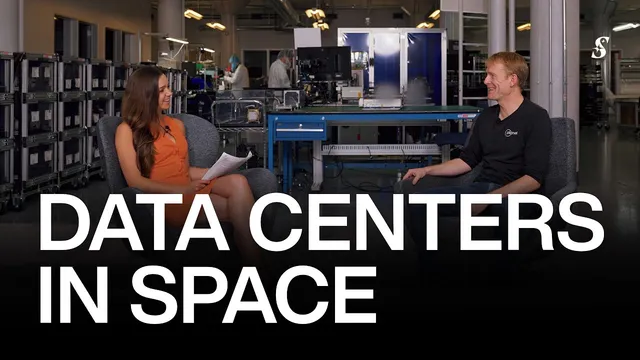
Sourcery, hosted by Molly O'Shea, with Winston Weinberg.
Transcribed by machine (Whisper) from the episode’s audio, so a word may be off here and there.
The purpose of Harvey, Harvey AI, Harvey AI, if you're reviewing a million documents, is how do you check that its work is accurate? So you were at $100 million in ARR last August, and now you're nearing $300 million. What's been driving that? It's 100% product. Our token usage in January was $1 trillion, and this month it'll probably be like $12 or $13 trillion. Our DAU over MAU at the beginning of the year was around 36%. Right now it's like 51%, 52%. And then this year, most recently, the main switch we did is just went over to cloud agents. We switched our entire infrastructure to that. And once we did that, usage user just started doubling quarter to quarter.
You asked about a sword. We could start with this. We could start with this. So I actually, this is probably the best thing. I also personally have a replica of Frostmourne. uh but that's in my apartment i don't know what that is it's it's arthas's sword uh world warcraft got it yeah anyway of course my bad my bad it's an awesome sword but i've seen too many people do sword things and so i didn't end up doing it um but i do have it it's great you guys can okay well that works too you can come through this way it's totally fine um but yeah this thing's fantastic we've actually we had a really small one um there was a kind of like a running joke when we were all in an airbnb that we had this like little tiny gavel and one of the biggest problems with the product was just like latency um and so whenever we tested like a new feature we would basically just like hammer the gavel and be like make it faster make it faster make it faster which i think annoyed that a lot of people but we've stopped doing that now oh my gosh wow okay that's a good place to start yeah yeah we got a bunch of books got some sculptures and you handpicked all of this stuff just for reference we're on a tour of harvey right now
this is Winston and um what are we gonna see today um we're gonna see the floor that's been renovated so three floors here in San Francisco and then one the one we're on now has been like fully renovated okay and then we're doing the sixth and the seventh and the significance of this painting yeah so there's no significance of this painting but um I mean I think like one thing about this floor in general is we've tried and we'll take you up to the speakeasy after we've tried to do like a combination of kind of like tech plus also like classic um and so you'll see like a lot of sculptures we have a lot of uh like books related to law this is kind of funny because it's John Grisham but it looks like it's like oh my god ancient text like Hammurabi's code or something like that how did you find them um I actually don't know for these particular ones but in general we've kind of tried to do like a combination of um when we were actually doing our brand in the beginning we were basically like could we do a copy of like the best tech companies and then succession like the show yeah my point was like kind of a combination of like an ode to you know like classics like greek first orators things like that plus like hey we're a tech
Read the whole transcript
company um and we've definitely tried to do that a lot with our brand and we've tried to do that throughout the office too. It seems to be working. It looks amazing. Thanks. Okay, so we're going to cover a lot of different things today. For starters, on this tour, I want to talk about the evolution of the company. So you've been around close to four years now. Yeah, it'll be four years in August. Congratulations. Well, not yet. Happy birthday. I don't know. You have nearly a thousand employees yeah close it's like 960 something and this office is one of how many uh 12. wow so we opened up offices pretty quickly but the the office here and then new york are by far the largest how many employees are um so in this one i think it's around like 350 and then New York is there.
around like 300, something like that. Yeah. And then the vast majority of EPD is here, but we are growing out the other offices too. That's a really cool vibe. Yeah. Okay, so when you build out globally, you have 12. Yeah. How do you figure out which cities to go into first? Is it like you have your customers and then you build around them? Yeah, so it's actually, yeah. So we did it first based off of just like reacting to like big customers. So like we'll sign like Deutsche Telekom and it's like, oh, wow, we need an office in Germany, right? Things like that. There's actually something really interesting that we had a problem of in the beginning, which is because we process sensitive data, a lot of the countries, we actually needed like an Azure instance in each one, right?
So like in Australia, you can't process financial data outside of the country. And so we would set up these offices and then we'd set up like Azure instances too. And it was almost like we set up an Azure instance and then that would be like a pretty good indicator that we'd have to set up an office pretty soon afterwards just because like customer demand yeah um but another way to look at it is kind of like the legal tam overall too um and so we kind of base it off of like you know how many lawyers are there in in each country etc and there's how many lawyers in this company yeah um in this company we have over 200 yeah and so and then on the commercial side like actually i guess doing what a normal lawyer would do um there's only about like 25 really yeah and then the rest um i mean obviously we use harvey internally for a lot of stuff so we're trying to scale that up um and then the rest of folks either they work on product or they like help with go to market and things like that too um it was we don't have this anymore but you used to if you would have visited us like a year or two ago you would have been able to tell who's a lawyer and who isn't because why there was they would dress differently yeah so there
was like a phase should we play a game right now yeah you won't uh you won't be able to actually i don't think anywhere on this floor actually um but basically like the first week they would wear a full suit and a tie and then about like maybe the next monday the tie would come off and then like three days after that it's like the suit came off and then it would eventually be like hoodie and sweatpants yeah yeah naturally and you but you would be able to tell like basically like which lawyer had been here for which amount of time and you could always tell which is kind of funny so as we walk through this like how did you set up this new office like there's obviously a lot of conference spaces yeah desks this is a huge communal area do you guys host lots of yeah we we host a lot of hosts like customers and things like that we also i mean it's a little bit past lunch but we were talking about this earlier we have like an insanely loud lunch culture yeah we walked in at like 12 30 and i was like yeah this might be it's it's crazy loud like to the point where i don't schedule meetings during the lunch really like i or i don't do customer meetings during the lunch hour like it's literally like a band like from 12 to 1 30 i just will not do
external meetings because it is so loud and you can't it's loud everywhere so people will eat lunch here but it's like loud throughout the whole thing um i think we just have always had that we started in airbnb and then whenever we moved from office to office like we'd always eat lunch together and it's somehow like spread out to the you know hundreds uh almost a thousand employees and so we want to keep that i think forever i don't know i think like you need like a couple of those instances where like everyone gets together we've done a handful of these office story so far and you might have the most employees in office. Really? Yeah. Well, don't tell them that. I mean, I think like it's something we care about a lot.
I think that if you have to try to force it, you're probably in trouble, right? Like it's not gonna work that well. But I think like the thing that does it the most is stuff like This is like, you get to meet everybody from like, if you go to here during lunch, and again, you wouldn't have been able to hear anything. So maybe not as helpful. But you want you can't be like, Oh, that's the team that works on this. That's the team that works on it's like everyone is all mixed together. And so I think people like coming into the office because we have a very like culture of everyone working together. And people are really good friends that are like a cross functions. So we have people like, like, you can come here on the weekend, and there will be people in the weekend.
really yeah all the time yeah yeah and it's it's funny because no one works in offices and so people usually work in like a corner um and then you'll have like just a small group of people in a corner but like i notoriously lose like my card 24 7. i think i have my with me right now but this is like my 19th like i just constantly go through them and so i know that there's people on the weekend all the time because i'll come on the weekend and i'll post into sf general like like, yo, let me in, yeah, and there's no one to. Maybe they think that's a test. Exactly, and so every single time so far I've been able to get in, yeah.
Okay, so what's your favorite room? Oh, yeah, good question. Okay, favorite room is definitely a speakeasy, and I'll show you that in a second. I'd say my second favorite is I really like to work actually on the couch, like on the couch when people come in, and I think part of that is I used to travel a lot, I travel a little bit less now, but last year i almost entirely didn't work out of an office i just worked on the couch and it's because i get here early and i like like saying hi to everyone for a couple hours and then i have meetings um but in terms of actual room is the speakeasy so i can show you that it's up here actually oh cool i'm surprised by being in office i'll take that though it's uh i mean it was a good compliment yeah no no um i'm trying to think like the only other company that has was applied intuition oh yeah yeah they were packed they're young though they're like 40 people right oh oh no applied intuition not applied compute not applied compute i like applied computer gabe was just there like last week okay so what's the biggest lore here biggest lore of this office yeah this office actually doesn't have the airbnbs have like way more oh i would imagine yeah it was i mean so airbnbs we went through i think eight so basically what we did
is at what point did you realize you needed to get 20 people okay so we what happened is we basically kept getting like a larger airbnb each month when we just added more people um and then we got to a point where it was like okay this is definitely a problem um at like 20 ish what is the deal with people in sf like startups getting like townhouses and houses to build yeah out of i would like to say that there's like some beautiful reason for this or some smart thing to be 100 honest it's just easier really it's just like i can go personally book an airbnb okay and then you just don't think about it because you're doing so many other things legal what to yes it is legal to do that yeah um and then you i mean you basically just like personally book a new airbnb each time and it's like then you don't have to worry about what's the most illegal thing that you know i'm not gonna say that on camera nothing we're a bunch of lawyers are you kidding me okay cool sorcery is brought to you by brex the financial stack trusted by more than 30 000 companies, including one in three venture-backed startups in the US. Nearly 40% of startups bail because they run out of cash. Rex is literally built to help founders avoid that. Unlike
traditional banks that let your money sit idle, chipping away at it with fees, Rex is designed to help you spend smarter and move faster. Their all-in-one solution combines checking, treasury, and FDIC protection into one powerful account. You can send and receive money globally at lightning speeds. Get 20 times the standard FDIC coverage through their partner banks and even high yield from day one. But same day and even same hour liquidity. Access your funds anytime. Companies like Scale AI, DoorDash, Service Titan, HIMS, Anthropic, Flexport, Robinhood, and Plaid trust and use Brex. Start today at brex.com slash sorcery. That's B-R-E-X dot com slash sorcery.
sorcery turing is training the next generation of ai with tasks that require real expertise and real world judgment that's why companies like NVIDIA anthropic salesforce and gemini partner with turing turing builds realistic reinforcement learning environments and data systems based on real operational traces the kind of infrastructure frontier labs need to train superintelligence. Visit turing.com slash S-O-U-R-C-E-R-Y. We just did a little walking tour of the office. Now we're going to go deep into the business. Are you ready? Yeah. Let's do it.
“we've now actually created basically like a pipeline for creating synthetic data sets across like every single legal use case”
“it feels like if you do not constantly change you are just going to get so behind that you die as a company right now”
“law firms very rarely fire people very rarely okay”
like a huge issue in the beginning thinking of how fast you're growing the company i don't know maybe you still have a billion dollars in the bank how are you thinking about buying or sorry building out the company itself or buying there's like a now there's like an onslaught of M&A within all these AI companies and buying up smaller startups for talent and all this kind of increased competition how are you thinking about that yeah devalue like higher value on team and lower value on what they've built in terms of
Like, I do not believe that it is a good idea right now to go around and buy legacy technology. Like, I don't. I think it is a much better idea to buy, like, really, really good teams, regardless of if they worked in your space. Doesn't matter, right? And so that's, like, if you look at the acquihires that we have done, they actually haven't been in the legal AI space or, like, legal tech. They've been outside of it. But they're really, really good teams that could work on a problem that we have, right? and that doesn't mean that I won't do legal tech acquisitions in the future but I do think that right now if you are making an acquisition like the number one thing you should be looking at is just talent because you can build things so much faster now right that it should literally just be talent like are you buying a team that is really really good and are they going to align with your cultures because the other problem is like we're not even four years old if we go and absorb a bunch of teams, like our culture is still being built, right? And so you're going to just like collapse yourself, right? And so I think it's a really bad idea to go out and buy like a bunch of companies and then they end up being like half of your company is that. That's a
terrible idea. I do think it is a good idea to go out there and like acquire some companies for really good talent. Today's episode is sponsored by VCX by Fundrise, the public ticker for private tech, allowing investors of all sizes to invest in venture capital. Learn more at getvcx.com. Some of you may not have heard this yet, but our sponsor Public just launched something called Generated Assets, and it brings AI into investing in a way I've honestly never seen before. Here's how it works. You type in an idea like AI-powered supply chain companies with positive free cash flow or defense tech companies growing revenue over 25% year over year. Public's AI then dispatches a swarm of agents that scan every single US stock, evaluates them, and instantly builds a custom index around your thesis. What really stands out is how clearly it explains why each stock is included. And before you invest, you can even backtest your idea against the S&P 500, so you're making decisions with real context, not just guessing. And beyond generated assets, Public lets you invest in stocks, bonds, options, crypto, all in one place. They'll even give you an uncapped 1% match when you transfer your investments
over from another platform. If you want to build a portfolio that actually reflects your thesis, visit public.com slash sorcery. Paid for by public investing. Full disclosures in the description. Enterprise AI runs on Merge, the AI infra platform for integrations, agent tooling, and model orchestration. So your teams ship product, not plumbing. Mistral, Dropbox, and Drada already trust Merge in production. Start building at merge.dev. Founders scale faster on Deel. Set up payroll for any country in minutes. Hire anyone anywhere. Get visas handled fast and get back to building. Visit deal.com slash sorcery.
That's D-E-E-L dot com slash sorcery.
“you have to just assume that most things are two way doors.”
“I just spent a billion dollars on tokens where's my ROI”
recording I asked you what you're most excited about and you said benchmarks yeah we're going to be interviewing Gabe after this what question do you think I should ask him um I think that the best question actually is why are benchmark like why are why are the current benchmarks for most verticals bad right um and if you look at like the benchmarks that have existed for legal for a long time i mean half of them are like can it pass the bar multiple choice questions on like community property law and things like that right and i think that we haven't actually until now had here is a very like very good set of data that doesn't a legal task from end to end and we're missing this in most articles other than coding basically coding is the only one that has like a good saturated benchmark wow okay when are you going to do a collaboration with kim kardashian
soon she didn't pass she gave up i think kanye passed it or maybe that was a joke i don't know i think it was a joke i think it was a joke damn i think it was a joke i think it was i'm not sure well thank you so much yeah of course thank you because it lives why do you have a hippo well because they both live on land and in the water so they see both sides of the world oh my god that kind of works ducks fly and then ducks fly ducks do and then hippos eat people hippos have eaten a few people so that's not i don't know why you want runaway jury that's legal john grisham how many i've noticed you have over 1200 books in this office have you read all of them every single one of them From front to back.
And I could recite any part of the book. Even the culinary cookbooks? Mostly those, actually. I'm, like, more well-versed than that. No, it's been a long time since I cooked. I am really bad. I'm a chicken and rice DoorDash guy. And it's actually the same. It's the place called Cholito Linda. And it's around here. And there was actually a time I was interviewing someone. And I asked them, like, hey, do you want lunch? And I pulled out my phone to do DoorDash. And they'd seen that I ordered it 467 times. yeah it said like the like the little number you ordered multiple times a day yeah twice lunch and dinner oh yeah so you're one of those types you just eat the same thing every day well so and then breakfast um there's a blue stone on like fulsome and i get there exactly when they open like it's 701 and i get um it's like this keen green smoothie that's really good with extra almond butter and i look like a psychopath because i'm like i have a spoon and i'm literally eating you eat it with a spoon yeah it's kind of terrifying i eat so i try to these with forks so you're okay how do you even do that wait wait actually i'm literally not even kidding how well i like to put like granola on top so i eat it with a fork but then you so is it
like you fork out the granola so it's like granola doused in smoothie okay so it's granola doused in smoothie and you do that with the fork and then you put a straw in it's like a smoothie parfait yeah that actually kind of makes sense you know that's not that bad a spoon seems like it would work better though. But I'm making you feel less bad about the whole spoon. I guess that makes sense. All right, are we walking or what are we doing here? Yeah, let's start. Okay, so. I like the duck though. We do. The duck was great. I mean, might as well. Hey, it's Molly. If you enjoy our interviews, check out our newsletter, sorcery.vc, where we deliver a once a week top deals and tech headlines email and also go deeper on our podcast interviews. Subscribe to Sorcery today. And don't forget to subscribe to the podcast on YouTube, Spotify, Apple, or wherever you listen. Link in description to sign up.