Free with a sign-in.
The best 6 min of 34
Ari Emanuel on the Future of Entertainment in the Age of AI
Ari Emanuel argues that AI will expand entertainment production while live events gain value from scarcity and human connection.
IBInside Blackstone · Christine Anderson
- Ari Emanuel is a Hollywood agent building a live-events company.
The best minutes
- 16:48AI can lower production costs and expand entertainment3 min
- 24:31AI raises the value of human taste and creative judgmentPro pick 3 min
Also worth watching
Skip the six-minute market discussion, the memoir and client-loyalty section, and the closing live-events debrief.
Full analysis · 6 min read
Real Alpha · Nov 12
Ari Emanuel says AI could lower costs and expand entertainment
- Emanuel said AI could lower production costs and raised about $2 billion in equity for MARI.
- The cost thesis is plausible, but he gave no production-savings or audience-economics estimates.
- Operators should separate tool savings from demand and test which formats audiences choose.
Free with an account
Read the rest of the analysis
7 sections, the 3 other voices it tests Emanuel against, and what it means for you. Every episode we cut gets one.
Check your inbox
We sent a link to your address. Click it to finish signing up. Not there in a minute? Look in spam.
or
Signed up before? The same buttons sign you in. The episode, its moments and the transcript stay free.
Emanuel expects AI to lower costs and widen output
Emanuel's forecast starts with cheaper screen production. He said film and television would become more plentiful and cheaper to make, and thinks AI can unlock creativity.
He named social, podcasts and microdramas alongside movies and television. That's a supply-side forecast, not a profit forecast. Lower costs may make experiments viable, but they may also intensify competition for attention.
He offered no production-cost estimate, volume target or evidence showing who captures savings. So operators should treat lower costs as a reason to test, not a margin assumption.
Our read
The cost curve may widen the slate, but the episode cannot show who captures the savings.
Cheaper production does not guarantee chosen entertainment
Emanuel said that in China right now, microdramas have surpassed new movies, and many are being made with AI. He gave no metric or supporting data for the comparison, beyond that vague present-tense claim.
That example illustrates format churn, not settled demand. His prediction of greater volume does not show which work will attract paying audiences.
Dylan Field, Figma's co-founder and CEO, made a related distinction on All-In in October 2026. He said AI can lower production barriers without raising creative quality by itself.
For example, a content team should compare lower first costs with discoverability, completion and willingness to pay. Otherwise, production efficiency can look like product-market fit when it is only cheaper supply.

Our read
The useful unit is not content made, but content people choose and pay for.
Emanuel sees human taste separating abundant content
Emanuel's strongest answer to commoditization is taste. He told young entrants to study arts, culture, literature and creative thinking. He said those capacities matter because AI does not provide them.
Still, that is a human-capital prescription, not proof that judgment stays scarce or gets paid. AI can expand candidate output, but teams still need to separate useful novelty from noise.
Vinod Khosla, Khosla Ventures' founder and managing director, offered a sharper price forecast on The Information's TITV in September 2026. He said human-made ceramics could be worth 10 times more, linking human provenance to live sports resilience.
Take that handmade-ceramics forecast as a hypothesis, not transaction evidence for entertainment. A creative team can test whether human direction improves audience preference, retention or price.

Our read
Taste is a credible differentiator, but its value needs an audience-side measure.
Live scarcity supports a thesis, not a return
Emanuel said his premise in starting MARI was that live cannot be disintermediated, including sports, music and events. He also recounted Elon Musk making a similar point.
The scarcity and shared-emotion case came more explicitly from Chris James, Blackstone's head of Tactical Opportunities, in the closing debrief. James said live stands apart from abundant online entertainment because the occasion is scarce and shared.
Bill Thompson, Spartan Forge's founder and CEO, made a related forecast on The Joe Rogan Experience in October 2026. He said abundant AI media could lift demand for live and handmade work. That reinforces the demand hypothesis, but remains a forecast.
Emanuel is building MARI, and James is explaining Blackstone's investor case for live assets. Neither segment supplies asset-level returns. James also pointed beyond teams to arenas, surrounding infrastructure, online components and premium experiences.
For instance, those levers broaden the opportunity set, but the episode gives no asset-level returns or attendance data. Scarcity may support pricing, yet capacity, costs, event quality and repeat attendance still shape returns.
Our read
Live's distinct experience is an investable thesis, not proof that every venue or event earns.
Emanuel's workweek forecast outruns its evidence
The host linked AI to more leisure time, and Emanuel agreed with that framing. He separately predicted three-day workweeks if trend lines continue, and described four-day workweeks as already visible across the globe.
He pointed to hotel and restaurant reservations, drive times, travel and Thursday night events. The host did not receive a data series, definition or period for those indicators.
But Emanuel's Thursday-night account does not establish that AI caused the pattern. Nor does more free time automatically become ticket spending.
That distinction matters when budgeting for venues or entertainment districts. Operators need observed attendance and spending, not only a forecast about future schedules.
Our read
Treat the workweek story as a scenario, not a base case for demand.
MARI commits capital across a broad live portfolio
MARI turns the thesis into a portfolio. Emanuel said he raised about $2 billion in equity and $900 million in debt from different players. Using those reported figures, $2 billion + $900 million = about $2.9 billion, our arithmetic.
He described festivals, collectibles, sports, ticketing and discovery, including TodayTix and Bucket Listers. Earlier, he said MARI comprises 16 businesses. For example, the portfolio spans Winter Wonderland, Frieze, the Miami Open and ticketing through TodayTix.
This mix may spread exposure across event types and ways of reaching customers. But it also makes performance harder to judge from one valuation or a sold-out show.
Emanuel called live the opposite bet to AI, yet he also expects AI to expand adjacent content. Both can be true, but the portfolio is an allocation choice, not a clean hedge. Capital raised establishes financing scale, not operating performance, debt-service capacity or returns.
Chris James's private-equity view supports the rationale, while making clear that it is an investor thesis.
Our read
MARI demonstrates substantial capital commitment, not that its live assets already earn attractive returns.
Emanuel's bidding process sets price, not investment proof
Asked how he builds conviction around assets, Emanuel answered with a negotiation lesson. He said his job is to create an environment where bids rise and find what the market will bear.
That is a seller's toolkit. Emanuel said he is selling material he considers strong, sometimes packaged with an actor, writer and director. But that explains how he prices material, not how a buyer separates price from value.
The exchange gives no project-level forecast, hit rate, cash flow multiple or acquisition return. Those figures simply are not part of his answer.
For a founder buying AI media tools or live assets, the distinction is practical. Competitive interest shows what someone will pay today. An investment case still needs evidence of durable demand and cash generation.
Read beside MARI's raise and James's investor thesis, Emanuel's case is directional. Costs may fall, while taste and live occasions may differentiate. But returns remain to be tested asset by asset.
Our read
His market-making skill can set a clearing price, but the transcript does not underwrite that price.
What it means for you
- Cost per finished minute. Run an AI-assisted pilot against a comparable production, measuring cost per finished minute alongside completion, audience size and revenue. The episode makes cost reduction a hypothesis, not an outcome.
- Measure actual live demand. Separate attendance, repeat visitation and ticket yield by event and day. That tests whether the leisure story translates into paid demand.
- Stress-test the schedule. Build venue budgets against observed bookings first, then model three-day workweeks as an upside case. Emanuel offers a forecast, not a measured baseline.
- Separate price from value. For an acquisition or content package, record what competing bids show, then underwrite cash generation independently. Emanuel's answer focuses on finding what the market will bear.
What to watch
- Whether AI-assisted production lowers cost per finished title and improves margins or audience reach.
- Whether Thursday-night bookings and ticket spending support Emanuel's leisure-time case.
- Whether MARI reports operating outcomes across events, ticketing and discovery.
Send this to the product and finance leads setting AI content budgets.
Watch the minute where Emanuel predicts cheaper production and more content
Written by Real Alpha from the episode's transcript and the other moments it links, then checked against the transcript. Quotes are the speaker's exact words.
Minute by minute
A Pro write-up, open to you here. Try Pro free for 7 days
A Pro write-up. The minute by minute is in Real Alpha Pro; the episode, its moments and the transcript stay free.
Read it with Pro, 7 days free- 1:06Markets mix strong earnings with uncertainty
Michael Chae described a relief rally, a sharp de-risking and then a rebound in AI-related stocks. He cited strong earnings and double-digit revenue and profit growth in Blackstone’s portfolio, while flagging cost-of-capital pressure and uncertainty about the investment boom. His recent trip to India, Japan and Korea also pointed to demand for private-capital solutions.
- 6:40A memoir built on candor
Ari Emanuel said he wrote his memoir after colleagues warned that someone else might tell his story, and he wanted to describe how brutal the work can be. He called client representation a 24/7 responsibility and said he had wrestled with guilt over missing time with his four children.
- 10:14Why Emanuel makes hundreds of calls
Emanuel said he makes about 300 calls a day because he represents clients including Mark Wahlberg, Jonah Hill and Martin Scorsese, while also working across MARI and TKO. He prefers direct calls without small talk and recalled meeting Mark Shapiro on a flight after watching him type for hours; they became friends.
- 14:58MARI brings live experiences together
Emanuel said he started MARI as a bet on live events, opposite AI, and raised approximately $2 billion of equity and $900 million of debt. Its businesses span holiday events, collectibles and sports, with TodayTix for ticketing and Bucket Listers for event discovery.
- 16:48AI could broaden entertainment
Emanuel expects film and television to expand in cheaper, varied forms as AI lowers production costs. He cited China, where he said microdramas had surpassed new movies and many use AI for economic reasons. He expects pressure on below-the-line production work, but said human judgment and taste will matter.
- 19:20Live events resist digital substitution
Emanuel argued that AI cannot disintermediate the shared experience of live sports, music and events, and predicted that workweeks could shrink to three days. He cited hotel and restaurant bookings, drive times and Thursday NFL games as signs that people already spend more leisure time from Thursday onward.
- 21:21Negotiations reveal what is fair
Emanuel recalled trying to raise a Warner Bros. option from $5,000 to $7,500 early in his career, only to have an executive tell him that fairness is where the parties end up. He said the lesson shaped his job: create an environment where bids rise, then find what the market will bear.
- 23:48Agencies will adapt to AI
Emanuel said brands will become content creators across podcasts, microdramas and social media, and that agencies are evolving with them. He believes AI’s speed, global disruption and upside are not yet fully understood, but expects the aggregate effect on businesses to be positive. He also said live entertainment is difficult to disintermediate.
- 25:57Taste matters in an AI era
Emanuel said his agency still has a mailroom and advised young people to try to enter the industry through its training program. He recommended studying the arts, culture and literature, arguing that taste and creative thinking matter because AI does not provide them.
- 27:42Sleep anchors Emanuel’s routine
Emanuel said he sleeps six and a half to seven hours, works out and uses the sauna daily, fasts every Monday and for three days each quarter, and practices breathing meditation. He said sleep is the one routine he would keep if he had to choose.
- 29:56Scarcity gives live entertainment value
Chris James said live entertainment stands apart from digital abundance through scarce moments and emotional connections. He said investors can build value through venues, arena infrastructure, online components and premium experiences, not only by buying teams. Blackstone is especially interested in modern venues that anchor broader entertainment districts.
Published Nov 10, 2026.
Transcript · 26 min read
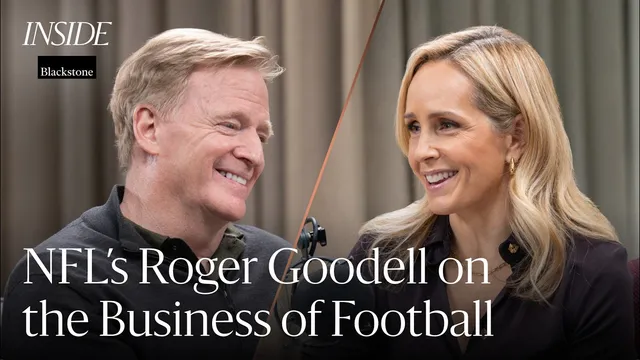
Inside Blackstone, hosted by Christine Anderson, with Ari Emanuel.
From the transcript Inside Blackstone publishes with the episode.
Now, this guy is like the biggest studio, negotiating all these big deals and he's like fighting with me over $2,500. And he says to me, fair is where we end up. Now, get out of my office. Hello and welcome to this week’s episode of Inside Blackstone. I'm Christine Anderson, Global Head of Corporate Affairs, and here's this week's lineup. First, we have a very special guest for you, Michael Chae, our Vice Chairman and CFO. He comes in to help us unpack a crazy week. And then, my conversation with Ari Emanuel, legendary agent and one of the most influential people in Hollywood. Tune in to hear how AI may reshape media and entertainment and why live experiences and sports are becoming more and more valuable.
To close out our episode, I've got Chris James, Head of our Tactical Opportunities business, he's gonna join me in the Debrief. Now, over to my conversation with Michael. All right. Michael, welcome to Inside Blackstone. Christine, it's great to be here. It's such a treat to have you here. I feel like I’ve made it. You finally made it, Michael, after nearly 30 years at Blackstone, right? You started as a senior partner in our private equity business, and then you ran our Asia business. Now you're our CFO and Vice Chairman and play a big role in setting the macro here. So curious how you would unpack the last week.
Well, it's been a wild ride, as we both know. You know, last Wednesday, in terms of market reaction, we saw a big relief rally with the uncertainty of events behind us. We saw more optimism on the prospect of geopolitical resolution and therefore oil prices, inflation, and rates potentially easing and the market not really minding the prospect of gridlock. The next day, of course, we saw a pretty massive de-risking. That was actually quite technical in nature, and a lot of so-called de-grossing and reduction of risk on the part of hedge funds and levered ETFs. And then the next day we saw, you know, some stabilization in the market and a rebound in AI-related stocks that had been so beaten up in the context of uncertainties about the build-out.
Read the whole transcript
So obviously, in terms of fundamentals, investors are, you know, wrestling with: What does this all mean for earnings next year and beyond? Especially given the importance of the technology and semiconductor sectors for earnings growth in the market overall. Okay, so obviously hard to know, but you're guessing a little bit more stabilization continues this week? We can only hope, but that would, I think that would be reasonable. All right, so give me your take on the macro more broadly. Well, the fundamentals have been very strong. We've been in a real earnings boom. The S&P is, you know, in the middle of posting a year where it'll have the highest earnings growth in five years. In our own portfolio, we’re, you know, we've been seeing double-digit revenue and profit growth.
The drivers, from my perspective, are this, you know, very positive one-two punch of first, the investment boom, and then second, a healthy American consumer, 70% of the economy growing at over 3% real, albeit somewhat K-shaped. And we've also seen, really importantly, real strength in productivity and margins in the market at large and certainly in our portfolio, and this is largely all ahead of the AI productivity boom that we think will be coming, you know, over time. So those are the positives and the tailwinds. In terms of the headwinds, first, a rising cost of capital through most of this year.
I would call it a cost of capital shock. And now, of course, uncertainty is about, you know, the sustainability and shape of the investment boom that I referred to. Okay, so we've also seen moves in rates. What's your outlook for that? You know, in the last handful of weeks, we've seen a welcome easing. I think it's actually, you know, close to 50 basis points in about five weeks. There's a number of factors at work, but at the heart of it is, of course, inflation. At the heart that is energy and oil prices, and at the heart of that is geopolitical conflict and uncertainty. So, outside of energy inflation, we continue to see the other inflation factors as basically under control.
Wages in balance, wages in labor markets in balance. Shelter cost inflation measured in real time is actually pretty muted. And actually, you know, a bit of cooling in the economy, which, you know, has been running somewhat hot, would probably be viewed as constructive for the rate outlook. So, if, and this is a big if, we do see some geopolitical resolution, we do think the Fed has room to be less restricted over time. So overall, you seem cautiously optimistic to me. Yes. Okay, you're just back from this big Asia swing. Let me see if I get this right. You were India, Japan, Korea. What am I missing?
Those three. Those three. Yep, yep. Then a little West Coast. Those three and then a little West Coast. Earlier this week, yep. What are you hearing? Well, it was a great trip. We have, as you know, great people and businesses in each market. And just quickly, I'd say, you know, India is such a dynamic, important economy and market, and has such a robust talent pool, important to the firm. And we've, you know, just built an extraordinary investment business there in private equity and real estate and with a lot of, I think, growth areas from here. You know, for Japan and Korea, I’d say a big takeaway for me, after meeting with a lot of folks, is that many large corporates, in both countries, are more in need of private capital solutions than ever before. In Japan, because of the focus on shareholder value. For Korea, because there's actually a lot of large-scale investment needs for the biggest companies there as well.
And so I think our firm is gonna have some really exciting opportunities ahead of us in all of those markets. Okay. Well, wonderful to have you on. Thank you so much for joining me. I hope you'll come back. I would love to come back if you’ll have me. All right, I will, we will be calling upon you. And now we're gonna turn to my conversation with Ari Emanuel. My guest today is Ari Emanuel. He's a legendary Hollywood agent, who became one of the most influential figures in entertainment and sports. For three decades, Ari's been at the center of an industry in transformation. From talent agency William Morris Endeavor to TKO, the company behind Ultimate Fighting Championship and World Wrestling Entertainment.
Now, he's building again with MARI, his new live events and experiences company. He's also the author of the bestselling memoir, Roll the Calls, a fascinating look inside the industry and his remarkable career. Ari, thank you so much for being here. Or you're not here. No, we're here, we’re here. We’re here. Thank you so… This is here. Thank so much for doing this, I really appreciate it. Ari, I wanna start with this. I don't know you well, but you just don't strike me as a guy who would write a personal memoir. So I wanna hear about that. And I also, I'm fascinated by the fact that most people in personal memoirs, they tend to sand down the edges a little bit, whereas you lean into the edges.
Curious why ya did that? Well first of all, I, it started, it’s been ten years. And it was started with my head of communications and the head of the lit department, the book department, who said, you know, if you don't write it, somebody gonna write it, you’re gonna be pissed off and it's not going to be what you want to say. So I said, okay, I'll try it, because I've read other autobiographies, you know, they just gloss over all this stuff that actually happens in one's life. And, the only way I think anybody was gonna learn anything or care about this book is if you told them the honest truth that it's been brutal.
I wanted to be really honest about what it takes and my journey and everybody can pull out what they want from it and they have to figure out their own journey. Talk to me about the quote at the beginning of your book where you say, work is the true story of Hollywood. Why did you choose that? Well, you know, I think people think that we don't work really hard in Hollywood. I mean, this place… You're hanging by the pool, sippin’ cocktails. Yeah, this place, people are, I mean, you might not think it's work. It is constant work. Like most businesses, this is a 24/7 job. There's hundreds of millions of dollars on the line, constantly, that you're playing around with.
You also, I loved your story about watching your dad leave the house every day at six and sort of what that meant to a kid. I mean, I don't know. Do you have kids? I do. I have four of ‘em. Yeah, I have four kids and you know, somebody asked me at one point, did you feel guilty every time you had to leave? I don't feel guilt about it now, but at the time when I was going through it, cause I had never gone through it before, I felt guilty having to miss stuff and thinking that I'll have screwed stuff up with them because they saw how intense their father was. But at the end of the day, my ex-wife and I have four touchdowns, so we’re good.
So your intense client focus comes through loud and clear in this book. And for all the people that you have like harsh words for, your clients, you don't. And you're intensely loyal and…Where did you develop this ability to sort of put them at the center of everything? Well the job on the representation side, I'm do or die for clients. If I'm gonna get in business with somebody, it's my reputation, and I'm their partner, on the business side of their life. And if they're giving me their dreams, which is a script, their acting career, their directing career, book, you know, whatever. And I've said, yes. That's the job.
The job is, I'm the partner, you've given me your trust, and I'm gonna show you, kind of, what that means to me. That's 24/7, seven days a week. And when my head comes off that pillow, I think about ‘em, and when it goes down right before I go to bed, I think about them. So I work with some pretty intense people here, as you know. And yet, hearing… Yeah, I do. …you know, you do. And hearing about the way that you pursue your day and this like 300-ish calls that you might make on a day. Yeah, well, you're cutting it down now for an hour. Well, I know, I don't even know what your phone's gonna look like when we get off this podcast, but, you know, apologize in advance for that. It’s okay. But what, how does someone make 300 calls in a day, and like, why?
There's certainly successful people that don't have to work the phones as much as you've sort of decided to do. Well, I have clients, right? So there's everybody from Mark Wahlberg or Jonah Hill or Marty Scorsese or Pete Berg or Aaron Sorkin. I mean the list, which is people I care about, that have been with me for a long time. Then there's MARI, which is 16 businesses. And then there's TKO. And they all, kind of, there's concentric circles so when you're talking to Netflix about a movie, which is on the WME side, and then you're also talking about WWE, it's just, it’s a collision course, which is exactly how I like my life.
You talked about having, during this period when you were economizing, you had to like learn to do a short phone call, you wouldn't even say goodbye. Right. What’s… We didn't have money. What's the beauty in a short phone call though? I was talking to, way early in our career and the WB had just started, the Warner Brothers Broadcasting. And there was an executive at Warner's, who was the head of the studio. And he would always start the call, like, how's your family? I'm like, it's okay, we don't have to do that. We just have to say, here's what I want. Here's what's going on. And not all the surround sound of nothing.
Oh, how’s your family? I don’t care about your kids. I hope they’re healthy. Don’t act like you care about mine. I was never that guy. I'm not trying to be... But it sounds so transactional, and yet everyone I talk to likes you. You’ll know if I’m your friend. You’ll know if I’m your enemy. I’m good with it. Your approach is often quite startling. So it seems like being a character in the hit show Entourage, right, being parodied, that didn't, that didn’t hurt. I thought it was gonna be the worst thing in the world for me. And then, Steve Levinson and Mark Wahlberg said, this is gonna be the greatest thing that ever happened to you.
And over time, kind of during it, post it, it’s been an asset, yeah. My favorite story in the book is when you met your partner, Mark Shapiro. You see this guy… The best. …typing away on a computer, you go over on an airplane, you see this guy, you wonder why he's up late typing like relentlessly. You kick the sleeping guy out of the seat next to him. No, here's what happened. Here’s what, let me tell you the story. So, there’s, I was flying back Friday night, to LA, on United. And United at the time, first class, you had, two, one, two. That's where the seats were, so there was only two rows. So I was in the second row, I was in the middle, cause I didn't want to talk to anybody.
I just wanted to get my reading done, I had a lot, I had scripts, I had articles, I had things, I had my agenda. So I'm working, the guy right to my right, on the aisle, both on the aisle, these two fingers typing away. I'm like, wow. I'm just reading, getting everything done. This guy for three and a half hours has not, with these two fingers, not stop typing. Not, just not stop typing. I just can't it anymore. And I get up and there's a guy at the window. You know, he's next to this man at the windows. He's had three glasses of wine. He's asleep. Probably, you know, and I say get up. I stand over Mark, who's typing and he's looking up at me.
I say, get up and come sit in my chair. And the guy at the window, now, if it was today, they would land the plane and arrest me. The guy gets up. Now Shapiro at this point is typing away and he's like, what is going on? What just happened? And I turn to him and I go, what the F are you doing? And he was from a suburb of Chicago, like I was from a suburb, he's, like my younger brother, he was a couple of years younger than me. And we just became fast friends. And for the last hour and a half of the flight, just, you know, comparing notes of people we knew, what we did in Chicago, our businesses.
“And I went and raised $2 billion of equity, approximately, and $900 million of debt from different players.”
“I think AI is gonna have an incredible unlock of creativity. I also think pricing’s gonna come down.”
So in an AI world, do you think sports become even more valuable? My belief is what I said in the starting of MARI also. You cannot disintermediate live, whether it be live sports, live music, live events.
As my son Leo says to me, Dad, you know what they call Thursday? They call Thursday, baby Friday. So you have three-day workweeks, which is a third more revenue. And probably you're gonna go down to Wednesday so that you're gonna have a lot more free time. So Ari, did I hear you correctly though? You think we're gonna get to a three-day workweek? Yeah, I do. I mean, if the trend lines continue the way they're working, we're at four-day workweeks now. Not at Blackstone. Okay. You're at four-day workweeks across the globe when you look at all the data, hotel reservations, drive times, restaurant reservations. I mean, the NFL books a Thursday night game now in their schedule.
One, they wanted to get a new day, but also Thursday night is when people were going out. So you're at three-day workweeks. It's a third more revenue into disposable. And I think it's gonna grow from there. So AI creates… So… …a world with more, more leisure time… More free time. …more consumer spending… Yeah. …and all that leads to… Drive times in the United States right now, you know what drive times are in the United States? No, what? Average? 11 to 4. So, in the morning you're doing, you’re on the phone, you're doing all your stuff that you would do for the weekends… Listening to your podcasts.
…then you're leaving at 4, you’re also doing it. That means Thursday night you're ready to rock and roll. What do you want to do? You want to go to a venue? Hotel reservations, restaurant reservations, everything is, just look at the numbers, are exploding on Thursday night. Travel. So interesting. Maybe I'm not at Blackstone, but I can have a conversation with all the employees, to go talk to Jon for you. Well, let's see that, I might challenge you to that Ari. Okay one question I do have about your approach. Obviously, you know, entertainment is art, right? It’s not science. And so how do you gain conviction around these assets that you’re buying?
Whether it be a show that you’re, you know, a series, or a show, or a movie, how do you put a sort of monetary value behind it and get real conviction that it’s gonna be a winner? Well, I’ll answer the first question. So, my first negotiation when I was just became an agent at CAA, I was working for this guy, Bill Haber. And he gave me a play from one of his longtime clients. And he said, go make a deal at Warner Brothers. They want to option this. And the head of Warner Brothers Television, Business Affairs, he was, you know, negotiating license fees for ER and Friends and everything. And then, so this negotiation was this big.
I think Bill was just testing me. And we're negotiating this 18-month option with an extension for 18 months, and it's like $5,000, it's nothing. So we're in this middle of the negotiation. I think I'm trying to get from $5,000 to $7,500. And he just won't move. And I say on the phone to him, this is not fair. I'm working my tail off to get this deal. And Art Stolnitz says, young man, come out to the Valley. So I get in my car, I go to the Valley, I walk into his office. Now, this guy is like the biggest studio, negotiating all these big deals and he's like fighting with me over $2,500. And he says to me, fair is where we end up. Now, get out of my office.
I love that he calls you in to tell you that. And that's true in every negotiation. At that point I knew it was a learning lesson and he’s right, fair's where we end up. You don't pay what you, the number I want unless you think it's incredible. And I accept because you can't get any more. And so, that little life lesson of negotiation answers your question. I think, my job is to create the environment that the bids go up and I'm selling what I think is a really great piece of material with the package that I put together. Sometimes it's with an actor and a writer and a director, sometimes not.
And my job is to kind of find out what the marketplace will bear and what, you know, what fair is for everybody. And that's, that's my job as a representative. And you know I do it as good as other people and I think I do it pretty well and it's worked out. Ari, in an AI world, do you think the work of an agent changes? Oh yeah, I mean, I think, right now, for the first time, you are gonna see brands become content creators and you could be in the podcast space, it can be in the microdrama space, it can be social with a social person endorsing it but doing it in a different way. So, yeah, that's the great thing about an agency.
And, yeah, we're constantly evolving here, and probably our competitors are too.
“Because those are values that AI doesn't do. They don't do it.”
You are 65, even though you don't look like it. Yeah. That's sweet of you. Clearly no sign of slowing down.
How much is this crazy routine, which you should summarize quickly for us, been so… I'm not going to summarize it. Here's what I would say to you is. If you want to be. I mean, Jon does this, he runs, you know, he's got his routine. Right. He and I have talked about our different routines. Yours is a little more intense, I think. Yeah. I don't think he's digesting gut worms, as far as I know. I don’t. You know what it is… I sleep probably six and a half, seven hours. Okay. I work out every day. I sauna every day. I… Today's a fast day. Okay. Once… Every Monday I fast, every quarter, I fast three days.
What's the most essential part of your routine if you had to, could only keep one element of it? Like what do you think… You have to sleep. You have to sleep. All right, sleep's the thing. What’s, how do you manage stress, beyond all this? Every day, every day in the sauna, because I do a 20-minute sauna every day. 20, 25, 30. I do a breathing meditation every day, in the morning. I was sort of thinking you were on the, you know, on your phone in there, but no you… No… …tap out. …I do a, I do a pretty intense breathing meditation. Impressive. All right, anything I haven't… Yeah, yeah, yeah. …asked you in the five seconds we've got remaining?
Anything I haven't asked you that you wanted to talk about? No. Okay. But I did enjoy this, actually. You are so fun… …and I didn’t, I actually didn't think I was going to enjoy it actually. Oh, I don't know if you're offended or not. And your actually, and your actually… But… You’re actually good at it! Oh, thank you. You’re actually good. You are as hilarious as my colleagues tell me you are and as intense and smart. And so, thank you so much for being here. This was a lot of fun. Thank you for having me. I actually had fun! Well, I'm glad. Shocking. Thank you for that, Ari. I appreciate it.
All right, go return all those phone calls. Your call has ended. Yeah he, just like clicks off the phone. It’s like his thing. Signature style. Over and out. Peace. Yeah. Peace out. And now I have one of my favorite people at Blackstone, Chris James, CJ, the Head of our Global Tactical Opportunities business, Tac Opps, here to talk to us about all things live experiences and sports. CJ, welcome. Glad to be here. Nobody can interview me better and do the Debrief better… Thank you, thank you. …than Christine Anderson herself. Thank you for coming on. I'm flattered to be here. I'm very happy to have you here.
Excited. All right. CJ, you were the first person that I ever heard talk about live experiences as this big investable asset class. I will never forget our big investor conference this past year where you walk onto the stage, huge, full, you know, full-room screen to the music of Lil Yachty. I didn't know Lil Yachty is a rapper, at this big festival. He's an artist. He's an artist that I just am not cool enough to know. But, the crowd is going wild. It's this amazing sort of priceless moment. And you used it to kick off your presentation. And, which was a little nontraditional for a Blackstone investor conference, but... It was, but it was quite on point because it kind of captures, I think, the key thesis, the key gist of that presentation, which is, in live entertainment, you have these scarce moments and this emotional connection.
And you could hopefully, in that 30-second clip watching him walk out, you could really see and feel that, which was what we're trying to convey, the value of live entertainment. That emotion and that scarcity. I love it. What’d you make of Ari? I was really into Ari just more because of his intensity. Like, the guy's got a lot of, it feels like, points of view on people. Strong views. Strong views on people, and I respect that. And he's also got a level of intensity around what he's doing, and particularly, what he’s doing on behalf of his clients, his partners, his businesses, and this broader, kind of, vision he has in live entertainment.
It's like invigorating to see somebody with that type of energy exciting you about what he’s doing. Ari leaned into live events and experiences and sports early, much like you have done as well, almost as a bit of an AI hedge, if you will. What are you seeing there? There's a lot of levers in live entertainment to create value and enhance the asset that you are buying. So for us, live entertainment, apart from AI, is a very attractive space to be invested in as a private equity investor. And the scarcity factor is a big one as well, right? Massive amount of scarcity and in a world of digital abundance and consumption patterns in entertainment where you can, online, consume a lot of entertainment, wherever you are.
Live entertainment is, has the fact that it is scarce and the connection with other people, the emotional, kind of, quotient that you can share, that makes it distinct and separate in a world of digital abundance. And that, by itself, I think makes it an interesting place to invest given the demand that is behind that. And then talk to me about sports specifically. So that's an area that we've spent a lot of time looking at and have invested in. Same with Ari. It's the ultimate unscripted content, right? You don't know the ending and so he's leaning in, in a big way, with his UFC and World Westling investments and it's something that you've spent a lot of time on as well. Totally, but in respect of the sports ecosystem, it's not just investing in a team.
There's a variety of ways that you can invest in sports, whether it's the arena, whether it’s the infrastructure around the arena, whether it’s the online components, whether it's the premiumization of the experience. So when we think about live entertainment, and particularly sports, we're thinking about it like with a variety of things you can do and invest in beyond just investing in a team. Is there any one of those specific areas that you like better than others? We love this modern venue infrastructure, which is to say, investing in kind of real assets. Maybe it's an arena, maybe it's a building, what have you, that anchors a broader entertainment district.
The thing about live entertainment, there's a lot of things you can do there. Super helpful, thank you so much for being here. I hope you'll come back as we talk about this theme in the week... Oh my God, you’re pulling an Ari on me. And that was Chris James. Thank you, Chris, for joining us and thank you for joining us on this week's episode of Inside Blackstone. Love you. Follow, subscribe wherever you get your podcasts.