Free with a sign-in.
The best 12 min of 42
Democrats Begin Outlining Priorities | Balance of Power
Sam Liccardo says Democrats should put cost-of-living relief and bipartisan AI safeguards ahead of hearings and press releases.
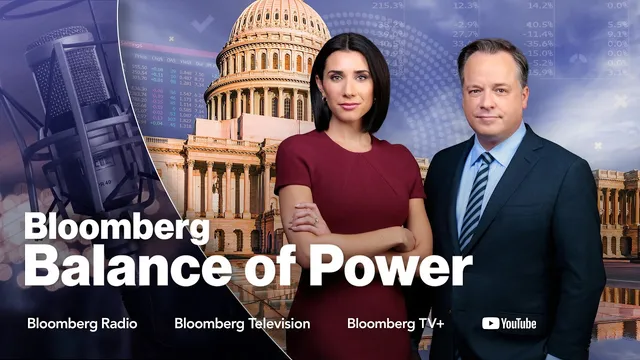
 Balance of Power · Joe Mathieu & Kailey Leinz with Michael McKee, Sam Liccardo, Chris Phelan, Rick Davis, Jeanne Sheehan Zaino and Patrick McHenry
The best minutes
- 8:56Democrats plan to pair AI safeguards with cost-of-living billsPro pick 5 min
- 30:01Data center opposition is becoming a populist political force4 min
- 34:32Crypto missed its chance to pass market-structure law3 min
Every moment plays free. PRO marks a write-up that's in Pro.
Also worth watching
Skip the opening jobs-and-Fed exchange, the White House data-center discussion, the state-regulation panel, and closing House turnover.
Full analysis · 6 min read
Real Alpha · Nov 21
Sam Liccardo says AI bills need 60 Senate votes
- Liccardo says Democrats need bipartisan AI protections that can clear 60 Senate votes.
- That has a possible coalition behind it, but leaves enforcement and scope unspecified.
- Founders should watch whether Congress pairs safeguards with bills addressing household costs.
Free with an account
Read the rest of the analysis
6 sections, the 5 other voices it tests McKee against, and what it means for you. Every episode we cut gets one.
Check your inbox
We sent a link to your address. Click it to finish signing up. Not there in a minute? Look in spam.
or
Signed up before? The same buttons sign you in. The episode, its moments and the transcript stay free.
Liccardo wants laws, not another hearing cycle
Liccardo's test is whether Democrats pass bills, not whether they schedule hearings. He said Congress had issued many press releases. Congress had waited three decades to legislate on online child safety and digital privacy, he said.
Hearings can expose risks, but they do not impose duties on developers. Liccardo said he expected plenty of hearings, subpoenas and press releases, then argued Congress needed bill text. That distinction matters because oversight can create visibility without changing what a builder must do.
His first package, he said, would focus on cost of living. Examples included eliminating tariffs and addressing a minimum wage that hasn't increased in 19 years. He also hoped AI-safety legislation would arrive early.
The pairing is more than sequencing. Everyday affordability answers the voter concern Liccardo described, while safety bills offer a concrete alternative to hearings about technology risks.
“What Americans critically want are solutions.”
Our read
The test is whether priorities become law, not whether hearings generate headlines. Pairing AI safeguards with household measures could broaden support, but each still needs workable bill text.
Sixty votes constrain what Congress can promise
Liccardo said a veto and the Senate's 60-vote threshold limit what Democrats can enact alone. He said they must find bipartisan policies rather than assume a new majority can impose its will.
That constraint changes how a bill should be drawn. A proposal focused only on model behavior may leave unresolved concerns about the sites, electricity and community impact attached to data centers.
Liccardo said leading companies including OpenAI and Anthropic had called for sensible safeguards. He also cited a public letter signed by 1,300 AI scientists and employees calling for pacing.
That support creates a possible coalition, not proof that firms will accept any particular rule. Liccardo named cybersecurity and safety, but did not set out tests, enforcement powers or who would carry them out.
“we do need to get through 60 votes in the Senate.”
Our read
A defined bill with cross-party sponsors is more credible than a broad promise to regulate AI. Industry support is evidence of possible alignment, not proof of adequate protections.
Productivity may ease inflation, but affordability persists
Phelan said the report showed 165,000 jobs, compared with about 40,000 a month usually needed to keep unemployment steady. For 2026, he said hiring was running about twice that pace.
His explanation is productivity. He said a productivity boom adds supply, easing the too-few-goods side of inflation. He did not expect the strong jobs report by itself to make the Fed raise rates.
That is the administration's case, not a settled reading of inflation. Earlier in the program, Bloomberg correspondent Michael McKee said unemployment was basically unchanged and average hourly earnings remained behind inflation.
Phelan said prices were probably about 25 percent higher than at the beginning of COVID. He said wages had kept up with inflation since the second Trump administration began, but only just. They had not recovered losses from 2019 to 2024.
Later in November, Jennifer Lee, BMO Capital Markets senior economist, spoke on Bloomberg Surveillance. She said job and wage growth supported holiday spending, while energy, food and health costs still pressured households. BMO expected sales to rise two-tenths of a percent overall and three-tenths excluding autos and gas.
“a productivity boom like we're having”
Our read
Productivity may ease the tradeoff between employment and prices, but it does not reverse the household price level. Separate current wage growth from the accumulated cost burden when planning budgets or messaging.
Data-center gains depend on local consent
Phelan's case for domestic data centers rests on local buy-in. For the most part, he said, projects can create jobs and productivity growth when communities support them. Keeping facilities in the United States also serves a national-security interest.
Yet Phelan said data centers could be located elsewhere, including foreign countries or space. That makes domestic siting a policy preference, not an automatic outcome of demand.
In November, Jon Favreau said on Decoder that communities were not told about projects in advance. He said operators had not explained benefits or negotiated with residents. His account helps explain why consent is a process, not just a payout.
Mikie Sherrill, New Jersey's governor, spoke on Decoder in November. She said operators had not shown a model assuring communities they would not be harmed. She named water, power bills, jobs and local benefits as issues.
For example, Laura Ullrich of Indeed spoke on Bloomberg Businessweek in November. She said that in some rural communities, 71 percent of data-center jobs were with the top 10 tech companies. That measures employer concentration, not how many local residents get the jobs or remain there.
“when they get community buy-in”
 Jon Favreau · Decoder · Nov 19Data center backlash reflects a loss of local control
- MSMikie Sherrill · Decoder · Nov 16Data centers need a business model communities can trust
- LULaura Ullrich · Bloomberg Businessweek · Nov 18Data centers create jobs, but workers may have to travel
Our read
A national economic case does not secure local approval. A credible proposal has to show what residents experience, who bears costs and who receives durable benefits.
State rules turn consent into a build constraint
Rick Davis said the election had ushered in over 40 different state regulations governing AI and data centers. He expected governors, state legislatures and voters to keep shaping deployment while Congress had not acted.
McHenry tied Texas and Georgia's anti-data-center votes to voters' psychological concern about AI. He treated the physical buildout as that concern's visible expression.
Separately, McHenry described the governor-elect's message as saying developers had not been good corporate citizens. He said it framed company-government ties as cronyism directed against residents.
That political risk can slow new projects even without a federal ban. Davis said the states already had a patchwork. He saw no way for Congress or the president to stop state regulation without constructive federal action.
For example, Alex Epstein spoke on TBPN in November about local opposition. He said pleasant facilities, school funding and tax relief could help answer concerns. He presented those benefits as potentially cheaper than delay, though the show did not test their cost or enforceability.
That makes local terms part of deployment planning, not an afterthought. A site plan should disclose power, water, jobs and tax commitments, and specify who monitors and remedies shortfalls.
“governors are going to take the lead on this.”
- AEAlex Epstein · TBPN · Nov 20Data centers can reduce delays by making projects better for neighbors
Our read
Local engagement is not a substitute for regulation, but it can determine whether a project advances. Plans should make costs, benefits and commitments concrete before opposition becomes a political or permitting fight.
Crypto shows the cost of waiting for perfect law
McHenry's crypto account offers a warning about legislative timing, not a direct forecast for AI. He said crypto groups turned down a good market-structure deal while holding out for a perfect bill.
He said the market-structure effort ended with nothing legislatively. Regulators would still shape crypto, but adoption of wider crypto rails would be delayed without the Clarity Act.
The analogy has limits. AI safety, labor disruption and infrastructure raise different policy questions from crypto market structure.
Still, his account points to a general negotiation risk. If a coalition lacks agreement on scope, perfect coverage can cost the chance to set statutory rules. Liccardo's 60-vote threshold makes that design work necessary early.
For AI builders, this does not prove Congress will fail. It does show why teams should track existing state rules while federal bill text remains unsettled.
“they were holding out for something that was unattainable, a perfect piece of legislation”
Our read
The comparison supports a practical warning, not a prediction that AI legislation will fail. A narrower bill may leave gaps, but waiting for a perfect one can leave policy to regulators and states.
What it means for you
- Map approval rules. List the state and local rules affecting planned sites. Separate enacted requirements from proposals and unresolved approvals.
- Price community terms. Estimate each site's power, water, job and tax effects. Record who pays, who benefits and whether commitments are enforceable.
- Track wage reality. Compare hiring with wage growth and employees' price levels. Phelan said prices were probably about 25 percent above pre-COVID levels.
- Scope safeguards early. Write down covered risks, enforcement and likely bipartisan support before setting an AI policy target. Liccardo said Senate passage needs 60 votes.
What to watch
- Whether Democrats put AI safeguards and cost-of-living measures into bill text that can attract 60 Senate votes.
- Whether state and local officials secure clear commitments on power costs, water, jobs and community benefits before data-center projects advance.
Send this to the policy and infrastructure leads weighing AI expansion.
Watch Liccardo's five-minute case for bills over hearings
Written by Real Alpha from the episode's transcript and the other moments it links, then checked against the transcript. Quotes are the speaker's exact words.
Minute by minute
A Pro write-up, open to you here. Try Pro free for 7 days
A Pro write-up. The minute by minute is in Real Alpha Pro; the episode, its moments and the transcript stay free.
Read it with Pro, 7 days free- 0:23Jobs strength leaves Fed focused on inflation
Michael McKee says the jobs report beat forecasts, with 165,000 jobs and upward revisions; holiday courier hiring and data-center construction helped explain the strength. He says unemployment was essentially unchanged and average hourly earnings rose 3.1%, still trailing inflation, so the report gave the Fed little reason to shift attention from inflation.
- 6:16AI safeguards need bipartisan support
Liccardo says Congress should enact sensible AI safeguards, noting that OpenAI and Anthropic have called for safeguards and that banks worry about AI-related cybersecurity risks. He says market volatility also reflects questions about data-center debt and future revenue, and argues for bipartisan rules that address safety and community concerns while allowing construction.
- 9:46Democrats focus on cost-of-living bills
Liccardo expects Democrats to lead with cost-of-living bills, including measures on tariffs, a minimum wage he says has not increased in 19 years, and other help with bills; he also wants early AI safety legislation. He says members should prioritize enacted laws over hearings and press releases, including protections for local communities and workers facing AI-driven job disruption.
- 15:23Productivity may ease inflation pressures
Chris Phelan says the Fed should focus on inflation, not a strong labor market, and argues that productivity growth can ease supply constraints without adding inflation. He says 165,000 jobs far exceeds the roughly 40,000 monthly jobs needed to keep unemployment steady, while prices remain about 25% above their level at the beginning of COVID and wages have not recovered losses from 2019 to 2024.
- 20:13Data centers need local buy-in
Phelan says data centers can bring jobs and productivity when they win local support, and argues the U.S. should host them for the jobs and national-security control they provide. He says losing projects to other countries would be undesirable but does not predict a recession, pointing to strong recent jobs data.
- 23:09States could lead AI regulation
Rick Davis says Trump's economic policy was in ruins and his affordability message missed voters. Jeanne Sheehan Zaino says the administration needs congressional cooperation and that data-center developers must earn local support; Davis says states are already regulating AI and data centers, with governors and legislatures likely to lead absent federal action.
- 28:58McHenry sees AI investment risks
Patrick McHenry says markets had not priced in the scale of Democratic gains and state-level opposition to data centers, raising questions about AI infrastructure spending and policy. He says voters' concerns include AI, local impacts and corporate ties to government, and sees populist pressure shaping how projects move forward.
- 34:20Crypto coalition missed legislative opening
McHenry says crypto advocates missed the chance to pass the Clarity Act by holding out for perfect legislation, and expects crypto adoption through traditional finance to advance more slowly without a law. He says regulators will still shape the sector and points to stablecoin use under the Genius Act.
- 37:23McHenry sees Miller as a potential disciplinarian
McHenry describes the election as a severe blow to Republicans on the House Financial Services Committee, including in districts Trump had carried by 16 points; he cites one Democratic winner who spent $60,000. After the hosts report Stephen Miller will become chief of staff, McHenry describes him as a trusted policy adviser who understands Trump and could maintain discipline, and credits Susie Wiles' tenure.
Published Nov 6, 2026.
Transcript · 32 min read
Balance of Power, hosted by Joe Mathieu and Kailey Leinz, with Michael McKee, Sam Liccardo, Chris Phelan, Rick Davis, Jeanne Sheehan Zaino and Patrick McHenry.
From the transcript Balance of Power publishes with the episode.
Bloomberg Audio Studios. Podcasts. Radio. News. You're listening to the Bloomberg Balance of Power podcast. Catch us live weekdays at noon and 5 p.m. Eastern on Apple CarPlay and Android Auto with the Bloomberg Business app. Listen on demand wherever you get your podcasts or watch us live on YouTube.
Looking at these jobs day markets, it's been great to be here at World Headquarters in New York and how lucky I am to also have Michael McKee here with me in our New York studio, who of course covers jobs day for us as our international economics and policy correspondent. As we work our way through the data we got this morning, and Mike, a major upside surprise, topping all estimates, an economist forecasted 165,000 jobs. And it's not just about the October jobs, it's the upward revisions to jobs. What's with the surprising strength in this labor market? Well, there's a couple of probable reasons for it.
This is the political show, so we will focus for the moment on the number of jobs created. The Fed's going to look at unemployment rate. But one thing that's been happening is companies have been sitting on the sidelines saying they don't know what they're going to do with all of the uncertainty now, obviously. The election's over, but that didn't figure into the October jobs numbers. But it may be that some companies are getting to the point where they're saying we need to just get off the snide here and decide what we're going to do and we're going to hire some more people. The other is there are some seasonal impacts on this because it's the time when companies start hiring for the holidays. We saw a big rise in the number of messengers and couriers, the people who get hired by UPS and FedEx companies.
Read the whole transcript
And then there's still a lot of construction workers being hired for data centers. Now, that could slow down maybe as we go forward. But at this point, there's still a need for skilled trade workers currently.
Yeah, I guess the question becomes if these inbound governors and state legislatures have their way, if that boom continues. But as you say, Mike, the Fed's more likely to look at that 4.1 percent unemployment rate. Does anything in this report give the Fed any reason to think more about the labor side of their mandate than the inflationary side?
No, this gives them permission to continue to ignore it. The unemployment rate is basically unchanged. If you look it out to three decimal places, it was a three basis point move lower because of rounding it ended up as a percentage point lower. But it's telling you that the companies are not laying people off. The economy is not slowing down is kind of the overall message from this. Now, for the Fed, they're looking at the average hourly earnings as well. Up 3.1%, that's still behind inflation. So the whole issue of unaffordability that drove voters is still out there. And you can either try to bring down inflation or you can try to bring up wages. And at this point, it looks like the Fed trying to bring down inflation is going to.
Have to do. Well, and when we think about the Fed's decision in December to try to bring down inflation, are we seeing, based off of what is happening in the labor market and what we're still seeing with inflation, despite the fact that the Fed has already hiked rates once, that that tool is necessarily effective in addressing the inflationary pressures present in this current environment?
Well, the tool is effective. The issue is that it takes a long time for that to happen. The Fed has only raised rates by 25 basis points, and it usually takes about a year for that to get into the economy. There's a psychological aspect to it, but the actual decisions on borrowing, I mean, you don't go out and decide to buy a car every week or every. Month, so... something like that. So it takes a while to get into the economy. So that's why they're still talking about maybe we can do more to slow down demand. Now, it is true that only the president can solve the energy prices thing here by ending the war. But if that happens, that'll bring down headline inflation. The worry is the longer the war goes on, the more that headline inflation starts to spread out into other areas of the economy. And that's what the Fed is keeping an eye on.
All right. And Mike McKee is keeping an eye on it, too, our international economics and policy correspondent here with me at world headquarters in New York. Mike, thank you so much. And obviously, Mike makes a good point, Joe, that it is President Trump's decision making that is going to guide the path forward when it comes to Iran, though the incoming Democratic Congress certainly is going to try to rein that in as best they can, even if President Trump is promising to be Mr. Vito.
Yeah, well, that's for sure. He also, it's interesting, though, he said, Mr. Vito, we saw the picture of the hat, but he also issued a statement that night, remember, saying that he was willing to work with Democrats. I mean, maybe he'll be picking his battles here. It's hard to tell. This market, by the way, is having a little trouble digesting all the data you're talking about with Michael McKee. The Dow just turned negative. It's down 40 points. The S & P is up 48. Last time we spoke with Sam Liccardo, Kayleigh, we got into the idea of a red phone. You think of like the bat phone or the red phone on the president's desk that used to allow him to pick up the phone and call Mikhail Gorbachev. I'm assuming that still works with Vladimir Putin.
The idea that we could pick up a red phone and call China in the event of an AI jailbreak or some other event that could be detrimental to humans or our infrastructure, whatever the market is going to be concerned about that day. These are some of the ideas that the market is wondering about. Legislation to control or regulate AI might come from this new Congress, and that's why there's been a bit of agita, you might say, in this market. NASDAQ falling into correction territory, the AI unlined. Sam Liccardo also represents a good swath of Silicon Valley, and he joins us right now, the Democratic congressman representing California's 16th congressional district, also serves on the House Financial Services Committee. And I'll say, Congressman, congratulations. You won reelection with over 76 percent of the vote, which is pretty impressive.
Does that give you an opportunity now in the lame duck or in the new Congress to pass this AI red phone bill? Well, thanks for having me.
I think there's a lot of opportunity to move forward on AI safety. And let's be clear, this is something that many in the industry have been clamoring for. Leading hyperscalers at OpenAI and Anthropic have been quite emphatic about the imperative that we need to put sensible safeguards in place. and Congress has, I think is usually the case, been quite inactive. We've issued lots of press releases, but we haven't actually gotten bills passed over the goal line, as we've seen with past issues in technology, whether it's around child safety online or digital privacy, where we've been waiting for three decades for legislation from Congress. This is a situation where we critically need to act. I think we're hearing it clearly from the financial sector. Major banks have been really expressing very serious concern about cybersecurity risks from AI.
So this is the time for us to move forward with sensible AI regulations. Well, as you talk about sensible regulation, Congressman, I wonder if you feel that markets are misinterpreting the desire or the game plan Democrats might have in not only regulating this technology, but the infrastructure that powers it. We saw pure panic across financial markets yesterday, pain that was concentrated in tech. And while we are seeing a bit of a bounce back today, we still have a long way to go to recover those losses. Do you think the market misunderstands what you and your party are really intending to do?
Well, I'm not sure how much to read into the volatility. Let's be clear, the volatility in the market has been quite considerable over the last several months. I think there's a certain anticipation of a comeuppance or a resetting of the market with regard to massive investments in AI infrastructure, particularly data centers, and a real question about whether or not there are going to be revenues at the end of all that investment to pay off the extraordinary amount of debt that's required to build out that infrastructure. There's a lot of questions in the market, and they're not just political. I would note that on Election Day, we saw a big jump in the markets. The day after, a big drop. So I'm not sure exactly how to read it. I think the reality is there's a massive amount of uncertainty. Regardless of what party you're from, data centers were a politically unifying force in this country because Republican and Democratic voters seemed to equally create distaste for them.
So one way or another, we've got to move forward with bipartisan legislation, legislation that can get 60 votes in the Senate to address many of these core concerns, certainly about AI safety, as I mentioned, but also protecting communities from whatever concerns they may have about data centers, which I think we can do sensibly while we get data centers built.
“What Americans critically want are solutions. After we're done with the yelling and the tech lash theater, at some point or another, we're gonna actually need legislation in place”
Congressman, we just have 30 seconds left, but who's the best chair of the House Financial Services Committee to get things done? Maxine Waters or Sean Caston?
Well, I look forward to having a really robust conversation in the caucus about this. I think what's important is that as Democrats, we need to recognize people did not vote on Tuesday for us to do things the same way. It is important for us to lead and find ways to actually get things done. And so I'm going to be supporting a chair that enables us to actually get bills through both houses. All right.
Well, we look forward to learning which chair that is. Congressman Sam Liccardo representing California's 16th congressional district, of course, a Democrat. Thanks for joining us on Balance of Power. We'll have more ahead. We'll go to the White House for the Council of Economic Advisers Chair Chris Phelan next on Bloomberg.
You're listening to the Bloomberg Balance of Power podcast. Catch us live weekdays at noon and 5 p.m. Eastern on Apple CarPlay and Android Auto with the Bloomberg Business app. You can also listen live on Amazon Alexa from our flagship New York station. Just say Alexa, play Bloomberg 1130.
We're joined by Chris Phelan, the chair of the White House Council of Economic Advisers, who's with us live now from the North Lawn. Mr.
“Prices now are probably about 25% higher than at the beginning of COVID.”
Yeah, we saw it come out, obviously, in the election results, knowing that, I mean, inflation did get down to a two-handle, not 2% even months ago. But Democrats are looking at a pretty sizable majority here. And we heard from a lot of voters point to economic concerns. inflation being the number one that drove their votes. I know you've only been in place since summertime, Chris Phelan, but do you bear some of the responsibility as one of the caretakers of this economy and the administration for the electoral results this week?
It's not a good idea to argue with the American people. They made their decision. I think at this point, what's important is simply to institute policies, bipartisan if necessary, which most likely will be necessary now, that essentially grow the size of the pie. So I think we should just look forward to doing that over the. Next two years.
Well, as we think about what might come over the next two years, I'm sure you saw what happened in markets yesterday, Mr. Chairman, where there was serious panic about a potential slowing of the data center and AI boom with Democrats not only about to take charge of Congress, but state legislatures and governors' mansions across the country. How would we see changes reflected economically in jobs growth, in GDP growth, if we do see a material slowing of the rate of that development and infrastructure buildup?
Well, it's always hard to predict, but for the most part, data centers, when they get community buy-in, what I was calling local conditions buy-in, create jobs, they create productivity growth, and the key is exactly what I said, which is local buy-in. So the data centers, one of the things that's true about data centers is it doesn't really matter where they are. You can put them in foreign countries, SpaceX is talking about putting them in space. A national security thing is we do want them in the United States, not just to create the jobs associated with building and maintaining the data centers, but control of them.
It's an important thing. Well, the industry has made clear we're going to open these data centers wherever we need to open them, whether it's in space or under the ocean or maybe in a different country. If they all went somewhere else. Chris, if they went to UAE, if they went to Mexico, if they were lost from the United States economy, what would it mean for growth if we lost that underpinning that we currently have?
A big part and a successful part of this administration's economic policy is reshoring manufacturing, reshoring factories, reshoring the things that... that an economy requires to produce. And so I would not consider it to be a good thing for these data centers, which I said, if they're useful, they will be built somewhere.
It is better that they get built in the United States because that's then where the jobs are.
Could we have a recession if we lose them? One of the nice things about the modern United States economy is recessions are becoming commonplace. Less and less and less frequent. The space in between them is getting larger and larger and larger, and their severity is getting less and less. So I don't predict a recession at all. Now, recessions are not usually predictable, but right now we've got great economic data coming in, and we've had great economic data coming in on the jobs front essentially for the last two and a half years or two years. Yeah.
Well, it's good to have you back with us on Bloomberg, Mr. Chairman. Chris Phelan is chair of the Council of Economic Advisers with us live from the White House as we assemble our political panel. Bloomberg Politics contributors Rick Davis and Jeanne Shanzano are with us here on the Friday edition. Rick is a partner at Stonecourt Capital, a Republican strategist. Jeanne is Democracy Visiting Fellow at Harvard Kennedy School's Ash Center, our Democratic analyst. Rick, what do you think of the messaging from the White House today when Chris Phelan says it is never a good idea to argue with the American people Is that a lesson learned on Tuesday night?
Yeah, I thought he was pretty measured in his approach and lessons learned, evidently. So I think the real question is, where do we go from here? The president's economic policy is in ruins. His rhetoric is especially related to affordability has been really missing a constituency. And so this was, I think, actually a pretty good foot in the right direction to say, yeah, we got it wrong and we need to look for new options to improve things for the American people.
Well, how much does it matter if the chair of the Council of Economic Advisers is saying that if the president still isn't necessarily saying that, Jeannie?
Yeah, it matters a whole lot. I thought one of the interesting things we learned from Hakeem Jeffries in the last day or so was that he said neither Speaker Johnson nor the president had at that point contacted him. And of course, they will need him to do exactly what Rick is talking about, to pass whatever programs and policies they have in mind to do what the chair was just talking about, respond to and assist the American people. And I think on data centers, he's absolutely right. You have to get local buy-in. But the question is how, and how can you do that after everything the president has said? A lot of people looking at the data centers and the issue around that as just a lot of election talk.
It is not. People are firm in their position against these data centers. They are more positive and polling about nuclear reactors, if you can believe it. So if you're going to get buy in, you have a long way to go and you need to get working on that.
It's funny because it was the data center push that got people to start feeling better about nuclear again. Rick, the president on True Social today, I am 100% in favor of superintelligence, as he calls AI, and will work with the many states in the U.S. that want to become rich by having them. They are gold, and only foolish leadership will say no to the riches they bring. Will we be in this patchwork society where there are a couple of states that have lots of.
Data centers, Rick, or could they go offshore? Is this. a potential loss for the U.S. economy.
Well, you already have high concentrations of data centers in certain states that sort of got an early advantage in the development of them. Virginia, the number one example, right in our own beltway. Most data centers than any other state in the country. But as these things get built, they'll find a place to get built. I mean, we already are in a patchwork. This election ushered in over 40 different state regulations governing AI and data centers. And We can anticipate that becoming the norm. I don't think there's anything that the president or Congress can do to stop state regulation at this stage, especially since both those entities have basically abdicated any role up to this point in time in regulating state development of data centers and AI.
So until there's actually something constructive that can get done in Congress, I think governors are going to take the lead on this. State legislatures are already passing laws and voter referendums are right now the biggest check on AI and data centers in the country.
After 40 of 41 of them passed on Tuesday, Rick Davis and Jeannie Shanzano, both of them Bloomberg politics contributors and our political panel today. Thank you so much. Of course, Joe, we spoke yesterday with Congressman Suhas Subramanian, who represents data center alley in Virginia. And he said it's not going to work this patchwork piecemeal state by state locality locality kind of approach to data centers. He thinks there needs to be something federal. I guess we'll see it maybe in the new Congress. We'll have more ahead here on balance of power.
Stay with us on Balance of Power. We'll have much more coming up after this. You're listening to the Bloomberg Balance of Power podcast. Catch us live weekdays at noon and 5 p.m. Eastern on Apple CarPlay and Android Auto with the Bloomberg Business app. Listen on demand wherever you get your podcasts or watch us live on YouTube.
All right, Charlie, check in the markets. Go ahead, Joe. It's Friday. We can both talk as little or as much as we want.
This is the danger of having the two of us in different cities because James already told me you were going to talk first.
Anyway, I'm glad that you're there with Charlie. I'm glad to be here with Charlie. I am excited to get home to D.C. after what has been an incredibly long week covering these midterms. And they're technically not over yet. The voting's over, Joe, but we still don't have a final tally of what these majorities are going to look like. I just took a quick peep at the latest vote count. In Mississippi, Scott Colombe, the Democrat, is currently pulling ahead by 2,000 votes. This is the widest margin we've seen in some time. Still, though, you have about 3.7% of the vote yet to be counted, according to the Associated Press. But between Mississippi and Alaska, where they're counting votes even slower, we're looking at potentially up to 56 seats Democrats will hold in the Senate.
We already know they'll hold at least 253 in the House, but there's still, what, 22 races to be called? Yes, incredible.
They've been clearing their way through North Carolina as well. We're going to spend a minute with the chairman, his home state. Wow. I mean, Texas is blue. North Carolina is catching up. And to that end, we found Patrick McHenry, Kayleigh. You're still stuck there. I made my way back. He is also still alive and counted for the former Speaker Pro Tem, former chair of the House Financial Services Committee. And yes, Republican from North Carolina, Patrick McHenry. Uh, nice to see you.
Everyone survived is you somehow got your way down. You and Kaylee, you guys have had a monster week that talk about endurance. Um, and for the folks listening and watching, I don't think you understand how much work they put into, being ready. And then their election night was wild to watch them reel off for what was a full workday in the evening after a full workday.
Listen, did we get that on tape, James? This is going on the resume. The bonuses need to go around.
Better than a LinkedIn endorsement. Thank you. And you went in a wee hours later than I did. You and Kaylee stayed up half the night here. So the fact that the dust is still settling, we acknowledge. You were
“there's been this skepticism in the marketplace about the strength of this AI build”
Yeah.
Well, and, you know, as Gregory Allen said last evening. To us, Kaylee, this doesn't do anything to existing data centers or even those that have a shovel in the ground that are permitted, which is a lot. We've got many gigawatts already lined up in a state like Texas. But it also, Kaylee, reminds me of what Ted Cruz told us. The last statewide Republican in the state of Texas said, pay them off. Just tell people you will pay their, you'll never pay another electricity bill. Maybe that's the kind of stuff, Kaylee, that's coming.
Yeah, I guess we're going to have to see as we watch this space very closely. I want to ask you, though, Mr. Chairman, about another area that I know you pay close attention to and our audience does as well. That's crypto, because
“They had an opportunity to legislate and they were holding out for something that was unattainable, a perfect piece of legislation.”
The White House.
We're looking at your former committee, the House Financial Services Committee. You were chair.
I'm sure you've played this game maybe yourself just looking. What do we have, 54 members if I'm correct? Wow. The outgoing members. I've got a list that producer James put in front of me. Bill Huizenga lost re-election. Ann Wagner lost re-election. Andy Barr going to the Senate. Barry Ladermilk retired. John Rose, unsuccessful run for governor. Brian Stile lost re-election. Ralph Norman, I'm going to keep going, Byron Donald's governor. Mike Lawler lost re-election. Monica De La Cruz lost. Andy Ogles lost. Sam, Zach Nunn lost. Tim Moore lost. I mean, if you're with us on Bloomberg TV or on YouTube, look at the baseball cards here. What does the future of this panel look like?
I mean, this is a brutal election night for my friends. It really was. Many of them have had long-tested major battleground districts like a Bryan-style and Wagner-style. But many of them were in solid Republican districts like Tim Moore, my home state.
I used to represent part of that district. Trump won that district by 16 points and now has a Democrat who spent $ 60, 000. As much as I want you to finish this, I got to cut to the chase. We just got the most ridiculous breaker here. The president just announced a new chief of staff. Yeah. Kaylee, we've been talking about this. Another parlor game. This name keeps coming up. Nobody thought it would happen or did we? Stephen Miller. Yep.
Currently the deputy chief of staff, but will become chief of staff starting Monday, November 9th. President Trump announcing on True Social that Susie Wiles, who he says has done an outstanding job, will be moving over to the Trump political operation. He thanks her for her service as chief of staff. But again, Stephen Miller is going to become the White House chief of staff effective Monday, Joe. You've got to have a reaction. Oh, sure.
Look, Stephen Miller has been the most loyal Trump staffer close to the president from the jump and has been a major policy advisor, domestic policy advisor for the president. It makes sense. I mean, he is one of the most trusted aides the president's ever had.
Is he ever going to say no to the president? Is this due to the culture in the White House?
Well, I think he's built the culture of this second White House with Suzy. And Suzy Wiles has been an incredible chief of staff. She ran the political operation for the president to come back to the White House. It's an exhausting job to do that, much less an exhausting job to.
Last two years as chief of staff. It's an extraordinary thing. You know, the narrative, though, is Suzy Wiles leaves discipline behind. Well, we don't.
Yes, because of the example of the first Trump administration, where you had this litany of chiefs that never fit quite with the president and didn't balance the needs of the president versus the want of the president. And I think what we see with Stephen Miller is he gets what Trump means and translates that. And I think that is of the list. I think Stephen is well equipped to be a successful chief of staff for the president, maintain discipline, tell the president what he needs to hear. Even if there is a stubborn will on the opposite side of going a different direction, I think Stephen is the one who can articulate that to the president.
It's good balance. And far more balance than I think Stephen Miller otherwise. Gets credit for. Yes. He's only, you know, for many in the press, they cover him as just the immigration guy. He's touched the fullness of this administration on policy.
It's not Bill Pulte. It's not Kevin McCarthy. It's Stephen Miller. Aren't you glad you came in at this moment?
Yes, this is an amazing moment around with Patrick McHenry. And so this is part of a natural turnover post midterm. Yes. And I think we'll see more. I think the coming weeks we'll see more.
Bloomberg politics contributor Patrick McHenry, Mr. Chairman, thank you. But gosh, we're going to be talking about a potential impeachment, Kayleigh, of Pete Hegseth next week. The door might be swinging. Yep.
Stephen Miller, the new White House chief of staff, affected Monday. We'll have more on Bloomberg.
Thanks for listening to the Balance of Power podcast. Make sure to subscribe if you haven't already at Apple, Spotify, or wherever you get your podcasts. And you can find us live every weekday from Washington, D.C. at noontime Eastern at Bloomberg.com.