Free with a sign-in.
The best 6 min of 48
Trump Backs Huang’s Return to Nvidia
Jane Harman says the alleged Nvidia-related intelligence breach warrants scrutiny as the panel weighs China policy, markets and FAA failures.
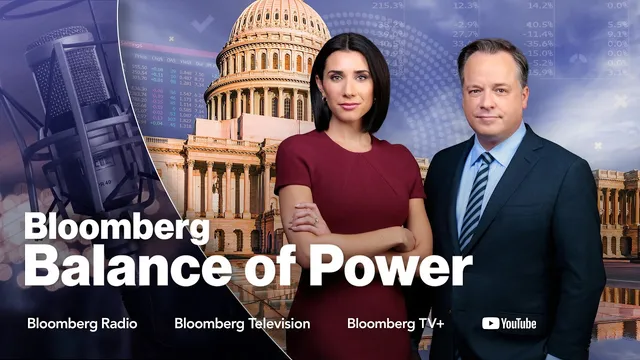
 Balance of Power · Joe Mathieu & Kailey Leinz
- Jane Harman · Distinguished fellow & president emerita, Wilson Center
- Rick Davis · Partner, Stonecourt Capital
- Jeanne Sheehan Zaino · Visiting Democracy Fellow, Harvard Kennedy School Ash Center
- Henry Harteveldt · President, Atmosphere Research Group
The best minutes
Also worth watching
- 35:53Investors may be selling Nvidia to fund Anthropic orders3 min
- 22:27Davis says the Schumer challenge may strengthen Schumer3 min
Skip the rest of the Asia-trip coverage, the broader Senate and House leadership panels, and the CBO update.
Full analysis · 5 min read
Real Alpha · Nov 19
Trump says he’d not mind Huang’s return amid Anthropic’s ~7x IPO book
- Anthropic’s offering was reported about seven times oversubscribed as of Friday, while Nvidia’s earnings loomed.
- That signals investor appetite, not proof of customer switching, security clearance or durable AI profits.
- Trump said he would not mind Huang’s return, but boards still need evidence on controls and succession.
Free with an account
Read the rest of the analysis
6 sections, the 6 other voices it tests Harman against, and what it means for you. Every episode we cut gets one.
Check your inbox
We sent a link to your address. Click it to finish signing up. Not there in a minute? Look in spam.
or
Signed up before? The same buttons sign you in. The episode, its moments and the transcript stay free.
Trump keeps Huang’s possible Nvidia return politically live
Bloomberg’s Tyler Kendall reported from Manila that Trump said he would not mind seeing Huang return to Nvidia’s top spot. That was a preference, not an announcement of a board decision.
Trump also defended Commerce Secretary Howard Lutnick, while Treasury Secretary Scott Bessent had called for a dramatic leadership shakeup. That split makes the policy signal less settled than a simple endorsement suggests.
Yet the administration’s comments do not settle what Nvidia’s board will do or how export oversight will work. Both questions remain separate from whether Huang might return.
Trump described the chips Huang could sell to China as “sort of obsolete.” But the host distinguished those from the chips at issue in the Megaspeed scandal.
For example, the broadcast showed Treasury and Commerce publicly assigning responsibility differently. That makes internal decision rights a practical question, not a solved one.
Our read
Trump’s remarks keep a possible return in play, but they do not establish a decision or resolve export-control responsibility.
Harman treats the reported breach as unresolved
Harman said it was reported that intelligence agencies, State and Defense saw a national-security breach last year. She said Commerce, which held the export-control file, was the exception.
She described a transfer of classified information, but said she had no current classified access. She identified published reporting, including Bloomberg, as her basis.
That qualification limits what the segment establishes. It reports her reading of published accounts, not the underlying intelligence assessment.
Trump said national security was not put at risk. But the program supplied no underlying agency assessment to reconcile those accounts.
Harman said Congress planned closed-session testimony from Huang and Lutnick in a few weeks, as she understood it. That expectation is not a confirmed hearing date.
“I take this very seriously.”
Our read
The useful conclusion is procedural, not exculpatory. Request records and testimony before treating either public account as settled.
Leadership questions will outlast Nvidia’s earnings call
Hosts said Nvidia would report earnings the next day, with interim CEO and CFO Colette Kress leading the call. That makes the call a test of current numbers, not a complete test of governance.
Strong results could support near-term demand while leaving succession and export-control questions open. Still, the broadcast offered no earnings outcome yet.
Ed Ludlow on Bloomberg Daybreak US Edition in November highlighted Nvidia’s unusually stated 70% growth outlook for next fiscal year. That raises the execution bar, but does not verify the forecast.
Ed Elson on Prof G Markets in November focused on Huang’s 60 direct reports. He also noted the missing COO, board chair and succession plan.
Tae Kim on TBPN in November said a successor must know personal limits. He described Huang’s technical, recruiting and dealmaking range.
For example, a new title alone would not distribute those responsibilities across the company. Test decision ownership and backups, rather than treating the CEO appointment as a complete succession plan.
 Ed Ludlow · Bloomberg Daybreak: US Edition · Nov 17Nvidia’s CEO uncertainty overshadows its earnings
 Ed Elson · Prof G Markets · Nov 17Huang’s structure left little room for internal challenge
- TKTae Kim · TBPN · Nov 13NVIDIA may need several leaders to replace Jensen’s range
Our read
An earnings report can support the demand story without resolving continuity, oversight or succession. Those require separate evidence.
Anthropic’s order book signals appetite, not durable value
Bloomberg reporter Bailey Lipshultz said Anthropic’s offering was reported about seven times oversubscribed as of Friday. Its order books were set to close around Nvidia’s earnings, putting both events in one capital-allocation window.
Lipshultz said the idea of selling Nvidia shares to fund Anthropic orders had been floated. She had not heard anyone outright reject it, but did not report a verified wave of sales.
Anthony Hughes, Bloomberg’s US equity capital markets reporter, discussed the book on Bloomberg Intelligence in November. He said a 20% safe harbor could allow a higher price or larger offering without refiling.
The available accounts give six times in Hughes’s comparison and about seven times in Lipshultz’s report. But they do not establish when each snapshot was taken.
Paul Kedrosky on Prof G Markets in November argued oversubscription has little relationship to business fundamentals. That skepticism tests the interpretation, but does not disprove investor interest.
Ege Erdil, a Google DeepMind research engineer on MTS in November, compared frontier labs with capital-intensive airlines. His point is that staying ahead requires expensive continued spending.
“There's a lot of demand.”
- AHAnthony Hughes · Bloomberg Intelligence · Nov 13Anthropic may price conservatively despite strong IPO demand
 Paul Kedrosky · Prof G Markets · Nov 19Oversubscription can mask an engineered exit
 Ege Erdil · MTS · Nov 12Frontier labs may struggle to sustain high margins
Our read
An order book measures demand for shares, not customer migration or durable margins. Investor interest and unresolved funding needs can coexist.
Harman says defense spending needs a destination
Harman said she was not for cutting off all new Pentagon funding, because she sees a dangerous world. But she opposed an automatic 50% increase, especially for systems experts predict may not make the country safer.
She said the commission she chaired recommended soft power, diplomacy and advanced technology, not old legacy systems. That is not a direct statement about commercial AI budgets.
Still, it offers a capital-allocation test. Executives should say what capability each dollar buys, what it displaces and what evidence would show it works.
Take the episode’s distinction between advanced technology and legacy systems. A budget line is not the outcome it is meant to buy.
Our read
Harman’s position is about where public defense funding goes, not a verdict on private AI spending. The useful test is whether the proposed capability justifies its cost.
FAA recovery shows why upgrades require staged testing
Hosts said $9 billion remained from earlier FAA funding, while the administration requested $50 billion for a replacement system. Harteveldt said $30 billion was probably reasonable, while $50 billion might be a bit high.
He called Friday a gross failure and said there was clear negligence in backup systems and containment processes. He also said rushing could be one reason Friday happened.
For example, Harteveldt said L3 Harris had completed 70% of contracted work at other FAA centers without incident. That record does not explain Friday’s failure, whose cause remained unclear during the broadcast.
Still, Harteveldt said upgrades need a methodical, measured approach, with technology tested and made safe. The funding request alone does not show how that will happen.
“They cannot rush the process.”
Our read
For AI operators, stage deployments against identified dependencies, security checks and rollback thresholds. The comparison concerns implementation discipline, not equivalent aviation risks.
What it means for you
- Map approval paths. Record who approves exports, issues warnings and resolves disagreements. Harman’s account makes those controls a records question, not a settled breach finding.
- Separate demand signals. Track IPO orders separately from customer adoption, retention and usage. The episode reports share demand, not evidence that users moved from Nvidia to Anthropic.
- Test succession coverage. List decisions that depend on one executive, then assign deputies and escalation owners. The outside Nvidia discussions highlighted direct reports, missing roles and concentrated responsibilities.
- Stage infrastructure spend. Release major system budgets against dependencies, security tests, backups and rollback gates. Harteveldt’s FAA account links modernization to methodical testing, not speed alone.
What to watch
- Whether Congress schedules the closed-session testimony Harman understood was planned in a few weeks.
- Whether Anthropic adjusts its offer price or share count after the reported about-seven-times order book.
- Whether the December 11 funding deadline includes staged FAA upgrades and backup testing.
Send this to CFOs, general counsel and product leaders setting AI controls and capital budgets.
Watch the minute where Bloomberg reports Anthropic’s order book
Written by Real Alpha from the episode's transcript and the other moments it links, then checked against the transcript. Quotes are the speaker's exact words.
Minute by minute
- 22:09Schumer faces a leadership challenge
Jeanne Sheehan Zaino says Schumer appears to have the votes and incumbency advantage, while Davis argues that voters are unlikely to care much about the leadership fight and that it could strengthen Schumer's position. Zaino says Schumer's team wants to move the vote sooner, though that would require changing caucus rules.
- 25:10Jeffries has room to lead
Zaino says Hakeem Jeffries is meeting incoming House Democrats to seek support by acclamation. Davis says Democrats may have a 35, almost 40 seat margin, which would leave the Justice Democrats and other dissenters with less leverage.
- 39:25Harteveldt says flying remains safe
Henry Harteveldt says planes already in the air landed safely, while the FAA stopped departures because it was not confident they could stay in contact with air traffic control. He says airlines worked around the clock to reposition aircraft and crews; cancellations had fallen to just over 300 that day from many thousands over the weekend.
- 43:39FAA upgrades need a measured rollout
Harteveldt says Friday's failure should not have happened and notes that L3 Harris had completed 70% of contracted work at other FAA air traffic centers without incident. He calls $30 billion reasonable and $50 billion potentially high, says upgrades should be tested methodically, and identifies technology infrastructure as the priority.
Published Nov 16, 2026.
Transcript · 32 min read
Balance of Power, hosted by Joe Mathieu and Kailey Leinz, with Jane Harman, Rick Davis, Jeanne Sheehan Zaino and Henry Harteveldt.
From the transcript Balance of Power publishes with the episode. Where the podcast’s audio and the video part ways, some times are a minute or so off.
Keep the coverage going on NVIDIA, how it factors into the president's trip to Asia. And indeed, we will do so. Of course, President Trump right now is on board Air Force One en route to Alaska, then to Manila. He'll, of course, head to China later this week. And he has a number of members of the administration accompanying him on this long flight today, including both the Treasury Secretary Scott Besson and the Commerce Secretary Howard Lutnick. As Besson has been saying in public that it's Commerce's fault that any NVIDIA chips were able to get to China via Megaspeed, as he said that Treasury, the USTR, the War Department, the State Department, everyone was on board, but Commerce had the pen. President Trump, when asked about at least the perception of a public dispute between these two department heads, basically said it's just a difference of opinion in approaching China specifically when he spoke with reporters earlier this morning.
One view is you don't want to insult China. We have a very good relationship with China. And you don't want to insult them. And the other view is just go, you know, down and dirty and do what you have to do. You can't say either is wrong or right. We'll let you know. But Jensen, as you know, wanted to sell to China. And the only thing he was able to sell to China were chips that were sort of obsolete, a.
Little bit like our avionics. You know, we're heading to China. I don't think you want to insult China just before you get there.
Read the whole transcript
Of course, it's the chips not allowed to sell to China that were at issue here in the whole Megaspeed scandal. We are in Manila on the ground ahead of the president's arrival, and there's a lot more to talk about than just NVIDIA, although that will be the backdrop of this four-day swing through Asia. Bloomberg's Tyler Kendall is already in the Philippines and joins us now live live. Tyler, before he gets to China, what will be on the agenda?
Well, Joe, his first stop will be here to Manila, where we're seeing the summit of Southeast Asian economies meet. And from my discussions here on the ground, top of mind for many of these countries is how the U.S. is going to react amid the fallout from NVIDIA when it comes to further export curbs that could target many of these countries that have been alleged, suspected of being these third-party routes that have ultimately ended up helping get AI chips over the Chinese border. That's definitely going to be one topic of conversation here when President Trump ultimately lands. We also know trade is going to be the other main focus, as the ASEAN economy block has actually seen its exports to the U.S. jump 40 percent in the last year, despite what has been so much back and forth when it comes to trade and tariffs. That's not exactly what The U.S. administration wants to see as they try to bring down that trade deficit. That's going to be another area. And then the last one I'll put on your radar, Joe and Kayleigh, is that President Trump is set to meet with leaders of the Quad Alliance.
That's India, Japan and Australia, along with the U.S. There has not been a leader level meeting since President Trump took office under the second term. So that in and of itself is significant. It's considered to be this counterweight to China's And the group's expected to talk about their defense alliance, but also critically important, shoring up the supply chain and bolstering it when it comes to critical minerals in a bid to, of course, compete with China.
Well, while there may be focus, Tyler, in some of these conversations on competing with China, President Trump, when talking to reporters this morning, talked about the need to not alienate China too much when it comes to tougher things like export restrictions. He also suggested that he may raise this whole Jensen Wang Chinese spy issue. episode with Xi after previously suggesting he wouldn't.
Yeah, Kayleigh, I was in the White House press briefing room last week when President Trump seemed to indicate that it wasn't going to be something that was on the agenda, but now it feels almost inevitable considering it is looming over all of these conversations that we are having. President Trump saying that perhaps he could bring it up in his private bilateral meeting with the Chinese president Xi Jinping, as he stood by the former NVIDIA CEO, saying earlier that he wouldn't mind if he saw Jensen Wang return. to the top spot, seeming to contradict comments from his U.S. Treasury Secretary Scott Besant over the weekend, who said that he wants to see a dramatic shakeup when it comes to leadership at the company. I've already mentioned this too, but he stood by his U.S. Commerce Secretary as well, who the president seemed to link his views to that more softer version going into this meeting, that you don't want to alienate China right before you arrive into the country.
We'll have to see what happens here. There are a ton of other deliverables that we're going to be watching for including when it comes to trade and including what happens in that trilateral meeting where Russian President Vladimir Putin will join the U.S. And Chinese presidents. Indeed. All right.
Bloomberg's Tyler Kendall live in Manila for us. Thank you so much. And we'll keep checking in with Tyler throughout the week as she travels alongside the president in Asia. But we want to zero in more on what we heard from President Trump regarding Jensen Wong earlier today. Upon departure from the White House, he was actually asked about any potential threat to national security that stems from Jensen's affair with an alleged Chinese spy. Listen to this exchange.
What do you say to Americans who are concerned that national security was put at risk, given your close relationship with Jensen Wang and this alleged affair with a Chinese spy?
It was not put at risk, and our country is now stronger than ever before. And, you know, China plays games with us, so we play games with China. Hmm.
Let's get another point of view now as we turn to former congresswoman from California and former ranking member of the House Intelligence Committee, Jane Harman, who is here with us in our Washington, D.C. Studio. It's always good to have you here on Bloomberg. And with that ranking member of the Intel Committee hat on, I have to ask you how difficult it may be at this point to determine whether or not national security was at least put at risk, even if we don't know definitively that it was compromised.
Well, it's always difficult. But in this case, it has to be determined. I mean, it's reported that all of our intelligence agencies, plus the State Department, plus the Defense Department, with the exception of the Commerce Department, which has the file on export controls, thought that there was a breach of national security, a transfer of classified information, last year. And the president was told... And the normal warnings to the person who was being approached by the alleged Chinese spy were not given. And the Commerce Department apparently pushed back. The president claims he doesn't know anything about it. But I take this very seriously. I have no access to classified information now. This is all just reported by good outlets like Bloomberg. But I'm just saying this is not okay.
And not wanting to offend Xi Jinping is fine. Let's not offend Xi Jinping. But let's follow the law. And good on Congress for actually asking for information and planning to call, as I understand it, Jensen Wang and Howard Lutnick to testify in a closed session in a few weeks.
Should Howard Lutnick be on Air Force One on this trip? And what's the impact of rhetoric like that? We didn't want to anger China. The president could be showing up in China on the back foot with rhetoric like. This, no? Yes. I don't know why he's on Air Force One.
Is he losing leverage because of NVIDIA? Well, I think he's losing some leverage because of the results of the midterms. And I don't think these meetings, both of them, are going to provide any substantive deliverables. There aren't going to be photo ops for the president, as I see it. And I think the idea of possibly meeting with Kim Jong-un on top of meeting with two obvious folks who are working against U.S. interests, including our interest in Ukraine, which I think we need to be supporting much more strongly, makes no sense to me. So I don't know why these meetings are— these are pre-scheduled meetings, but I don't know what the president expects other than good photo ops to come out of the U.S. conversations.
Well, he's at least in the trilateral conversation with Putin and Xi, hoping that they're going to discuss nuclear arms in particular, which maybe is why North Korea would be involved, though we don't have confirmation of that.
And there are more nuclear nations, too, and our nuclear regimes have all lapsed. I don't see that as yielding something that the world is going to rejoice over.
Well, so, and to your point about what other than photo ops this might bring about, do you see a meeting with Putin alongside Xi Jinping is doing anything to potentially further the cause for peace between Russia and Ukraine? No.
I mean, Russia invaded Ukraine. Where's Ukraine in the meeting? And a potential settlement that Putin is proposing, reportedly, is to basically compromise Europe's security on top of compromising Ukraine's security. So no, they're not there either. So I think this is not the right way to approach this. I think the right way to approach this, if the U.S. wants to play a role, is with Ukraine in the room, Europe in the room, and Russia in the room.
I think most were wondering about the potential of a trade truce being extended as well. When the president was asked, though, that did not come up in sort of, what is the agenda, Mr.
President? What are you going to be talking about? Here was his answer to reporters.
We're going to talk about denuclearization, tough subject, because it's very hard for any of us to say we'll get rid of our nukes, right? But especially since you do have other countries. But we're going to be talking about denuclearization. We'll talk about Iran. We have Iran in very good shape. And we'll talk about Iran a little bit. We'll talk about my favorite subject, Ukraine. Ukraine's losing... Ukraine-Russia is losing 25,000 soldiers a month. So we'll be talking about that. We'll all be talking about economics and trade.
So denuclearization, you said, Iran, which we have in great shape. And his favorite subject, Ukraine, that typically is not his favorite subject. He sounds like someone who's expecting some progress here.
Well, Ukraine is not losing. We are not, sadly, providing the satellite coverage we're supposed to provide to Ukraine on a consistent basis. That's the U.S. reneging on a promise. And Ukraine is not getting all the aid that we promised and hoping it will get more aid from Europe, but But Ukraine at this point, in my view, is not losing. Russia is losing thousands of soldiers on a daily basis. And I think that's dreadful. By the way, a topic that wasn't even raised, thought I'd put it on here. The T word, Taiwan. Oh, that. Here he's going to the first of these meetings with the Quad, something we have not paid attention to at all for several years. And the Quad was formed, as I understand it, as a kind of defense alliance to buffer against China.
And all these countries are worried about what China might do in Taiwan. It didn't even come up.
Well, and especially considering the resources that have been diverted from that theater toward the Middle East due to the war with Iran. The third aircraft carrier group just arrived there today, I believe. Right, Joe? And you now have three that are stationed in that theater, leaving potentially some vulnerabilities in the Indo-Pacific.
And I thought we also cared about the Southern Hemisphere. Wasn't that our priority these days? Yeah, the Donro Doctrine.
Well, you remember in the Biden administration, it was constantly the pivot to Asia, right? With the Quad was, remember, the AUKUS blowup. These were supposed to be future enduring relationships that would help us face China? Have we simply turned away from that?
I don't know. AUKUS isn't even mentioned in this conversation. That's true. But I hope not. I mean, I still think that there is a China threat. There's also a China opportunity. I'm not saying... All we should do is confront China. There are ways to cooperate. Certainly, as AI progresses and on climate, we seem to have walked away from climate. But that's a huge threat in the world. So I don't know what the agenda is, but it doesn't sound like there will be many deliverables on our side. And having Howard Lutnick on the plane, it seems to me, sends a very uncomfortable message. I wonder what.
Advice you would have for your former colleagues in the House and in the Senate right now who are considering whether or not to use government funding next month as a cudgel over the war with Iran, whether any appropriations, even via a continuing resolution, should be allotted and allowed to flow to the Pentagon so long as that conflict is still ongoing. Because this is something that some Democrats, including Chris Van Hollen, who is of course, challenging Chuck Schumer to be the next majority leader, have raised?
What would you tell them? I would tell them to be careful. I'm not for cutting off all new funding for the Pentagon. I think we live in a dangerous world. But I would want to know where that funding is going. And I am not a fan of an automatic 50% increase in Defense Department spending, especially on things that many experts predict are not going to make us safer. I chaired this Commission on National Defense Strategy recently, and we recommended investments in soft power, which seems to have disappeared, in diplomacy, which is not our strong suit at the moment, and in advanced technology, not in old legacy systems. And I don't see that program yet being adopted.
You mentioned Chris Van Hollen, Kayleigh. What do you think about this leadership battle that has erupted? Does Chuck Schumer, after... staging this massive victory, deserve to be fired? Or is that misguided? It's not the majority leader who orchestrated this victory. It was a vote against Trump.
It's the call of the Senate. I know both men. I served with both of them in the House and let the Senate decide. But I would say that part of the mandate coming out of this election was a call for change. And I think that's motivating some folks. And we'll see where it lands. But we need a strong majority leader campaign. in the Senate who wants to respond to the mandate of the voters. The mandate of the voters was to focus on their issues, not to focus on what statues get painted gold in the district and how do we eliminate a golf course that many in the district have used for generations.
Just had a ruling on that, apparently. It's going to stay open for now? We'll see. It's great to have you in studio, as always. Thank you.
Fresh off the golf course, Jane Harman with us in studio, former Democratic congresswoman from California, former ranking member, House Intel, and a great conversation, Jane, as always. We appreciate that. We'll assemble our political panel coming up next with J.D. Shanzano and Rick Davis. The president is on his way to Asia now.
Stay with us on Balance of Power. We'll have much more coming up after this. You're listening to the Bloomberg Balance of Power podcast. Catch us live weekdays at noon and 5 p.m. Eastern on Apple CarPlay and Android Auto with the Bloomberg Business app. You can also listen live on Amazon Alexa from our flagship New York station. Just say Alexa, play Bloomberg 1130.
I just want to remind our audience that we still don't know the outcome of every race. in the midterm elections earlier this month. We're still waiting on results in Alaska, though it looks like the Democratic former congresswoman, Mary Paltola, is closer to clinching victory against the incumbent Republican Senator Dan Sullivan. She is almost the 50% threshold needed to avoid this going into the ranked choice tabulation. And of course, if she is indeed victorious and a call has not been made yet, that would bring the number of Democratic or democratically associated seats, including the two independents, in the Senate next year to 56%. It, of course, also changes the math in the contest for the next Senate majority leader, whether you need to pick up 28 or 29 senators who are in your support if you are Senator Chuck Schumer.
Or if you're Senator Chris Van Hollen, who, of course, Joe is now openly challenging Chuck Schumer. He says he's getting more and more senators lined up behind him or at least private support from them, suggesting that they will, in the secret ballot, be supporting his bid. The question, though, is whether or not he's going to get to that requisite 28 or 29 number if he can claw away that many votes from Chuck Schumer.
I thought you were about to call the Alaska Senate race. I got really worked up there for a second. I wish I could. Maybe soon.
We were so close. Although, even though it could still be weeks, right? Before this is all. Depends on if she gets over that 50%. Yeah, then rank choice, it's complicated.
Of course, Democrats don't need that to have the majority, and that's why we're talking about a leadership battle. Kayleigh set us up perfectly here, and if you saw Chris Van Hollen over the weekend, he says this race is wide open. Enter the Van Hollen Five. That's how many endorsements he has. The thing is, Chuck Schumer has 15, and there might not be a race here at all. That's where we start our conversation today. with our political panel. Bloomberg Politics contributors Rick Davis and Jeannie Shanzano join us. Rick is our Republican strategist and partner at Stonecourt Capital. Jeanne is our Democratic analyst and democracy visiting fellow at Harvard Kennedy School's Ash Center. Jeanne, is Chris Van Hollen correct?
“I've never seen a popular revolt based on a leadership fight in the House or the Senate.”
Spoken like a man who's had a career in the Senate. Over in the House, Jeanne, it's a little different. I think pretty much everyone expects that Hakeem Jeffries will be the Speaker of the House, and I don't think anyone is standing up to challenge him. The question is, will he get the unanimous support that Nancy Pelosi enjoyed? He's going to be busy. He's going to be meeting with every single incoming House Democrat by the time the closed-door session vote takes place on Wednesday. Can he turn them all to his side? He is trying.
I mean, it reminded me, remember when Hillary Clinton ran for Senate and she visited every county? You know, he is taking nothing for granted. He is meeting every member. He really wants to get the support by acclamation. So there isn't an actual vote on it, just as you mentioned, like Nancy Pelosi did in 07. And of course, there is a strong sense by his team that he deserves that after the huge numbers that they racked up in the election. And also, of course, because he is going to be the first black speaker of the House should he get that designation. And so I think there is a sense there. But in the end, not unlike what Rick was saying on the Senate shot side.
Does it really matter how he gets there? Most people don't care if there's a vote, if there's an acclamation. There's nobody challenging him at this point. And we're hard pressed to imagine that on January 4th, early January, he is not the speaker of this House of Representatives in historic fashion.
Well, and of course, if he becomes speaker, Rick, he is going to have the luxury of a much wider margin than the current speaker, Mike Johnson, has been dealing with. He's going to be able to afford to lose folks on the left or what have you on votes, right? Because he's going to have that wiggle room where it hasn't existed for the last several years. So how much more does that empower him when he does ultimately take the gavel, if we're assuming that that is a foregone conclusion? Yeah, a lot.
Kayleigh, I mean, this is so much different than a three or four vote margin where every single member of the House or Republican caucus has had a veto over whatever the speaker wanted. They're going to have 35, almost 40 seat margin in the House. So the speaker, whoever it is, and it'll likely change. be a no contest, although we could only hope it would go to 11 ballots for just entertainment purposes.
I'm sure Kevin McCarthy would enjoy that. Yeah, there are a bunch of mavericks in the House caucus. A lot of DSA-ers won. A lot of Justice Democrats very much want to oppose the chair. So in the past, that group, maybe it's less than 20, but a significant group, would have real leverage. Now they don't have any leverage. I mean, there's so many extra votes that the speaker could count upon. He doesn't have to cut any deals with anybody, really. And so kudos to the Democrats for overwhelming force in the House of Representatives. It'll help them both in running the House, but also running their own caucus. Well, when we ask what might get done in the lame duck session, Jeanne, you wonder what Democrats are willing to take part in, realizing there could be some Republican-only exercises in the form of reconciliation. And we've heard about a lot of different ideas, maybe addressing the debt ceiling, Pentagon spending.
By the way, we have a funding deadline on December 11th that could all be tackled there. But there's a big question about this Massive airport ground stop that we experienced Friday and we're still trying to get back to normal from. The Secretary of Transportation, Sean Duffy, says they need $ 50 billion to build a whole new air traffic control system. Democrats like Rosa Dolores say we just gave you $ 12 and the big beautiful bill, you haven't spent it all yet.
Will Democrats, after what we just experienced, change their tune? You know, I don't think so. I think they are going to demand answers from this administration.
I think they obviously there's bipartisan support for modernization, but they are right to ask, how have you spent the 12.5? If you didn't. Spend it all, as Rosa Delora has said, and many people have said, where is it? Why aren't we going to spend that? What is the plan? I mean, there's a lot of questions to be asked here. And I don't think they want to do that. But Joe, you know, I think there is going to be a lot more pressure for a Democratic shutdown as a result of this leadership battle between Chris Van Hollen and Chuck Schumer than there otherwise would have been. Because Chris Van Hollen is making clear we should not play ball with the Trump administration on this funding for the war. And Chuck Schumer has not said where he stands on that. So I think that I'm not saying there's going to be a shutdown.
I don't think it's in anyone's interest. But I think Chuck Schumer will face some pressure on that. And of course, that is a big divide in the Democratic side. And John Fetterman over the weekend on Fox was saying if Chris Van Hollen is elected, he'd consider leaving the Democratic Party. That's how seriously he is frustrated by Chris Van Hollen's state stance, rather, on Israel and funding for the war. So it's a big divide on the Democratic side that could impact this December 11th deadline for government funding.
Rick, we just have 90 seconds left. Did Van Hollen's entrance into this leadership contest increase the odds of that December 11th shutdown Jeanne's talking about? No.
I mean, at best, there are four or five followers who are willing to fight to the end for pulling the funding on Iran. But it's just not realistic. Even Patty Murray, the ranking on appropriations, has said that they're all for winding down that funding, but they're not for cutting it off. And my guess is you'll see a very similar vote count that you had before the elections around an extension of a CR in the next year. And then the Democrats can figure out what they want to do and fight amongst themselves and I can then talk like Jeanne does about the opposition and how great we are.
Looking forward to that. Rick Davis, Jeannie Shanzano, Bloomberg Politics contributors in our political panel today. Thank you so much. And we're not done talking about that funding for the FAA for air traffic control upgrades and infrastructure upgrades, how it all is influenced by the ground stop we saw nationally on Friday. Henry Hartfeld, president of Atmosphere Research Group and a travel industry analyst, is going to be joining us still ahead on Balance of Powers. We're seeing a deterioration, by the way, in the markets. The NASDAQ 100 is now down the better part of three percentage points.
Stay with us on Balance of Power. We'll have much more coming up after this. You're listening to the Bloomberg Balance of Power podcast. Catch us live weekdays at noon and 5 p.m. Eastern on Apple CarPlay and Android Auto with the Bloomberg Business app. You can also listen live on Amazon Alexa from our flagship New York station. Just say, Alexa, play Bloomberg 1130.
It's another brutal day for tech and chips, in particular with the SOX down more than 5%. We've seen a lot of moves like that to the downside on that index lately. Same goes for the NASDAQ 100. And this is happening on Monday, arguably before the biggest catalysts of the week have even taken place. Of course, we have NVIDIA reporting earnings after the bell tomorrow in the aftermath of the ouster of CEO Jensen Wong. It is the interim CEO and CFO Colette Kress who will be leading that earnings call. Then on Thursday, we have what could potentially be be the biggest IPO on record in Anthropic. Both of these events could prove critical in determining the trajectory of the AI trade from here, that AI trade on which, of course, so much in these markets rely and the economy as well when we think about the infrastructure boom that has accompanied it. We heard that from the chair of the Fed, Kevin Warsh, at the Fed's Jobs and Productivity Task Force conference that happened in San Francisco earlier today.
Listen. Yes, I could disappoint. After significant capital investment and stock market gains, expected returns could turn down, equity valuations could fall, leading to an economic slowdown and a more notable rise in unemployment. In time, the economy would recover, but without the productivity gains. Wait, what?
I thought it was the golden goose. There's clearly a major re-evaluation that's taking place here in the markets. We're seeing it play out again today, although I have to admit, to your point, on the eve of NVIDIA earnings, we've got worries. And maybe people aren't so excited about the anthropic IPO as they're concerned that this is going to be a make-or-break moment for AI, for tech.
“If you have to be fully invested, you've got to sell something to buy something.”
Bailey Lipshultz, Bloomberg News senior reporter.
We've got news out of the CBO, Kayleigh. Yeah, Philip Swagle is announcing that he will be departing the Congressional Budget Office in January. Of course, the CBO during his tenure, but long before that, has come under fire consistently for the scoring of some of its bills and the impact it will have on the debt and deficit. Of course, the CBO is the one that projected that the one big, beautiful bill that was passed last year is going to add trillions of dollars to the deficit over the next 10 years. And Philip Swagle has been here with us in studio on multiple occasions, walking us through the way in which they do these interpretations. But in a blog post, he is saying that he will be announcing or he is announcing his departure in January.
And we'll see who takes the helm at CBO in his absence. Maybe the most thankless job in Washington after Speaker of the House.
I'm not sure. It depends on the political dynamic. But Kayleigh's right. This is a self-framed, nonpartisan organization that is slammed as a partisan exercise. Every time. Every time there is a piece of legislation that needs to be scored. Phil Swagle announces his departure in January. We're tracking as well the ask for money and the progress, if I guess we can call it that. Airplanes are getting in the air. We're just not exactly still sure what happened that triggered a national ground stop on Friday. We had to throw the late show out on Friday to manage everything that was happening. So many of our listeners and viewers were caught up in this. I hope you're not sitting in an airport right now. The fact of the matter is the president of the United States, while still not knowing what the cause was, is blaming the last administration.
He was asked about it in the White House driveway this morning. Listen. I don't take any responsibility. They did a great job. Secretary Duffy, they acted incredibly. Everybody was safe. Nobody was hurt. No crashes, no nothing. And I mean, the only. Responsibility should be for 40 years they should have done this.
For 40 years, of course, the president was in office for four of those 40 years. And this administration has been given $ 12. 5 billion to invest in the air traffic control system. It was in the so-called Big Beautiful Bill. There's $ 9 billion of that left. Transportation Secretary Sean Duffy was asked about that in a series of interviews on Sunday morning as the administration now asks for $ 50 billion to build the entire system from the ground up and replace what is an incredibly old and clearly inefficient system. The president on Truth Social saying the same thing. Everything they touch turned bad with regard to the Biden administration.
Big money spent unwisely, making an old and broken system worse than when they began. A lot of people are wondering if they're safe when they go to the airport right now. And it's where we start our conversation with an expert, Henry Hardeville, president of and airline industry analyst at Atmosphere Research Group joins us now from Dallas. Henry, it's great to see you.
“Friday should not have happened. It was a gross failure yesterday. There's clear negligence in terms of backup systems not working, containment processes not working.”
All right. Well, we'll see if that funding materializes. Henry Hardeville, president of Atmosphere Research Group and travel industry analyst and advisor, joining us live from Dallas today. Thank you so much for being here on the early edition of Balance of Power.
Thanks for listening to the Balance of Power podcast. Make sure to subscribe if you haven't already at Apple, Spotify, or wherever you get your podcasts. And you can find us live every weekday from Washington, D.C. at noontime Eastern at Bloomberg.com.