Free with a sign-in.
The best 14 min of 56
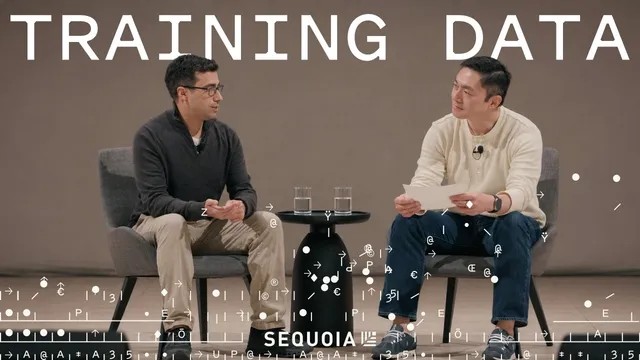
The Boomerang CEO(s): With MongoDB’s Dev Ittycheria
Dev Ittycheria says CEOs win by setting strategy, building the right team and creating conditions for people to execute.
 Training Data · Brian Halligan
- Dev Ittycheria is CEO of MongoDB.
The best minutes
- 14:49A CEO’s job is strategy, people, and the conditions to succeedPro pick 3 min
- 33:15A strong CRO builds a sales playbook for the businessPro pick 8 min
- 41:18AI makes speed, unit economics, and talent more important3 min
Every moment plays free. PRO marks a write-up that's in Pro.
Also worth watching
- 9:26Avoiding a known issue makes the CEO part of the problem5 min
- 17:36A CEO must develop people, not just hire them4 min
- 24:22Math Olympiad filters can miss founders with useful judgment4 min
- 30:08Growth can hide an underbuilt demand-generation engine3 min
- 6:06Vulnerability helps leaders surface problems sooner3 min
Skip the scaling and executive self-awareness discussion, the planning and focus debate, and the closing HubSpot recap.
Full analysis · 7 min read
Real Alpha · Nov 18
Dev Ittycheria says CEOs have three jobs
- Ittycheria defines three CEO jobs as strategy, people, and conditions for success.
- His examples support the frame, but do not prove it as a growth formula.
- For AI teams, the test is faster truth, deliberate hiring, and tighter unit economics.
Free with an account
Read the rest of the analysis
6 sections, the 5 other voices it tests Ittycheria against, and what it means for you. Every episode we cut gets one.
Check your inbox
We sent a link to your address. Click it to finish signing up. Not there in a minute? Look in spam.
or
Signed up before? The same buttons sign you in. The episode, its moments and the transcript stay free.
The CEO’s job is narrower than the calendar
Dev Ittycheria’s answer is unusually bounded. A CEO owns strategy, the leadership team, and the conditions that let people succeed.
That last category includes capital allocation and culture, not just morale. The framework allocates attention rather than listing every task a chief executive performs.
His hypothetical is sharp. Doing 997 other things well cannot offset neglecting these three.
His experience gives the prescription weight. Ittycheria ran MongoDB for 11 years, giving him perspective across changing company stages.
That record does not isolate which decisions drove growth. The episode is not a MongoDB product pitch, and Ittycheria offers no controlled comparison.
That makes a CEO’s calendar a diagnostic. If the week fills with low-level approvals, strategy, hiring, or execution conditions may be starved.
A founder can use it as a time audit, not a universal org chart.
Our read
The three-job rule is a useful constraint on CEO attention, not proof that those duties alone produce growth.
Candor is the first step toward faster decisions
Ittycheria’s operating thesis starts with information latency. At 5:24, he said recognizing a problem consumes most of the time between a problem and its solution.
That places candor before speed. Teams cannot decide quickly when people sanitize failures, protect egos, or cherry-pick data.
His own correction was personal, not procedural. Feedback once left his cofounder dysfunctional for about two weeks.
Ittycheria then saw his delivery and frustration as part of the problem. Vulnerability became a way to make it safer to raise product, team, and customer issues sooner.
Chase Lochmiller, on Training Data in October 2026, also emphasizes actively asking what is going wrong. Jon McNeill, on The Knowledge Project in November 2026, describes Tesla’s three-sentence problem emails.
Those are two practical mechanisms, invitation and format. Neither example proves candor alone makes a team fast.
The bottleneck is not whether bad news can be sent. It is whether leaders reward the first person who sends it.
 Chase Lochmiller · Training Data · Oct 29CEOs need to actively seek out bad news
 Jon McNeill · The Knowledge Project · Nov 10Tesla made concise messages and fast bad news part of its culture
Our read
The strongest evidence here is the mechanism, not a measured speed gain. Leaders need honest signals and a way to act on them.
Avoiding a known issue lowers the standard
Once an issue is visible, silence has a cost. Ittycheria said a leader who knows someone or something is failing and avoids the conversation lowers the standard.
His own example was direct. He told an executive that caring more about an issue than its owner meant they had a problem.
But confrontation is not a license for bluntness without calibration. Earlier, he described feedback that was directionally right but delivered badly, leaving his cofounder dysfunctional.
For a useful conversation, the issue needs an owner, a clear expectation, and a next action. That is our operating implication, not a formula he gave.
At scale, he said bad news travels slowly upward and arrives sanitized. The first account of a problem is a reason to investigate, not a complete diagnosis.
A prompt search for disconfirming signals matters because the first report may be filtered by fear and hierarchy.
Our read
A leader’s silence can ratify weak performance. But urgency should not reproduce the harmful delivery he says he had to change.
Hiring well includes developing people
Team quality is not a one-time hiring decision. Ittycheria said some executives who succeeded at one stage of MongoDB could not scale with the company.
Across his 11 years, he said 23 C-level executives passed through. He watched for weak self-awareness, losing good team members, and declining new-hire quality.
Self-awareness, retention, and hiring quality are observable signals, unlike vague claims about leadership potential.
He also separates recruiting from development. Leaders need to recruit, coach, give context, hold people accountable, and then get consistent execution.
His CEO search emphasized ownership, long-term choices, attention to detail, and crisis behavior, rather than a generic executive résumé.
For example, he said deeply technical products need technical chops. But math or chess filters may still miss founders with relevant judgment and insight.
He also said some exceptionally bright people can struggle to admit being wrong when their identity depends on having answers.
Eric Glyman describes Ramp hiring for standout ability in a role, not a complete checklist. He said so on Inside Blackstone in November 2026.
That complements Ittycheria’s focus on fit, but not his separate emphasis on coaching. Role-specific talent can coexist with a coaching obligation.

Our read
The hiring test is not simply whether someone has performed before. It is whether they can grow with the next stage and help others improve.
A CRO must adapt the playbook to the sale
The CRO discussion makes the leadership framework concrete. Ittycheria said a CRO must build the business’s prospecting, qualification, forecasting, and closing playbook.
The CRO should not simply copy a prior employer. His questions are why the customer should act, why this product beats alternatives, and whether the deal can close in time.
That ties the sales process to its customer and market. For infrastructure, he said technical users, operations, security, application teams, and economic buyers can need different cases.
Take the database sale he describes. Developers can kill the deal by rejecting the technology, but cannot authorize a purchase.
The distinction fits MongoDB’s infrastructure context, but it remains his operating judgment. He offers no comparative results showing custom playbooks outperform reusable sales frameworks.
He also recommended blind references because senior candidates can tell polished stories. For example, he said he might look for someone who succeeded selling a second- or third-tier product against a strong incumbent.
That can separate sales skill from brand access, though he offered no outcome data.
His durability test is simple. If inbound demand disappeared, could the sales team still create demand, or would results dry up?
Jon McNeill, on The Knowledge Project in November 2026, found 10,000 test-drive customers who had not been called back. That episode shows a follow-up failure, not which playbook suits infrastructure.
The transferable lesson is not a named methodology. It is whether the process matches the buying path and source of demand.
Our read
The useful distinction is not acronym versus no acronym. It is whether the CRO can adapt qualification and execution to the product’s buyers.
AI raises the premium on judgment and economics
AI adds a faster clock and a harder cost question, not a replacement CEO job. Ittycheria said decision half-lives are shorter and companies must track compute costs and gross margins.
His economic question is how much value a product adds atop consumed tokens. Faster rebuilding does not remove the need to price sustainably.
Talent also becomes more consequential because smaller teams can do more. That raises the stakes for judgment, but the excerpt gives no estimate of hiring leverage.
Ittycheria recounted Winston at Harvey saying the right person was worth their weight in gold. Winston also said the wrong person could crush a team or company.
The inference is that smaller teams may have less slack to absorb a bad hire. That is our deduction, not his stated point.
And leaders have to steady teams through demand euphoria and model scares, rather than extrapolate from either mood.
Ittycheria said MongoDB already recast its 12-month plan every 90 days. He thought there may be more premium to doing so now.
But database decisions run longer, he said, so the shift showed up less in MongoDB’s business.
Jeanne Grosser, on Grit in October 2026, describes an operating model that shows the math behind what must be true. Ittycheria’s planning cadence is a way to revisit that math as conditions move.
Sundar Pichai said on Big Technology Podcast in October 2026 that frontier research gets first claim on compute. He said long data-center lead times shape supply.
That is a different scale, but it reinforces treating capacity as a planned constraint. Together, these examples point to recurring reviews, not one AI playbook.
 Jeanne Grosser · Grit · Oct 5Build an operating model to show what must be true
 Sundar Pichai · Big Technology Podcast · Oct 20Google puts frontier AI compute ahead of other uses
Our read
The practical shift may be more frequent economic review, alongside talent and organizational steadiness as operating variables.
What it means for you
- Bad news latency. Ask one team each week what is going wrong and where failure is being softened. Track the time from the first signal to an acknowledged owner.
- CRO references. For the next senior sales hire, record evidence of playbook design, demand generation, and success against incumbents. Separate the candidate’s execution from company brand and inbound demand.
- AI unit economics. Build a per-use view of compute cost, price, gross margin, and value delivered. Consider a 90-day review while accounting for Ittycheria’s point that database decisions run longer.
- Next-stage fit. Name the next stage and the capabilities it requires for each executive. Review whether leaders develop people and retain strong teams, not just whether they hit current targets.
What to watch
- Whether AI model changes make a 90-day planning review useful beyond MongoDB’s longer decision cycles.
- Whether AI products retain gross margin as compute costs and delivered value change.
- Whether sales leaders can generate demand without inbound leads, not just convert demand already arriving.
Send this to the CEO and CRO building an AI sales organization.
Watch the minute where Ittycheria names the three CEO jobs
Written by Real Alpha from the episode's transcript and the other moments it links, then checked against the transcript. Quotes are the speaker's exact words.
Minute by minute
A Pro write-up, open to you here. Try Pro free for 7 days
A Pro write-up. The minute by minute is in Real Alpha Pro; the episode, its moments and the transcript stay free.
Read it with Pro, 7 days free- 1:04Time away sharpened priorities
Ittycheria says he agreed to return partly because he did not want to leave MongoDB employees, customers and investors without leadership. Ten months away helped him separate major issues from small distractions; on returning, he focused on team decisions and simplifying the organization so it could make decisions faster.
- 4:45Vulnerability speeds up problem-solving
Ittycheria says much of the time between a problem and its resolution is spent recognizing that the problem exists. He argues that leaders who admit mistakes and make it safe to speak honestly help teams surface issues sooner and make decisions faster.
- 9:21Avoiding conflict lowers standards
Ittycheria says CEOs must confront missed commitments, underperforming products and team issues; when they knowingly avoid a problem, they become part of it and signal a lower standard. He distinguishes kindness from politeness and says leaders must search for bad news because good news tends to reach them on its own.
- 13:50A CEO has three core jobs
Ittycheria credits Mark McLaughlin with framing the CEO’s jobs as setting strategy, choosing the leadership team and creating conditions for people to succeed. He says strategy changes less often than the team, and leaders can stop scaling when they lose self-awareness or their teams. The hardest calls, in his view, test courage, such as replacing an early colleague who no longer fits.
- 17:31Hire for the next stage
Ittycheria wants a CEO with an ownership mindset, a long-term view and enough attention to detail to understand the business. He says leaders must recruit, develop and consistently drive people to execute, and he assesses candidates by how they handle crises and make difficult decisions.
- 23:32Look beyond raw intelligence
Ittycheria says technical depth matters for some products, but screening only for Math Olympiad or chess credentials could miss people with valuable taste, experience and judgment. He argues those qualities matter as intelligence gets cheaper, and founders need the humility to examine evidence that challenges their beliefs. He says he keeps learning through reading, podcasts, notes and observing his team.
- 30:08Growth can hide business flaws
Ittycheria warns that growth can conceal overhiring, excess layers and costs, as MongoDB experienced during the COVID-era acceleration. He asks sales leaders to consider how much productivity would remain if inbound demand disappeared. Companies should serve inbound demand while building repeatable ways to generate demand themselves.
- 33:27Build a company-specific sales playbook
Ittycheria says a CRO must develop a playbook for the company’s customers, qualification process, forecasting and hiring rather than simply transplanting a prior company’s approach. He says infrastructure sales differ from application sales because developers, security teams, operations teams and economic buyers have distinct needs. He also recommends blind references and warns that success at a strong brand may reflect product demand as much as sales skill.
- 41:18AI changes the CEO’s operating conditions
Ittycheria says decisions have a shorter half-life, and leaders need to understand compute costs and gross margins in relation to the value their products provide. He says companies can build and replace products faster and do more with fewer people, raising the stakes of hiring well. He also says CEOs must temper both euphoria and panic.
- 44:06Recast plans and clarify tradeoffs
Ittycheria says leaders should revisit plans as revenue expectations change, invest to meet demand and cut initiatives that are not working. He argues that focus is less useful as an abstract rule than clarity about strategy and the tradeoffs behind choices such as entering new markets.
- 47:04Scale the team and find bad news
Ittycheria says CEOs at larger companies must keep assessing whether their team can handle the next stage and spot-check decisions without micromanaging. He assumes bad news reaches him late and softened, so he looks for it actively; he also says executives should consider how their behavior lands with others. He describes himself as driven and accountable at his best, but sometimes too intense or distracted.
- 53:05Halligan takes the lessons to HubSpot
Halligan says he is bringing four lessons back to HubSpot: encourage ownership, make faster decisions, understand underlying economics and stay steady through highs and lows. He says he is tracking usage, NPS and unit economics as leading indicators, and that AI makes many decisions easier to reverse.
Published Nov 18, 2026.
Transcript · 50 min read
Training Data, hosted by Brian Halligan, with Dev Ittycheria.
Transcribed by machine (Whisper) from the episode’s audio, so a word may be off here and there.
The CEO's in charge of strategy. What is the company's strategy? Where are we going? What do we aspire to be? The second job is, do you have the right people to go execute on that strategy? And that's really the core leadership team. And then the third job is, are you creating an environment where people are set up for success? That could be the right capital allocation decisions, the culture you create. You've talked a lot about culture as a product that can attract and retain great people. I can do a thousand things. I can do this podcast. I can go visit the customers. But if I do 997 things well, and these three things poorly, I failed as a CEO.
Hey, everybody, David D'Achari on the call today. It's a fascinating call for me personally, because Dave boomeranged back into the CEO job at MongoDB recently and I boomeranged back into HubSpot as CEO, refounding the company. He's a gem full of wisdom. I learned a lot. Hope you like it. Welcome to the pod, my friend. Hey, Brian. Good to be here. Okay. You tried to retire. I did. 10 months and you got a call from someone from MongoDB that the CEO had resigned. Where were you? Take us inside your head at that moment. So actually, I got a call. I was in Tuscany, Italy. I got an email from the board chair saying, hey, can you talk? And I said, yeah, let's talk tomorrow. We ended up catching up that morning. And he told me that the then current CEO was thinking about leaving. I was obviously shocked. And then he asked me if that were to happen, would you consider coming back? I said, let me think about it.
I'm sure your wife was involved in your decision to retire in the first place. So you got the call. Your wife's probably in the room. What was that conversation? Well, philosophically, both my wife and I felt like we want to spend time with us. We were empty nesters. We obviously were very fortunate. And both of us had lost our parents. In fact, my dad had passed away in February. So it kind of put things in perspective and say, I don't want to work till I'm 80 and then fall over and die. And so we said, let's enjoy time and do things and i'd actually made a decision doing sequoia which is part of doing interesting things and uh but when she heard this her first reaction was what And the second reaction was, yeah, you should do this.
Read the whole transcript
Oh, okay. And I mean, obviously, MongoDB has been very good to us. And there's a lot of people who we worked with who we're very grateful for. And so fast forward, the chair called me to give me an update and say, yeah, he's leaving. Can you do this? And I said, yes. And candidly, I didn't want to leave 6,000 employees in the lurch. I didn't want to leave thousands of customers wondering what's going on. And obviously, there's a large investor base that had believed in the company. And so I felt it was important to do that. We actually had an investor day on Tuesday to give our kind of like a long-term guidance.
And then Wednesday, we had our largest user conference in New York. You had 10 months to think big thoughts. What were some of the things you reflected on in some of the learnings coming back? Yeah, I think as a leader, you always should introspect on what happened. And I was introspecting on my 11 years at MongoDB and what I think went well and what I could have done better. And there's all these things you could have done better. And I think it gives you perspective. And so you kind of can see the forest from the trees better and kind of really understand what were the big issues that really mattered and where did I spend a waste time focusing on little stuff that didn't matter as much.
And so when I came back, the first to me was team. Like, you know, no matter what era you're in, it's all about having the right team. And unfortunately, I had to make some hard decisions. I just remember as CEO of HubSpot at any given time, one of the senior executive slots was open and I was managing their team and oftentimes two. So I assume you've got a giant number of direct reports because all of their direct reports work for you or did you have another plan? I brought an interim person as well as someone I worked with to cover one role. And I consolidated what my predecessors had done was split product into two groups.
And I didn't think there was a lot of lack of clarity on who did what and when. And so it kind of simplified. And the whole thesis was, let's simplify our organization so that we can make good decisions quickly. Okay. And why do you think making decisions quickly is so important? I think any business is the output of decisions that result in the products you build, the customers you have, and the revenue you generate. I mean, if you think about it, the companies are the sum of all their decisions. And to me, the best companies can make good decisions quickly over a long period of time. And so, I mean, we can go down this in a lot of detail.
but like one of the things about making good decisions is being able to have hard conversations and be able to speak the truth. And frankly, most people are not wired. to tell you what they feel, this big gap between what they say and what they feel. And so you have to, as a leader, make it comfortable for people to kind of really bare their soul and say what's going on, whether they're unhappy with their counterpart in one part of the business, whether they're going to admit mistakes about what they've done in their business, what the issues are, because if you can't talk about the truth, then it's all like you're basically wasting a lot of time. And if you map the time between a problem and solving the problem, the bulk of that time is actually recognizing there's a problem. Once you all collectively recognize the problem, actually solve the problem, usually it's not that, unless it's something super structural, it's not that traumatic. But so much time is wasting debating, ego, cherry picking data, et cetera, that just makes the process much more painful. And so as a leader, you got to cut the BS. I don't know if this is a compliment or not, but my last guest was Allie Goetsy from Databricks.
Who's done a phenomenal job. Phenomenal job. You remind me a lot of him. And your talk track actually on right there is almost identical to his where conflict aversion is a real bug and people have to be able to tell you the truth. Yes. Can I say something that you may not like?
“I think one of the hidden management secrets is being vulnerable.”
“And what I've noticed is that when people know that you know there's an issue and you don't do anything about it, then you become the problem.”
Well, I'm just going to talk about evaluating CEOs for a second. You're looking for a new... You found a CEO. So I'm curious your reflections on what you got right, maybe wrong on that. You're looking for a new one. You're evaluating all these Sequoia founders at this point, CEOs. What are you looking for? Well, I think it varies. Obviously, founders, these younger founders, a lot of them may be researchers who came up from an AI research background and they have never hired like a finance person or a go-to-market person or they've this is the first business they've ever been part of right or if they were part of business they're very junior organization they really understand how the sausage was made so a lot of that is just giving them some perspective and some wisdom on like what it takes to build a business right and and most tech businesses usually comes down to two things have you built the right product and do you have product market fit and do you have a go-to-market organization that can acquire customers cost-effectively and efficiently in a scalable way.
“But if I do 997 things well and these three things poorly, I failed as a CEO.”
And they introduce hope into the process. Yes. You're looking for a new CEO. What are you looking for?
“A lot of people forget part two, right? Because even the best people need some context around like what's going on.”
technical and you've got real sales chops. Pretty rare. Usually someone grew up through product or they grew up through sales. What are you looking for on that? I'm not dogmatic. It has to be a product person or a go-to-market person. I think if you are smart and have enough curiosity, that you can learn enough to be an effective CEO.
I think the thing I'm looking for is have they exhibited good judgment over a long period of time? And can they really, how do they navigate through difficult situations? How do they make tough people decisions? Because that's the job of a CEO. How did they evolve the company's strategy? How did they make contrarian bets? Sometimes, because that's where you can create a lot of value. For us at MongoDB, when we launched our cloud service, a lot of people thought we were nuts. When I took the company public, our cloud business was 2% of revenue. And people kind of chuckled and said, it's kind of cute that you're going to try and compete with AWS.
And that's now the driver of all our value, right? Same with HubSpot, by the way. When we went public, we were $100 million in revenue. And everyone was like, well, you're a marketing software company, which was our genesis. But we had started into the CRM business and had a million dollars in sales revenue. In the roadshow, we're waving our hands, all excited. We got zero credit. Yes. Same exact thing for us. And now we're totally valuing another CRM business. Okay. Anything else you're looking for in that Mongo CEO? To me, the CEO job, like I said, being able to have the courage to confront issues, being able to have the courage to make difficult decisions, having the courage to pivot the company in a different direction when everyone says this is the path to glory, right?
I think that's a very, very important attribute. I'm going to push your Sequoia hat on for a minute. There's all these brilliant founders coming through. Yes. We're selecting very few of them. What are you looking for when you're in a pitch? What I'm looking for is someone, I think, who's deeply technical because I think you need to be technical to build something credible in this world today. You weren't that deeply technical when you started your first company. How wasn't that deeply technical? True. I think, so let me rephrase, it could be a combination of people. Okay, fine. So my CTO was more technical than me.
But I think also that person needs to not just be deeply technical, but also understand they can go into much rigor about unit economics as they could about the details of their product. To me, that's like the nirvana of a founder. Okay. We're both at Sequoia now. And once in a while, Sequoia has off-sites. And we had one.
“I think we're going to miss a lot of good people who have some unique experience and insight.”
You are a learner and you've developed yourself over time. I've noticed this about you. You said something to me before this about like once you've been successful, you think you've got it figured out and you kind of stop learning and evolving. Yes. How do you learn? Like what's your process of getting better? Like do you have a coach? Do you read a lot? Do you just go do ayahuasca journeys? Like how do you get better? Well, I think it comes down to what I was trying to say earlier.
Like, one, I believe that if you're not embarrassed by who you were two, three years ago, you're not growing fast enough, right? If you're still the same person who were two, three years ago, then that means you're plateauing. And a common friend of ours, John McMahon, had a great line saying, I don't want, you know, I like people who don't think they're the master of the game. They think they're the student of the game because they constantly have a learning mindset. And I think that's a very, you know, appropriate way to say it. It's like you're constantly learning. So how do I learn? I listen to, I read a lot.
i listen to a lot of interesting podcasts especially i mean i try and go through them quickly but if someone's got you know an interesting point of view i try and have a little notebook that i take little notes in if i learn something some unique insights oh that was important i capture that and that's how i keep learning growing i learn a lot by observation with my own team you know what's working what people are doing well and that's really helped me in terms of growing and i i always think you can't you either grow or die right i think the people and back to why to make changes a lot of the execs who couldn't scale just couldn't introspect on what was going well and what wasn't going well and adapt and change as the business needed to them and i think as a leader and especially a young founder you know the business Since you're running with four or five people, it's going to be very different than the business you're running with 40 people versus 400 or 4,000. And if you're not learning and growing, I'm sure the person you were at 2005 or 6 was very different than when you left, right? And
“growth hides a lot of mistakes. Growth covers for a lot of flaws.”
And then you should also think about like when you build your comp plan, are you building it for repeatable behavior? Because sometimes a blue whale may come in,
“Whatever acronym you use, I don't care, but you've got to have a very robust qualification methodology.”
“The right person is worth their weight in gold. The wrong person could crush a team or even a company.”
we had a whole cycle and we kind of ran heavy on the tracks yeah which you do now i assume you ran 12-month planning cycles we ran 12-month planning cycles um but what we do is every 90 days we recast the plan so you didn't do that before no we did that before but i think now there's even
more premium to maybe redo that and put a lot more rigor on what's happening. I think database decisions tend to still be a little bit longer term than like other decisions. So I don't think that showed up in our business as much as other people's business, but you still want to recast the plan because your revenue plan is also your proxy for your expense plan. And what you want to do is as you're recasting plans, saying, is my revenue ideally going up faster than I expect? And so am I investing appropriately to kind of go service that demand and make sure I can take advantage of investing in all the things I maybe couldn't do before. And now I think it's.
It's so much more important to be disciplined around like cutting things that are just not working ruthlessly. Because stuff just, you start the initiative and it's just going and you almost forget about the things you're going. I feel like CEOs need to be like the editors in chief, but it's hard to cut that stuff. Any advice on that? Back to CEOs need to be confrontational. They need to challenge the leadership team and those teams. Why should we keep investing in this, right? And again, you used a nice question. if you own 100% of this company, would you still be investing in this project? Yep. The early days of HubSpot, I was not focused and I got a lot of feedback that I wasn't focused.
And then I got in the mode of I was very focused. There's three things we're going to do a year, you know, the projects we're going to grind and report on, but I was very good at that. I feel like these days focus is less important and that you can do more things at the same time. For example, so many of these companies I work with and you work with in year two or three are like really expanding in Europe, which is something you wouldn't dare do unless you were like seven, eight years into a pretty stable business. Your thoughts on focus? It's less about focus, but clarity on your strategy. Like what is your strategy? Where are you going? And your strategy can evolve. And so then your actions are obviously a function of what your strategy is, right? And are you bringing people along in terms of, you know, where you're going, right? And so So the job of a CEO or founder is to say, hey, we're seeing a ton of success in North America.
We're seeing some signs that Europe is going to be big. We should go. And then you should understand, okay, what are the trade-offs? That means I don't invest as much in North America, or maybe I don't go expand to Asia for another couple of years. I go to Europe, et cetera. And then the question is, where in Europe, right? The irony is that right now, Europe is not exactly a great economy. Most, even the best run public companies, their European teams are not doing that great. The problem for Europe is the Lagora story with Harvey. Harvey's crushing them, but everyone's worried that a startup will go in Europe and kind of creates a lot of market share.
It'll be hard to unseat. Yeah, but I'm less worried about that. I think you're either a global champion or not. It just slows you down when you go to Europe. Yes, but I think it's not existential. You grew from $2,000 to $20,000 to $200,000 to $2,000. And a whole bunch of my CEOs are in that, like, call it 200 to 2,000. Like, what changed in there about your job, about you, about the work? One, obviously, I think when it comes to the team, the question you have to ask yourself with your team is, the team the right team for the next two three years maybe now it's just two or 18 months um i think a lot of people you know what got us here will not get you there right and i think that's you have to be again very judgmental about do you have the right team to get you where you want to go so that's point number one two as the business scales you can't be in every decision so you need to start having a mechanism to spot checking things right whether like you said you know maybe you have a, you know, you have a vacancy. So you go run that division, you kind of can really know what's going on or run that team and really know what's going on. Or you may have a new, you've just recruited a new executive and you want to kind of, you know, without micromanaging,
still be very involved and like understand what they're doing and make sure they have the right context and they're making good decisions because that's a very fragile part of the organization. Or you could have someone that you've started to have reservations about because they've got you here but you're not convinced they're going to get you there and uh you know the joke i was in any audience i always say has anyone here fired anyone too quickly no one never because they introduced hope into the process right so the the point hope is a four-letter word for you yes and uh um and so that's where i think a ceo and again what i've trained myself is like about bad news the asymmetry information between bad news good news inside organization whenever i hear something bad, I automatically assume two things. One, I'm the last to know because bad news travels always very slowly up the organization, but much quickly down the organization. And two, it's far worse than what people are telling me because people sanitize bad news, right? If you have a customer telling your account team, we're throwing you out, by the time it surfaces to you in most organizations, it surfaces you out, we have a little problem with Acme company, we're on top
of it. Now, we don't do that in Mongo, but a lot of companies do that. And then you find out a month later, the company churned, right? And so the customer churned. And so then the question is like, why didn't you act? Again, back to my point, the elapsed time between problem identification, problem resolution is one acknowledging that it's actually a problem. When you acknowledge the problem, then you can just throw resources at it and say, we got to go fix this. Okay. And you think that's extra important between call it 200 and 2000, which is getting bigger and stuff slows down. And also when you're 40 people, everyone still knows you first name basis. You're not the grand poobah of the organization. Now you're 2000 people. Oh my god i'm i saw dave in the hallway totally you know like and so you got to recognize that people are much more intimidated by you as a function of your role in title the first time you noticed that um i could just sense it like you know i could sense people very nervous So then my assistant would come tell me, oh, my God, they're so excited to meet you.
And I'm like, really? I'm still the schmuck I was, right? And so, you know, you really have to, you know, really, really operate in a way to say, like, I'm always looking for bad news because it's so hard to find. Okay. When you speak to people, you ask them, what do you think people say about you when you leave the room? Yes. What do you think people say about you when you leave the room? Well, let me ask you. Let me answer why I asked that question. I think one of the most effective traits of leaders is how self-aware they are and actually how situationally aware they are, how self-aware, how they're coming across and how can they read the room? Are people grokking what they're trying to say? Are there some people kind of nodding, but you really know they're not buying in? Are there some people who are checked out?
Are some people very grumpy because this is a decision they're just not going to buy into, you, et cetera. And so one of the reasons why I've had to get rid of execs is that they're very self-aware. And so they become disconnected from how they're coming across. The reason we look in the mirror is like, hey, did I put my shirt on correctly? Is all the buttons buttoned or does my hair, like I got a hair sticking out that's looking weird? Being self-aware is also having a mechanism to say like, do I really understand how I'm coming across? And so a test of how self-aware you are is understanding when you leave the room what do people say about you so this came from ptc yes in my uh supervisor ptc i so at ptc i ran the pacific rim for a long time and it ripped and i was overconfident let's just put it that way for a few years in there and i came back and he gave me that line and he said what do you think people say about you when you're not in the room by the way you're never in the room because you live over in hong kong i said I don't know.
He said, people say you think your shit doesn't stink. That was 30 years ago, and it still sticks with me. It was a very valuable thing. What do you think people say about you? I think it depends on my best. I think people say he's very driven. He can separate the signal from the noise. He holds us accountable, but it's coming from a place of caring. I think in my worst, I'm probably someone who can be a bit of a missile, where I won't go around you, I'll go through you. Yeah. I can intimidate people to the point that they get dysfunctional, that a lot of my frustration in the express of them, I'm really angry.
myself, but it's coming out at them. And I have to kind of check myself. I've gotten better at that, but the early day, I mean, I probably would have been fired at MongoDB two years in. Okay. Okay. And there's times when I've not always been present in meetings and people can sense that because there's something going on and I can't get out of my head and I'm kind of going through motions of a meeting. So it really depends situationally what's going on. I'll tell you what I say. I say you're a wise, seasoned operator, maybe the best in tech. I appreciate you coming on the pod and dropping all the wisdom on us.
Thank you very much. Thanks, Brian. That's very nice of you to say. I hope you guys like that. Dave is a real operator. I learned a lot from him, and I'm taking a lot of it into my new role as CEO of HubSpot. I really like the part where he talked about the four things that CEOs need to be very good at. The first is just high agency, hire high agency people and encourage high agency. I've been trying to do that at HubSpot. I said in my first company meeting presentation, pretend like you own 100% of the shares of HubSpot. And I got like 50 emails from employees saying, if I owned 100% of the shares of HubSpot, I would do this.
I find that to be a very useful kind of rubric. And people look at you a little funny. It's like, okay, that's a good perspective. We talked about fast decision making. I've been trying to do that at HubSpot. And I think fast is more important than it used to be. It used to be many of the big decisions CEOs made were kind of one-way doors. Like you can go back through that door and you set sail and it's just hard to turn that ship around. Most things are two-way doors today. You can build so fast, you can change your mind on most things. So I think speed is a weapon these days. And I'm trying to make a lot of fast decisions here at HubSpot while I still have a beginner's mind, particularly.
Know your economics. He's not talking about your P&L and your balance sheet. He's talking about the underlying economics of the business. I think it's good advice. Like some of the first things I've done, getting back to HubSpot, is look at usage every way to Sunday, look at NPS every way to Sunday, and then look at unit economics every way to Sunday. Those are the drivers. Those are the leading indicators that are going to happen in the future. And so I'm pretty zeroed in on that. And you should be too. I like when CEOs talk about leading indicators. be the steady person between the high highs and low lows historically my first run at hubspot as ceo i would this was not me i would bounce high and bounce really low and everyone can kind of feel it. This time I'm going to try to be that steady presence. I took this to heart and I've brought this with me in my first week on the job at HubSpot and I'm hoping I can keep it up because there's going to be a lot of high highs at HubSpot and there's going to be a lot of low lows and I hope to be the steady as she goes. Just an update on the pod. I'm really enjoying doing it. I'm going to continue to publish episodes. They're just going to be a little less frequent you know if we have a terrific guest or a friend of mine
wants to come on that's going to be amazing we're going to do it it may not be every other week like we've been doing but we'll continue going on and we'll have some some bangers for you thanks a lot