Free with a sign-in.
The best 14 min of 61
SpaceX, Palantir, Anduril & Onodrim | The Return of Conglomerates
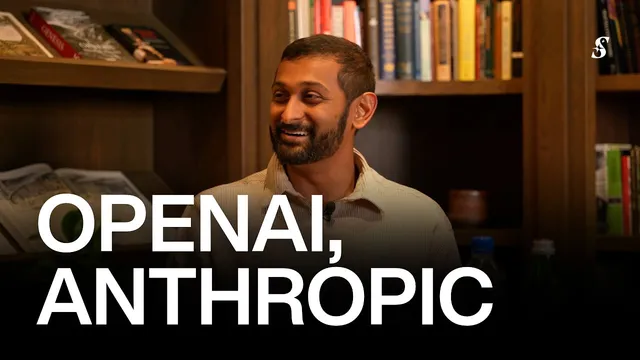
Christian Garrett argues that the next technology giants will pair vertical integration with commercial scale across defense and industrial markets.
 Sourcery · Molly O'Shea
- Christian Garrett is a Partner at 137 Ventures and co-founder of Onodrim Industries.
The best minutes
- 1:18SpaceX is building a durable hyperscaler businessPro pick 4 min
- 28:14Dual-use conglomerates can build resilient defense capacity5 min
- 33:14Europe’s defense suppliers need scale and modernization6 min
Every moment plays free. PRO marks a write-up that's in Pro.
Also worth watching
- 8:25Starship can unlock businesses by lowering launch costs4 min
- 16:07137 backs AI companies with positions above the models3 min
- 22:47Power-law returns can justify premium prices for leaders5 min
- 42:31Co-founding Onodrim changed how Garrett helps founders7 min
- 49:11AI is making industrial automation easier to deploy4 min
Skip the sponsor reads and the closing discussion of tech-industry culture and political influence.
Full analysis · 5 min read
Real Alpha · Nov 13
Christian Garrett says SpaceX grew like 160%
- Garrett put SpaceX's top-line growth at like 160%, while discussing Q3 earnings.
- His durability case rests on like 40% compounding over 20 years, not one fast year.
- Teams should test payback, shared systems, and customer demand before extending the thesis.
Free with an account
Read the rest of the analysis
7 sections, the 3 other voices it tests Garrett against, and what it means for you. Every episode we cut gets one.
Check your inbox
We sent a link to your address. Click it to finish signing up. Not there in a minute? Look in spam.
or
Signed up before? The same buttons sign you in. The episode, its moments and the transcript stay free.
SpaceX's duration matters more than one growth year
Garrett put SpaceX's top-line growth at like 160% in the context of Q3 earnings. He did not specify the measurement period or comparison base.
That distinction matters because the same headline rate can describe different intervals. It should not be treated as a run rate without knowing the period behind it.
Separately, Garrett said SpaceX compounded at like 40% over 20 years. He called 40% in one year good, but not incredible. Duration was the point.
Garrett has a long view of the company. 137 Ventures, where he is a partner, has invested in SpaceX for 16 years. He called it the firm's largest position.
Our read
The argument rests on a long record Garrett describes, not just one growth figure. His investment history is relevant context for how he sees that record.
Integration gives SpaceX several ways to use capacity
Garrett says SpaceX can earn across AI products, compute, connectivity, and launch. It builds infrastructure for its own use or sells capacity to others.
He said the company had reiterated sub-12-month payback periods on earnings calls for its compute and AI business. He treated those periods as a signal of current demand.
Another cushion is flexibility. If demand slows, Garrett said SpaceX can shift capacity toward internal products and pull back on investment more quickly.
Gil Luria, on Prof G Markets in October 2026, described Microsoft pairing long-term data-center commitments with short-term neocloud capacity. He said this helped Microsoft meet demand while staying cash-flow positive.
Sundar Pichai, on Sources in October 2026, cited demand signals, improving models, and committed contracts to support continued investment. As Google's CEO, he was making a company-side case, not an independent demand assessment.
- GLGil Luria · Prof G Markets · Oct 29Microsoft limits AI spending to what its cash flow can support
 Sundar Pichai · Sources · Oct 21Google justifies AI spending with demand and capability signals
Our read
Integration gives SpaceX options, but payback and redirection remain claims to test as capacity grows. Luria and Pichai show different ways leaders frame financing and demand.
New conglomerates need shared systems, not just breadth
Garrett contrasts older conglomerates with newer ones built around shared operating technology or vertical integration. His case is not diversification alone, but a common platform connecting different business lines.
He describes SpaceX as having different industry exposures built on a shared technology base. He also points to Anduril's use of software and AI across multiple products.
For example, Garrett describes Anduril's Lattice as shared backend infrastructure. He said each additional product makes the others more valuable.
That is a specific operating thesis, not proof that every business in a group benefits. The episode offers no quantified savings, development gains, or cross-selling results.
Our read
A shared platform can make a conglomerate more than a collection of businesses. The test is whether it produces measurable gains across units.
Commercial revenue can help sustain defense capacity
Garrett's argument is that commercial customers can help maintain capacity between government orders. He said defense production cannot rely on public spending alone to sustain the scale required.
He described commercial business as about 68% of revenue for China's defense primes. He also said Palantir's majority revenue was commercial in its latest earnings, and that SpaceX's majority was commercial.
Those figures are Garrett's descriptions, not independently verified numbers in this episode. His broader point is that commercial scale can help maintain production and give companies room to adjust capacity.
He pointed to commercial shipbuilding as an example of how an industrial base can support defense production. For operators, the question is whether commercial demand can keep suppliers productive when defense orders change.
Our read
Dual-use capacity is the episode's bridge between commercial growth and defense resilience. The revenue mix matters only if it supports production that defense customers need.
Onodrim targets the suppliers beneath Europe's primes
Garrett describes Onodrim as a platform for acquiring aerospace, defense, and industrial suppliers across Europe, then investing in their growth.
He says the visible drone-company market is crowded, citing 4,000 drone companies in Europe. He sees a less-supported layer underneath, including component makers and manufacturers.
Garrett said fragmented European markets make it hard for suppliers to expand, adopt technology, and find partners with the right incentives. Onodrim plans to bring capital, engineering support, and technology to acquired businesses.
That plan offers a concrete route to scale, but its returns depend on target quality and execution after acquisition. The episode describes the thesis, not results from completed deals.
Our read
Onodrim applies the episode's scale argument to the supplier base. The proof will be whether acquired businesses modernize and expand without losing the capabilities that made them valuable.
Cheaper launches could create markets beyond rockets
Garrett said Starship would drive launch costs down an order of magnitude. He said that would probably lead to an equal rise in the number of companies.
He also said full reusability is the next major step for reducing costs and increasing launch cadence. That leaves the business case dependent on engineering progress as well as customer demand.
The host, Molly O'Shea, described visiting StarCloud and seeing its development plans for orbital compute. Garrett recalled SpaceX's public target for launching its first orbital compute satellites in the back half of next year.
Garrett cited Varda as a business built on lower launch costs. Philip Johnston, on Sourcery in October 2026, also framed launch cost as decisive for orbital data-center economics.

Our read
Launch cost is an enabling condition, not a complete business model. Cadence, operating costs, and paying customers still have to line up.
Industrial AI matters when it changes production
Garrett said his operating exposure made him more interested in technology deployed inside industrial businesses. He sees AI making integration with factory controls faster.
For instance, he described Applied Intuition reaching beyond software for engineers into vehicle electronics, controllers, and wiring. He said simplifying these systems can improve vehicle costs.
Garrett also described General Matter applying sensors where there had not been sensors, alongside modern tooling for uranium enrichment. He did not give a measured productivity result.
He cautioned that deploying software does not automatically make a company a technology business. For Onodrim, that distinction means measuring operational effects rather than counting installations.
Our read
The industrial opportunity is plausible because technology can reach physical operations. The evidence should be output, quality, cost, and integration time, not software adoption alone.
What it means for you
- Track realized payback. Compare compute investment estimates with realized utilization and revenue, and record the time window. Garrett's sub-12-month figure described SpaceX's signal, not a universal target.
- Measure shared systems. Ask each business unit what common software or operations improve. Track changes in delivery time, unit cost, or cross-unit sales.
- Map supplier bottlenecks. List critical suppliers, production limits, and the investment needed to expand. Separate capacity supported by commercial customers from capacity relying mainly on defense orders.
- Set factory baselines. Before an AI or automation deployment, record throughput, defects, labor time, and integration cost. Compare those measures after deployment.
What to watch
- Whether SpaceX sustains short payback periods as its compute capacity expands.
- Whether Onodrim announces its first acquisitions and shows how it modernizes suppliers.
- Whether SpaceX meets Garrett's recalled timeline for orbital compute satellites in the back half of next year.
Send this to finance and operations leaders sizing infrastructure or industrial acquisitions.
Watch the minute where Garrett gives SpaceX's like 160% growth figure.
Written by Real Alpha from the episode's transcript and the other moments it links, then checked against the transcript. Quotes are the speaker's exact words.
Minute by minute
A Pro write-up, open to you here. Try Pro free for 7 days
A Pro write-up. The minute by minute is in Real Alpha Pro; the episode, its moments and the transcript stay free.
Read it with Pro, 7 days free- 1:18SpaceX is expanding beyond launch
Garrett says SpaceX’s business is still getting started after 16 years in 137 Ventures’ portfolio. He cites 160% top-line growth, $4.4 billion in net income and $8.8 billion in EBITDA in Q3, and says Starlink, compute and AI products are expanding alongside launch.
- 4:46SpaceX is broadening beyond launch
O’Shea cites reports that more than 50% of SpaceX revenue is attributed to AI; Garrett says launch and Starlink still have room to grow. He argues that vertical integration across apps, models and compute can help SpaceX adapt to shifts between open- and closed-source models, or redirect capacity to its own products.
- 8:37Starship could unlock orbital compute
Garrett says SpaceX has publicly targeted launching some of its first orbital compute satellites in the back half of next year, while cautioning that timelines are hard to forecast. He argues that lower launch costs could expand orbital compute and enable new businesses, pointing to Varda as a company built on cheaper access to launch.
- 12:41Capital access shapes the build-out
Garrett says debt markets and the cost of capital matter because companies use debt to build compute capacity. He sees valid questions about whether future revenue will support spending commitments, but says companies with lower-cost capital may capture demand at better rates.
- 16:07137 favors independent application layers
Garrett says 137 Ventures has backed Cognition and Hex, which he sees as well positioned at the harness and application layers. He cites their growth and their potential in areas such as coding, security and analytics, while saying the firm is still working to assess the durability of other AI categories.
- 19:16Duration matters more than yearly growth
Garrett says SpaceX compounded at about 40% for 20 years, and argues that the duration of growth matters more than any single year’s rate. Since 137 Ventures is a minority investor and cannot control how long it holds a company, he wants to back businesses he can believe in for decades.
- 22:47Premium prices can reward quality
Garrett argues that investors may do better paying a 25% premium for a quality asset with strong growth than buying a weaker asset at a discount. He points to Ramp’s expanding financial operations products and says that although many fintech companies failed, winners such as Stripe, Revolut and Nubank show the power-law nature of venture returns.
- 27:16Dual-use firms can sustain defense capacity
Garrett says Anduril uses shared technology, including its Lattice software, across multiple products, creating operating synergies. He argues that commercial revenue can help support defense capacity and cites Palantir and SpaceX as examples; he says 68% of revenue at China’s defense primes comes from the commercial sector.
- 33:14Onodrim will scale European suppliers
Garrett describes Onodrim as a platform that acquires aerospace, defense and industrial businesses across Europe, invests in them and deploys technology to help them grow. He says Europe has many critical suppliers but less consolidation than the U.S., and sees an opportunity to help these businesses scale across the region.
- 36:41The supplier layer needs investment
Garrett says Europe has 4,000 drone companies, while the less-supported opportunity is the supplier layer beneath them: components, manufacturing and engines. Onodrim plans to focus mainly on acquiring and scaling suppliers and services; its team brings experience from private equity, defense, government and technology, and screens for durable revenue and critical capacity.
- 42:31Operating changed Garrett’s investor lens
Garrett says he did not set out to start a company, but time spent in Europe convinced him that fragmented contracts would not solve the region’s production bottlenecks. He sees himself as a minority co-founder who helps where useful while Isis and Alex build Onodrim, and says the experience has helped him understand founders’ needs from investors.
- 49:11Technology can modernize industry
Garrett says his work with Onodrim has made him more optimistic about technology in manufacturing, from automating paperwork to integrating with PLCs. He cites Applied Intuition’s work across vehicles and other industries, and General Matter’s use of updated tools and sensors in uranium enrichment, while cautioning that software alone does not make a company a technology business.
- 53:55Tech’s growth depends on cooperation
Garrett argues that technology has benefited from non-zero-sum incentives and says he worries that petty fighting could erode that culture. He says technology now affects sectors including energy, manufacturing and defense, making cooperation important to preserve.
- 55:29Garrett warns against politicizing tech
Garrett argues that consumers and policymakers should judge companies on their products and merits, not founders’ politics. He says these firms support jobs, economic output and national security, and that people can choose not to use a product without trying to damage the company.
Published Nov 13, 2026.
Transcript · 55 min read
Sourcery, hosted by Molly O'Shea, with Christian Garrett.
Transcribed by machine (Whisper) from the episode’s audio, so a word may be off here and there.
This year has really been the year of SpaceX. It's a company we've invested in for 16 years. It's our largest position and they grew top line like 160%. They posted $4.4 billion in net income, $8.8 billion of EBITDA, $2 trillion company that is a dominant provider in multiple critical industries. It's clearly a very exciting company. Just a handful of companies drive all the returns. That's obviously how we built the firm to capitalize on that. Cognition is recently at $48 billion and a roll at $90 billion. I have this like return to the conglomerate sort of piece of trade out. The defense plans of China, 68% of the revenue comes from the commercial sector.
Palantir and SpaceX are the only example of this, but I think we need to return to the, like, dual-use conglomerates. General Mills made cereal and weapons systems. Christian Garrett, welcome back to Sorcery. It's good to be here. I know we're in this lovely spot in a secret location, as always. but it's great to have you here we have so much to talk about i know i've talked about you or talked with you a bunch over the last year or so whether it's at hill and valley or on the podcast and we've talked about spacex and and roll and vertical integration and all these things but this year has really been the year of spacex and so i'd love to hear from you how that's evolving and how the business model is forming now that it's a public company yeah so i mean it's a company
“they're getting sub 12-month payback periods, right, which is obviously a signal for demand.”
Read the whole transcript
I think number one is, you know, the story about SpaceX from or SpaceX SI, you know, from the beginning was launch space, getting to Mars, getting to the moon, like increasing launch capacity, that kind of thing. To what you're mentioning is this dramatic shift to almost becoming a hyperscaler.
If not, they already are even in their earnings or their S1 and that kind of thing. The story was they're an AI company. And so I think in their earnings, it was reported over 50% of their revenue is attributed to AI in some capacity. So what do you make of that? And I guess secondary to that question is, what would their market comps be now? And what will they be? It's sort of an ode to the great companies of the past that I've sort of become more and more obsessed with. But you look back at these large conglomerate-type businesses that were in the 80s. You always had the benefits. there's negatives to those businesses, which I don't think are attributable to the next generation ones like SpaceX, which we can dive into. But one of the benefits of the businesses is you had multiple business lines that had exposure to different industries that at times would provide diversification. If an industry cyclically was growing much faster than another one, then you at the top co-level continue to have compounding. And I think here you're just seeing one business line that has exponential demand. It's growing extremely fast from a small base compared to other parts of the business, whether on the connectivity side or the launch side that are
in the beginning of another S-curve in our view. But those just play out over different time horizons. And so, yes, right now the AI business is exploding and moving very fast and they're carving out a huge part of that market for themselves. But if you look at launch and Starlink in particular, I think once again, underappreciated is that Starship is working, right? They actually legitimately got it launched and had payloads delivered to space that are delivering compute, right, on the V3 satellites for Starlink. You're having the next generation of the Constellation built out, which people really don't understand the scale. I mean, that launch on just a handful of Starlink V3s delivered like 1% of the world's, right, in our capacity. I mean, it's insane, right? And they're going to deploy tens of thousands of these. And then obviously the DDC side. I think over time, you'll see this revenue mix adjust, right, and shift around as these other businesses grow. And so, you know, with Starship as a platform. It's unclear how just the core launch business, you know, grows. I mean, I think it could be much, much larger than it is today and a much larger percentage of revenue. Starlink, similar, right, with DDC, with obviously D3s, and there's various other products that are
continuing to build. I think people generally don't appreciate that these are all just moments in time. And this is a business that is taking a multi-decade or century view. And I think the revenue mix will sort of shift and adjust, as it does for all businesses, right? I mean, every business that's in the early days, which is hard to fathom for a 20-year-old business and it's in the early days, you'll see this kind of revenue splits adjust, right, just based on demand across their different industries, particularly when you have a company with sort of exposure to multiple industries that are in their own different kind of growth curves.
Well, it's interesting because everybody's in the early days now. It's like everyone's trying to grab on to inference revenue or compute revenue or all this kind of stuff and like build. out their business models and we're seeing this and I don't know if this has led to like delays in IPOs or whatever but trying to figure out okay we have a lot of this growth how do we then backfill in this valuation if we just have one line of revenue. Meanwhile SpaceX incredibly durable company has like 10 or whatever or how many of they that they have and like different ways to pull on different strings in case one thing falls or one thing they need to like lean into for more momentum. We were just at StarCloud in Seattle. And so Philip, the CEO there, we were
“And so I think that's the power of vertical integration and also the importance of what they're doing, which is driving costs down around critical infrastructure.”
Incredible story and just demonstration of like how to navigate markets when it's completely changing. It's completely changed. On the hyperscaler standpoint in this neocloud environment, this is something I want to dig into because I know you monitor all of this stuff. and, like, you take, like, an economist view, but, like, you also, like, understand the financings behind it. Like, Elon had recently put out a tweet on the constraints of financing in this market and the debt and the access to it. And we saw this with, like, I know CoreWeave have some issues there, different ones, but, like, how are you seeing this market play out in terms of, like, financings and debt? You've seen in the public markets and in the debt markets a lot of volatility more recently. Everything is everything. There's just so many things that are conflated with this because you also have a lot of macro volatility. You have an election cycle. You have a generic degrossing in October that's pretty consistent. Some of that also plays a role.
But I will say that there was clearly questioning on people's ability to either, one, underwrite where revenue's coming from to support the sort of spend commitments or for companies' abilities to grow based on their access to capital, right, to match those commitments. It's ironic that, and this is what just goes to show you like market structure matters and sometimes these things don't make any sense, but in some sense, those are the beneficiaries of the spend also dropped, but then those that are the spenders dropped too. And so it's a little unclear how both companies could drop. But one thing to definitely pay attention to is in order to really build out this capacity. Once again, speed and payback period is everything. And then cost of capital is a huge part of it because a lot of this is funded by the debt markets because it's the most efficient form of capital to go do it. And I think the similar thing you're just seeing is people are questioning the ability for folks to build out that capacity. And I think it's a valid question. I think you've seen folks maybe get an unfair treatment. I think you've seen a lot of noise around people's access to capital. But at the same time, Elon's 100% right that
You know, there are certain companies that have a huge advantage, right, and a lower cost of capital. And they're also going to suck up a lot of that demand at better rates. And so, you know, it's another reinforcement on why I think they're extremely well positioned in this category. I think there's a lot of dynamics going on in the market that are driving all these things. But there is a real question, right, around certain parts of this market. And I think it's a question that, you know, has continued to surprise to the upside. If you look over the last few years, because we've been asking these questions.
but obviously it's strange market dynamic where as time passes the questions are still there and they're getting you know even harder right to have a view on and so i think that's what makes investing in this market so exciting and so difficult right it's just you don't really know what market dynamics are going to be like in the next three months let alone the next three years and it's very hard to know kind of steady state market structures too as well right which is whether it's model pricing whether it's volume mix of open source or closed source whether it's you know, compute pricing, or it's going to be the cost of capital, right, or the ability to build data centers, right, and access power. It's fascinating to watch. It's a fun time to invest in, but it's also incredibly difficult. How to price a company is going to be entirely driven by ability to believe in some out years of earnings. And that's really hard right now. It's hard to believe in the next two years of earnings, let alone the next 20. And so that's, I think, a fun time as an investor and a difficult time as an investor. Yeah, I want to push on that more before
“We have not done a ton there but those are companies that we felt were pretty well positioned within sort of having the third-party structural positioning”
And so you just want to focus on, you know, being right on bets and picking businesses that can survive these cycles. So what are the growth rates that you're looking at and how has that changed over time? Like, what are the metrics you're looking at? I mean, it depends on the type of business, right? I mean, there are businesses that are not, you know, consumer internet scale, right? And that can't grow as fast as something there. For us, it's going to be much more the sort of strength and quality of that growth, right?
So a business like SpaceX, you know, compounded for like 40% for 20 years. Now, 40% on a standalone year is good, right? It's not incredible, right? What's really amazing about that is the length. Right, right. The duration of that for 20 years is insane, right? And I think people back in the power of compounding, right, like 9% growth rate, which is like the standard kind of S&P, average growth rate in the S&P, 9% over 30 years, right, is like a 13x, right? I mean, like, it's credible how really duration is what matters the most within that. And so I think for us, mostly it's about the duration of growth. And so when we've made big bets, and when we really to concentrate. It's in companies where, you know, over time we've built that conviction and we really understand that this is a business that can come down for a long time. And in our asset class, we can't control duration, right? I don't know how long we're going to be invested in this business. When we make an investment, we want to have a view that, like, we want to be in this business for decades because we don't control it. We're minority shareholders. And so we want to be excited about it 10 years from now, 20 years from now. And the businesses that will be backed,
particularly the businesses that we've really, like, concentrated in, SpaceX, Andruel, These are businesses that, you know, the duration of that compounding and that revenue growth was very clear. And the runway of opportunity is very large versus, you know, the growth rate within a year is important data point. And it's supportive to your math, but it's not the only factor. This episode is brought to you by Brex, my favorite. You become what you spend on. And I refuse to spend my time on work that shouldn't exist. expense reports receipt chasing and manual closes the companies building what's next from versell open ai anthropic granola and deep gram all made the same call they all run on brex brex is the intelligent finance platform that combines cards expenses and banking into a single stack with agentic finance built in ai agents that handle expenses automatically enforce policy before spend happens and close your books in minutes. That's why Sorcery runs on Brex so I can spend time on building and not busy work. It's time to get Brex AF. Learn more at brex.com slash sorcery. That's b-r-e-x dot com slash s-o-u-r-c-e-r-y. Bye. From handshake to signature faster, Harvey, the AI platform built for legal work, is trusted by 80% of the AMLA 100 and
and over 20% of the Fortune 500. Learn more today at Harvey.ai. That's Harvey.ai. AI needs more than chips. It needs power, land, and infrastructure. Zone develops next-generation data center campuses, partnering with AI companies, site developers, and technology leaders to bring compute online faster and at scale. Zone is building the foundation of the AI frontier. visit zone frontier.com to learn more that's zone frontier.com to learn more so at the stage
“the power law within our industry more than pays for these opportunities, right?”
Let's talk about Andrel. So is everything computer? It's funny. This is something that Palmer's been obsessed with for quite a long time. It's really cool to see him actually do something here. And obviously part of the overall trend, which is repatriating more and more capacity that we should not have given away.
and this is just another example of that. I also particularly like seeing things that are you know sometimes you need industrial policy to bring that capacity and then sometimes companies because they see a commercial opportunity will just do it themselves and Andrew is a great example of that and it's pretty cool. So but the thing I really appreciate is something Palmer's been taught. not for a long time and it's one thing you can't appreciate about founders like that or generational founders it's it's they they tend to be early and on the ball um and the best part is in our job we get to partner with them in tiny capacities as they do need capital and resources to go deliver on that and palmer's done that continually uh along with uh you know everyone
“you're going to need to be dominant in the commercial industry or else it just won't work.”
a lot of companies are not building, you know, real true kind of dual use capability sets. And the best success stories probably are those that are in the commercial sector that are dominant, that are then crossing over in the defense industry, right? And you see a lot of that enterprise software and infrastructure and cybersecurity. I think you'll probably need to see more of that within sort of the aerospace and defense category.
“what has not received as much support is the layer below, right? Who's supplying all these companies, right?”
How do you access talent in this layer that's underappreciated? There's two layers of talent for us, right? There's talent we've recruited into the company, which we've done a great job of and I think will. And if there's any talented Europeans that want to work on this, please reach out. And we've brought DNAs together. I think they're very unique. You know, our company consists of folks that come from private equity, traditional aerospace and defense, government, and the technology sector, right? We have people from Palantir, SpaceX, Ryan Mittal, McKinsey, go down the list, which is, I think, really unique and it's been kind of fun.
We also have, like, I think, like nine nationalities as well, which I think deeply represents Europe, which has also been fun. It probably makes our Slack and group chats very interesting because you have a lot of views and cultural differences that we learn and appreciate but really bring together. Some people are a little bit more direct than others. Yeah, yeah, definitely. I've learned a lot about Eastern European humor. Oh, really? And I think a lot of people have learned a lot about Italian schizophrenia. So it's been good. Which I think matters most, right, the company that we partner with, right, are people who've built.
you know incredible businesses many of them multi-generational or or have been around for over a decade um and i think what we're looking for are management and companies that have these same characteristics that i think i look for from an investment hat and we look for one through seven right these are businesses that are durable right what's the quality of the revenue right have they been doing this for a long time is there a low churn right which just shows that this is a high quality business do they have capacity that's critical right to the industries that we care about, particularly on the defense side, even if the majority of the revenue is coming from aerospace or industrials, right?
Is that capacity and is there a business line that we think should be growing and can grow on the defense side? Does it solve a critical bottleneck? That's something we really focus on, right? Where are the bottlenecks for this build-out? The contracts have been going to all the primes, but you've been seeing that production is the big bottleneck right now, and a lot of that's because of the supplier level. Whether it's their ability to scale, right? Who's going to take the risk on CapEx, right? How do we modernize our operations to deliver faster? Or the sad part is a lot of the capacity is repatriated away, right, and it no longer exists in Europe, and you see the same dynamic in the U.S., right, that both exist. So these are the kind of things we look for, and then obviously we want to partner with management that we think knows their category extremely well, and we want to empower them, and many of these companies exhibit those characteristics, and it's been really great to be working in this business the last year, and we're really excited to partner with some of the first set of businesses, and we're very early improving it out. I think we have a very strong thesis. We have an incredible team, great backers. Now we just need to go
execute. And so that's the next phase for us. How good is AI at real professional work? Merkur's AI Productivity Index, or APEX, tracks it with every major frontier model release. Built with partners like Harvey and Cognition, see where the frontier actually stands at merkur.com slash APEX. Today's episode is sponsored by VCX by Fundrise, the public ticker for private tech, allowing investors of all sizes to invest in venture capital. Learn more at getvcx.com. Public is a multi-asset investing platform where you can automate your investing with AI agents. Create your own custom agent with a simple prompt.
Agents can monitor markets, execute trading strategies, and manage your cash across stocks, bonds, options, crypto, and more. Want to buy at market close and sell the next day's open? Just tell your agent. Automate your investing at public.com. founders scale faster on deal set up payroll for any country in minutes hire anyone anywhere get visas handled fast and get back to building visit deal.com slash sorcery that's d-e-e-l.com
“A bad investor can destroy your company. A good investor won't make your company, right? Which my partner, Justin, always says.”
“Your ability to start integrating into PLCs is significantly faster, which allows you to do a lot of interesting things with machines”
And as we're re-industrializing, this is the fun part, I guess, of this that we get to invest in, most people get to build in, right, that we get to partner with, the operators, is, you know, we can reinvent kind of how we did things from the old world. And I think that's the exciting part and the difficult part. Yeah, it's so cool.
I know we're a bit over time. It's like 9.06 right now, so we'll try to wrap up in like five minutes. So there were a couple other things that were on your list of things to talk about that I think are quite interesting. I would love to quickly go over the trend of political weaponization and then also how lucky we are in tech to not be zero-sum. I've been thinking a lot more about mainly because they're things I do not want to see happen because it alters what was really special in the industry and what allowed the industry to I think you know continue to grow and gain more and more share of global economy and continue to touch and impact and transform many types of industries right not just what was purely technology right maybe from you know transistors all the way to computers and software and cloud like now technology is touching all sectors right energy we talked about manufacturing defense i'll start in reverse but you know i think our industry is unique that it's not zero sum and it's something that i think we all know we don't think about a lot like if you go in other industries you realize the difference in culture in behavior and incentive structure uh and how they do business i mean it's wild so
different and it's it's small but nuanced but really is i just think the zero sum now probably the pessimistic take is the only reason we are not zero sum is because we're in a high growth industry and many of these industries are not right but i do think it's a little bit cultural too and uh you know i think uh that's something i just think is deeply important to preserve um and i guess the more i see petty fighting and arguing and behavior uh within our ecosystem it makes me a little sad and maybe i'm naive um and you know i came in industry as such a fan right from a kid um and looking up to some of these people and i just don't i just don't like i I particularly don't like it, and I see what happens when you have an industry that stops growing and loses its zero-sum kind of mentality.
It makes me concerned. I don't think we're there, but it's something I think is something we should really cherish and protect. And the other side is on the political weaponization. You've started to see this, I think, with social media was the beginning, right, of there to be more of a concern, and how do we sort of interact with these companies that have such critical power in this category? and I think it's starting to turn where now it's becoming politicized. of, you know, if you as a founder or a company are on one side or the other politically, right, then we need to do something about it. And I think that is really disappointing. And you've seen it on both sides, right? And with companies we've talked about today. And it's just one is incredibly misguided because it's ironic because these companies usually are made up of people and management and founders that have completely different political views, right? These companies are working on things that are nonpartisan, right? They're benefiting the entire economy of the world.
They're some of the largest job providers in the world, and they're pretty critical to national security and resilience. If you did not have some of these companies, we would not be competitive at all. We'd be totally screwed from a GDP growth perspective, right, from a jobs perspective, from just capabilities perspective. And I think it's just a bad precedent to start to set. And you've just seen it evolve slowly, whether it was we need to break up big tech not too long ago, right, and regulate them for social media, whether it was, you know, people burning Tesla cars down, which is insane. You see people, you know, flipping out at Anthropic, right? It's like, oh, I won't use their product, right? Because of this. And I think, you know, there's a weird nuance where these worlds are blending more. And so maybe that does mean we need to re-underwrite actually thinking this. Maybe I'm wrong. But also I do think it's a dangerous precedent too, as well. And I think consumer decisions and I think policymakers decisions shouldn't be influenced by the politics of the people of all these companies. They should just be influenced by the merits of the business and the importance of the business and the product that they offer to
the markets. And the markets have their own mechanisms of sorting these things out, right? If people don't like a product, they cannot buy it. You need to burn the product down or try to kill the CEO. That's a little much, but you can just not buy the product. And there's a good feedback loop, right? Or you cannot use the model, right? Or you cannot use, you don't have to use Facebook, it turns out. No one's forcing you to. And so, yeah, that's my view. I think it's open for debate. I think there's nuances. I'm not saying I'm 100% right. But generic point, I think, you know, we really do not want there to be a sort of weaponized political attack on companies in our sector. And we don't want to support it on either side. And I think we just benefited and we never want to lose, you know, the fact that we don't have a zero-sum mentality. And I think a lot of that's because the industry has been growing, but I think a lot is cultural. And those are awesome things. And at the end of the day, we are all in the same industry that's, you know, driving real value of the world. And I just, yeah, tearing ourselves from within at each other is petty and stupid. And I've seen it in many sectors or companies. And maybe a warning to the outside,
which is just tearing this industry from outside because of political reasons, it will backfire. And so I would like to see maybe the tone and things kind of maybe calm down a bit because right now is some of the most important time periods in the world. And we literally had a flying car just a couple of weeks ago, and yet we also have all this volatility. And so I would like to see things maybe change, but maybe they don't. But for me, I think those are pretty critical, at least for our industry, to cherish. I mean, quite the thought provoking Wade and the conversation, which has been awesome, like really thoughtful.
I really appreciate everything that you share from the portfolio to SpaceX, how you think about conglomerates, like all these things are really interesting. And I do think we just live in a terror society and we just like live in this world where we have too much access to information. We were talking about this beforehand. It's like we don't need to be knowing all these things. We don't need to be involved in all these things. Like, how about we just have one newspaper that gave us the news each week? That would be a little bit more peaceful, but we don't have that. But anyways, Christian, thank you so much for taking the time.
I love having a catch-up and seeing what's going on in the growth stage markets with you. And I'm excited for the next Hill and Valley. When's that? Spring. So March or April usually depends on the congressional calendar. But we will have a date soon, usually by the end of the year or early next year. And, yeah, it's been awesome. The next one, definitely need to have you there. We'll do a lot together. And I know, you know, Delia and Jacob and I are super excited. And we have some good things that were in the works that we're excited to announce soon. Cool. Awesome. Well, thank you, Christian.
Thanks, Molly. Hey, it's Molly. If you enjoy our interviews, check out our newsletter, Sorcery.VC, where we deliver a once a week top deals and tech headlines email and also go deeper on our podcast interviews. Subscribe to Sorcery today. And don't forget to subscribe to the podcast on YouTube, Spotify, Apple, or wherever you listen. Link in description to sign up.