Free with a sign-in.
The best 17 min of 65
The Democrats figured out something Elon Musk didn’t
New Jersey Gov. Mikie Sherrill argues that Democrats won by centering affordability and accountability—and that states must fill gaps in tech regulation.
 Decoder · Nilay Patel
- Mikie Sherrill is a Governor of New Jersey.
The best minutes
- 14:21X can create a false sense of where voters stand4 min
- 18:36States can use existing laws to challenge federal actions4 min
- 29:04Data centers need a business model communities can trust8 min
Also worth watching
- 22:52New Jersey added a COO to coordinate siloed agencies6 min
- 5:40Sherrill chose full disclosure after finding a voter-roll error4 min
- 47:59New Jersey is gathering evidence to strengthen social media cases3 min
- 9:12Influencer politics works best when candidates stay authentic4 min
- 55:58Plate readers can curb theft, but AI widens the privacy risk5 min
Skip the campaign recap, the federal-versus-state AI regulation discussion, and the later privacy debate after the plate-reader example.
Full analysis · 6 min read
Real Alpha · Nov 20
Mikie Sherrill says X can create false voter consensus
- Sherrill says teens spend 35 hours a week online.
- Her account makes X a poor proxy for voters, but offers no measured validation.
- Executives should test public signals against direct feedback and document local costs.
Free with an account
Read the rest of the analysis
6 sections, the 6 other voices it tests Sherrill against, and what it means for you. Every episode we cut gets one.
Check your inbox
We sent a link to your address. Click it to finish signing up. Not there in a minute? Look in spam.
or
Signed up before? The same buttons sign you in. The episode, its moments and the transcript stay free.
X can inflate political signals beyond their audience
The host asked whether Musk's purchase of Twitter had failed across every dimension. Sherrill did not endorse that verdict.
Instead, she described a specific failure mode for political interpretation. Activity on X, she said, can make a narrow group look like broad agreement.
Retail campaigning gives her another signal to compare against the feed. She said face-to-face contact can reveal when online energy misses voters' actual views.
That distinction matters for companies reading social engagement as demand. Posts show activity on one platform, not whether posters represent customers or voters.
Sherrill said she learned the term astroturfed during her campaign. But the episode gives no canvass sample, engagement data, or comparison with election results.
Max Chafkin, on Bloomberg Businessweek in November, makes a separate point. Musk's companies depend on rules, contracts, and approvals, so X's political reach and his businesses' government exposure are separate measures.

Our read
Sherrill offers a reason not to treat online activity as a public-opinion poll. Her account is plausible, but the episode does not measure how often X's signals mislead or how much they affect votes.
Retail contact gave Sherrill a campaign feedback loop
Sherrill says New Jersey's many municipalities make campaigning unusually retail. She describes reaching thousands and thousands of people, sometimes in a day, through small businesses, diners, and local gatherings.
She says those conversations helped her identify affordability and accountability as the campaign's center. She tied anger at corruption to rising costs, rather than abstract ethics alone.
For example, she recalled small businesses connecting Trump's enrichment with their own rising expenses. That makes an ethics issue legible as household economics.
But this is her explanation after winning, not a controlled test of what shifted votes. The episode includes no poll wording, audience breakdown, or competing account of the result.
Her approach is a feedback loop, not proof that in-person contact always produces a truer reading. The useful discipline is checking leaders' interpretations against the people affected.
Our read
Sherrill's account suggests leaders need a route from public sentiment to decisions, then a way to check their reading. It does not show that retail contact alone produces a winning message.
Disclosure can keep others from defining the problem
After New Jersey found noncitizens on voter rolls, Sherrill says colleagues advised a short statement and then waiting. She rejected that approach.
She chose to explain what happened, why it happened, and how the administration would fix it. Her reasoning is that the story would surface anyway, while silence would leave others to define it.
That standard matters to companies facing outages, product failures, or data exposure. A narrow announcement can leave customers and staff to fill in missing facts themselves.
But transparency is not remediation. The episode gives no count of affected records, cleanup details, or indication that anyone on the rolls voted.
Those omissions limit what listeners can conclude about the incident itself. They also show why disclosure needs verifiable specifics, not just a willingness to speak first.
Our read
Sherrill makes a strong case for explaining problems before others define them. Disclosure earns trust only when people can check what happened and whether the fix worked.
Local approval now depends on visible project benefits
Sherrill says New Jersey towns make local decisions about where data centers fit. She wants operators to show water use, power effects, jobs, labor standards, and community benefits.
She says the state imposed over $1 million in fines on one existing center for permitting violations. She described it as one of the largest fines in the country.
That is evidence of enforcement in one case, not proof that future projects meet local expectations. Her case for moratoriums is leverage, not a permanent answer.
She hopes pressure will make operators show communities what noise, water, and energy demands will look like. Residents should be able to assess a proposed facility before it arrives.
Jon Favreau, on Decoder in November, says backlash reflects deals imposed without explanation or local control. John Coogan, on TBPN in November, says better messaging alone will not resolve opposition.
Coogan's point aligns with Sherrill's demand for visible benefits, not simply more polished outreach. Alex Katz, on Inside Blackstone in November, expects standards and responsible development rather than broad moratoriums.
That is Katz's forecast, not an established compromise. Laura Ullrich, on Bloomberg Businessweek in November, reported that 71% of data-center jobs in the communities studied were with the top 10 tech companies.
Some of those communities were rural, she said. That finding complicates promises that projects create lasting local employment.
Matt Garman, AWS's CEO, told Sources in November that AWS pays for all the power it brings to the grid. That is the operator's account, not an independent local bill comparison.
“I don't think data centers have shown a model where communities are confident”
 Jon Favreau · Decoder · Nov 19Data center backlash reflects a loss of local control
 John Coogan · TBPN · Nov 5Data centers need to deliver visible benefits to local communities
- AKAlex Katz · Inside Blackstone · Nov 17Data-center growth is likely to continue with community guardrails
- LULaura Ullrich · Bloomberg Businessweek · Nov 18Data centers create jobs, but workers may have to travel
 Matt Garman · Sources · Nov 10AWS says local benefits are key to data center support
Our read
The comparisons point to a test beyond public relations. Projects need locally verifiable costs and benefits, while hiring promises need evidence about who gets the jobs and where they work.
New Jersey wants evidence before expanding social media rules
New Jersey's research center is meant to advise parents and teachers, and produce evidence for cases against social platforms. Sherrill says missing data has weakened states' litigation.
She says the Meta settlement should not end further cases. Her policy theory targets addictive and compulsory design rather than content.
Sherrill expects that approach to be strong and resilient against First Amendment concerns. The episode reports no court ruling testing that view.
She also gives average teen online time as 35 hours a week. No source or method appears in the episode, so this remains her cited figure, not a verified finding here.
That distinction matters for companies building youth products. Research now planned could change the legal and product discussion, but it has not yet produced results.
Teams should not confuse a proposed evidence base with settled standards or court outcomes. The same caution applies when an advocacy figure becomes a product requirement.
Our read
Moving from concern to research makes the case for policy more testable. But the center's future findings and the legal outcomes Sherrill hopes to support remain unsettled.
AI makes surveillance rules harder to keep bounded
Sherrill says residents wanted plate readers after car thefts shifted into home break-ins. New Jersey limits retention, and the attorney general audits use, she says.
She says the readers seemed to have a big impact, though they did not end the theft problem. That is a public-safety case for a tool, not unlimited permission for every use.
The host raises the possibility that AI could link readers and track anyone anywhere. Sherrill says the fear is no longer only who holds data, but what AI can do with it.
She also points out that phone videos have exposed police conduct, making cameras a tool of accountability too. The competing effects make blanket support or rejection of cameras hard to defend.
Builders should ask who holds recordings, who can access them, how long they remain, and whether systems link them. Rules written for each device may miss what connected systems can infer.
“And now it's not a who, it's a what. What's AI going to do with this data?”
Our read
AI does not erase the public-safety case for cameras, but it changes the scale of the privacy risk. Retention limits and audits need to account for connected systems, not only individual devices.
What it means for you
- Check signal quality. Track disagreements between social engagement and direct customer or resident interviews. Treat a spike as a hypothesis until you know whose views it represents.
- Build a local cost sheet. For infrastructure proposals, document expected power and water use, local hiring, and community benefits in terms residents can check.
- Label evidence clearly. When budgeting for youth-safety work, separate sourced figures from studies still being planned. Decide what evidence would change a product or policy choice.
- Map linked data access. Inventory recorded data, retention periods, access rules, and possible AI uses. Test whether audits cover linked data as well as individual devices.
What to watch
- Whether New Jersey's research center publishes methods and findings that can be tested in court.
- Whether data-center operators disclose energy, water, hiring, and benefits at the project level.
- Whether privacy safeguards address AI analysis of connected camera and device data.
Send this to public-affairs, product, and infrastructure leads.
Watch the 3 minutes 52 seconds where Sherrill says X can create false grassroots momentum
Written by Real Alpha from the episode's transcript and the other moments it links, then checked against the transcript. Quotes are the speaker's exact words.
Minute by minute
- 1:30Affordability and accountability defined the race
Sherrill says she began campaigning soon after Donald Trump won in 2024 and met voters across New Jersey. She says voters wanted change, and her campaign focused on affordability and accountability, linking anger over corruption to rising costs.
- 5:40Public disclosure can rebuild trust
Sherrill says online misinformation and algorithms concerned her as early as 2018, but she also believes little can now be hidden from voters. She says her administration explained problems with voter rolls, why they occurred and how it would address them, rather than minimizing the issue, to build trust.
- 9:12Authenticity matters more than imitation
Sherrill says social media is a lasting part of campaigning, but effective video depends on authenticity rather than copying influencer tactics. She praises Mamdani's empathy and says she avoids performative profanity as a parent and governor; candidates should communicate in a way that fits their electorate.
- 14:13X can distort the political picture
Sherrill says X can create a false sense of grassroots support and mislead politicians about voters; her campaign checked online claims against in-person conversations. She sees its bravado as out of step with young men facing weak job prospects and difficulty affording homes, and says political styles can turn tone-deaf quickly.
- 18:00States can fill federal power gaps
Sherrill argues that state governments have gained room to act as federal power is centralized. She says New Jersey warned ports and businesses that importing Russian diesel would violate laws passed by Congress, and reports that some ships have turned away. She describes state action as a muscle that has not been exercised this way in years.
- 22:52New Jersey adds a cross-agency COO
Sherrill says New Jersey added a chief operating officer to coordinate departments that had worked in silos, alongside the traditional chief of staff and chief counsel. She says the administration is modernizing permits and outdated systems, and that she makes decisions using public feedback and trusted staff.
- 28:56Data centers need community safeguards
Sherrill says local governments should decide where data centers fit, with safeguards for water use, electricity costs and community benefits. She says New Jersey fined a center that failed to follow permitting laws more than $1 million, and expects moratoriums to continue until operators show communities the project's impacts and benefits. She wants government at the table as AI develops.
- 37:48Rules can target addictive design
Sherrill says platforms should not leave child safety to parents and favors age-appropriate design and limits on addictive, compulsory behavior. She cites an average of 35 hours a week online for teens and says New Jersey created a research center to guide parents, teachers and policy.
- 41:49Online age checks raise privacy concerns
Sherrill says she is not convinced users can remain anonymous online and worries about personal data being collected and weaponized, including voter data sought by the federal government. She acknowledges privacy concerns around age verification but says broader questions remain over how people can engage online and who holds their data.
- 44:03Sherrill expects more tech litigation
The host says New Jersey is set to receive $525 million under the Meta settlement and asks whether Sherrill will press YouTube to accept similar terms. Sherrill expects more litigation, saying platforms have not acted willingly and companies that adopt safety measures alone risk losing market share.
- 45:42Parents cannot manage platform risk alone
Sherrill says a child-safe platform may not win users because social media businesses monetize attention, so parents cannot solve the problem through controls alone. She says New Jersey's research center will study screen use and build evidence for cases, noting that companies have stopped studies when results were bad and that the Meta settlement should not end litigation.
- 52:33Surveillance gains come with data risks
Sherrill says Flock license-plate readers responded to residents' concerns after car thefts and home break-ins, and says New Jersey limits data retention and audits their use. She also worries about who can access collected information and says a society could use technology to monitor everyone, but that is not one she wants.
- 58:55AI magnifies surveillance in public
Sherrill says phone videos have helped expose police misconduct and advance civil-rights and criminal-justice reform, but she shares concerns that AI could combine recordings and track people everywhere. She says communities must decide what surveillance risks to accept; adding AI to public cameras makes the trade-off more alarming and may require reopening expectations of privacy.
- 1:03:23Sherrill backs the popular vote compact
Sherrill says she opposes the Electoral College and supports the National Popular Vote Interstate Compact. She says she will look at where other states stand and would like to see the compact advance.
Published Nov 16, 2026.
Transcript · 57 min read
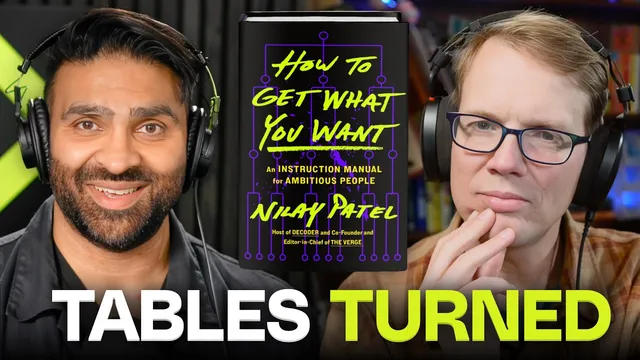
Decoder, hosted by Nilay Patel, with Mikie Sherrill.
Transcribed by machine (Whisper) from the episode’s audio, so a word may be off here and there.
Hello and welcome to Decoder. I'm Eli Patel, Editor-in-Chief of The Verge, and Decoder is my show about big ideas and other problems. Today I'm talking with New Jersey Governor Mikey Sherrill, who's been in office for just a little under a year. And you're going to hear her say her election was a preview of the huge Democratic victories in these recent midterms. She also ran on the dual themes of affordability and accountability. I really wanted to ask the governor, how exactly corruption and accountability became such an animating issue for voters. We also talked about what might be the real story for the next two years, a newly set of empowered democratic states. With Trump concentrating power in the executive branch, governors like Cheryl are starting to exercise their own power in ways that haven't been tested in a long time.
This runs right into tech policy and the anti-AI backlash, as states around the country try to address topics like child safety on social platforms and big tech overreach in lieu of any form of meaningful federal regulation. That's how politicians like Governor Sherrill have found themselves at the forefront of the data center fight, online privacy, and age verification, all topics you'll hear us dive into in this conversation. We also talked about the meta settlement, why Governor Sherrill expects more big tech litigation, and what happens to privacy in the era of flock and AI-enabled cameras. She had a lot of questions about that last one, and honestly, so do I. I think privacy is a question we're all going to be debating for quite a while now. Before we get going, do me a favor and subscribe to Decoder on YouTube, where we put out new episodes every Monday and Thursday.
Okay, New Jersey Governor Mikey Sherrill. Here we go. Governor Mikey Sherrill, you're the governor of New Jersey. Welcome to Decoder. Well, thanks so much for having me. I really appreciate it. Yeah, I'm excited to talk to you. It's after the midterms. There's a huge blue wave. You're a Democrat. I noticed. Yeah. I noticed that you were saying New Jersey is like the bellwether. Like you paved the way. This is like a big quote. Tell me about that and tell me how you're feeling about the midterms. Well, I'll answer the easy question first. I feel great about the midterms. I feel absolutely fantastic about the midterms. And yeah, I was thinking about it because New Jersey has those off year elections. So there are very few statewide races, really only two in that cycle. It's New Jersey and Virginia. So right after Trump won, we started our campaign. And by right after, I mean, he won in November of 24 and we started our campaign in November of 24. And so what's so interesting about New Jersey is even for a governor of this state, it's still so retail. I'm, you know, I don't think a lot of other big states do as much retail, meaning I'm getting in front of thousands and thousands of people,
Read the whole transcript
sometimes a day at small. business stops, at diners, in their community. We have so many municipalities. So I am able to go to gatherings of people up and down my state. And that means that we always have a real pulse on what's going on very quickly. And after 24, we had to get the vibe, right? Because it was different. People were furious. They wanted movement. They wanted change. And then suddenly you have Elon Musk with a chainsaw. People are scared. They don't like what's happening and they want a leader who's going to address it. And I think what we did in that time, because we heard from everyone, is really centered on what the race was about. And it was about affordability. And it was about accountability. I know now that seems obvious. Yeah, it's about affordability. Everyone knows that. I don't think it was obvious in 24 what it was all about, what was driving people. And we were able in New Jersey to figure that out and suss that out. And And I think because the campaign was so incredibly successful and we had such a huge win at the end of the day that people then thought, oh, yeah, that's exactly the path.
We're all going to run on affordability and accountability. And that's powerful in the Democratic Party, because I think we were we're at, I think, the center of our power when we're fighting for working families. And that's where we are right now. And I think it's going to it bodes really well for the future. One of the really surprising aspects of this last election cycle was corruption leading the polls in several places. You just don't often see people on CNBC being like, our poll says corruption is the number one issue in America. And that was the CNBC poll. It was, I think, number two in the Guardian poll.
I feel like I can connect corruption to all the tech CEOs are at the White House all the time to data centers. Is that a real connection or is that just because I happen to live in the tech bubble? So as somebody who has worked with pulling good, bad and everything in between, I would say, and not to sound like a broken record, and we were talking about and that corruption piece was part of the accountability, you know, the affordability, accountability. And I was hearing about that anger at corruption on the trail, even from very small, modest businesses, tying it to Trump pocketing billions of dollars as their costs are going up.
I think you're exactly right. People are very upset at the tech billionaires and when they're hanging out at the White House, especially kind of those flip-floppers. Oh, they're all in on liberal values, and then they're all in on Trump values. It's just to make a buck, right? The reason corruption popped so much is people, it's not just corruption, it's the corruption that's costing them money. It's Trump going to this Iranian war that he can't explain and somehow making billions of dollars, right? It's Trump trying to allow Russian diesel here as everyone else is paying higher and higher gas prices and everyone knows that Russia's funding Iran.
And oh, by the way, the oligarchs are funding the wedding of Trump's kid, right? Like just so much corruption. And it's tied, I think, specifically to people's ideas of their pocketbook and what's making this go up. And everyone, I think, thinks it's because partly Trump's on the take here.
“I wouldn't have been able to tell people exactly what happened and why it happened and what we were doing about it.”
“The performative nature for some people is I think what gets them in trouble.”
The reason I ask is I'm really curious about that connection between policy and results and authenticity. I think with Mayor Mamdani, you can see that he's trying always to connect the policy to the result. And he's obviously, like you said, very gifted at it. I will also say I think that Rob Sand victory video where he recreated the Fleetwood Mac meme with the cranberry juice, like an all-time piece of political communication. I'm not sure what it communicated other than it ruled, but like there it is.
Sometimes you just love it like the – what was the one from the Mississippi Center? Choose another protein. I thought that was like so good. But there's a vernacular there, right? It's a video vernacular. You know, like in the history of politics, like JFK is the television president. There's a vernacular with social video that came out in this election. And I'm really glad you brought up the sort of toxic energy of the Trump bros because they feel like an ex. Like they're Twitter people and they they do barbs on Twitter. And you're feeling like the newer ones are on. What do you say? Instagram?
Yeah, like on Instagram. It's like their video, like they are natively video in a very particular way. And that feels that I mean, ex just feels toxic. There's something there. Especially once Elon took it over, right? Actually, here's my hottest take. I'm curious if you agree with this.
“There's this fake energy sometimes on social media that people think is where everyone is at.”
anti-federalism, right? Like he tried to centralize a lot of power in the federal government.
And, you know, the first AI bill they passed was like a 10-year moratorium on any state-level AI policy. Like there was a lot of, we're going to take the power at the federal level. We're going to, I don't know, we're going to bribe the states in various ways or punish the states if they don't do what we say. Now you've got a lot of democratic power across the whole government, right? And a bunch of state houses in the federal government. Do you think that's going to swing back? Do you I think we're going to see more state-level policy. Do you think we'll see more unification between what's happening in all the Democratic states and in Congress, or do you think we'll see more experimentation?
“So what we did was we put every port and every business on notice in New Jersey that it was illegal.”
“So that is why the chief operating officer, she sort of brings everyone on mission and brings the cabinet together”
would pick here. And you don't feel like they're leaving a lot out or haven't looked at it or haven't researched it well. I want to put that all into practice. I want to start with data centers. I really want to talk about the social media bills you have passed in the meta lawsuit you mentioned, because the trade-offs there are as difficult as they get. But let's start with
“I don't think data centers have shown a model where communities are confident that if they build that in their community, that they are not going to be harmed.”
the Senate passed, what, 91 people voted in favor of it in the Senate. It was very popular, obviously killed in the House when they dumped a bunch of money on Steve Scalise.
So I think what you're seeing, these pieces of the Kids Online Safety Act and a lot of what we're doing, I think you'll start to see a lot of coalescing around it. And, and that's, you know, New Jersey just set up, um, we set up the first research center in the nation because you know, there's just, there's not a lot of good information for parents or teachers around what to do. And there's all this, I would call it BS around like, oh, the social media companies, oh, we've given parental controls. It would be a full-time job if I wanted to keep up with the parental controls for my kids. We do put them on. We do, you know, you're constantly, can I have more time? Can I have less? Oh, we're in a car ride. I'll give you more. Oh, I forgot to take it off. Now you've been online for eight hours. Like, you know, it's just, it's not good. It's really, really bad. This should not be dumped on parents when big tech has all the power here.
And I hear sometimes, you know, about concerns. Well, why should we, you know, have to figure out who's, they know exactly who's online. They know exactly who old you are. They can always figure it out when they want to and they want to sell you something. But somehow then when we're asking them to say, hey, let's have age-appropriate design code, let's not get compulsory or addictive behavior. And we're seeing that in children. I mean, the average teen spends 35 hours a week online. That's not healthy. That is not mentally healthy. That is not good for society. That's not good for our kids. That's a...
full-time job. They're not connecting with other people. So, I mean, you know, they can figure it out when they want to keep your eyes online and how, you know, what's going to do that, but they can't figure it out when we want to make sure we're protecting our kids. That just doesn't track. I'm glad you brought up this trade-off. So many of your peers that have shown up on the show have basically offered me the formulation of, we failed to regulate social media, we will not fail to regulate AI. Like, that is the dynamic I've heard from them. we're just giving up on social media? Well, I would say we got to social media regulation 10 years later. We didn't do it through acts of Congress. We didn't pass a federal privacy bill. These things don't exist. We got there through major litigation, which your state has participated in, and a bunch of state-level laws that recapitulate parts of the Kids Online Safety Act. And whenever I hear this formulation, the thing that I think is, well, it's way easier to regulate AI because they want to build huge buildings. And if there's one thing Americans can do, it's stop you from building huge buildings. Like, we're good at that. We're great at that. Maybe that's not the right tool, but boy, are we good at swinging that hammer.
Everything about social media is speech, right? Everything about social media affects the First Amendment in some big and meaningful way. And we've never, like, figured out how to have that conversation directly. We tend to have conversations about Section 230. Like, we find other things that you can knock around so you don't have to talk about. Well, ultimately, we are restricting how teens can speak online, right? And we think that's for their benefit and we should make that argument, but it is a speech restriction. We're actually not going at it from a speech restriction specifically, partly because we've seen this in the courts now.
Do I think that young children should be seeing hardcore porn and do I think we should be able to restrict that? Yes. However, given some of what we've seen in the court cases, we are going after addictive and compulsory behavior. So all of the algorithms that really are designed to create this addictive, compulsory behavior in children, that's what we have written the laws to address. And I think that will be very strong and resilient, and I think that will help address some of the First Amendment concerns that the courts are having. Yeah, and that's the 10 years of figuring it out. We essentially across the country have landed on product liability and not content moderation, right?
The product is designed to be harmful. We're not even going to talk about the content because then you will run into the First Amendment. There are some, I think, complications of that, right? If you want to do age verification, right, and you want to make sure that the kids aren't using these services when they shouldn't be, which is part of the meta settlement, you've got to check my age too, right? You have to invade my privacy in some way. And the technical solution to that does not solve, like, I would like to be anonymous on one. Like, I have to tell Meta or the government I'm of age and I have to produce some documentation of that.
Are you concerned about that tradeoff that as we try to protect kids by making sure they're kids, we're going to infringe on the rights of adults to be anonymous online? Do you really think you're anonymous online? Like, I guess I don't believe that you're anonymous online. Sure. Sure. So we're pretending, we have this almost pretense that you can be anonymous online and that they don't know your age or that, I mean, they are tracking everything about you at all times. You just by virtue of being online, give up this privacy. I guess I don't quite believe that you can be anonymous online. I think that it would be very hard for them not to know everything about you in your behavior unless you're, gosh, you would have to be very curated in your online experience in a way most people aren't. But to that extent, I do worry about privacy concerns with online content because the federal government has come after a lot of our data. For example, our voter rolls, which I've refused to turn over, and a lot of privacy data.
also seen them weaponize different personal data that they hold, including in my election against me. So I do worry about all this. And, you know, I think some people would suggest that I'm acting like people did about TV back in the day, you know, that, that, oh, everybody acted like TV was going to be the disintegration of society. I think that there is always some adjustment period with new technologies. The addictive nature, I do think the addictive nature of these algorithms has created a huge societal problem for children and a huge mental health problem. And I do think we have to keep iterating and finding ways to address that. If there are privacy concerns, then we're going to have to keep figuring out how to best address those and keep people's privacy data as safe as possible. I actually don't think that's a problem for this space. I think the problem is much larger than that. How do you engage online and protect your privacy and who gets to hold that privacy data. And that's very unclear to me. I don't think right now anybody's privacy is assured online. In fact, I would say quite the opposite.
Operating from that would lead you to one set of conclusions about the legislation. Saying we should fix privacy online might lead you in another direction. And I'm not sure that the big platforms want to go in that direction, right? Like, I'm not sure they want to fix the issue of privacy. I'll come back to that. One of the things that's really striking here is New Jersey is part of the big Meta settlement. I think the state's going to get $525 million out of that settlement. The rest of the money is unlocked if TikTok and YouTube agree to the same terms as Meta. And Mark Zuckerberg is very proud of this arrangement.
But Neil Mohan, the CEO of YouTube, has said YouTube is not at all interested in this. Are you going to put pressure on YouTube to agree to the same terms as Meta? Or are you going to have to litigate against them too? I assume we'll have to litigate. We've just not seen anybody move in this space willingly or, you know, kind of raise their hand. And I think they've learned their lesson. I think when you've seen people in the social media space and you saw Facebook years ago, you know, try to move in a way that maybe made better algorithms. They just immediately lose market share to other companies, which is why I say federal government or any government, you know, and state government is so important in protecting people from the downside risks.
The reason Dario Amodei has put out all of these prescriptions for regulation and yet hasn't unilaterally adopted them is likely because he feels that if he did, his market share would go down and nothing would change and everybody else would just move into that vacuum. And so that's why you need government to regulate this, because otherwise, just being a good Samaritan, a good actor in this space, it doesn't change things and it actually harms you individually as a company. to support the show i'm really curious about this dynamic uh and i'm going to pick on mark zuckerberg because i love picking on mark zuckerberg so he would tell you that there should be no AI regulation. He said it out loud. And the reason is because the market will prioritize safety, right? If you have an AI lab and you're going to kill everyone, people aren't going to buy your product. This is his argument that there is a market for this. I know it's his argument.
I just don't buy it. But he does not think there's a market for social media safety, for teen safety, right? His settlement requires the government to go pressure his competitors to agree to the same terms. I've heard a lot of people say that there's not an argument for safety on social media. But you're a parent, I'm a parent. If you just sold me an Instagram that was better for kids, I would probably say you can use that one and not TikTok. Why do you think that market hasn't developed? Because everyone's asking for the government to regulate here, but it seems like this is the social media platform that's actually safe, is a marketable product. But it hasn't appeared, so I assume it's not. I assume that the money is just eyes on screens and the more marketable, you know, the safer product is not producing that. And you, you know, you have over time, I mean, you know, there was kids YouTube and I had my kid on kids YouTube, but they, they don't, they gravitate towards something else, right? It's, it's, um, and so even I think if you had that Instagram that was kid friendly and you put your kid on it, your kid would get themselves off it pretty quickly, which is why I think it's really,
I just keep coming back to feeling like it's really unfair to tell parents like, oh, well, if you're a good parent, you're going to put your kid on these, you know, we're going to get parental controls. And if you're a good parent, you'll do it. Again, I can't tell you how many hours my husband and I have spent trying to, you know, make sure parental controls are working for our kid. And then now, you know, the schools are just giving out laptops like candy and my kid just goes and gets on whatever she wants to get on at school. I mean, imagine, right? Like here I am, you know, locking down her phone and then she goes in school and could get on everything.
And I'm like, I thought you were, you know what? As the governor of New Jersey, you can't make a phone call to keep the laptop out of the school? It feels like that's a call you can make that most parents can't. Well, I've got cell phones out of school, which my- Kids aren't thanking me for it, but I just got a standing ovation from teachers at the teacher's conference.
“we've lost a lot at the court level because we just don't have the data we need.”
trial. Do you think we caved too early on the Metta case? You know, I just think we need to keep bringing more cases. I don't think the Metta settlement should be seen as the end of it. I think we should keep moving in this space to get better rules around it, especially given, as you've said that the federal, I mean, this is another way to get kind of federal regulation.
Right. It's a lot of states. And eventually the Supreme Court that could have that sort of federal standard in a way if the government's not going to act. Just operationally, who makes the call and says, we're going to settle? Is that a conference call? Do you have to press two to agree? How does that work? Generally, there is a lead state in this space that kind of leads the other states in some of the litigation. We are closely working, our attorney general's office closely works with the other states. And so there's a state that is sort of the convening authority, bringing everyone together, and then they work together to determine, yes, this is how we're going to move forward. And this is where we think this is the time to settle here, or we think we should pursue this. We think we should drop the case. They've agreed to do X, Y, and Z. So it's generally, there's a lead state that convenes everyone, and then they kind of come around to the agreement together. This was a real dynamic in the first two years of the Trump administration, right? A bunch of Democratic state attorneys general were going to do stuff because the federal government is doing nothing. Do you think that dynamic will stay now that there's a much
more Democratic Congress? Yeah, there's still so much out there with H.R. on with FEMA relief, with CMS. I mean, there's just tons out there still. We are still in court litigating. We have been attacked quite a bit by the Trump administration on things like mass detention facilities and the Gateway Tunnel Project. So we were in court very quickly there. I don't think that that will... I mean, if Trump just decides to suddenly stop, sure, but I don't think that will be the case, unfortunately. By the way, I'm very proud of myself for not doing the full hour on the Gateway Tunnel. I feel like there's, like, a great, like, 10-episode podcast series on the twists and the turns of the gateway eternal.
Oh, my goodness. I am here for you. Tell me when you are ready to do that one. It's for another time. I want to end by talking about privacy. It has come up. It has been woven through this conversation. The notion that we don't have any left is all over the tech industry for a lot of reasons. And I actually, I think one of the things that is happening in tech and culture right now is a redefinition of privacy in very specific ways. I'm wearing an Apple Watch right now. It has the beta software on it, and it just makes summaries of every conversation that I have. And Apple's point of view, it's going to make one of this conversation, I'm sure.
And Apple's point of view on this is, well, it's not a direct transcription. It is just a summary. It doesn't identify speakers. We haven't invaded anyone's privacy. There's any number of tech AI products that listen to you all day long and tell you how you feel. There's one called the Amazon Bee that's just that, that you wear, and it literally listens all day long. Flock cameras exist, and flock cameras are like a truck driven through the law that says you don't have an expectation of privacy in public. It's a big swirl, right, where it's, we're going to take even more privacy away from you.
Meta glasses exist, and you're like, people don't like them. They call them pervert glasses. And Mark Zuckerberg's entire answer is, well, phones don't have a light. And that is meant to end all conversation about the practical implications of metaglasses. How do you feel about this? Like, there are flat cameras in New Jersey. People really don't like feeling surveilled. And at the same time, the tech industry is rushing forward to collect even more data, to feed even more AI in more and more intrusive ways. Where should we land? I think about this all the time, and I wish I had a really great answer for you.
I find it incredibly scary to think that every detail will be surveilled that, you know, what was it, Gattaca or Galactica? When like a piece of hair that you dropped, they would do your, you know, you could do your genetic code and then they would determine, you know, if you were in the right space because, you know, you were determined at birth to have to be in certain places or something. That's Gattaca. The tech industry loves learning the wrong lesson from movies like this. it's their favorite oh no um but i think it's this this um horrible impending sense that we are going to be so so much is going to be known about us that we're it's going to take away our ability to thrive and live our lives like for example you almost fear a world where somehow you know from a strand of hair they can determine when you're going to die and of what and so you have to do X because you're going to be dead by the time you're 70. You know what I'm saying? It's just very scary, all of the data and information. And I think what's most scary to me is I don't know where it's going and who has access to it. I was speaking to a gentleman who was telling me about AI and he said I had to give up tons of privacy, but it's a godsend. It sorts
everything out for me. It does my calendar. It reminds me to call people. It keeps my to-do list, it listens. He said, it is so awesome, but I had to give up a lot of privacy. And I guess my concern wouldn't be that if I had some system that could do that, my concern is, where is all this being held? And who's going to do something with it? And when are they going to come after me? Because they're like, I heard you did X, Y, and Z, or I heard you- But this is the backlash to Flock. Like you're describing in very specific ways the way people feel about flot cameras.
“So a couple of years ago, we had a huge outbreak in car thefts.”
surveil each other and put it all on Facebook. And then AI can search Facebook and find us all. Like, this exists today. And what I'm getting at very specifically is the idea that you have no expectation of privacy in public might be changing culturally faster than it's changing politically or legislatively. And I'm curious if you see that balance changing state by state or at the federal level. Like, this is the dynamic we're in. We're going to have little laboratories of democracy. It feels like flat cameras are one little tick against I have no expectation of privacy.
Actually, I want these gone. I don't even want a license plate reader in my neighborhood because I want to feel that much more less surveilled. And you could see a world where we sort of, as we understand how AI is impacting all these abilities, that we start to create certain spaces where you do have this expectation of privacy and say, look, you cannot have cameras in public parks or you can't have cameras in blah, blah, blah. It's a really difficult balance, I think, when I think about it as a woman, just about certain areas, like we're just dealing with some of the college campus, how to keep people safe there. And to think about, as I think about removing cameras from public spaces, and then the concerns we have about some of the attacks on women on college campuses, again, I just keep getting to those tension points. And I think these are just things that we have to come together as a side and say, we're willing to accept this amount of risk, or we're not, or we're going to have a cop on the beat to protect people, and we're not going to have cameras, or we are in certain dark alleys. And that is the fear for me, though, is what you keep narrowing in on is almost a little bit less about some of that, because all of that felt a little settled. It felt a little
like, okay, we're going to have some cameras out on some of these college campuses and keep people safe. But adding that AI element takes it to a whole new, scarier level. And that's why I think you're saying we're going to have to reopen these conversations. Well, you made a face when I said my Apple Watch was recording. I know. I can't even have an Apple Watch because I can't be looking at it every five minutes. So I don't do that. Do you think that Siri feature in the Apple Watch is appropriate where it makes summaries of all your conversations? Again, where's it going? Where are all these summaries going and who's looking at them and why and what are they doing with it? And are they uploading it into something? Is it anonymized? Is it not? Can they track it back to you? Who can hack into it? I mean, these are all the questions I have when I think about that. And I, you know, that's why I'm not wearing an Apple watch. Fair enough. Apple has a lot of technical answers to your questions. I'm curious if they will ever come up with the social answers.
I got one more question for you. It is a total wild card, but I'm dying to ask you. These are the ones that always get me. Okay, go. New Jersey is in the National Popular Vote Interstate Compact, which if enough states sign on to, the presidency will be determined by the National Popular Vote winner. There are now enough new democratic states with democratic legislatures and democratic governors that you could get it over the finish line. Are you going to push for that? You know, I'm really excited about that. I hate the electoral college. I got to tell you, I love this idea. So, and I was seeing some of the same reporting.
it sounds like you were maybe looking into. So it hadn't, you know, this is something I, you know, in my mind one day I was going to take on the electoral college. Today might be the day. So I got to, I got to get hot on this one and see where everybody's at. Cause I'd love to, I'd love to see a popular vote. I'm just, I'm rooting for it only because it would just be like a historic thing to happen in our lifetimes. But it does see if all of the headlines I saw after the election, I was like, oh, that is, that is the most unlikely. You really cannot be in the most densely populated state in the nation and not want to get rid of the electoral college. That just doesn't make any sense. I mean, just really, if you just care about your vote and the power of your vote. I think it's a bunch of, I'm from the Midwest. There's a bunch of Midwestern states that could sign on to it. We'll do our best. If that happens, we'll have you back. Actually, we should have you back to talk about privacy and all the things to come. Thank you so much, Governor Sherrill. This was great. I really appreciate it. Thanks for having me i'd like to thank governor cheryl for joining me and thank you for listening to this
episode of decoder to get new episodes every monday and thursday subscribe to our youtube channel at decoder pod and find us on tiktok and instagram under at decoder pod for more fun stuff we put out almost every day you enjoy this episode please send a link to it to someone you think you might like it it really helps us grow the show you can also subscribe wherever you get your