Free with a sign-in.
The best 24 min of 70
The man who fought Napster is now fighting AI | Decoder
Mitch Glazier argues that AI policy should protect creators’ rights while letting fans decide what music they value.
 Decoder · Nilay Patel
- Mitch Glazier is chairman and CEO of the Recording Industry Association of America.
The best minutes
- 13:44Fans may decide whether AI music can earn their loyaltyPro pick 8 min
- 39:56YouTube licensed music even after winning in court8 min
- 31:59Deepfake rules need safeguards for speech and likeness8 min
Every moment plays free. PRO marks a write-up that's in Pro.
Also worth watching
- 54:44Spotify's AI labels need to reach the track level5 min
- 1:00:02AI music labels depend on distributors as well as platforms4 min
- 21:59The RIAA runs its work with a 46-person staff5 min
- 1:04:19Chart eligibility may hinge on human creative control4 min
- 26:52Glazier tests gut decisions against trusted dissent3 min
Skip the opening sponsor reads and show introduction, the two mid-episode sponsor breaks, and the closing credits and ads.
Full analysis · 7 min read
Real Alpha · Nov 21
Mitch Glazier says 90% of Spotify recordings get about 10% of revenue
- Glazier says 90% of Spotify recordings get about 10% of revenue.
- He expects fans to resist fully generated music, but offers no churn data or polling detail.
- Labels matter only if distributors and platforms carry them into listening.
Free with an account
Read the rest of the analysis
6 sections, the 2 other voices it tests Glazier against, and what it means for you. Every episode we cut gets one.
Check your inbox
We sent a link to your address. Click it to finish signing up. Not there in a minute? Look in spam.
or
Signed up before? The same buttons sign you in. The episode, its moments and the transcript stay free.
Copyright should protect conditions for future music
Glazier's premise is that copyright should create future opportunities for art, not merely defend an existing catalog. He ties that right to incentives, saying artists need a chance to earn a living and keep making work.
That makes the question bigger than whether an AI track sounds good. If generated music competes beside human work for the same listener and subscription, cheaper supply can weaken incentives to create. Still, a right to charge does not settle who collects, how much, or whether smaller acts benefit.
Max Richter made a similar livelihood warning on Big Take on November 8. He said AI music could make it harder for new musicians to earn a living, and called for source royalties. Glazier offers a rights framework, not proof that licensing alone sustains careers.
Glazier speaks as RIAA chairman and CEO, representing major labels while often building broader coalitions. That is an institutional interest, not a reason to dismiss his account. His case still needs tests of who gets paid and whether deals preserve future work.

Our read
The episode makes a strong case for protecting the conditions that allow new work to be made. It does not show which licensing models sustain artists across different career stages.
Fans may reward human identity, but evidence remains thin
His route from rights to revenue runs through fan preference. Glazier says research and polling show listeners value the human artist, persona, and bond, not just audio. He expects fully generated songs to remain suspect, while assistive AI may become as accepted as synthesizers or Auto-Tune.
For example, Glazier distinguishes a prompt-generated song from an artist using AI as a tool. That distinction gives product teams a reason to separate disclosure about assistance from disclosure about fully generated work. A single AI label could blur two very different kinds of involvement.
But the episode supplies no polling sample, question wording, or effect size. Stated preference therefore cannot stand in for subscription behavior. Nilay Patel presses the gap by noting Spotify has not suffered an obvious listener exodus. Glazier points to likely subscriber pressure and future competition, not demonstrated churn from AI labels.
Max Richter said on Big Take on November 6 that humanity had not run out of musical ideas. That challenges novelty as a reason for generated supply, but does not establish fan demand. A team can test this with visible labels and actual listening behavior, not attitudes alone.
“it's always the fans, in my view”
Our read
Glazier's distinction between assistive and fully generated music is useful, but his prediction about fan loyalty remains untested here. Treat stated preference as a hypothesis, not evidence of changed behavior.
The No Fakes proposal adds safeguards, not certainty
The proposed No Fakes Act addresses a different asset from song copyright, a person's voice or likeness. Glazier says federal law provides no basic right to one's voice or likeness. Most state publicity laws focus on advertising or endorsements.
The framework uses notices and counter-notices, with safeguards on each side. Glazier described a temporary restraining order and quick judge review for disputes involving parody, news, or speech. He also discussed whether false notices need penalties, leaving that an open design question.
That is more structured than leaving constitutional calls to a platform. But it still builds takedown power around a new property right. Glazier said he did not know whether the balance was perfect.
The need for safeguards is tangible, and so is the risk of mistaken removal. The discussion covers harassment deepfakes alongside political parody, but does not resolve who bears the cost of a bad takedown. It gives procedural ideas, not evidence about error rates in practice.
Our read
The proposal recognizes that a quick remedy can also suppress lawful expression. Its safeguards matter as much as the new right, and the episode leaves their real-world performance unknown.
YouTube shows licenses can matter beyond court wins
Glazier's business precedent is YouTube. He says YouTube developed licensing and Content ID after legal victories because music helps deliver what users want.
That is a commercial argument, not a court ruling on AI training. Glazier says the RIAA's suit against Suno tests whether music training qualifies as fair use. He says generated songs may compete for the same subscription and listener.
Nilay Patel describes Google's split posture, licensing music on YouTube while treating search and model training as fair use. Glazier distinguishes search as a route toward original works, while generated tracks can substitute for them. The distinction turns on substitution, not simply whether a system copied material.
That is the case the RIAA is making. It represents label interests and says permission or compensation should precede marketplace use. The episode does not settle how courts will apply fair use to all models. Licensing is therefore both a rights question and a distribution strategy.
“you can win the case, but lose the business.”
Our read
YouTube is evidence that licensing can support a service even when a company has legal defenses. It does not prove that every AI training use requires a license, or that every licensing model will work for creators.
AI labels need distributors as well as platforms
The episode's clearest operating number is a distribution skew, not a causal result. Glazier says 90% of recordings on Spotify get like 10% of its revenue. He says 10% of its content gets 90%. That describes concentration already on Spotify. It does not show AI music caused the split or pushed subscribers away.
Glazier says labels buried in credits are too hard to see, and track-level labels matter. For instance, a service can disclose AI in credits while hiding that information when listeners choose a track. A label at the moment of choice can inform users, but only if the classification is reliable.
The implementation problem runs upstream. DIY releases pass through distributors such as DistroKid and TuneCore before reaching Apple Music or Spotify. Platform rules cannot label uploads that arrive without useful metadata. Glazier says detection works well for fully generated tracks, but not for degrees of AI use.
Alex Stamos, Cognition's CISO, said on Decoder on November 7 that fake detection remains probabilistic. He said camera-to-platform provenance can cryptographically verify what is real. His example concerns media provenance, not music detection.
Glazier expects subscriber retention, competition, and regulation to push disclosure. But Patel notes Spotify has not yet seen an obvious listener exodus over AI music. The episode does not show which pressure would move Spotify first.
Our read
The 90/10 figure describes a crowded catalog, not proof that AI caused a business problem. Track-level labels depend on an unbroken data path, and detection appears most useful for fully generated music.
Human control may shape chart eligibility, but remains unsettled
Glazier expects creator control to shape eligibility, but the boundary remains open. He says some international charts require releases to be substantially human, while Billboard labels AI work. RIAA certifications have not yet faced the issue.
The current certification measure still treats 1,500 streams as one unit, replacing a CD sale. But a familiar counting rule does not answer whether a human or machine created the work. Counting exposure and judging authorship are separate tasks.
Glazier expects the meaning of substantially human to change, perhaps within three years. He says the core should be creator control, while songwriting, production, and recording may involve AI differently.
For builders and operators, that uncertainty favors recording how a track was made, not just assigning a binary label. The episode offers no settled test for how much human input is enough. Eligibility rules may need categories that distinguish assistance from full generation.
A label tells listeners what they hear. Eligibility rules determine what counts. The same definition of human control may not fit both uses.
Our read
Glazier's forecast is that creator control will matter, not that a fixed standard already exists. Any chart, certification, or product rule will need to explain how it handles different kinds of assistance.
What it means for you
- Map the upload chain. Trace a DIY release from generation through distributor to platform. Check whether credits, tags, or provenance survive each handoff.
- Test label placement. Run a track-level disclosure test with listeners. Measure recognition, skips, saves, and subscription intent separately instead of treating survey preference as churn.
- Separate AI categories. Track fully generated output separately from assisted work. Glazier says detection is more reliable for the former, not degrees of AI use.
- Define human control. Write a working rule for awards or certifications. List examples teams consider assistance, authorship, and machine generation, then track disputes.
What to watch
- Whether Spotify moves AI disclosure from credits to track-level surfaces.
- Whether distributors adopt detection and tags for fully generated DIY uploads.
- Whether the proposed No Fakes Act advances with notice, counter-notice, and judge review.
Send this to product, legal, and music operations leads.
Watch the minute where Glazier gives Spotify's approximate 90/10 revenue split
Written by Real Alpha from the episode's transcript and the other moments it links, then checked against the transcript. Quotes are the speaker's exact words.
Minute by minute
A Pro write-up, open to you here. Try Pro free for 7 days
A Pro write-up. The minute by minute is in Real Alpha Pro; the episode, its moments and the transcript stay free.
Read it with Pro, 7 days free- 3:39Napster divided fans and labels
Glazier recalls being sent to college campuses to argue against peer-to-peer sharing, where students wore anti-RIAA shirts and he expected to be booed. He says some of those conversations were useful, but Napster put the industry and fans on opposing sides.
- 7:21AI has aligned artists and fans
Glazier says the AI disruption has brought artists, labels and fans into closer alignment than during Napster. He sees preserving human art and the artist-fan connection as the shared aim, even as business models change.
- 13:44Copyright should sustain human art
Glazier says copyright exists to give creators an incentive to make a living and produce more art. He warns that machine-made music could weaken the incentive for human artists if AI companies profit from existing work while reducing opportunities for future work.
- 18:25Fans will shape AI music demand
Glazier says services depend on subscribers, and fans value an artist’s persona and connection as well as the songs. He distinguishes fully generated music from assistive AI, which he thinks could become accepted like synthesizers or Auto-Tune, and says labeling helps fans respond.
- 21:40The RIAA does more than sue
Glazier describes the RIAA as a standards-setting body, industry spokesperson, market-data publisher, certification program and content-protection operation, as well as a lobbying and litigation group. He says its 46 staff serve a U.S. recorded-music business worth $11 billion wholesale last year. He also says he changes his initial view about 40% of the time after hearing others’ perspectives.
- 30:26Deepfakes expose a likeness-rights gap
Glazier says U.S. law provides no general federal right to one’s voice or likeness, and that state publicity rights usually cover advertising or endorsements. He says the RIAA worked with YouTube on a simple process for people to report deepfakes using their face or voice.
- 35:39The No Fakes Act adds safeguards
Glazier says the bill was developed with First Amendment scholars and groups including YouTube, OpenAI and Public Knowledge. He describes safeguards such as penalties for false notices, counter-notices and quick judicial review when a use may be parody, news or otherwise protected speech.
- 39:56Google and YouTube took different paths
Glazier says YouTube learned that winning an intellectual-property dispute would not guarantee a service fans want, and built Content ID and music partnerships despite winning in court. He contrasts that with Google’s search and book-index cases, where the company argued that indexing could lead users to works rather than substitute for them.
- 43:27Suno outputs may substitute for human music
Glazier says the RIAA’s Suno suit argues that training on music without permission or compensation is not fair use, particularly when generated music competes beside human music and may substitute for it in the market. He says the case aims to establish that companies need consent or compensation to reproduce music for training.
- 49:29Licensing can limit AI music supply
Glazier says streaming gives music catalogs lasting value and gives artists the opportunity to sell them to investors. He says licensing agreements could also limit downloads or use a walled garden to keep AI-generated tracks from flooding streaming services, though he says he does not know the details of competitors’ deals.
- 54:44Spotify faces pressure to label AI
Glazier says Spotify’s AI disclosures in credits are too easy to miss and argues that labels should appear at track level. He says Spotify must also consider that 90% of its recordings account for 10% of revenue, and could face a trust problem if recommendations present AI tracks as human-made.
- 59:50AI labels depend on distributors
Glazier says labeling needs distributors as well as platforms, since many fully generated tracks reach streaming services through DIY distributors such as DistroKid and TuneCore. He says current detection can identify fully generated music with low false positives, but cannot yet reliably sort finer degrees of AI assistance.
- 1:04:19Platinum rules may need a human test
Glazier says the RIAA still counts 1,500 streams as one unit. He says some chart systems exclude music unless it is substantially human, and expects the RIAA to require human streams for certification. He adds that what counts as substantially human may change as artists use AI.
- 1:08:18Music’s disruptions offer lessons
Glazier says there are no easy answers and that the industry needs a path that lets music change and grow. He argues that lessons from music’s repeated shifts can apply to other industries.
Published Nov 9, 2026.
Transcript · 55 min read
Decoder, hosted by Nilay Patel, with Mitch Glazier.
Transcribed by machine (Whisper) from the episode’s audio, so a word may be off here and there.
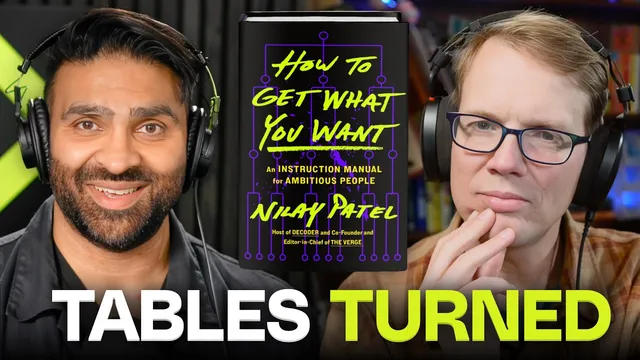
Hello and welcome to Decoder. I'm Neil I. Patel, Editor-in-Chief of The Verge, and Decoder is my show about big ideas and other problems. Today, I'm talking with Mitch Glazier, the CEO and chairman of the Recording Industry Association of America, or the RAAA. This conversation was a real full circle moment for me. I was in college when Napster hit and the RAAA became everyone's favorite villain because they were suing kids for downloading music. That is when I decided to go be a copyright lawyer, which set the rest of my career in motion. And Mitch was in the background as a young lawyer at the RAAA working on those cases on the other side.
So part of me was very deeply, very genuinely surprised to discover just how much fun I had talking to Mitch. That's because here, in 2026, Mitch, the RAAA, the record labels, the artists, and ordinary people are all pretty unhappy with big AI companies in the same way, for training on everyone's work without permission and flooding our feeds with slop. Everyone's mad about it. And since the RAAA is both the group that lobbies for changes to the law and also the group that files lawsuits about things that affect record labels and distributors, Mitch is a pretty busy guy these days. We got deep into the legal complexity of things like AI deepfakes, how bending them outright might affect other kinds of expression, and how the AI detection in labeling systems that we all seem to want might actually work in practice, especially if big platforms like Spotify and YouTube don't get on board.
I just want to get right into it. This conversation is a real ride through how AI and the law and art and commerce might all intersect. I think you're going to be able to tell that Mitch and I had a lot of fun talking about it. Before we get going, do me a favor and subscribe to Decoder on YouTube, where we put out new episodes every Monday and Thursday. Okay, RIAA CEO Mitch Glazier. Here we go. Mitch Glazier, you're the chairman and CEO of the Recording Industry Association of America, which people know as the RIAA. Welcome to Decoder. Thank you. Thank you, Nita. I'm excited to be here. I am very excited to talk to you. I have to tell you, this is a very full circle moment for me.
Read the whole transcript
My entire career got onto its track when I was in college and Napster came out and my university banned Napster from the school network. And I decided right then I was going to go be a copyright lawyer. And then I was a copyright lawyer and I defended kids who got sued for using Kazaa. I was not good at that job. It was not fulfilling. And I became a journalist because I could write about copyright law on the iPod. So talking to you is about as full circle as it gets for me. Thank you for being on the show. Good. Well, then I'm no longer sorry for the policies that we forced your school to implement because it made you a copyright lawyer. So the world benefited at the end of the day. So it had some silver linings to it. When I first started at the RAAA, Napster was obviously the big issue. Nobody had seen anything like it before.
technological change had really been CDs. I mean, it had been a long time and a much more gradual change and much less abrupt. So they decided it'd be a good idea since I was like, you know, youngish at the time to make me go to college campuses and go to like, you know, auditoriums and convince these college students that they shouldn't use peer-to-peer technology. Wait, wait, wait. I imagine when you said that, that it was more like a 21 Jump Street situation. that you were like posing in the dining room and be like, we should pay for, you were giving like, you were like giving presentations. Yes, it was horrible. So, um, you know, everybody had like these anti RIAA t-shirts on. And, um, I remember one time I, they, I followed Chuck D who was like on there promoting peer to peer and I didn't know what to do. And I knew I was going to get booed.
So I took a garbage bag and I just like put it over my head and I walked out onto the stage with a garbage bag on me, you know, thinking they're going to throw tomatoes at me. I might as well just sort of make light of it. But I have to say, even though it was a very tough time, some of the conversations that we had with students at that time were some of the best conversations I've ever had. Even now with AI, about sort of the change in technologies, things being fan driven, you know, the disconnect that can occur sometimes between, you know, an industry and the people who, you know, are out there driving change in the industry.
So it was actually a good experience at the end, but it certainly did not feel like it at the time. It didn't feel like it at the time for me. Thank you for saying the butterfly effect is real. But it was heated. It was hot. And one of the things that has really occurred to me is I get older and AI exists and I see the platforms taking so much of the economic value out of art, particularly in the age of AI, is that my opinions about intellectual property enforcement have changed. It feels like I'm just giving up all of the ideals that I had when I was a kid about the internet, that open access to information was good, that there was that meme ages ago, everything is a remix, and that we should all build on each other's art as much as we want because that will push the culture forward.
I am still very idealistic about that. And I definitely did not think the recording industry suing kids was the appropriate way to protect the intellectual property of artists back then. But here we are in the age of AI, and it feels like no one is making enough money for making art except the world's biggest artists, who are all also tech investors now in some way, and the tech platforms who collect fractions of pennies from everything and are doing data center build-outs or whatever it is. And that just existential dynamic for me is where I wanted to start. I want to talk about how the RAAA works and all the decoder questions. But I was just thinking about what I really wanted to ask you. And it comes down to that is we have to protect the work, but there's some balance in overprotecting the work that makes it harder for people to make new things.
and my own journey with the RIAA is a reconsideration of that as more and more things get taken. Where have you landed? You've been there for 20 years. How are you feeling about that balance? The word balance is the right one and it's not an easy one. It's one of those things where over time, a barrier pops up here and then you kind of pivot and then a barrier pops up here and you kind of pivot and you sort of land in a zone that feels right because the responses that you're getting both from the creative community and from fans they do start to line up and I think in AI they are lining up much more closely than they did during, you know, previous years of disruption.
Some of it has been because of the democratization of the industry, where the gatekeeping roles have changed, where the partnerships between, you know, those who partner and invest with artists and the artists themselves have changed. In a world where artists and label services, you know, like a la carte services are a bigger part of revenue, in an area where catalog and forever exploitation and new investors in the industry have come in, the landscape is much wider now. And it's not like there are just two types of big actors kind of controlling or sharing in all of the money, right? Now there's like dozens of different types of folks meeting artists in different places where they are and meeting fans in different places where they are. And so it feels to me like this disruption, which is huge, and I hope we talk about it. The good news is unlike Napster, I don't feel like we are facing it at odds, which is kind of what it felt like back then. Now it feels like we're not in the same place, but we're kind of rowing in the same general direction, which is that everybody understands that art and commerce have always had tension and there's always going to have to be a balance.
But authenticity and that connection between a human being, artist, and a fan, the preservation of that seems to be paramount in everything that we're doing, whether you're investing or whether or not you're listening or whether you're performing. And to me, it's that sort of, we're not fighting in this space anymore between just a business model or an investment. We are now fighting to keep the art as human art and the connection between an artist and a fan sort of preserved and alive. And that, to me, just seems like a much larger purpose, I guess. So it feels very different to me. I, um, it feels like a good bookend like you. I started my career with Napster, but on the other side, learned a ton as a young lawyer. Um, and now on the other side, we have AI and comparing the two is so wild. I mean, the polls during Napster were like, you know, fans over here and creators kind of hiding a little bit and the company's over here. And now it's like AI's over here and we're all together on the other side. Yeah. I mean, like I was, again, I cannot emphasize this enough. I was a bad lawyer and I should not have been doing that job. I doubt that. I was not good at it. I, I really wasn't. And what I remember from that time was, you know, we, we, it was college kids
and they, you know, their universities would turn over their IP addresses and they would get their a little lawsuit. And we would tell them, we're going to go to the district court in Chicago. You're going to settle for $5,000 because that's what the RIAA is running this program at. It's $5,000 settlements to break even on the cost and to deter you. And then you're going to go work at the pizza place for a semester, pay your bill and move on. And I thought this can't be accomplishing a goal, right? Like the thing I'm doing right now is nothing. And maybe that's why I felt like I was or maybe that's why I got out of it. But what you're describing is the polls there where there was no pushback on, well, these kids just love music, right? The thing they love is just music and now they can get it and they have it. They weren't thinking about the business model of CDs, right? Because that's what maps are fundamentally disrupted. There was a scarce physical object that you could go pay $15 for. And if Metallica sold enough of those, their plane would get bigger. And everyone could kind of see that.
And I'm listening to a lot of this music and it should make you rich was nowhere close to reality. We've built those models now. We have built Spotify and Apple Music and all the subscription models. I want to talk about YouTube quite a bit, actually, where you can listen to a lot of music and some people will get rich, but a middle class of artists may just be totally hollowed out. And now the AI companies are like, and we're going to stand up a competitor where you can just ask for music and no one except us will get paid. And that is probably built on a bunch of artists that we used to make money by having a lot of attention.
That swirl to me, it's just the one that I can't decide where my ideals fit into that, right? Like as a person who has opened Suno and had a good time just making some music, I'm like, well, I understand how this is great for one kind of person with an artistic bent. I understand why this is fun as somebody who likes music. I do not understand the economics that follow from this the same way I had no idea how the economics of disrupting the CD would shake out. And I think we can, I'll give you actually one example, just to make this question even longer, we had the CEO of Cloudflare on the show. And they're trying to stand up a system where instead of websites running advertising on traffic, everyone gets paid a fraction of a cent to make content on the web. And he's like, you know, like Spotify. And I was like, dude, Spotify changed the entire music industry. Like artists have different jobs now because of that economic model. And he was like, no, I think the big ones are really happy. And you can argue with him or not argue with him. But it felt to me like the tech industry did not understand what that disruption actually did to music in that moment. And now we're standing on the precipice
of it again. So again, I just want to start there. I'm feeling this like existential tension. You described it as art and commerce, where the commerce is going to change. And so the art has
“At the end of the day, it's always the fans, in my view.”
it's funny i want to talk about all that it occurs to me that i have gotten immediately as deep into my feelings as i can with you and i forgot to ask you the very basic questions that ask everybody who comes on the show so obviously the ri double a is is well known it's it's either a hero or a villain, depending on where you are in your story, as we have both determined.
“the entire recorded music business was $11 billion wholesale last year in the United States.”
“I usually will have a gut instinct, but then I will survey people that I trust in our companies and people on my own team.”
want some, if we're trying to get to here, we better figure out a path, a realistic path to get there. Okay. So I'm very sorry for this, but it feels to me like the rest of this conversation is just going to be nightmare law school hypotheticals. This is just what we're doing now. Because that framework applies to a lot of different problems, particularly like on the other side, they make some good points too. So I opened Instagram today and I saw 9 million deep fakes of celebrities being put in the video for Popstar by Drake. Have you ever seen this video?
Yes, yes. Drake didn't do it himself. It's Justin Bieber's acting as Drake in the video. And I saw one with Lewis Hamilton today. I saw one with Donald Trump today. I saw a full Star Wars one where it's a Darth Vader and he's just been deep faked into Justin Bieber's mansion singing a Drake song. And I thought to myself, I can't even count the layers of intellectual property issue here, right? First of all, no one has the license to any of this likeness, right? Like Lewis Hamilton could probably be like, hey, that's me. I don't know under which law he gets to show up and say, hey, that's me and to whom he says it.
Is it the AI company? Is it the person who made the video? Is it Instagram? Some of the platforms have private policies like YouTube now. But even just that, where to begin? That's very connected to you saying the scarcity is in the artist, right? The scarcity is in the relationship the fan has to the artist. But that has nothing to do with the copyrights you routinely enforce, which is the recording. You can see I'm just spiraling. Like, I watched one video, eight seconds of Darth Vader doing a Drake song, and I thought, I don't even know where to begin. Is it Disney who gets to be the angriest, or is it Drake, or is it someone in the middle?
Can you help me just organize my thoughts here?
“What's the punishment if you send a false notice? Is that punishment high enough to deter false notices?”
And there is some balance there that almost certainly will track the same balance that copyright law and music has undergone over the past hundred years, right? No question.
“you can win the case, but lose the business. And music is such a driver of YouTube.”
It's fascinating. Neil, I don't know if you've read the SEC document that Anthropic just had defile in order to have their IPO. But in the risk section, it's basically like, well, it could be that all this scraping that we've been doing actually violent and all these laws. And that could, you know, if it's willful, put us in a liability, you know, deficit of X and sharehold, people who are investing as new shareholders should sort of know that information. So they kind of acknowledge up front, like this could be a big cost of doing business going forward.
And yet they're going to have a spectacular IPO, right? Despite those risks, which means that they're willing to bear them. And they're also willing to accept the cost if, and when that comes and it is secured. Actually, I have a different view on that. And it's related to the beginning of our conversation, right? You, you said, I think you gave a quote to the Los Angeles Times where you said being the RIAA is more fun now because the consumers are on your side fighting the AI giants instead of you fighting consumers. I get that. The valence of the RIAA in the culture may have changed. I'm sure we'll get some people in our comments saying it hasn't, but in general, it's changed, right? You're on the side of the artist fighting the giants. Google won all of those cases about fair use when it was a baby, right? They had slides in the office and they were a startup and no judge had ever used the internet before. And they're like, I love YouTube. And Viacom, you're posting your videos on YouTube because your people love YouTube. And you know the audience is there. And there was something very happy about the tech industry at that time. Google as a company was a hero. I think these companies are villains now.
But truly, if you look at the polling, they are not beloved. AI is not beloved, particularly with young people. The idea that AI is theft is not beloved with young people. That gives you an opportunity to actually turn the screws harder to say you maybe you shouldn't bear these risks maybe the artists should be the ones getting rich not the ai companies are you putting that into policy or are you just trying to negotiate to an outcome no we're putting into policy uh you know we're everything is an arc as you know but in the beginning of a disruption you try to put into policy the basic rights that are going to allow the creators to control their creation to charge what they want for their creation, and to develop the licensing deals that they feel they want to develop. And it's gotten to be even bigger now than in the Napster days, because back then, as you said, the transition was from CDs. So the artist only made money in those days, like during a few months after.
release, right? And then some CDs still sold for years afterwards, but a lot of them ended up in warehouses and you kind of had this small window. The streaming revolution allows, you know, exploitation, not in the negative sense, but in the positive sense, it allows it forever. That's why you have all these new investors coming into the music community because it's a little bit more like a commodity now, right? That's why Goldman Sachs is buying catalogs. That's why all of these new companies are coming in and they're buying catalogs of music because music's evergreen, right? It's water. People are going to love it forever. And as an artist, you now have an opportunity you never had in the past. It's not just to like make this chunk on wholesale cost of CDs within a certain month period. It's, hey, now that I've built up this following and I might be, people might love these songs 20 years from now, guess what? I can now sell my catalog for a large amount of money to an investor in the future.
I just want to hit pause here and say that the baby punk rocker in me is, we could do another full hour on artists now have the opportunity to sell their catalog to Goldman Sachs. It's another hour, but I know it's there. And listen, we all, we're all 20-something at some time, and then we're 50-something at another time. And it's, you know, it's the way that everybody wants to take care of their grandkids at some point. so but but this is an opportunity that they have now that they didn't have before and so i think that this disruption um i think there's more skin in the game for the actual creator than there was in the past when the revenue was just kind of more bifurcated or trifurcated and nobody on the creative side of the equation thinks that it's right that like suno will be making all the money from all of the music that has been created in the past. And that that substitutional effect is going to deprive the artist or any one of their partners. Like if the artist is in the middle in the sun and you've got all the folks around them from performing rights organizations to record companies, to publishers, to managers, to producers, to agents, et cetera, like they're all sort of partners in a piece of that larger puzzle.
And now the artist has more skin in the game than they ever had before, which is another reason why I think we're sort of rowing together a little bit longer. There are other outcomes here. I think it's Warner who's partnered with Suno. They made a model on Warner's music, so they don't run into these issues. If that proliferates, then you don't get to suit the AI music companies because they made their models with licensed music, but you'll face a supply problem on platforms like Spotify, where suddenly you can just flood the platforms with music. And your solution there, at least as I understand this conversation, is labeling, right? You're going to put labels on the AI stuff so the fans can make a market decision. And the bet is the fans will choose humans. Is there another solution to the glut of supply? Yeah. I think sort of an immediate sort of solution for the now in the marketplace is labeling.
But I also think that these licensing agreements, and I'm not privy to the licensing agreements that exist with Suno or any other AI company because I represent competitors. So they would never tell me. But I would imagine this sort of idea of dilution where you don't want to put at risk on streaming platforms, artists, music, because 90% of everything that they're competing with is ai slop if i could use that term the licensing agreement gives you the leverage and the ability if your rights are secured to say i'm not going to let you download all this stuff i mean it's rumored that in the udo agreement like a walled garden had to be built yeah so that fans could make music within the network on their own spot like app, it wouldn't discourage them from also having Spotify or Apple. It increases the revenue for everybody, but we're not going to allow you to download from this platform and dilute that platform. I don't know if that'll work. That seems to be one model. It could be that the terms with Suno had a limit on it or considered supply, but I'm not a business person. I'm a policy person, but I think that there are plenty of ways if the rights are secured that through licensing
arrangements and agreements, creators could then have the leverage to affect the supply so as not to cannibalize the work that they have in other platforms. Well, I think the policy problem of
“They need to do it at the track level.”
I've only got a few minutes left, and I want to take one turn at the end to talk about how you measure for platinum certification because that's also up in the air. Sure. But let me just ask you one more question here on labeling.
“But at the end of the day, it has to be the platforms and the distributors that are willing to do it.”
“But at the core, it's got to be in the control of the creator.”
As you can tell, I've thoroughly enjoyed this conversation. I could keep going for hours and hours and hours. I do. I mean, honestly, this has been, this has been awesome. And it's, you freaked me out a little bit because you, you know, the stuff that you're, it's so great to see though, because the stuff that you're focused on is exactly what we are trying to grapple with every single day. And I think where we've come to is that we can't pretend that there are easy answers.
We can't just react sort of in a knee-jerk way. We've got to try to figure out a path forward that's going to allow the industry to change and grow. This industry has adapted more times than any other industry in the history of our country. I mean, nobody goes from wax cylinders to AI, you know, in 100 years. Can you imagine asking Boeing to, like, make cars, right? It's not so it will very adaptable industry. I agree with you that we're ahead of the game and that if we are the future, we're sort of living it. And the lessons that we learn from the music industry, we can apply to a lot of other things.
So this has been awesome. Yeah. Thank you so much for being on Decoder. Really appreciate it. You got it. Take care. I'd like to thank Mitch for joining me and thank you for checking out this episode of Decoder to get new episodes every Monday and Thursday. subscribe to our YouTube channel at DecoderPod and find us on TikTok and Instagram under at DecoderPod for more fun stuff we put out almost every day if you enjoy this episode please send a link to it to someone you think you might like it it really helps us grow the show you can also subscribe wherever you get your podcasts