Free with a sign-in.
The best 10 min of 47
OpenAI VP: How AI Changed My Family’s Fight Against Cancer | Ashley Alexander
Ashley Alexander says AI can help patients and caregivers navigate the whole care journey, from organizing records to preparing for appointments.
 Behind the Craft · Peter Yang
- Ashley Alexander is VP of Product at OpenAI leading health.
The best minutes
- 25:34A complete medical history can catch dangerous treatment conflicts3 min
- 36:13Use a separate project and ask questions during appointments3 min
- 41:04Protect time for family by making caregiving non-negotiable4 min
Also worth watching
- 29:52Clinician AI use is rising, but record access depends on health systems2 min
- 9:38Most clinicians welcome patients who arrive informed3 min
- 14:17Cancer care is about more than finding a cure3 min
- 22:20Condition prompts can track research while care sheets centralize records3 min
Skip the opening caregiving and career history, the sponsor read, and the health-record privacy and future AI health-feature discussions.
Full analysis · 6 min read
Real Alpha · Nov 8
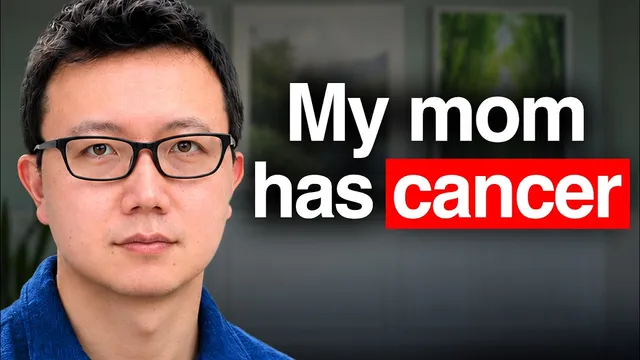
Ashley Alexander says both parents had two cancers each
- Alexander said each parent had two different cancers, diagnosed closely together around the pandemic.
- Her clearest safety example is one reported contraindication catch, not a measured error rate.
- Use AI to prepare questions, but verify record access and protect caregiver time.
Free with an account
Read the rest of the analysis
6 sections, the 2 other voices it tests Alexander against, and what it means for you. Every episode we cut gets one.
Check your inbox
We sent a link to your address. Click it to finish signing up. Not there in a minute? Look in spam.
or
Signed up before? The same buttons sign you in. The episode, its moments and the transcript stay free.
Fragmented records put families between specialties
Alexander said both parents had two different cancers each, diagnosed closely together during a period around the pandemic. Her father’s first cancer was non-Hodgkin’s lymphoma, when she was a sophomore in college.
She went to appointments, took notes, and tried to connect decisions across specialties. The lung and heart were connected, she said, while pulmonology and cardiology departments did not structurally coordinate the information.
That gap is the episode’s clearest product problem. A caregiver may have options, records, and experts, yet still lack one usable view when decisions arrive.
Alexander says AI gave her a way to interpret medical language and form questions in real time. But her account establishes a workflow, not proof that it changes treatment outcomes.
Our read
The episode supports AI as an information organizer for families facing fragmented care. It does not show that the tool can select a better cancer treatment.
One record check surfaced a possible treatment conflict
Alexander recounted a public story from her former boss, Fidji Simo. ChatGPT flagged a contraindication buried in a patient’s record before treatment, she said. The attending then agreed another treatment was appropriate.
Alexander said the issue was incomplete record visibility, not a clinician’s lack of skill or attention. That distinction matters because even an attentive doctor cannot act on history outside the available chart.
Still, this remains one reported case, relayed by an OpenAI product executive about her former boss. The episode gives no rate of false alarms, missed conflicts, or harms avoided.
The anecdote also leaves the human check in place. The attending reviewed the conflict and agreed on an alternative; the account does not establish that model output should overrule a clinician.
“chat caught it somewhere deep in her record”
Our read
The story makes a concrete case for gathering records across systems. It does not establish how reliably AI can detect conflicts or what happens when it misses one.
AI can turn appointment time into focused questions
Alexander’s lower-risk workflow happens between appointments. She said a United States doctor’s visit lasts something like 15 minutes. She uses AI to digest information and prepare pointed questions beforehand.
For her father’s interstitial lung disease, she researched a new therapy and its clinical trials before an appointment. She then asked the doctor whether her understanding was right and whether the option fit his case.
During visits, Alexander says she asks AI about unfamiliar terms while her father speaks with the doctor. She named left wedge resection as one term she needed explained.
For example, Peter Yang described an open-source skill for his mother’s treatment sheet. It keeps phone numbers at the top and updates a Google Doc from emails and call notes.
In July 2026, Shiv Rao of Abridge told Upstarts that even a doctor could leave visits unsure what to remember. His family’s IVF story covered the same recall burden, not evidence that AI fixes it.
Our read
Preparation lets families use AI for explanation while leaving case-specific decisions with clinicians. Rao’s account reinforces the memory problem, not the effectiveness of this workflow.
Health-record access still depends on system integration
Alexander said records can remain split across systems, leaving clinicians without a patient’s full history. Her family once had to drive between two institutions to move CT scans on CDs.
Alexander said the latest AMA study, she thought, showed something like over 70% of clinicians using AI regularly. She recalled something in the 30s or around 30% in 2023.
But regular use is not the same as patient-record access. Clinicians can use ChatGPT free after verification, she said, while connecting patient records requires health-system agreements, including a BAA.
Alexander said connected health data gets extra encryption and is not used for model training or targeted ads. Those are OpenAI product assurances from its health executive, not independent security findings in this episode.
Will Ahmed, WHOOP founder, said on Inside Blackstone in September 2026 that health AI depends on who has the data. That supports data access as a central constraint, not a specific OpenAI integration claim.
Shiv Rao of Abridge described on Upstarts in July 2026 how AI applies health-system rules to clinical notes and billing. That provider workflow differs from family record access, but shows integration must fit system operations.
 Will Ahmed · Inside Blackstone · Sep 15Ahmed says health AI’s advantage depends on access to data
 Shiv Rao · Upstarts · Jul 23Clinical notes connect care delivery to healthcare payment
Our read
The episode describes growing clinician use, not universal access to patient records. Health-system agreements remain part of the path from a personal tool to connected care.
Alexander sees AI supporting the whole cancer journey
Alexander sees AI supporting the entire cancer journey, not only a cure. She included screening, uncertainty after diagnosis, treatment decisions, research, and getting therapies to people.
That is a wider frame than a cure claim, but much of it is forecast. In this interview, the demonstrated caregiver tasks are organizing records, understanding terms, and preparing questions.
She also said 300 million people come to ChatGPT weekly with health questions. That is an OpenAI usage figure, not an outcome measure, and she offered no health result attached to it.
Her closing example imagines ChatGPT noticing required labs and offering a suitable appointment for approval. Alexander said the technology is capable, but gave no release date or evidence of deployed booking in this exchange.
OpenAI sells the product whose potential its health product VP describes. That commercial position does not disprove her examples, but readers should separate present uses from future product ambition.
Our read
The episode supports a broad product thesis, but does not measure health outcomes. Separate current caregiver tasks from future automation and research promises.
Caregiving still requires protected human time
The final constraint is the caregiver, not the model. Alexander said caring still brings cognitive, emotional, and time burdens, even with AI.
She blocks her father’s appointments at work, including jobs at Meta and OpenAI. She said she has not faced pushback, but still has to set the boundary herself.
When her parents became ill, Alexander had also just experienced a miscarriage. She took a month off through a former employer’s Recharge program and said she did not regret it.
Yang said openly discussing his mother’s cancer brought people forward with advice and help. Alexander said a friend’s father-in-law, a doctor, referred her to a Stanford specialist for her father.
Her employers were supportive, she said, but she still had to set boundaries. That makes her month off an example, not a general assumption about caregiver time.
The practical test is whether a workflow makes time for care and rest, not only whether it organizes information.
“i'll just block the time”
Our read
AI may help with information work, but it does not remove caregiving’s emotional load. The episode treats community and protected time as part of the care plan.
What it means for you
- Separate family records. If you use an AI project for a relative’s health, check its memory settings and get their consent. Alexander said she keeps her father’s information siloed from her own.
- Maintain a care sheet. Keep treatment details and phone numbers easy to find, like Yang’s one-page document. He described updating it from emails and call notes.
- Prepare the appointment. Use AI to clarify unfamiliar terms and draft questions, then ask the clinician what applies. The episode supports preparation, not treating a model’s answer as a treatment decision.
- Protect caregiver hours. Block appointment time and plan time for your own recovery or support. The episode makes clear that AI does not remove caregiving’s emotional and cognitive load.
What to watch
- Whether health-system agreements make connected records available in actual clinical workflows.
- Whether record-conflict detection is tested for missed alerts, false alarms, and patient outcomes.
- Whether proposed lab follow-up and appointment booking become usable features.
Send this to the product lead building health workflows for patients and clinicians.
Watch the minute where Alexander says both parents had two different cancers each.
Written by Real Alpha from the episode's transcript and the other moments it links, then checked against the transcript. Quotes are the speaker's exact words.
Minute by minute
- 0:49Cancer care led Alexander to AI
Ashley Alexander says her father was diagnosed with non-Hodgkin’s lymphoma when she was an undergraduate, and both parents later had two different cancers each, diagnosed close together; they are now in remission. As their caregiver and advocate, she found treatment choices difficult to navigate and had to piece together information across specialties. She studied management, worked at Bain and moved into product, then says ChatGPT’s launch showed her how AI could extend that work into health.
- 7:06AI supports caregivers between visits
Peter Yang says he uses a shared ChatGPT project and uploaded medical records to help manage his mother’s care, including figuring out whom to contact and coping with the emotional strain. Alexander says she uses AI between appointments to digest information and prepare questions specific to her father’s case, so she can use limited doctor time for decisions.
- 9:38Prepared patients can help visits
Alexander says clinicians she speaks with have mixed views, but most appreciate patients who arrive better informed and ready to discuss focused questions. She advises treating the clinician as the expert and using AI for preparation, not diagnosis or treatment. She also says AI could help reduce clinicians’ paperwork and after-hours administrative work.
- 14:17Cancer care is more than cures
Alexander says cancer care includes prevention, early signs, diagnosis, treatment decisions and the period of uncertainty around each step—not only finding a cure. She supports using AI to advance science, but argues it should also help across the wider care journey. She gives an example of a postpartum woman who found AI’s nonjudgmental support helpful for building healthier habits.
- 19:08Health context powers personalization
Alexander says connecting health records and wearables can give ChatGPT context to personalize answers, rather than requiring people to upload documents manually. She says connected health data has extra encryption and is not used for model training or targeted ads. For condition updates, she suggests telling ChatGPT what to track or setting up an automation, while noting that proactive features still have limits.
- 25:34Organized records can surface risks
Alexander recounts a story about former OpenAI executive Fiji Simo, who says ChatGPT found a contraindication in a patient’s history before a treatment was given. Alexander also says a well-organized record can help clinicians see information across health systems and catch medication conflicts. Yang notes that having his mother’s earlier cancer-treatment records could help him answer doctors’ questions.
- 28:01Health systems remain hard to connect
Alexander says privacy rules reflect important commitments, but fragmented systems can still force families to carry scans between institutions on CDs. She says health systems want better tools too, and describes working with them to integrate AI into clinical workflows. She also says clinicians can use ChatGPT for Clinicians for free after verification, while connecting patient records requires the appropriate organizational agreements.
- 32:25AI could accelerate science and care
Alexander says OpenAI is focused on using its models to advance science, and that AI could help across research, clinical trials and getting treatments to patients. She says 300 million people use ChatGPT for health questions each week. She describes healthcare progress as fast but slower than consumer technology because privacy, security and usability carry higher stakes.
- 36:13Use separate projects and ask live
Alexander recommends keeping a loved one’s health information in a project with its own memory setting, getting their consent and separating it from personal health conversations. During appointments, she uses AI to clarify unfamiliar terms and think of questions in real time. Yang says sharing a family’s experience can also bring practical help from friends and clinicians; both say AI should strengthen, not replace, human connections.
- 41:04Make family time non-negotiable
Alexander says she blocks time for her father’s appointments and treats family care as a priority, even with a demanding job. She recalls taking a month away from work when her parents were diagnosed with cancer and says caregivers also need time for their own mental health. She and Yang agree that clearer priorities can make room for family and community support.
Published Nov 8, 2026.
Transcript · 45 min read
Behind the Craft, hosted by Peter Yang, with Ashley Alexander.
Transcribed by machine (Whisper) from the episode’s audio, so a word may be off here and there.
There was a period around the pandemic where both of my parents each got diagnosed with two cancers each within a week of each other. My mom had breast cancer three times which is pretty crazy. I felt like I had an ability to potentially change the outcome based on how we steered the treatment path and I didn't feel like I had full information. As the doctors sharing things with me a lot of time I'm using it to sort of real-time like what does this mean for dad like what questions should I be asking right now? I feel way more empowered now to do that job for my family and for myself than I did without Chad.
All right, Ashley, I'm really excited to have you here. I think this interview is really special to me because we both care for parents through cancer. And I really want to understand, there's a lot of hype out there. I really want to understand how close we are, how close AI is to helping patients, caregivers, and also physicians, clinicians. So why don't we start with this? Can you talk about your journey caring for your parents and how it led you to OpenAI? Yeah, absolutely. Thank you so much for the time to speak about this and for your interest in this space. These are the conversations that I hope many of us will have more and more so that we can accelerate the positive benefit that AI can bring to all of us.
It's like you know me. This is actually, some people don't realize, this is actually the origin story of how I came to be here doing this work. And it dates back to over decades ago when I was a sophomore in undergraduate studies. My dad was diagnosed with non-Hodgkin's lymphoma. He is in remission. Actually, since then, both of my parents have had two different cancers each, diagnosed closely with each other. Everyone's in remission and okay now. But through that experience, I really play this role of caregiver, advocate, companion. I go with them to all of their appointments. I'm taking notes.
Read the whole transcript
I'm chiming in with questions on their behalf. A lot of the time, especially in that very first time when my dad got non-Hodgkin's lymphoma, we were faced with a lot of decisions where, you know, there isn't a clear mandate, this is the treatment path. a lot of time and I was for me the first time seeing this in the system um the fact that we were kind of overwhelmed with so much information and yet still you know obviously in partnership with professionals but still like they would it was like you wouldn't do the surgery or this um radiation treatment or this you know there's there's there's options often and that can feel really overwhelming when you know I'm not the expert I didn't go to med school I don't have a background in pulmonology um and not only that but all the information was so fragmented you know for my dad you know the lungs and the heart they're connected but the pulmonology and the cardiology departments even at some of the best institutions which you know we were lucky enough to send him to um they don't they don't yeah they don't they're not structurally set up to to have that kind of and so i'm the one piecing together that information on behalf of him um it's just a
a lot of burden and it's a really, and it's a really high anxiety time. Um, so anyway, that just all gave me this passion to say, you know, there are a lot of like smart and wonderful individuals in the system. It's the, the system is, is failing us. The incentives are misaligned. There's a ton of information asymmetry. I don't feel like I'm in the driver's seat of something that's the most important to me, which is my father's life. Um, and we just like deserve better as humanity is how I feel. So that was, you know, a long management as one of my concentrations in undergraduate studies. I worked at Bain and Company for a bit. I did a bunch of healthcare cases there. Ultimately, went into product because I'm an engineer at heart, and I like building things, and I wanted to build this skill set. But I always thought, even at that moment, I'm taking a quick detour, what ended up being a little bit longer than I thought, but a detour from my personal mission to one day find a way to transpose the skill set back onto this problem that I think is probably the most important work i'll do in my life yeah and everything changed you know i was always looking for an opportunity to transpose that skill set back and everything changed when ai you know it's really
when chat gpt launched um I felt for the first time, you know, this difference in shift and the kind of information empowerment people can have in their own health. And it really changed everything for me. Yeah, I had a one-year-old and a three-year-old, actually. I had the one-year-old before ChatGPT launched, and I had the three-year-old after. And so I had my own experience with the health system of having babies, one with the power of chat, one without. And it just totally changed the game for me. So anyway, I felt for the first time, my skill set can be something that really impacts this problem at scale and the world and we as humanity need this and deserve this.
And I want to do everything I can to accelerate the timeline. That's awesome. I think I'll just share my personal story, too. We were talking about my mom had breast cancer three times, which is pretty crazy. The first couple of times, I was still younger. And this time, now I'm actually unemployed, so I have more time to take care of her. It requires that, doesn't it? i mean it's a full-time job it's full-time job you have to like uh so what i've been doing is like like you said basically basically pm the shit out of this thing and like you know using chat gpt using project the project organizing all our information like the the problem is like a lot of the healthcare stuff like you know doctors save lives and all the power to them but the system is like you gotta like get fax numbers and like make phone calls and like it's hard to even get their email address so like that's what i've been struggling with just like calling them every day and kind of being a pest and be like, hey, when can we get a diagnosis?
When can we get the biopsy? And so on and so forth. Absolutely. Yeah. You have to advocate. That word advocate is a real thing. And I think about all the people who don't have a you or me, they're kind of fighting on their behalf and how much, you know, they probably feel lost and scared in those moments because we felt that way. And, you know, I come from like a middle class family, we had insurance, you know, we're in the Bay Area where there's a lot of great access to great care. And even still, I felt scared and not empowered. And so imagine how it feels for the single mom in the middle of America who's trying to make ends meet. Maybe she's working multiple jobs and, you know, maybe doesn't even have full interest. I don't know. I can't even imagine how that must feel for that kind of person to go through a big health crisis. So I think what you're doing for your mom is incredible.
And I hope that we can build products that can give that kind of support. Maybe it can't fully replicate how amazing you are but for someone whose alternative is nothing we we deserve as humans more support than that when we're going through a health crisis this episode is brought to you by granola if you're in back-to-back meetings you know how much work it is to take notes live and clean them up afterwards that's why i love granola the best ai meeting notes app in the market here's how i use it granola automatically takes notes during a meeting and i can add my own notes too after the meeting ends i use a granola recipe to extract clear takeaways and next steps in the exact format that I want. Then I can just share their notes directly in Slack with my colleagues or even get Granola to share their notes automatically.
Honestly, of all the AI apps that I use, Granola is the one that saves me the most time. Try now at granola.ai slash peter and use the code peter to sign up and get three months free. That's granola.ai slash peter. Now back to our episode. Yeah, and we just talked about like how I'm using chat gpt real quick yes tell me yes i'd love to hear your setup yeah so i i basically gifted them like a chat gpt subscription and you know like a lot of times the people who are sick or older they don't actually know how to use all this stuff but we basically created a sheer project and we had like a google drive or something and i started uploading all her medical records there um once it has that context is actually able to provide like really good advice for better force you know and actually like a lot of it like i thought i'd be using it to do research on a disease but a lot of it is just like okay who should i call next or like you know who should I try to coordinate with next and also a lot of it honestly it's like personal therapy like because like you know like I think we're both a little bit of a control visa you know you're right for me at least I feel like I almost feel like I can talk to my AI more than honestly, like my mom or, you know, because sometimes I don't want to tell her like all the results and stuff.
Sure. So like kind of getting advice from the AI and like kind of like figuring out stuff out is super helpful. Oh, that's a great point. And I feel the same way. In large part, you know, the average doctor appointment in the United States is something like 15 minutes. And my experience has been even shorter than that. And a lot of these ones, again, not their fault. It's the system set up that makes it that way. and what i found is really helpful about ai is a lot of the time i i need more time to sort of digest what's going on to ask the follow-up questions and i just don't get that time with the doctor and so i what i found is i'm able to do that in between the appointments so that i'm going in with much more focused questions that you know only the doctor can get to because they're so personalized to my dad's case um versus these kind of you know there was a new therapy that came out recently for his interstitial lung disease and i kind of vaguely knew that the clinical trials are happening and instead of using some of those precious 15 minutes with the doctor to ask what's the latest can he try it whatever um in advance of the the upcoming appointment i was able to clear all that with chat so that i could go in and say okay this is what i've learned do
you agree with this take this sort of like take on where the clinical trials are at do you think we should try it with my dad should we not and i just got to much more action planning yeah um because i am a control freak too and that just helps me feel much more prepared and then when making those decisions i feel much more confident in what we're doing yeah and i understand what the doctor is telling me as opposed to like being overwhelmed with the deluge of information that i just can't digest all in one 15 minute slot yeah yeah i've asked my parents to include me all the doctor conversations um they're up in canada but like they thought down we in and but actually
“the majority like tend to like that their patients can come in much more educated”
Yeah. Yeah. If only all the doctors use like, you know, thoughts or whatever, because like you're right, like a lot is riding on that 15 minute conversation. and if they had like these AI tools to help them process their emails or something maybe they can actually share emails with all the patients I would love to help with that I think that's a tremendous application I hear all the time about you know there's this term that they use pajama time where when the advent of the EHR came about a lot of physicians ended up just having to do all this paperwork after their clinic hours and it really ended up adding to budget burnout which is really unfortunate I think we need to do a lot more to support the clinicians.
It's one of the hardest lines of work. It's one of the most important lines of work, as you feel when you or a loved one is going through a health episode. And I think the system makes it really hard on them, honestly. Yeah, they print it out and type-typing all this stuff. It's a very manual process, right? Very manual process. And to the point that, I don't know if you've experienced this, but I've seen in caring for my parents and also even for my own health, a lot of those, they call it in-basket, those emails in the chart, they're having to have like PAs and nurse practitioners help with some of the responses because it's just too much for any clinician.
So anyway, big plus one to your idea. I think there's definitely something there where this technology can help them in the same way that it, I don't know if it's helping you, but it's helping me with my own inbox. Yeah, I don't like to fill any metal forms online anymore. I mean, obviously medical stuff is more important. You got to be careful, but like, you know, I just get AI to do it for me. Yeah, I think we're at a point where there's still that need for sort of the human in the loop piece But it's still a huge time savings to have I still review all of my emails I don't have AI agentically sending things out without my review still But it still saves me a ton of time even if I end up making little tweaks here and there So I think that's a good application Awesome. So another thing that I really grind my gears is like maybe I spent too much time on xx
“I think we should talk about like cancer care and sick care and any sort of health care as more than just cures.”
That's a good point, because actually the best cure right now is just to get scans regularly and find this stuff early, so you can just cut it out, right? That's probably the one I'm like... Yeah, I mean, I'm not a doctor, but I do think that generally prevention, I think, can be an antidote to a lot of things, not just cancer, but all sorts of, you know, actually some of the largest determinants of death.
There's like cardiovascular issues, metabolic issues, and a lot of those are actually things that don't even cut. It's like getting better sleep, like changing your diet, like moving. Everyone knows kind of intuitively that those are things that you're supposed to do, and yet it's still so hard for all of us, myself included, to adhere. And that's actually one of the things I think is really cool about AI. I hear these stories. I heard from a woman, for example, who was a couple years postpartum. And she just really struggled to shed what she called baby weight. And in her opinion, she just had, whatever, 15 pounds that she just really wanted to shed because she just didn't feel like her best self, like her pre-baby self.
And she tried everything. and she wrote into us saying when ChatGPT on a whim decided to just kind of confide in ChatGPT I was like really feeling down about myself and that was the moment that it clicked for her and it was purely because this this tool that she had felt like a no judgment zone and she felt like she would be honest yeah that was the difference and and there was some day-to-day tracking you know she was sending progress photos she was logging her meals all those sorts of things but to her you know there are other products that she had tried doing that and didn't work for her the difference was having the space where like you know there was a day where she would have an off day where she didn't feel like doing the workout and she didn't feel embarrassed to confide in that and chat and chat's response was you know get back on the horse it's okay maybe maybe it's just a 10 minute walk today if you don't feel up to the you know 30 minute hit workout it's okay like think about the long journey and it's almost like that support so anyway i just i think this is a much broader conversation than just like the moment you're in a point of care yeah because like you you know, ChatGPT has perfect memory, right?
Like, if my wife complains to me about something, like, I'll forget about, like, if she was, you know, she was paying something, like, a couple days ago, but ChatGPT will know. So it's kind of like, you know, yeah, you definitely should use these tools. And that's a good segue to talking about, like, how regular people can use ChatGPT Health. I think the first step is just to, like, connect all your accounts, right? Is that the first step? Yes, yes. So if you think, there's kind of a vision here where you could imagine the sort of best nutritionist, fitness coach, advocate, all in one, that's sort of the promise of what chat could do for you, all the way from sort of prevention to if you get into an episode of care, what you and I do for our parents.
Chat could, you know, this technology could do that for you, even to booking appointments once. But in order for it to do a good job, in the same way that you and I need to understand the details of our parents' cases, it needs to have that context on you. And so step one is just we're trying to make it really easy for you without having to, you know, do the old fashioned way of like uploading tons and tons of labs, like finding all your labs, downloading, uploading, what you're having to do with your mom and the Google Drive. It works, but it's very manual. And so what we've done is made it easy to just single tap and put your login information for your health systems, connect your health records, connect your wearables if you want to, and then have that synchronously going so that if you go to see the doctor or you take some steps or whatever, that's just automatically context that chat has so it can personalize answers for you better.
Nice. And I feel like talking to my normal friends, people not in the Bay Area, like the biggest barrier for them to really get the most out of chat gpt is just like connecting to stuff they're like oh you know it's gonna leak my information or like blah blah and i would tell them like hey this is like a you know this is like a trillion dollar company they're like information but like like do you have any like reassurances with people watching this that you know you're taking this seriously absolutely yes it's it's something that it to me it's the one it's probably the most single most important feature yeah that we put all of our energy into building first before we did anything else is is really shoring up that security and privacy approach because I too I mean I put my health data in here so I I'm I'm I'm eating the dog food that I may you know we use that term in the industry dog fooding um and the reason that I feel comfortable and I think other people should too is that we've we've really built that layer of privacy and thinking about the security of the data into the way we built the product there's additional encryption layers on the health data. If you sync your health records, for example, your health data,
we're doing extra layers of kind of purposeful encryption. And importantly, we don't train on your health, the health data that you connect. We don't target ads based on that. So if you connect medical records, we're not training on or targeting on that. These are kind of design decisions that we're doing because it's the right thing to do in terms of preserving that trust and building something that people feel comfortable. Yeah, that makes sense. So beyond like the standard, like, you know, the steps and you can connect your medical records to CHAS-GPT.
“I want you to always alert me when a new study or a new breakthrough”
“she actually caught a contraindication right before a treatment was about to be given”
here because like part of me is like why are these guys still using faxes and like you know these like 20 year old systems inside the hospitals but maybe like there's some like regulation or something going on or like you know yeah there's a lot of regulation in health care i have a lot of empathy for for these folks um and it really comes down you know they're trying to uphold privacy that's right commitments that they have to you and me and so it comes from a place of deep values and principles that I think any of us would be very aligned to.
Unfortunately, the reality is that what ends up happening is that it makes the whole system a lot more difficult to navigate. Like, for example, when my dad was first diagnosed with lymphoma, you get CTs of the lungs. I wanted to get a second opinion. I won't name the names, but there are two institutions. It's really not specific to them. Two top institutions in the Bay Area. And in order for me to get the second opinion from the second institution, I literally had to drive to the first one to physically pick up CDs. Yeah, yeah, exactly. That's what I have to do too. You have to do this too, yes.
Which is crazy and then physically bring them to the other institution. I don't have a device that uses a CD anymore. Like, how are you hiring a... It's wild. And you know that's not a technical limitation, right? Like, there's clearly a privacy thing. So I think this... I hope that this can be a golden age. And what I'm seeing from every health system that we work with and we're working with some of the top institutions in the nation right now, they're the hunger for... They don't like this either. You know, it's not... They want to be able to uphold the privacy commitments without having to deal with antiquated technology.
They're people, too, of the world. As consumers get access to all this technology, they're super smart, and they really deserve better. So I do think that we're on the precipice of a moment where AI is, and you're seeing it with some of the ambient scribe adoption. We partner openly with great providers in the space, like Abridge and Ambience, who power a bunch of the ambient scribing. You're already seeing this rapid adoption that previously did not happen.
“And the latest AMA study, I think, showed something like over 70% of clinicians are using AI regularly now.”
That is pretty consolidated, or is it pretty fragmented? Is there like a couple of electronic medical record platforms, or? There's a handful. And the thing that's nice about the health systems sort of right to their own data is that we can work directly with the health systems and work with them. And whatever electronic record they're working with, we just work with them to say, what's the way that you would like this to work for you? And we figure out, there's kind of open standards and things that we can use to make those things a reality for them together. got it okay and and how about like um like cutting-edge cancer research or stuff like that like like uh it's opening i'm i'm assuming you guys are helping we have a large um emphasis and focus on science and advancing science with our models it's some it's some of the most it's very exciting work um both through actually our pbc and our foundation our foundation has publicly shared that a big portion i'm gonna watch the stats i don't know exactly but we can look it up after yeah they're a big portion of those funds it's a lot of of money that the foundation is deploying is dedicated to advancing life sciences okay okay um so there's so there's kind
of two angles yeah and um and it's it's a huge priority right now to say how do we work together with the ecosystem to accelerate discovery okay yeah i'm really excited for that i i think um i think we're talking about this before the interview but like you know everyone's building personal agents and stuff to help you manage your emails and like this kind of stuff that's great that saves me time but like to actually improve human life like you know cure these freaking diseases like that that is massive improvement it's incredible i mean i i think all of it's incredible to be honest i mean we have 300 million people coming to chat every week asking health questions like chat is supporting 300 million people in their health already today even without the acceleration of the cures for the whatever yeah um which i think is just amazing it's already happening in front of us and we're are we're also seeing these models that have this next level intelligence that are solving you know decades of math right so it's like just imagine what's going to happen when we come together as an ecosystem with all the the parties involved to point that towards cures um and importantly there's also you know a lot beyond the discovery
of the cure there's also the a bunch of steps after that to actually make sure it gets in the hands of people you know everything from clinical trials and deployment right um and and what we've seen you know we work in partnership with a lot of um players in the space pharma companies etc and what we've seen is that there's a tremendous potential for ai to accelerate every step of those processes yeah um which is also really exciting so it's again i just i the thing that's so cool about this technology yeah and and why i'm able to have the impact that i'm able to have even a you're in here is because you can apply it to basically every part of the problem yeah and it's able to benefit in some way so it's pretty exciting yeah it's like a like because we both were having meta right and um like part of me is like probably because like working health care there's long shipping cycles and like because like at meta we can just run an ap test change some algal toggles and you can see the result in like the next day but do you feel that now you have to wait longer or do you feel like there's like a lot of progress making well it's yes and no i mean i I think we're having some of the fastest progress that we've ever seen in health care specifically.
Now, health care has not historically moved as quickly as the consumer tech industry, social media. Exactly. I think for good reason, because the stakes are a lot higher. That's right. And so I think the pace is extraordinarily fast. Now, relative to consumer product, you know, social media, whatever, it's definitely slower. But I think rightfully so. all the things we're talking about getting security right getting the privacy approach right getting getting the the the ui in such a way that you know my mom can figure out how to connect her medical records without having any technical experience like these things to me are so important where it's a little bit of a different approach that you want to take to this type of work, I think, than maybe historical or just traditional direct-to-consumer product.
Yeah, you don't want to run an A-B test on like treatment and stuff, you know, or like, you know, it doesn't make any sense. Yeah. Awesome. Well, I think for people listening
“the most useful thing though i've found is even just real time when i'm in appointments”
share that they have cancer but you actually share or maybe because i like maybe i share too
much a lot of people actually come out to help help you like like i'm in touch with like a great point i'm touch like oncologist in uh new in new york just giving like free advice and like a lot of people just come come out of the world to help help me which is very nice it's amazing yeah people people actually do really care that's a really that's a really good point like lean on your community that actually that is a great direction to take this because yeah i am the i am the biggest supporter of what this technology can do for us. And yet still, there's nothing that can replace And I think it's important for us to, as we have these conversations, talk about, in our best case scenario, what these tools actually do is they strengthen the human connections that we have because they allow us to show up in such a way that we're able to, you know, help each other, help ourselves, whatever, such that we have more of that, more of that time for human connection. I totally agree with that. I think having a community when you're going through.
Like a lot of your friends might be going through the same thing, they might not be talking about it. Like a friend called me is like, hey, you know, my dad went through the same thing. Here's how we did it. And it's like very, you know, you don't talk about this in regular life, right? So like, it's because you just share. No, it's so true. And you don't know until you share. I had a similar situation with my dad, the second cancer that my dad had. One of my best friends' father-in-law's just happened to be in the space. And was able to, you know, they live in Pittsburgh, so they're kind of far away, but they he was able the doctor was able to refer me yeah to a specialist close by us that worked at stanford who ended up being my dad's doctor for that that other cancer um so you're right you just never know and you're right people really do come out of the woodworks to help yeah yeah
“And so for me, it's just a non-negotiable. Like if my dad has a doctor's appointment, even at this job”
it can make the you just feel just more empowered and being able to yeah like not take on that job yeah yes i feel way more empowered now to do that job for my family and for myself than i did
without chat it's it's so it's amazing i'm just so excited for where this can go because you're mentioning several times you've mentioned some of the administrative stuff that it seems like things are coming back to it's um i agree and just with where the technology is going it's just it's really exciting to imagine a world where you know chat just knows that like i just got a pcp appointment i'm supposed to do follow-up labs i chat could the technology is totally capable now of just letting me know yeah hey i saw your your after visit note you've got these labs they're supposed to be through lab corp here's here's an appointment and a time that works for you. You're working from home this day. Here's the time slot. Do you want me to book it for you? And I could literally just push a button and it could make it all happen. I mean, that's the future we all deserve to live in. I'm so glad, actually, that you're working on this with the team. And I really think this could be the biggest positive impact on humanity. So thank you for working on this. I really hope so. Thank you. Please send me your feedback. And I'm just really excited to keep making it better for folks like you.