Free with a sign-in.
The best 14 min of 87
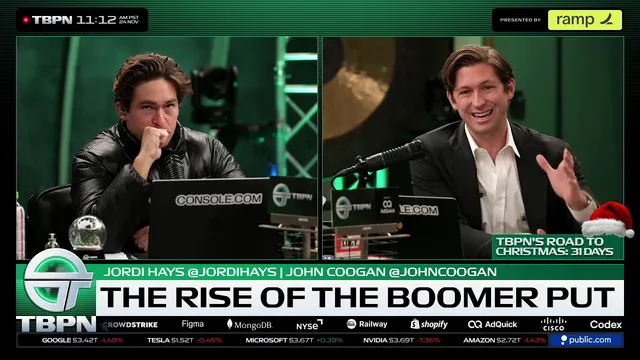
🔴 Dr. Alex Karp LIVE on TBPN
Alex Karp argues AI will reward domain expertise but create urgent choices about jobs, education and national security.
 TBPN · John Coogan & Jordi Hays
- Alex Karp is cofounder and CEO of Palantir Technologies.
The best minutes
- 1:15:48AI job losses will require major changes to education and policy7 min
- 1:05:19Palantir combines software with deep deployment expertise4 min
- 45:33AI should expand work rather than just cut headcount3 min
Also worth watching
- 37:21AI lets frontline experts shape the software they use6 min
- 19:43Drone businesses earn margin in autonomy and integrated systems3 min
- 1:09:53Karp expects AI job losses to fuel nationalization calls6 min
- 28:39Rodeo analytics could improve teams and deepen fan coverage3 min
- 1:01:02Karp says AI rewards expertise over routine skills4 min
Skip the 9-minute Dan Ives market outlook, 7-minute Ondas interview, 14-minute western sports interview and 11-minute news chat.
Full analysis · 6 min read
Real Alpha · Nov 8
Alex Karp says customers want business transformation in three months
- Karp said customers care about business transformation in three months, equating a three-year effort with work that never happens.
- That is Karp's sales framing, not a measured Palantir outcome, and no comparison data appears.
- Buyers should test deployment time, operating gains, and how much customer learning becomes reusable software.
Free with an account
Read the rest of the analysis
6 sections, the 6 other voices it tests Karp against, and what it means for you. Every episode we cut gets one.
Check your inbox
We sent a link to your address. Click it to finish signing up. Not there in a minute? Look in spam.
or
Signed up before? The same buttons sign you in. The episode, its moments and the transcript stay free.
Karp says customers want transformation in three months
Karp supplied the episode's most repeatable number. He said customers care about transforming a business in three months. The alternative, in his telling, would take three years, meaning the work would never happen.
Karp described the buyer's desired outcome, not a measured result delivered by Palantir. That distinction controls the whole reading. A three-month window could describe a prototype, a production workflow, or an operating model actually changed.
Only the last would support the broadest version of the pitch. Yet the line carries commercial weight. Palantir is selling the prospect of changed operations, not only access to a model or software license.
But the episode does not name a customer or define what transformation includes. That absence matters to founders and operators. A three-month commitment needs a starting point, an operational metric, and a test for whether adoption persists.
Three months is also short enough to sound like a commitment. Without a defined go-live threshold, a demo could satisfy it while core operations remain unchanged.
Our read
The number is a useful customer target, not evidence of a typical deployment. The broader proposition depends on whether a live change actually lasts.
Frontline experts can help define the system
Palantir's case starts with people closest to operations. Existing enterprise technology often left plant operators with spreadsheets and workarounds. Yet those operators knew why the work succeeded or failed.
For example, Mabrey used John, a plant operator, to show the gap. John knew what worked, but enterprise tools had given him little leverage.
AI can now let that expert help shape the software. Mabrey said forward-deployed engineers must earn the best people's time so those people can dictate what system runs the company.
That is different from treating workers' know-how as raw material a vendor extracts. The operator becomes a participant in defining the system, not just its user.
Ali Ansari of micro1 said on Sabrina Halper Show in October 2026 that structured data carries institutional knowledge into models. His focus was training data, not the live design work Mabrey described.
The risk is organizational, too. If an expert's participation is a one-time workshop, the system may miss how rules and exceptions change.
“Now the technology can be John's Ironman suit.”

Our read
The value proposition is expert-led system design, not just labor reduction. But customers must give domain experts real time and decision authority.
Deployment learning must become reusable software
Mabrey called initial deployment a capital investment. It includes installing the platform, building an ontology, and training the customer to use the tools.
He also described a second loop. Palantir returns to expand what a customer attempts, then feeds reusable primitives into the core platform.
This is the scaling logic behind the people-heavy model. It works only if enough deployment learning travels into reusable product while respecting each customer's operating rules. That transfer is not automatic.
Customer-specific rules, tribal knowledge, and regulatory constraints require judgment about what generalizes. Woodson Martin, CEO of OutSystems, spoke on The Cognitive Revolution in October 2026. He said common platform components may converge, leaving tuned workflows to differentiate products.
That supports attention to industry workflows, not Palantir's economics. Take Casey Lane's rodeo analytics project with TWG AI and Palantir. It tracks riders and bulls alongside scoring data, aiming to predict matchups and explain scores on broadcasts.
Lane said it might help his team and could yield analytics for competitors. He described work in progress, not a proved competitive gain or established sales stream.
That split matters to finance. Initial deployment hours belong in implementation economics, while recurring upgrades and support must be budgeted separately.

Our read
Deployment can be product discovery and delivery cost at once. The economics turn on whether lessons become reusable without flattening each customer's operating context.
Karp's three-month pitch lacks measured outcomes
Here is the diligence gap. Karp's three-month timeline is a sales proposition from Palantir's CEO. His company sells software with forward-deployed engineers and AI agents.
Yet he supplied no customer sample, baseline, delivery cost, or outcome measure alongside the timeline. So this number cannot establish average speed, return on investment, or repeatability.
Mabrey said buyers now want a working demonstration rather than a long explanation. That is a sensible enterprise test, but a demo cannot establish long-term operating change.
Satya Nadella said on 20VC in October 2026 that companies should retain value from AI usage, data, and private evaluations. His point raises a buyer's question here. Does deployment leave expertise in assets the customer can maintain?
That goes beyond delivery speed. Buyers should separate first-deployment effort from recurring support and reusable product value. The episode gives no baseline for the three-year counterfactual either, or evidence that the same result transfers to a second customer.

Our read
The episode supports a delivery philosophy and a clear target, not an independently comparable return. Treat three months as a hypothesis to validate against milestones and customer effort.
Karp says expertise and training shape who adapts
Karp framed skill shifts as a hierarchy, not a promise that everyone can move into a new role. He named vocational training and neurodivergence, broadly understood, as two ways to have a future.
Then he pointed to real technical or industry expertise as valuable. He said routine coding, reading, and writing would lose value, while people need to look differently and build something unique.
But he named no job families, timeline, or share of workers affected in that passage. Those are views about skill value, not a workforce forecast.
Ted Mabrey's TBPN segment in March 2026 offers a relevant complement. He said using AI to do existing work with fewer people misses its potential. Companies need a culture of creation and iteration to find new uses.
Dylan Field, Figma's cofounder, spoke on All-In in October 2026. He said people should use AI to learn skills they had not dared to try, rather than outsource thought.
That supports practice and curiosity, not proof that displaced workers will find new jobs. Karp does not say one training path fits everyone. His point is that aptitude and expertise will matter differently.
“you have some vocational training”

Our read
Karp's proposed advantage is not routine coding alone. The episode does not show how many workers can move into the new work he describes.
Karp predicts job losses will drive nationalization
Karp predicted a movement to nationalize AI technologies would become very strong, very quickly. He linked that political reaction to job losses and resentment toward wealthy technology owners.
That is a confident prediction, not a vague possibility. He separated domestic use from military deployment. In his account, constitutional rights should constrain domestic uses, while defense systems keep pace with rivals.
Palantir sells into enterprise operations and defense. That makes Karp's view worth testing against his firm's business position, not dismissing on that basis.
His proposed response includes migration changes, vocational training, aptitude testing, and more candid career guidance. But he offered no estimate of jobs lost, policy timetable, or funded transition plan.
Tulsee Doshi, a Google DeepMind product leader, spoke on Lenny's Podcast in November 2026. She said teams need protected time to learn tools and share workflows. That is a workplace training step, not a substitute for public vocational policy.
David Friedberg said on All-In in November 2026 he expects data centers eventually to be treated like utilities. That is a separate forecast about compute regulation, not evidence for Karp's predicted nationalization movement.
The practical response is more visible inside a company than across national policy. Employers can make time for training now, while broader education and migration changes require public decisions.
 Tulsee Doshi · Lenny's Podcast · Nov 8Teams need time to build and share AI workflows
 David Friedberg · All-In · Nov 7AI compute could become a regulated utility
Our read
Karp makes job transition a legitimacy issue for companies and policymakers. Training may help, but the episode offers no funded transition plan or estimate of displacement.
What it means for you
- Set the delivery clock. Choose one AI workflow and define live use before work starts. Track elapsed days, active users, and an operating outcome.
- Price customer effort. Record provider engineering hours and customer expert hours separately. Then count which components become reusable for later deployments.
- Give experts decision time. Schedule recurring time for a frontline expert to shape the workflow with a deployment engineer. Track exceptions, revisions, and who approves updates.
- Protect tool-learning time. Give employees time to learn tools and share workflows. Review how many repeated tasks become shared workflows and whether they enable new work.
What to watch
- Whether Palantir publishes a defined three-month delivery benchmark with customer outcomes and baseline comparisons.
- Whether customer-specific deployment work produces reusable primitives and reduces later customer effort.
- Whether employers and policymakers add protected tool-learning time, vocational tracks, and candid career guidance.
Send this to COOs and CFOs scoping enterprise AI deployments.
Watch the minute where Karp describes the three-month customer timeline
Written by Real Alpha from the episode's transcript and the other moments it links, then checked against the transcript. Quotes are the speaker's exact words.
Minute by minute
- 6:12Ives sees Palantir and Nvidia as AI winners
Dan Ives says Palantir's commercial growth is underappreciated and argues that investors should hold technology winners through market volatility. He also sees Nvidia and Tesla as leading players in physical AI, with factories an early market for humanoid robots and autonomy a major opportunity.
- 13:49Ives calls software selloff a ghost trade
Ives says investors are treating software as an AI casualty without accounting for incumbents' data, technology stacks and installed customer bases. He calls Oracle's quarter a step toward challenging that view and remains positive on Salesforce and ServiceNow.
- 15:56Ondas is combining autonomous systems
Eric Brock says Ondas has spent more than a decade developing autonomous systems and is building a portfolio of aerial platforms, counter-drone systems and ground robots. Its first product was a drone-in-a-box system, which he says Dubai police are deploying for first-response use.
- 20:19Integration can capture recurring revenue
Brock says drones themselves are largely commodities; autonomy, command and control, and connecting air and ground systems create differentiation. He sees counter-drone protection as a decade-long or longer infrastructure build, with ongoing service and upgrades creating recurring business.
- 25:12Western sports interest can become fandom
Casey Lane says COVID and the popularity of Yellowstone helped bring renewed attention to Western culture. He sees sports as a way to turn that interest into deeper fandom, and says Teton Ridge puts its American rodeo on Fox to reach viewers beyond its own platforms.
- 29:01Rodeo analytics can deepen the broadcast
Lane says Teton Ridge is working with TWG AI and Palantir on video analytics that track the bull and rider, combine footage with scoring and timing data, and help predict outcomes. He says the tools can give the team's bull-riding operation an edge and help broadcasts explain why a ride received its score.
- 31:25The American creates a major sports moment
Lane describes the American as a showcase where top rodeo competitors face qualifiers, with a $2 million prize after last year's prize rolled over. He says Teton Ridge is also testing Twitch broadcasts and athlete social media to bring new fans into the sport.
- 37:21FDEs turn expertise into applications
Ted Mabrey says AI, improved infrastructure and rising customer expectations have changed how Palantir deploys software; teams can now build an application that matters to a business within a day. Forward-deployed engineers draw on the knowledge of people such as plant managers and turn it into systems that help them do their jobs.
- 43:35AI should create new capabilities
Mabrey describes forward-deployed engineering as an initial investment to install the platform and train customers, followed by work to expand what they can do. He argues that using generative AI only to automate existing tasks and reduce headcount misses its potential to address new problems.
- 48:32Hosts weigh AI's early advantage
John Coogan and Jordi Hays imagine that access to ChatGPT in 2012 could have supported businesses in areas such as essays, creative assets and software. Later, they discuss inference and GPU constraints and report that Cursor was exploring a raise at around $50 billion while growing 25% month over month.
- 1:01:02Karp says expertise will outlast routine skills
Alex Karp says future prospects will depend on vocational skills or traits he broadly describes as neurodivergence. He argues that routine coding, reading and writing are becoming less valuable, while technical expertise, insight and the ability to build something distinctive matter more.
- 1:05:34Karp ties Palantir to business transformation
Karp describes Palantir as combining forward-deployed engineers, AI agents, software orchestration and systems that encode institutional knowledge. He says customers care about transforming their business in three months instead of three years, not about fitting the company into a simple software or services category.
- 1:09:53Karp warns AI could intensify job and policy tensions
Karp says AI could displace white-collar workers and argues that decisions about domestic rights differ from military deployment, where he sees the Department of War as the arbiter. He calls for vocational education, better ways to assess aptitude and honest guidance about which careers may offer work.
- 1:22:53Karp says opacity can protect a moat
Karp argues that Palantir's value comes from combining software and services with each customer's data and institutional knowledge, making its work difficult to copy or commoditize. He says investors often misunderstand the business and sees that lack of understanding as a competitive advantage.
Published Mar 12, 2026.
Transcript · 1 h 14 m read
TBPN, hosted by John Coogan and Jordi Hays, with Alex Karp.
From the transcript TBPN publishes with the episode.
Watching TBPN. Today is Thursday, 03/12/2026. We are in the middle of a blizzard. We are in the middle of a blizzard. This isn't actually that bad, but it is very cold. What do you mean it's not bad? It's not a blizzard. Great time. A real blizzard The conditions are rough. Give this a a a, you know, a a 10 out of 10 blizzard. Alright. Well, we got go this time. We got high winds. Just say you've never been to the East Coast before. True. Once. Been a few times.
You gotta check it on. We're having long time. From the West Coast. Long way from the TBPN AIPCon. We will be back there tomorrow. There's a ton of news that's going on, shaking the timeline that we will be covering in detail tomorrow. Dwarkesh Patel dropped a response to the Department of War's moves to designate anthropic a supply chain risk. There's a whole bunch of interesting nuance conversation. We're gonna get into some of that today. Patrick Collison, talked about the nature of drama in Silicon Valley, a very interesting thread that I think we can have a a long conversation about tomorrow. And, Microsoft is fast following OpenAI and Anthropic with Copilot Health, and OpenAI plans to fold Sora into GPT as the sort of productization of consumer LLMs continues. So we'll be covering those stories tomorrow. We wanna say thank you to all of our sponsors that make this show possible.
It'll be a little bit of a shorter show today, but we have a banger lineup. So we're gonna kick it off with Dan Ives. Wait. Welcome to the show, Dan Ives. How you doing? Well, it's happening. Thank you so much for taking the time and on this very, very cold day to hop on with us. First, introduce yourself. Tell us what you do, why you're here.
Read the whole transcript
Yeah. Dan Ives. I've covered tech stocks Yeah. Going back to late nineties, you know, on Wall Street. And, look for me, I mean, being here at Palantir Yeah. It's in one of our favorite names Mhmm. You know, the last few years. To me, it's the AI revolution. It's almost been the poster child. And Yeah. You know, and I've, in my career going back to early days of Apple, Tesla Yeah. Yeah. It's always trying to find who could be the next one of those. And Sure. You know, my my view the last few years is, Palantir has been been what I view is kind of the golden child of AI.
Yeah. How do you work on separating, like, the narrative the company say? Every company who comes out and, you know, slaps AI on something, renames, slaps a dot AI on their domain versus it's showing up in the financials, it's showing up in the metrics.
There's only one carp and one Palantir. And I think if you look at the numbers, numbers speaks for themselves. Yeah. And I think the commercial business has really been what's been the jaw dropper Mhmm. For Wall Street. Mhmm. Because I think that alone, you know, could really ultimately be combined with the government business, a trillion dollar company Yeah. In the next two to three years. And I think Palantir continues to be one where I think investors continue to underestimate just how big they're gonna be in this AI revolution.
Yeah. I remember reading the the the it was the Airbus case study a while back. Have you talked to anyone today, doing anything particularly interesting in the commercial sector with Palantir? Like, who who sticks out? 90% of customers here Yeah. Weren't here two years ago. Oh, yeah.
So I think it just shows now, obviously, they've dominated the government Yeah. Yeah. You know, dominated what we've seen across the board the last few years. But when it when it comes to commercial Mhmm. They they've really changed the whole game. And I think what you're seeing is with the AI revolution when it comes to use cases, Palantir is the first call. And I think that's something that's still not factored into the stock in terms of how big the commercial business could be for Palantir. Because when you look at the AI revolution, of course, NVIDIA, Microsoft, you know, you have the semi plays. You have software. But I think Palantir is gonna when when we look out in the next few years, they are gonna be one of the clear standouts Yeah.
In terms of this fourth industrial revolution. What, what advice do you have for investors who are seeing geopolitical tensions rise, war? There's chaos in the markets. Things are jumping up and down. Like, how do you keep a cool head right now?
I mean, look. In twenty five years doing this, it's like if you sold because of geopolitical in in terms of those issues, that was the wrong move the last few decades. And I think it's one where you take a step back, we are in a fourth industrial revolution. I think tech stocks ultimately make new all time highs this year, but you have to navigate the volatility in the white knuckles. The haters come out. The bears maybe win the day. Yeah. But I think this will be short lived and that's why to you know, if you look what we see from NVIDIA to Microsoft to Salesforce ServiceNow and, you know, to names like Palantir and some of the cybersecurity, you you have to own the winners Yeah. In these white knuckle moments.
Have you been following the latest in with NVIDIA? They're gonna be training their own open source models. Do you have a thesis of what that means for the company?
Yeah. I think they'll talk about more GTC next week. Sure. But but it's our view NVIDIA. Look. There's only one godfather of AI. It's Jensen, NVIDIA. Mhmm. They're they're now gonna own more and more of that end to end platform. And I think, look, that's the smartest move. And Yeah. The reality is is that they're years ahead when it comes to chips. Mhmm. But when it comes to physical AI, the two best players in physical AI are gonna be NVIDIA and Tesla in terms of the two physical best physical AI players.
I mean, humanoid robots, both. What do you think? Look, I think when it comes to autonomous I mean and, you know, Jensen talked about this Mhmm. You know, when we were there at CES, They are looking to go after what's gonna be a trillion dollar market opportunity. Now, I continue to think Tesla is gonna be the ultimate winner when it comes to autonomous. Mhmm. But for NVIDIA Yeah. The chips are ultimately gonna be fueled Yeah. By NVIDIA. Everyone trying to play catch OEM is gonna need a an autonomy stack. They're gonna need the self driving capability in some degree even if, you know, people are just driving the weekend the car on the weekend for fun, they're still gonna wanna be able to throw it into autonomous mode to get home at the end of the day.
An eight year old today Yeah. Doesn't need a driver's license when they're 16. And I think I think going back to your point, it's easy to get in these modes where geopolitical, white knuckle moment. Yeah. But if you look, I think ultimately Tesla, autonomous is worth a trillion dollars going to a Tesla story. And I think NVIDIA, a year from now, we're looking at 5, you know, 5,000,000,000,000 we talk about, but I think 6,000,000,000,000 markup by 2027 still continues to be our call.
Yeah. You were at CES? Mhmm. What else did you see that was cool? What was under the radar? What were, like, the small trends, the little gadgets? I feel like CES is sort of like a world's fair for cool tech. Yeah. Like, what stuck out to you? Not even as an investor, just personally, you were like, that was fun.
Look, I think robotics, like, when you look like server robotics would be a good example, like autonomous in terms of what we see. Mhmm. The robotics coming out, I think, is really gonna be we're gonna get also physical AI. Mhmm. I think that is really gonna be the game changer. And who are the chip players that are gonna fuel that? Yeah. Of course, it's NVIDIA. Yeah. But then you look down the sort of semi food chain. Yeah. I think robotics we talk about optimist with Tesla. Humeroid robotics, we are still in the early days of where this is all going. And I think, look, CES for so many years zero. Like, they're they don't they barely exist right now. It's demos.
But Right? That's why we're year three Yeah. Yeah. Into an eight to ten year build out of the AI revolution. And I think those that are that are getting embarrassed, they're gonna miss what I believe is the next election. Do the you humanoid robots will find more traction in consumer? Like, person has one. It's doing their dishes. It's doing their laundry. Or are we gonna not really see these things because they're gonna be in factories first?
Well, I think at first it's factory. Factory I think that's gonna be the first key use cases. But then consumer Mhmm. I think we look out three, four years, humanoid robots are gonna be something that will become common.
Everybody has a Roomba already. Look. Yeah. People are used to it. It goes back to, like, if you go back over the last ten, twenty years, I could go through many incidents where everyone's like, Apple, why would you why do you need an iPhone when you'd have a Blackbird? Yeah. Yeah. Why ultimately Were you following Apple in the nineties? Yeah. And and I think that Do you remember? What was it like? And we were just reading about Larry Allison yesterday. Yeah. And he was pointing out that Larry over to Apple at one point. Look. They What was that like?
It goes back to, like and and I've followed Ellison from the beginning going back to late night. It's like, it's trying to explain to investors that these things now look easy and no brainers from Apple, Tesla. But the point, like, you look in 2007, okay, a year later, financial crisis happens. Investors are like, this is a one year AT and T phone. Why would anyone leave their BlackBerry? Now you have $700 at a time when everything I mean, you could kinda get it subsidized to maybe 400, but that was still like four times the price of most cell phones.
And the view was that they were never gonna get to a 100,000,000 iPhones, and you're at 1,500,000,000.0 today. But it but it goes back to I could go through many times and test. I go 2022. Jensen, why are you spending money when it comes to AI? You're you're essentially GPU gaming company. Yeah. The point is that we're going through one of those periods. Sure. Sure. Sure. But I think it's gonna be proven to be, you know, the opportunity to own the the tech winners. How did you being one. How did you process Oracle's quarter? I think it was a huge step in the right direction for software because right now, it's an AI ghost trade. Anthropic has obviously been a big AI ghost trade. Explain that term.
Because you're fighting a ghost. Okay. When you when it comes to anthropic, we're gonna get into cybersecurity. Look what happens to CrowdStrike, Palo Alto, and others. Yeah. We're gonna get into software. We'll get sales force service now. It's a ghost trade because the reality is that the data, the stacks, the install base, that's who's gonna be the use case. And that's why Pound two being one, but I'm a huge believer Salesforce ServiceNow and others. When you look at You're you're a believer in this. I'm a huge believer that this is the most disconnected tech trade that I've seen in my career. Relative to the software. You call it a SaaS apocalypse. But I but I'd call it a ghost trade because you're fighting a ghost.
Oracle, first step in that direction towards fighting the ghost trade. Yeah. And I think it speaks to, like, look, Ellison, you know, covering going back to, you know, twenty five years. Mhmm. That's someone that understands where they need to get to. Would you take out 50,000,000,000 of debt to get to 6 to 700,000,000,000 of market opportunity? That's what they're doing. I do the same thing.
Yeah. Yeah. Yeah. The backlog's massive right now. Well, thank you so much for taking the time. Great to be here.
Great to finally meet you. Stay warm out there. You're you're not you're not quite dressed for it, but you I don't know how you do it. It's all about the minds and the minds. All about minds. Thank you so much. We're gonna take this headset off, pass it over to our next guest. Welcome to the show. Thank you so much. We'll we'll keep you quick. We'll keep it short, but thank you so much for joining. Good to see you again. Please, throw on this headset and then introduce yourself. Hopefully, introduce starts to melt off your jacket. Yeah. You really have a bunch of Let's go. So please introduce yourself and company. Yeah. I'll do that. Before I do, thanks for having me. Yeah.
I got your headphone flipped. Flipped. Oh, okay. This one, like Flip it down there. There you Perfect. Yeah. These Okay. So thanks for having me.
Yeah. And I'm hopefully gonna be in the studio next time. Yeah. We'd love to have you. That'd be great.
But, no, I'm Eric Brock. I'm the chairman CEO of. Ondos. Mhmm. We listed company. Yeah. We're a defense and security technology company. We focus on drones. We have aerial platforms. We have counter drone platforms, which are particularly valuable. Yep. Of course. Part of the cycle. Yeah. We've got ground robots. And what we're trying to do is build this portfolio Yeah. Systems to systems to begin to integrate the air and the ground and those capabilities. And, course, that's why I'm at this AIPCon. That makes a ton of sense.
First time on the show, can you give us some history on the company, how you got to this point?
Yeah. Sure. So, know, we have if you look at our our our chart Yeah. It looks like we're an overnight success. But as you you know, you talk to guys like me all the time. Yeah. Yeah. This is a good, you know, ten plus years in in doing what we we do. Love it. And, you know, we're doing God's work to really build the technology and this this is autonomous systems is complex. It's a marriage of hardware and software. You're get it in the field, make it work. Mhmm. And it takes time and this is not just for us, it's the industry. Mhmm. And what we're seeing for us for sure, but the industry more generally is that the technology is maturing. Right? We're making it useful with customers. So we're on an adoption curve. So, you know, the the history of the company is we've been developing technology for a number of years.
That's the core. So now we're Well, yeah. What was the first product? Was it actually like you build a product, you sell it to the government? Was that what that was?
Yeah. Essentially. So we've got you know, our first product was a drone in a box. So this is a Yeah. Yeah. Drone infrastructure. Sure. It lives in a it's a docking station. Yep. And then it takes off. Yeah. It's got robotic arm. We can swap batteries and payloads. Sure. And that's used for say drone as first responder. Yep. Right? The Dubai police are deploying this. Yeah. Was everywhere. They fly. So very useful. But what's particularly important about that, it was really helpful for us to start to to to break out is it works. Mhmm. Right? These these technology It's always helpful. It works.
So but, know, as we've evolved that, you know, in terms of history, I'll I'll I'll fast forward. Yeah. You know, once we were able to sort of demonstrate that we can we can take these to the the end zone and start to build markets and build customers Mhmm. You know, we really began to become aware of the the bigger opportunity. There's many many players, say drones, but it's on the ground, they're in the air air, they're in the water. Mhmm. And all the critical components around these systems. We've built a lot of companies and they're maturing. However, we built technology platforms. Now we have to build businesses and that's what Honest is about.
So we've begun to consolidate and bring these, know, these capabilities into a portfolio. But it's not just separate. We're gonna integrate them. You get scale going to market. You get supply chain scale. And that's the whole thesis around our financial model.
So there's part of it that's more private equity roll up. There's also an investing arm. You take minority stakes as well. Is That's right. When you make an investment, are you always looking to build a position over time to where you could own the full company? Or are you also looking at those, like, venture capital bets where they will just, you know, perform financially? Yeah. So so the answer is yes. Okay.
Okay. So it's all of that. Perfect. And really what we believe is that there's a couple of things. So so most of our capital is deployed in control investments. Okay. Because we wanna get that leverage. Yeah. We wanna focus on mature technologies. At the same time, the ecosystem is really important. And I think what particularly when we're coming into the public markets because we're transitioning from venture funded companies to now they're they're maturing. You know, we need growth capital. It's a different business model. It's a different cost of capital. Mhmm. And that's where the point. So one of the things we've been trying to do is the public markets are not as as familiar with a lot of these technologies and systems Sure. As compared to the private markets. That's where they were born. So as a leader and the leader we want to be, we think the market needs is we're trying to shine lights and support some of the ecosystem players because we need the ecosystem to grow up around us Mhmm.
To get scale. Mhmm. Right? So even places where you might say, hey, they're competing is that not really leaders have to come together because the the supply chain needs us. We can't be a cottage industry of hundreds of drone players. Yeah. The leaders have to come. And if I can help identify that for, you know, the public markets, that that's important. And and we get value from it. And of course, we can make money.
“You can think about this as an infrastructure bill for a decade or longer.”
we'll see you in the studio much warmer next time. I love it. Let's pop off those headphones, and we'll bring over our next guest. Thank you so much for hopping on. And we will continue our coverage today. Well, it's good to meet you. Are doing? How are doing? Good to see you. Let's throw this headphone set on. And Can you do it over the hat? Do it over the hat? I don't know what we do. You can put the hat over the no. There you go. That works. See if I got can just throw it back on. That works great, actually. There we go. Can you hear me okay?
I can. Perfect. Perfect. Can you hear me okay? We can hear you just fine. Good. Good. First time on the show, please introduce yourself and the company.
My name is Casey Lane, and I work for a Western sports entertainment and media company called Teton Rich. We do a number of things Yeah. Across the sports media and entertainment Sure. All focused around western lifestyle and western sports.
That's great. What are the most popular sports that you're covering? So we have a television network Yeah. And a subscription based streaming company called Cowboy Channel and Cowboy Plus. We have a linear channel, and then we have a subscription app that covers all of professional rodeo Okay. On the PRCA, which is the primary sanctioning body of professional rodeo. Yeah. And then we also have a bull riding team Mhmm. In the TKO PBR owned PBR teams league. So those are the two biggest two of the biggest. We also produce a massive rodeo Yeah. Memorial Day weekend at Globe Life Field in Arlington Yeah. And do a variety of other things in western sports.
We have a Hollywood division that produces scripted, unscripted movies, all kinds of stuff around western sports and western lifestyle. A few years ago, I followed JB Monney a little bit. Who's who are the big stars these days?
So the big stars are bull riding right now. You know, they they vary from sort of team to team, space to space. Sure. On our team, we have a couple of guys that are, like, you know, chiseled old veterans, couple of Brazilian guys, and then we have a a sort of middle aged bull rider I would call him. He'd love to hear me call him that. Mean, Keyshawn Whitehorse Okay.
Who's, like, superhero. Full rider. Yeah. He's great. Good name for all. He's he's awesome. Yeah. Then, like, there's some emerging talent. There's a kid out of North Carolina named Clay Guyton. There's a kid that's on Florida's team but grew up in Texas Yeah. Named John Krember. So Mhmm. Always new talent coming in. We Colby, who's my head coach, just spent four days in Brazil at a at a combine that PBR puts on down in Brazil to try to find new and emerging talent down there as well.
So Very cool. How's the business growing overall? There's a lot of turmoil in media, a lot of consolidation, but I imagine with the Internet, there's more people just becoming aware of bull riding of Western lifestyle sports broadly. But what's it been like the last couple of years?
Yeah. I mean, it's it's no secret in the market that Western has, you know, had a renaissance. Right? A combination of of COVID and and the Taylor Sheridan Yeltsin. I was gonna say there's so many different funnels into this world. And and I look at, like Yeah. I love it. I give I will give Taylor all the credit in the world, but also I look at it as, like, you know, that's a little bit of the canary in the coal mine. Okay. I think, you know, people, particularly in The US Yeah. Grown up farther and farther away from farming and ranching. Yeah. People are moving to the cities. But it's always part of Totally.
Our ethos. Yes. Yes. Yes. Americans. But there's this thing right here is the most iconic American symbol that there is.
It really is. You know what? John B wears one on the weekends. I'll say that. Do. So weekdays.
Yeah. And so that that sort of cultural Yeah. You know, phenomenon of what sort of Yellowstone brought and what COVID brought getting people back outdoors. You know, they couldn't go on vacation. So, you know, I'm gonna buy a I'm gonna buy an RV and a side by side and go see the West and all those types of things. Are you guys are you guys trying to manufacture some type of drive to survive moment? Cause I think what that obviously, to survive introduced the sport more broadly to Americans, but it also drilled down into the individual talent, which that that's something that Taylor Sheridan like, the Taylor Sheridan industrial content complex is not actually getting into the talent that that that you guys are covering.
Yeah. I think it's definitely on the road map of projects that we're looking at. We've done some stuff. PBR has done some stuff. There was a show on Amazon a couple years ago around the first year of our of the team's league that we participate in. But, you know, what we are really what you know, my belief Yeah. Is that we have this we have the attention of the country. Mhmm. And and for to some extent, the world. Right? That that's looking at Western. The place where people attach passion is sports. Mhmm. So how do we take that interest in Western and drive it towards sport? Because that's a place where we're heavily invested. Right?
Like I said, we have a whole television network Yeah. And and streaming app in Cowboy Plus that is dedicated to the business of rodeo and and rodeo media. So it's it's definitely something. And and we're you know, we sort of have extensions too. Like, our big rodeo that I talked about that we produce in Arlington, the American, is actually on Fox. Oh, okay. It's not even on our own platform because we're trying to widen the aperture a little bit and get more people into the top of the funnel Yep. To drive them into that sort of fandom. That makes sense.
What's the the next country outside of Brazil that's a pipeline for talent? Bull riding in particular is very popular in Canada, Australia Yeah. Brazil, US obviously, Mexico. Argentina is a sort of a new frontier. A lot of it has to do with the level of bull talent that those countries have access to. There's two layers, basically. Yeah. Because if a guy is really good in Argentina right now, he probably needs to go to Brazil and get on a little bit better bowl and then come here to get on, like, the highest caliber of bowl. Right? Sure. Sure. Sure. If we take a kid straight from Argentina and put them on our bowls, it would be like, you know, going from the pony rides to, you know, riding thoroughbreds. You know what I mean? Yeah. Just because they don't have that level not not that they're not that the the talent's not as good.
They just don't have access to the kind of bull power that we do here.
“a video analytics platform that basically tracks the animal, the rider to provide data.”
So that manifests itself in in each of the different sports verticals differently. Like, in professional bull riding Yeah. That moment is the team championships Yeah. In November at T Mobile Arena in Vegas. In traditional rodeo, in the PRCA, that's ten days in Las Vegas in December during the NFR. Yeah. But but just like you say that, you know, sports are about moments in time. Yeah. Our rodeo that we do, the American, is like the US Open. Right? It's the top five in each discipline Mhmm. Against a group of of, you know, five in every you know, five per discipline from every, know, every other part of the world that have competed on a track through a series of qualifiers and and regionals to get the chance to compete against the best in the world. And if they beat the best in the world, they win a million bucks. Million bucks. Actually, this year, they win $2,000,000.
2,000,000. Okay. Because last year, nobody won it and it rolled over. Oh, nice. There you go. So that's kinda you know, those are sort of, like, the big moments in time right now in in in western sports.
Yeah. How do you think about the the creator economy broadly, the the personal Instagrams? I was following, like, saw someone who does f one racer, and he's on Twitch in the simulator. And you just have this, like, ability to go go to the actual event, but then also open up your phone and continue that experience. How important is the continuation of the experience across the Internet these days?
It's hugely important. We and we've we've done a number of events. We've got a we've got a guy in our company who runs our our fantasy gaming business. Okay. He's a former contestant. Yeah. Who's a really energetic sort of, you know, personality. Mhmm. And he has done several hosted events where we take the live rodeo feed from our cowboy plus product Mhmm. And push it through, you know, alternate platforms like Twitch Mhmm. And bring in people Yeah. To host on their own channels that have never watched it before Sure. And interact with him asking questions like, what's you know, what what the hell are these guys doing? What's going on there?
You know? So that's a space we're just sort of trying to figure out, I think, right now. Yeah. Yeah. But in terms of, like, you know, the influencer community Yep. Like, you know, our athletes have found sort of their own voice there. Right? Because in rodeo, you know, until these until teams came along in bull riding, rodeo, everybody's like an independent contractor. Right? So my ability as a contestant to monetize my very short career is, you know, can I put a logo on my shirt that's gonna get caught on TV? Yeah. Well, now with the emergence of social media, those guys have their own voice, their own place, their own, you know, incentive to get more followers so they can go to these bigger brands and say, hey, Ariat, you know, you gotta pay me x because I've got this many followers and I'm talking about your brand every week and that kind of stuff.
That makes a ton of sense. What's your most memorable bull ride for yourself? So I was never a bull rider. But you have to have taken one out at Never. Really? Too dangerous?
So dangerous. It's one of those look. I so I did the time events in in traditional rodeo growing up. My dad was a bull rider, and I think as much my dad, but more so my mom having been married to a bull rider Yeah. Made sure that I never even looked in that direction. Yeah. But I'm pretty convinced I don't have the thing. The thing. There's a thing The thing is the ability to suspend fear. Yeah. It really is. And and every every active bull rider will tell you that they're not scared. And every retired bull rider, five years later when he looks back on it says, no. It's not about not being scared. It's about being able to convince yourself that you're not scared.
There you go. For that moment that because when you you know, I'd love for you guys to come to an event. Right? Get behind the chutes when the whole thing is when the whole, you know, 25,000 pounds of steel around you is shaking because a bull's moving, and he's 1,800 pounds Yeah. And a hundred and forty pound guy is about to climb over the chute and get on him. Like, there's I just don't have it. I did it just doesn't it just doesn't exist in my brain, the ability to just shut that switch off.
I don't blame you. You have it. I would love to see. Just I I have full faith. You do it. You're good. I'll be watching. I'll be rooting for you.
And and, I mean, with you know, I compare it you know, there's a lot of comparables. Right? You think about, you know, IndyCar drivers that are going, you know, 240 miles an hour down the backstretch at at Indianapolis, or you think about, you know, motorcycle racers or or UFC guys. Like, the UFC guys compare a lot to that, I think. But to a person, when you bring those guys a 100 and eighty pounds. To to a person, when you bring those guys to a PBR event and they watch it live, they they're like, I I can't believe that this that this is a thing. We we just had we were just in Pittsburgh a couple weeks ago, and we had Ben Roethlisberger Oh, yeah.
With us on the back of the shoots, and he was just going crazy because he's not, you know, been up that that close and personal with it. Well, thank you so much for taking the Appreciate it. On the shop. I look forward to coming to a event at some point. Headphones from you, and have a great rest of your day. Will do. Thank you, guys. We'll talk to you soon. Welcome back to the show. Hey. It's been a little over a year. Right? We talked to last you, Ted. Good to see you, Ted. For those who aren't familiar, please introduce yourself, Todd. How long have you been working at Palantir? I've been here sixteen years. Sixteen years.
There we go. There we go. Is this the coldest AIPCon you've been to? You're freezing.
I got married down the street actually, and in an outdoor wedding with no contingency plan. Wow.
What And I was like is weather was great. Oh, weather was great. Let's say you picked the venue this year.
Is the car ride. You got good luck. This is the bad luck. But anyway me roll the dice so many times. Talk talk about your role.
“Now the technology can be John's Ironman suit.”
Yeah. Where where do you FTEs fit into the customer life cycle? Is it is it is it kind of a reoccurring engagement? I'm thinking about the last two weeks. We have so many different supply chain disruptions, a lot of companies that are that are leveraging Palantir to run their operations. Are they or or I imagine all the systems are are built to be able to withstand chaos. That's kind of the point. But at the same time, do you ever redeploy forward forward deployed engineers during moments like this?
Yeah. I would think of it in two ways. One is for us, the forward deployed engineer is a CapEx investment. Right? You're installing the factory. You're building the initial ontology. You're training the the existing customer to be able to wheel the technology in the way that they want it to. And forward deployed engineering done well is kind of kind of a CapEx investment. And then the place where it's not is and where you do have reengagement is our goal is to continue to push the bounds of the ambition of, like, what do you want to do? Not can I deliver the same thing more efficiently to the next customer, but given what you've done today, have you thought about doing this?
Mhmm. And have you thought about doing that and pushing the boundaries of the creativity and then having the connected connectivity back with our core platform seems to say, we're gonna completely throw away our entire road map and focus this around this one singular customer because if we can do this, they can win. And by the way, we're gonna build the primitives that allow us to build things that our other customers win with.
How much of the discussion between FTEs and Palantir folks and corporations is around just explaining the capabilities of modern AI models versus previously, like, what a software system could look like? Like, how is that changing? Because it feels like we're in this crazy capability overhang where, like, the models move so fast, the technology is getting so much better that you can take two weeks off and come back. And that thing that you were smashing your head against the wall on has just been one shot by the latest model.
Yeah. I I don't know. In my world where we live Mhmm. That isn't true. Like, we've seen very little what I would call like cannibalization of the of the existing thing, but we have seen the I get to re decomp this problem. I can re reorganize around what these things are. And so a lot of it is are you building an engine that presumes change in the underlying technology, or are you preserving what most enterprise IT or systems, people, organizations are, which are, I need to presume stability and manage risk, cost, and effect? Is it you you do need to now build a system that presumes rapid rate of
“the private equity model is saying, I'm gonna take this new form of of cognition and try and replace old forms of cognition”
Great to have you. Thanks a lot. Out there. Will grab those headphones Alright. And talk to you soon. Jordy, would you rather have $10,000,000 or access to ChatGPT in 2012?
This is such a funny question because it reminds me of the, like, you know, $10,000,000 or dinner with Jay Z.
Dinner with Drake or something with Jay Z. It it is a But in but in this case in this case, we were talking about this off air. Yeah. And if you had ChatGPT ten years ago, you could make hundreds of millions of dollars in so many in so many silly ways. Right? I'd be like I'd be like, same day essays for college students. Yeah. You need an essay? You got something to do? Great. We got one. If you were the only person with that type of Yeah. Crazy. No. And and Ben was saying, you know, like, even even on the image and video side Oh, yeah. It's like, I'll generate any asset that you want. Yeah. Yeah. Yeah. Yeah. Commercials.
Yeah. Commercials. That that I mean, that would be crazy. People would be like, how did you do this in a day? Even even just, like even if you don't have codex, but you just have Chateappity, you can probably, you can probably piece together so much software that that you could go sell as an actual company.
Yeah. There's a million different really, really funny because it sounds it sounds like a silly question than you when you actually think about the capability. It's it's it's remarkable.
I would build a very, very thin wrapper, which is absolutely great. That's one that if you just if you just actually go and sell this, like, futuristic technology, everyone will assume you're you're you're a time traveler. We're doing pretty well. We're doing pretty well. The the the snow is is hitting my my feet.
The computers are working. The stream is up. This is a miracle. We are we are. It is so cold that the computers weren't charging at at one point. We I I've I've heard, you know, if you're in the desert, you need fans for your computer to keep it cool. We probably need to get some of those, but I never thought we'd have to get heat pads. Oh, they have the team the production team has heat pads on the computer. And we should be joined by Alex Karp in just a few minutes. So thank you for tuning in. Thank you to our sponsors for making this possible.
And More news. Trump administration's set to suspend the Jones Act to oil prices.
Was this what this was Alex Alex Epstein was talking about? Yeah. I mean, lot of people have wanted this forever Yeah. Because the the Jones Act obviously has had some unnecessary or or unintentional consequences. Right? Sounds really good on paper. But But least some difficult Yeah. Certain things. In not the way that Situations. People would have expected. Yeah. Quartz says, why don't they just tokenize the oil in The Middle East and transport it across permissionless financial rails, thereby avoiding the Strait Of Hormuz altogether?
Here's your oil NFT. Here's your here's your gasoline. Here's something we need to figure out. Helium Oh, helium exposure. Qatar's shutdown of liquefied natural gas production has shaken about a third of global helium taken about a third of global helium production offline, affecting chip makers who rely on helium for semiconductor manufacturing. Mhmm. Helium has no viable substitute in the chip process, and no other source can immediately replace Qatar's supply with helium containers already filled before the world before the war remaining stranded. If the disruption persists, helium shortages could force chip makers to deprioritize lower margin product lines, reinforcing the existing allocation towards AI memory and deepening an already severe memory shortage.
Find me the Alex Epstein of Helium today. Find me the Scott Nolan of Helium. There's gotta be someone out there who's been building a startup around Helium. I actually did talk to someone. I don't know that I should share, all the details, but they were looking at a startup that was going to buy a pretty significant, like, you know, helium mine or something like that. And they they had a whole business plan for it, and I think it, this was years and years ago. But it was a fascinating industry. I I dug into it for, like, you know, about an hour with this this friend of the show. Lots to learn more about rare elements and minerals and all the different impacts that recent news cycle has on all aspects of the economy. Hopefully, an Odd Lots episode on helium soon.
That that would be that would certainly be welcome. In Philly, 600 tubs of French dip mysteriously showed up at several restaurants. Is this real? And Brooks says, yeah, it's an affiliate inquirer. Brooks says it's starting. It's starting.
It's starting. Who knows? It's very ominous. What what what dip? French dip? Is that, like, sour cream and No. With the sandwiches. Right? French dip? Oh, well, French dip is a sandwich, but is it also a topping? I know.
But it's a soup. It's a but it's it's the the You dip the sandwich in it. The au jus. Au jus. Okay. Okay. I'm getting it.
Sue Hale says the run on inference capacity is coming. You have been warned. Inference capacity. I mean, we've seen that with Claude going down. The the the the GPUs are on fire over on over in OpenAI with the Codex team, TBPN resetting limits. Someone made a button that that a website that's just have the codex limits been reset. And you can just go to this website. It's one of these, like, one one off vibe coded pages. And Sam Hogan. If TBP resets them, you can go and check your codex.
Sam Hogan says real GPU shortage has never been tried. Yeah. We could be we could be getting close. There's a lot of demand, especially if NVIDIA is starting to keep the chips. Ty this is huge news for Tyler. He's been pitching Jensen on keeping the chips for himself and building an AI model or an open source model, and that was the that was the big news. What was the total headline figure? Something like $26,000,000,000 over five years investing in open source LLM development, something like that? It was a big number. 26. Big number. It was a big number. Not the biggest number we've ever heard. Another big number.
Netflix is paying 600,000,000 for Ben Affleck's company. This was reported earlier in the week that they were acquiring it, but there was no number. 600 is a lot bigger than what I imagined. I was looking at it as like a, you know, hey. This would be a nice soft landing for, this film company, but pretty significant outcome.
Yes. 6 hundred's a big number. It'll be very interesting to see what Netflix does with that. We tracked a little bit of the there's a new Kalker market up on which Hollywood studio, which traditional Hollywood studio, big Hollywood studio will release a fully AI generated film or scripted series by 2027. And I think Netflix was in the lead, but just barely. It's so early. So we'll see where all of that goes.
Redbird is the big backer of Interpositive Oh. Which Redbird is also Capital? Yeah. Big backer of the of the Warner Brothers deal.
Are they an investment bank or investment firm as well? They do both. They take positions and and advisory. Right? Yes. Yeah. Exciting. Well, we should be joined by Alex Karp in just a minute. Anything else in the timeline worth I thought this was interesting. And one of, at least, Anthropic's only marketing growth person Oh, yeah. One interview. Extremely impressive what what he was able to handle on his own, obviously Yeah. Using the tools Yeah. To their fullest extent. Yeah. But a lot of people thought it was funny because it's like, hey. You're you probably, like, should've growing that fast.
People. Like, you could probably add more people. Oh, good growth people are hard to find. They are. You know? It it is it is difficult. But, yeah, it would be interesting. Gotta talk about Cursor. What's going on with Cursor?
Cursor is having what sound like early talks to raise more money at somewhere around $50,000,000,000.
That was maybe 60. I mean, it's just a massive up around. What was the last round? 18 or 20? 30. 30. Okay. So nice little step up. A lot of lot of doom and gloom on the timeline around Curse. We were debating this yesterday. Fascinating just how big the market is, where adoption sits.
But the reporting says they're growing at 25% month over month. Incredible. To the And and at that scale, 2,000,000,000 ARR, something like that.
Yeah. And I just think we keep getting these data points that show that the world is much bigger than whatever people are saying on x Yep. On any given day. Yep. Right? Yep. Yeah. It's, yeah.
It it's easy to read into, Kyle Russell's post about, like, his team, which is truly, the cutting edge most, you know, most online group of folks shifting over and and shifting away from from cursor, but, there's still probably, applications where it makes a ton of sense. And bunch of companies that are happy with the product and continue to pay, continue to continue to grow. And then there's also that interesting thesis about maybe there's a, a world where they act as a, like, model router in some ways, and are and are piping different services in. Who knows what the margins look like in the in the limit, but, you know, certainly certainly could could, continue to grow. What else is in the timeline while we wait for Alex Karp to join TBPN live?
I mean, the big news is Taco Bell is adding a skin care item to its men menu. Mountain Dew Baja Blast under eye patches are gonna be infused with caffeine and citrus.
That's essential if you're in a code red. If you're in a code red, get the Baja Blast under it's under eye shadow. I don't even know what that is. But you can get it at Taco Bell on the menu at any Taco Bell. Is this, like, some limited drop? Is this some viral stunt? Is this real? I don't know. Have to check it out. Dean Ball is Oh, yeah. Dean Ball is going forth with Emilio Michael. That's right. They're they're they're trading blows about, what does it mean to have a constitution? Should who should be who should write that? Who should give the models their personality? And, I mean, we'll talk more about this tomorrow, but Dwarkesh Patel has a great post summarizing a lot of his thoughts, working through all of the different philosophies of when the government should be in charge, when different public companies should be in charge. Dean Ball's main point is that, you know, maybe constitution wasn't the right term or maybe it's a charged term or a loaded term that people read into. But, Dean Ball's point is that, there is no way to train an LLM that doesn't have a personality. Even if it's the most robotic personality, that's still a personality. Well, we are joined by Alex Karp.
Welcome to the show. Thank you so much Good to see you. For taking the time. You guys would with or without hat? Whatever is comfortable for you. You can do hat. Cold out here. Is it on. It's cold. Day day for you. You're always out skiing. You're you're cold. Done it. Yeah. We need to get we're close to getting skis. Look. We could we allow you to know we were supposed to do something physical. It's starting to stick. Yeah. It's starting to stick. Oh, I like this vibe. Now I feel like a newscaster. Feel important. Yeah. This is good. They You're, like, eight feet tall. People don't realize that. Yeah.
He's not standing up because it'll be, like he's, like, count track for all of us. He's, like, he's, like, eight foot. Last time we talked to you, I think you were doing four minutes on the dead hang. What's it up to now? Five zero five zero five. 505. What about in the cold, though? That's what I'm Sorry. We need to have a special minute for that. Yeah. Yeah. 505. For those of you who haven't done a dead hang, first of all, go do it. Why is it important? Well, there there are very few things that are proxy indicators that are accurate for health. Yeah. It's like dead hang, farmers walk body weight, and v o two are the three ones that count.
Okay. I don't think anyone really one rep match bench bench press. That's all I focus on. Okay. Well, you know, it's like feel like I feel like as long as a really impressive bench press, I'll I'll live Yeah. A short but glorious life. Yeah. I don't know. Can they say something about that? Yeah. That's Who want to live a long Yeah. And glorious life when you can live a glorious short life?
Yeah. I think that's what they tell you before they give you a bad salary in something like that. I was like, actually, I think I think it's like, yeah. It's or it's like, yeah. My social life is so great. I only have a bot, but I enjoy it. Yeah. It's A kind of logic. No. But, no, it's Dead hang is important. Dead hang is crucial. Okay. And you really need to go work on it, especially anyone watching Okay. Your podcast Yes. Is likely to outperform. Yeah. You wanna have some you know, you wanna be able to do something with that outperformance. Yeah. Like, dead hang. Like, yeah. Well, the dead hang may be a proxy indicator for other things you could do with your outperformance. Yes.
You know? But And, you know, not everyone is yeah. Not everyone is, like, six foot nine. They're like, you may not need a dead hang, but the rest of us.
Well, the I I can cheat because most of the pull up bars, I can't stand on the floor. That's right. Yeah. And I can hold forever.
You can forever. That's right. That's right.
“The thing that they need to learn to do is, like, be more of an artist, look at things from a different direction, be able to build something unique.”
“your software company is supposed to give the client a feeling they're getting laid while they're getting fucked.”
What is slow No. I mean, the simple version is they're one sixty against a test. Yeah. But the test isn't the it's a concatenation. The simple math would be, it's one sixty on one test Mhmm. But you've gotta pass differentiated tests over a long period of time. So it's a thousand tests. Yeah. So de facto, by the fiftieth step, it's zero IQ. Mhmm. But then there's also there's also yeah. I mean, it's like it's it's it's insane. Yeah.
Yeah. Like, no I love when I hear about all this is gonna replace, then I get to our clients, and they're like, could we have more? We don't even have the capacity. Capacity. Yeah. Yeah. Yeah. It's It's like like it's it's like it's it's a a surreal thing. Like, would you guys like to be FTEs? Because we need some help. If you're in the audience completely seriously and you're aligned, broadly speaking with America is a great country, you don't have to agree about anything else. And you're out there, and you're technical or just smart. Apply. We need you.
“there's gonna be a movement in this country that gets very strong very quickly to nationalize these things.”
They're gonna they're gonna quote you on that.
Yeah. Well, it's like They quoted you on
“you have to completely transform our educational system and and go very young into, like, training people to do things.”
That's funny. Help me square this idea. You you were you were talking earlier today about people misunderstanding your business. And Yeah.
What's it like to read about your business? Oh, I mean, first of all, it's I mean, the part I used I I hate it, But then the part I love is and it's like you are valuable your your value is pretty directly con convergent with people's inability to understand what you're doing. Yeah. So it's like it's like all these technologies are potentially commodifying everything. Yeah. Okay. So if you are a business that is, you know, not services, not product, but both, but also works on tribal knowledge of data, And every single business you make is individual. And so, yeah, that's a crazy valuable business.
True in a lot of industries where if the broader business community doesn't understand your business, you might have a short report, but you'll have a way less competition because people aren't copying you.
Well, it's to copy certain, like, like, and and and we we neglect this. Like Yeah. You know, almost, like you even see it culturally, like, luxury products dominated by the French, watches dominated by the Swiss, currently certain kinds of war fighting dominated by America. Yeah. And it's like, it's it's very hard for people to eviscerate these cultural advantages, and our products augment that, which makes it, you know, augments the the differentiated specific Mhmm. Over the generalizable. And and and that's where literally all the value is gonna go. And this is gonna be like a waterfall. And that that's the problem with a lot of software companies. It's like it's like product a b c t.
But but but then when you read it, it's like like one of the more depressing things that you guys probably confront, but it's like a market market huge market opportunity for you. It's like, where are the experts? Like, it's like, you know, it's like this shit. It's like, you know, you you hope and pray. Like, I'll tell you the funniest thing about my life now and people internally know. Almost every day, I'm like, wait a minute. I'm the adult in the room here? Yeah. It's like everywhere I go, it's like it's like, wait a minute. I like, I and it's like there it it's like and and it's big. So it's it's surreal when you read about these things, but and it's it used to really frustrate me, but now I kinda just think, well, like, I can't believe we're still viewed as crazy. It's like everything we're doing is the only thing that's where I mean, like, don't wanna, like, spend a lot of time on our baller accentual accentually baller numbers from last year, but it's like, you know, clearly, our shit works. Clearly, nothing is working at that level. And you would think they would take, like, I don't know, ten minutes to think, okay. Well, the thing I believed and I thought it would work didn't work at all.
Yeah. But this thing I thought was insane is has like a rule of one twenty seven Mhmm. When like no one like, is considered like and, like but they don't and and and and then and I yeah. But it it's sometimes frustrating, honestly. And the hard part actually is I kind of view it as a feature. Internally, we get these bright eyed kids. Mhmm. So it's so funny. I mean, one get the best people in the world. Mhmm. But, you know, just like I was probably at 21, they're very romantic. It's like, but why does the adult not understand this? It's like, but but but the adult expert tells me it's like, I don't know when you guys had to drop this huge moment when you realized that, like Yeah. The adults are, like, you know, on crack or something.
Like, it's Okay. Yeah. Last question. Would you rather have $10,000,000 or access to ChatGPT in 2012? It's a viral question. It's going viral right now.
I have to choose one or the other? Yes. I mean, okay. I'm just I don't think he needs don't think he needs to know. Can I can I have my social life in grad school? Oh, there we go. Okay. So that's on your head. How about you got a new pick? We just have to ask you. Because it's like, you know, it's like, great. I I gotta take something I valued. Oh, okay.
Yeah. The most valuable thing for social life in grad school. Well, thank you so much for taking this on. Good job, Alex. It's fantastic to have you. We'll talk to you soon. Yeah. And that's our show today, folks. Thank you so much for tuning in to TBPN. Today, we will be back in the TBPN AIPCon tomorrow at 11AM Pacific. Sign off with us?